Nashville Predators – Predator Smash

Throughout the year, the Sip Advisor will alphabetically travel the National Hockey League (NHL), discovering the best and worst each team has to offer in a variety of subjects. We will also feature a drink based off the franchise. Today, we travel to Nashville, or as the local hockey fans know it, Smashville, for an in-depth look at the Predators:

Establishment Story: The Predators joined the NHL as an expansion team in 1998. Previously, Nashville had almost become the home of a relocated New Jersey Devils, but that deal fell through. After the team’s logo was revealed, a naming competition commenced, with options being Ice Tigers, Fury and Attack. One final alternative was submitted by owner Craig Leipold, that being the eventual winner Predators.

Stanley Cups: The Predators have never won the Stanley Cup, but did appear in the 2017 Stanley Cup Finals versus the Pittsburgh Penguins, losing in six games. Aside from 2017, Nashville has only advanced as far as the second round, which they have achieved four times. The Predators have qualified for the playoffs 15 times over their 24 seasons in existence.

Celebrity Fan: Due to Nashville’s music scene, many artists of the area have become supporters of the Predators. This includes Keith Urban and wife Nicole Kidman, Carrie Underwood (who is married to former Predator Mike Fisher), Vince Gill, Dierks Bentley, and Shania Twain. This has made life very easy on whoever has to book musical acts for between periods or national anthem duties.

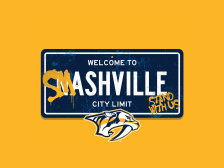
Smashville

Super Fan: Section 303 of Bridgestone Arena, affectionately known as The Cellblock or Cellblock 303, has been called “the loudest section of the loudest arena in the NHL”. The fan club dates back to the days of the Nashville Knights (1989-96) minor league team. Some popular members included Eudora Hunter, an 82-year-old woman who held up funny signs to the delight of other fans, and Ben ‘Big Ben’ Butzbach, who painted various images on his stomach. Sadly, both fans have passed away.

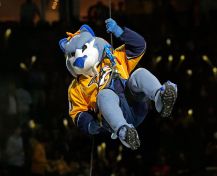
Mascot: Gnash is a sabre-toothed tiger, the animal being selected because the partial skeleton of one was found during excavation of the First American Cave in Nashville in 1971. Based on this story, it’s said that Gnash was discovered frozen in ice, while crews were building the Nashville Arena, today’s Bridgestone Arena. The frozen cat thawed and disappeared, re-emerging to debut with the Predators in 1998.

Tradition: Adapting the Detroit Red Wings tradition of throwing octopi onto the ice, Predators fans have been known to toss catfish from the stands, first occurring on October 30, 2003. Fans are also known to display their Fang Fingers, either foam gloves or curled index and middle fingers, which they use in a biting motion to sounds from the movie Psycho, prior to Predators power plays.

Appearances in Media: The Predators were the 2022 feature team in the NHL Network’s Behind the Glass series, which documents the chosen franchise’s training camp. This was the third installment of the all access series, with other teams followed being the New Jersey Devils in 2018 and Philadelphia Flyers in 2019. No team was highlighted in 2020 or 2021, due to the pandemic. Four episodes aired in fall 2022, with footage including Nashville starting their season with games in Prague, Czechia.

Gnash

Events/Scandals: On June 16, 2018, Predators forward Austin Watson was arrested following a domestic incident. He would plead no contest to a charge of domestic assault and be sentenced to one year probation and attending a batterer intervention course. The NHL suspended Watson for the 2018 pre-season and 27 regular season games (reduced to 18 by an arbiter) for unacceptable off-ice conduct. Watson didn’t rejoin Nashville until March 25, 2019, following time in the league’s substance abuse program.

Rivalry: The Predators greatest feuds have occurred against fellow long-time Central Division opponents, such as the Chicago Blackhawks, Minnesota Wild and St. Louis Blues. Nashville also had decent rivalries with the Detroit Red Wings and Columbus Blue Jackets, but those have dissipated to some degree, as both teams were moved into the Eastern Conference during the 2013 divisional realignment.

Tragedy: Wade Belak played the final three seasons of his NHL career with the Predators. When he retired in 2011, he remained with the franchise in an organizational role. Sadly, on August 31, 2011, Belak was found dead in his Toronto hotel room, where he was to take part in the hockey/figure skating crossover reality TV series Battle of the Blades. Belak’s cause of death was never officially released, but it was treated as a suicide by hanging.

Player Nicknames: Two of Nashville’s top goalies of all-time have memorable handles, including Pekka Rinne being known by teammates as Chief, while his incumbent Juuse Saros has been dubbed Juice. Also, 6’6” fourth-liner Michael McCarron has been the recipient of two wrestling-themed monikers while a member of the Predators organization. First, he was known as Big Show with the minor league Milwaukee Admirals, followed by Big Sexy with the big league club.

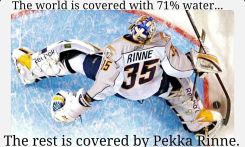
Pekka Rinne

Line: The Vowel Line consisted of Martin Erat, Denis Arkhipov and Vladimir Orszagh, for obvious reasons. Some other former top units include Viktor Arvidsson, Ryan Johansen and Filip Forsberg, as well as J.P. Dumont, Jason Arnott and Alexander Radulov. The franchise has always been known for the quality of its defense, with one of their most dominant pairs being Shea Weber and Ryan Suter.

Captain: Speaking of Shea Weber, he was named captain of the Predators on July 8, 2010. He served in the role for six seasons, before his shocking trade to the Montreal Canadiens in the 2016 off-season. Fellow blueliner Roman Josi is the team’s current leader and going into the next season, will surpass Weber as the franchise’s longest-serving captain. With Josi under contract until 2027-28, he should set a new standard of leadership within the organization.

Enforcer: Jordin Tootoo was a fan favourite for Predators supporters during his eight seasons with the team. The first Inuit person to play a regular season NHL game, Tootoo holds the all-time franchise record for penalty minutes with 725. Nicknamed the Tootoo Train for his devastating hits, Tootoo could also be relied upon to help on the scoresheet, putting up 30 points in his final campaign in Nashville. After retiring in 2018, Tootoo was invited to return to Nashville for Jordin Tootoo Night on February 2, 2019.

Family Values: Brothers Andrei and Sergei Kostitsyn played a portion of one season together with the Predators. They had previously also suited up together with the Montreal Canadiens. Andrei returned to play in Europe in 2012, following a curfew issue during the previous playoffs. Sergei lasted one more season, before his contract was mutually terminated and he too was Europe bound. The brothers were the first Belarussian siblings to play in the NHL.

Shea Weber

Returning Players: Two back-to-back first round Nashville draft picks started and ended their careers there, with gaps in between. Forward Scott Hartnell was drafted 6th overall in 2000, playing six seasons with the Predators. Hartnell closed his career with a final season in Smashville in 2017-18. Defenseman Dan Hamhuis, drafted 12th overall in 2001, played eight seasons with the organization, returning for two campaigns from 2018 to 2020.

Short Stint: Peter Forsberg’s tenure with the Predators lasted all of 22 games. He was brought in prior to the 2007 trade deadline, in exchange for the hefty price of Scottie Upshall, Ryan Parent and first- and third-round draft picks. While he was productive, scoring 19 points in those games, the Predators were eliminated in the first round of the playoffs. Forsberg then contemplated retirement, returning to the Colorado Avalanche for nine games the next season.

Undrafted: Vernon Fiddler was signed by the Predators on May 6, 2002, after playing with their American Hockey League affiliate, the Norfolk Admirals, as a free agent. He would debut with the big club in November 2002 and become a fixture of the roster from 2006 to 2009. Fiddler played the final 20 games of his career with Nashville, finishing with 877 games played, 104 goals and 157 assists.

Trade: One of the most lopsided deals in NHL history saw the Predators trade Martin Erat (along with Michael Latta) to the Washington Capitals for top prospect Filip Forsberg at the 2013 trade deadline. Erat was practically useless for the Capitals, while Forsberg became a star with Nashville. Forsberg is already the Predators all-time leading goal scorer and entered the 2022-23 season with an eight-year contract extension.

Filip Forsberg

Signing: Among the better deals the Predators have signed, include Paul Kariya (two-year, $9 million in 2005) and Jason Arnott (five-year, $22.5 million in 2006). As for one that didn’t turn out so well, was Matt Duchene’s seven-year, $56 million pact in 2019. Duchene, an avid country music fan, was bought out of the last three years of his deal in the 2023 off-season, leaving the Predators with a payout of $9.33 million over six years.

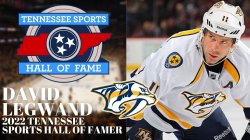
Draft Pick: The highest the Predators have ever picked was second overall, using their first ever selection on David Legwand in 1998. The team has made some amazing second round choices, stealing future captains Shea Weber in 2003 and Roman Josi in 2008. Nashville has also done well drafting goalies in later rounds, taking current netminder Juuse Saros 99th overall in 2013 and all-time backstop stat leader Pekka Rinne 258th overall in 2004.

Holdouts: While the Predators have had no contract impasses over their history, it should be noted that Nashville prospect Jimmy Vesey (drafted 66th overall in 2012) refused to sign with the team. This meant he would become a free agent in the 2016 off-season, as teams have four years to sign a college draft pick. To settle the dispute, the Predators traded Vesey’s rights to the Buffalo Sabres, but he still elected to become a free agent and eventually signed with the New York Rangers.

Buyouts: Center Kyle Turris was a key component of a 2017 three-way trade between the Predators, Colorado Avalanche and Ottawa Senators, signing a contract extension with Nashville immediately following the swap. However, on October 7, 2020, the Predators bought out the remaining four seasons of that six-year, $36 million contract. Nashville would have to pay Turris $16 million over the next eight years, while Turris would play 50 more NHL games over two seasons with the Edmonton Oilers.

David Legwand

Unique Game: In 2000, the Predators faced the Pittsburgh Penguins for a pair of regular season games in Saitama, Japan. In more recent years, they’ve participated in other high-profile league spectacles, such as the 2020 Winter Classic versus the Dallas Stars, a 2022 Stadium Series game against the Tampa Bay Lightning and were part of the 2022 Global Series, opening their campaign with two matches versus the San Jose Sharks in Prague, Czechia.

Goal: One of the greatest feats in hockey is for a goalie to score a goal. Predators legend Pekka Rinne did just that on January 9, 2020, firing a puck into the empty net of the Chicago Blackhawks, en route to a 5-2 victory. The win was also the first for coach John Hynes behind the Nashville bench. Fellow Predators netminder Chris Mason was also credited with a goalie goal in 2006, but that was the result of an own goal by the Phoenix Coyotes.

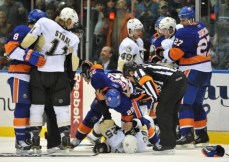
Fight/Brawl: Although not a traditional rival, the Predators and Winnipeg Jets have shared the same division since 2013. In the 2017 playoffs, the Predators defeated the Jets in seven games and for the teams first meeting since the elimination, in October 2018, tempers boiled over quickly, resulting in a line brawl. 76 penalty minutes were handed out in the contest, with a lopsided 60 going to Winnipeg. Nashville won the game 3-0.

Injury: In an unfortunate incident of friendly fire, when Jason Arnott scored the winning goal of Game 3 of the first round of 2008 playoffs against the Detroit Red Wings, teammate Alexander Radulov jumped on him in celebration. The resulting fall led to Arnott receiving a concussion and missing much of the rest of the playoffs. Nashville lost the series in six games, playing the final two contests without their captain and regular season scoring leader.

Pekka Rinne Goal

Penalty: Jordin Tootoo was suspended a couple times during his Nashville tenure, including five games in 2007 for a sucker punch to Stephane Robidas (which resulted in a concussion) of the Dallas Stars and two games in 2011 for charging Buffalo Sabres goalie Ryan Miller. It was Miller’s first game back after being hit by Boston Bruins power forward Milan Lucic three weeks earlier, which caused many around the NHL to call for changes to that part of the game, including Predators GM David Poile.

Wildest Story: During the 2012 playoffs, Predators forwards Alexander Radulov and Andrei Kostitsyn were spotted in a Scottsdale, Arizona bar at 5:00 am, the morning of Game 2 of Nashville’s series against the Arizona Coyotes. This violated team curfew and both players were suspended for that night’s contest. Radulov had just returned to the organization after four seasons in Russia. When his contract expired following the team’s elimination by the Coyotes, Radulov returned to Russia for another four years.

Blooper: During a November 2011 game against the Toronto Maple Leafs, winger Craig Smith looked to seal the win for the Predators with an empty net goal. He was alone on a breakaway and nobody had any chance of stopping him. The horn inside Bridgestone Arena went off and everyone assumed Smith had scored… except he had tried to shoot the puck into the top of the net and had completely put it over the net and into the stands instead. Thankfully, Nashville still emerged with a 4-1 victory.

Miscellaneous: When NHL jobs seem to have short shelf lives, it’s amazing that Predators GM David Poile guided the franchise from its earliest days until retiring after the 2023 NHL draft. Poile owns the record for most wins as a GM, finishing his executive career with 1,533 victories. He won the NHL General Manager of the Year award in 2017 and outside of the NHL, Poile also oversaw the 1998 and 1999 USA World Championship teams, as well as the American 2014 Olympics squad.

Nashville Predators: Predator Smash

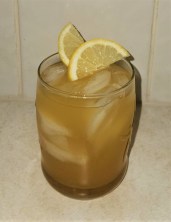
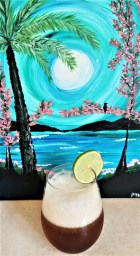
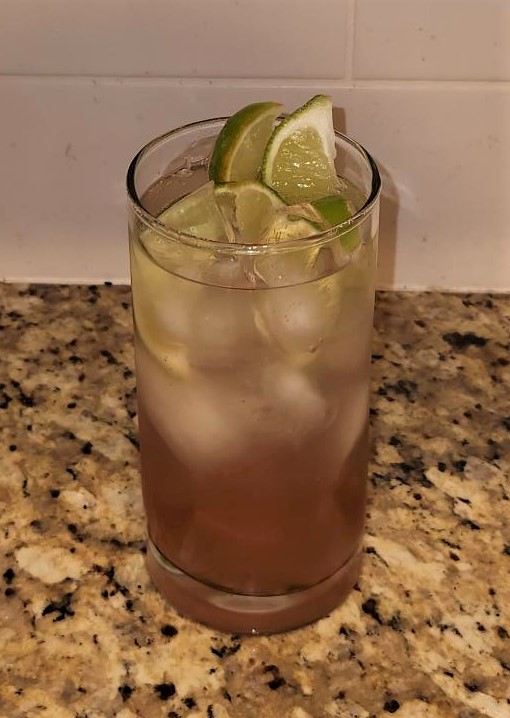
Predator Smash

  • 2 oz Bourbon
  • Top with Iced Tea
  • Blend with Ice
  • Splash of Lemon-Lime Soda
  • Garnish with a Lime Slice

This frozen drink was served for a time at Bridgestone Arena. While it didn’t come with a name when I found it, I’ve dubbed the beverage myself. I vowed to use my Margaritaville blender more this summer, so this was a good recipe to start with.

Montreal Canadiens – Habitant

Throughout the year, the Sip Advisor will alphabetically travel the National Hockey League (NHL), discovering the best and worst each team has to offer in a variety of subjects. We will also feature a drink based off the franchise. Today, we visit La Belle Province, to learn about one of the most storied sports franchises in the world, the Montreal Canadiens:

Establishment Story: The Canadiens are one of the NHL’s Original Six franchises, being founded in 1909 and playing in the National Hockey Association. In fact, the team is the longest continuously operating ice hockey team in the world, predating the formation of the NHL. The team was given the name ‘Les Canadiens’, as it was supposed to be comprised of French players and supported by Montreal’s francophone community.

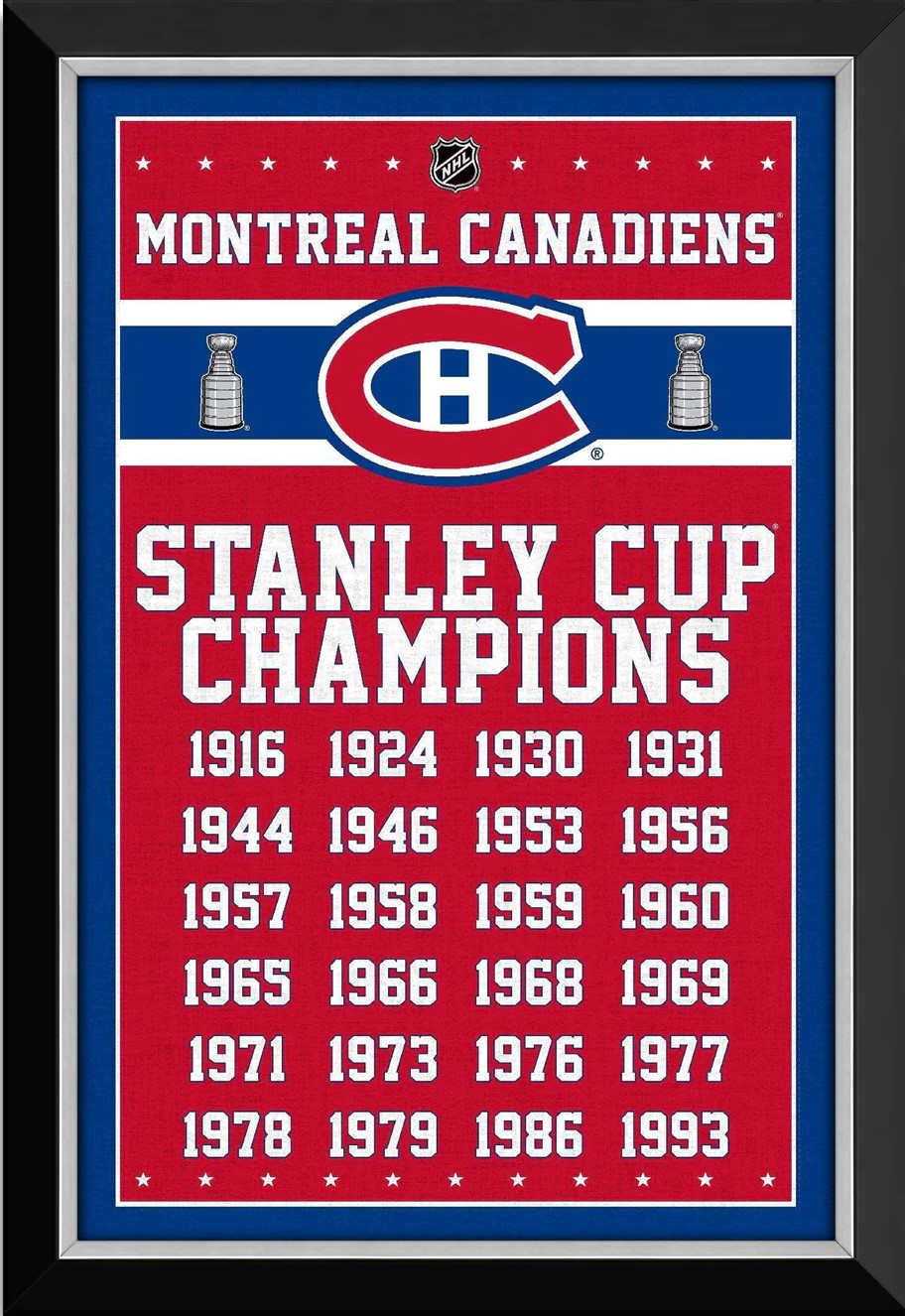
Stanley Cups: The Canadiens hold the NHL record for Stanley Cup victories with 24. Montreal’s dynasty teams of 1955-60, 1964-69 and 1975-79 largely contributed to this total. The Canadiens have appeared in a total of 35 Stanley Cup Finals. Introduced in 1985, Montreal has never won the Presidents’ Trophy, awarded for best regular season record. Had it always existed, the Canadiens would have won it on 21 occasions.

Celebrity Fan: As you can expect, given the club’s reverence with French Canadians, there are a number of celebrity supporters of the Canadiens. Among the team’s most famous fans are singer Celine Dion, Canadian Prime Minister Justin Trudeau, actors Jay Baruchel, Viggo Mortensen and William Shatner, and mixed martial arts fighter Georges St-Pierre. Legend has it, Mortensen wore a Canadiens jersey under his armor while filming the Lord of the Rings trilogy.

Stanley Cups

Super Fan: I believe every Canadiens fan to be a super fan in their own right. After all, supporting the team is like a religion in Montreal. In fact, the Canadiens launched their own Hall of Fan in 2022, with the original inductees being Sunil Peetush, Maika Parisien and Thommy Boudreau. Perks of the honour included an induction ceremony and having their names on a banner in the Molson Ex Zone, within the Bell Centre, as well as watching a game from a suite.

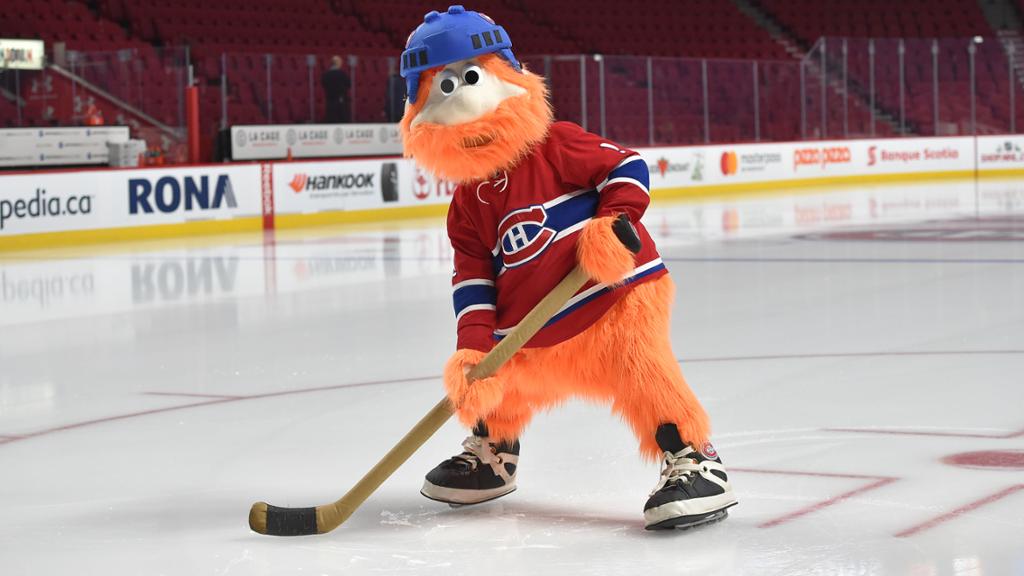
Mascot: Youppi! was the mascot of Major League Baseball’s Montreal Expos from 1979 to 2004, before the team was relocated to Washington, D.C., becoming the Washington Nationals. Needing a new team to support, Youppi! joined the Canadiens. His jersey number is an exclamation mark. Youppi was the first Canadian mascot to be inducted into the Mascot Hall of Fame, earning the honour in 2020.
Tradition: The Canadiens team motto is “Nos bras meurtris vous tendent le flambeau, à vous toujours de le porter bien haut.” This translates as “To you from failing hands we throw the torch. Be yours to hold it high.” The slogan comes from the famous World War I poem In Flanders Fields by John McCrae. Canadiens fans have also been known for the chants “Olé, Olé, Olé”, along with the team’s goal song and “Nah Nah Nah Nah Hey Hey Hey Goodbye”, as the team wound down a game with victory imminent.

Appearances in Media: The Hockey Sweater is a cherished children’s book, which was later turned into an animated short, titled The Sweater. The story is about a little boy who’s gifted a Toronto Maple Leafs sweater, despite living in Montreal and being a loyal Canadiens fan. It is based on author Roch Carrier’s childhood experience. The book and short are so iconic, a line from the story appeared on Canadian $5 bills for a time.

Youppi

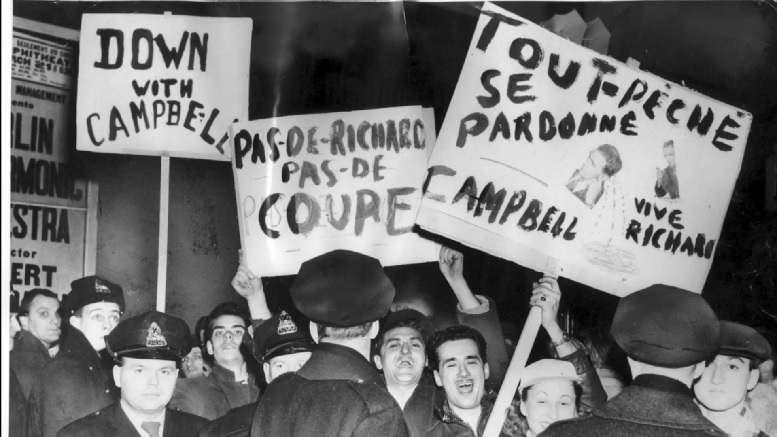
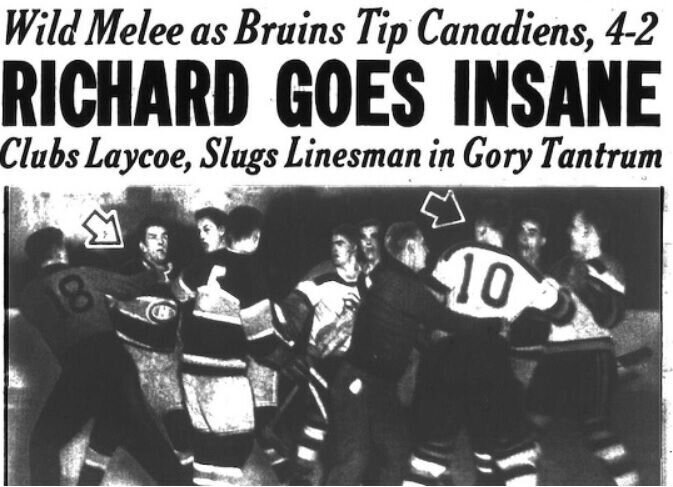
Events/Scandals: Occurring on March 17, 1955, the Richard Riot transpired because beloved Canadiens superstar Maurice Richard was suspended for the remainder of the 1954-55 season, including the playoffs, following an altercation with a linesman. When NHL president Clarence Campbell appeared at the Montreal Forum for the Canadiens next game, fans revolted causing $100,000 worth of property damage, only being quelled by Richard asking for supporters to stop.

Rivalry: Many view Montreal’s feud with the Boston Bruins as one of the NHL’s greatest rivalries. The two teams have faced each other in the playoffs countless times and heated matchups aren’t restricted to the post-season. The Canadiens also have checkered histories with geographically close teams in the Toronto Maple Leafs and Ottawa Senators and would still be enemies of the Quebec Nordiques and Montreal Maroons, if those clubs still existed.

Tragedy: The Canadiens long history includes numerous tragedies. First, days after the 1919 Stanley Cup Finals were cancelled due to the Spanish flu pandemic, player Joe Hall died of pneumonia. Next, goalie Georges Vezina succumbed to tuberculosis in March 1926. Later, in 1937, star Howie Morenz perished due to a coronary embolism, while recovering from a broken leg (more on that below). Finally, prospect Neil Carnes was killed in a 1989 motorcycle accident.

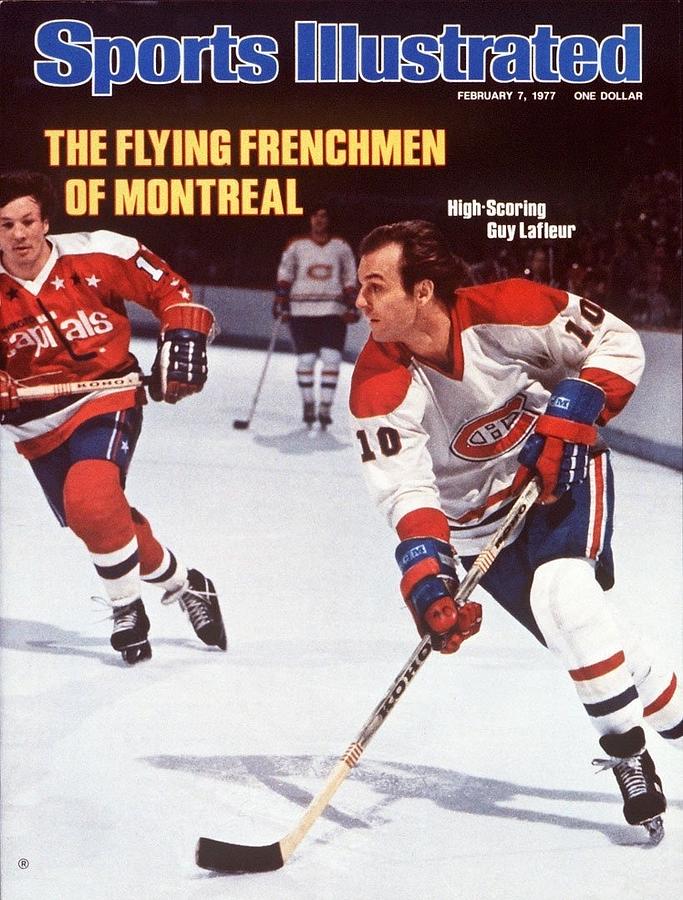
Player Nicknames: Canadiens fans and media work diligently to create nicknames for their beloved players. Some of the best, include Boom Boom (Bernie Geoffrion), Big Bird (Larry Robinson), Roadrunner (Yvon Cournoyer), Rocket/Pocket Rocket (Maurice/Henri Richard), Flower/Blond Demon (Guy Lafleur), Chicoutimi Cucumber (George Vezina), Goal Caufield (Cole Caufield), WiFi (Arber Xhekaj), Jesus Price (Carey Price), and Saint Patrick (Patrick Roy).

Richard Riot

Line: The Punch Line of Toe Blake, Elmer Lach and Maurice Richard were formed during the 1943-44 season and instantly had great chemistry. The following campaign, the trio finished first, second and third in league scoring. They would win two Stanley Cups together. Two championships, however, pale in comparison to The Dynasty Line of Guy Lafleur, Steve Shutt and Pete Mahovlich/Jacques Lemaire, who won four straight Stanley Cups from 1976 to 1979.

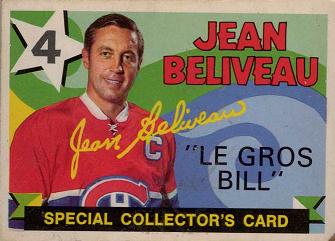
Captain: Amongst other notable leaders, Jean Beliveau gets the nod here. He led the team for 10 years, winning four Stanley Cups in five seasons from 1965 to 1969. Even after his career wrapped, Beliveau continued to leave his mark on the Canadiens, winning seven Stanley Cups as an executive with the team. Beliveau was named to the Order of Canada in 1998 and had his name added to Canada’s Walk of Fame in 2001.

Enforcer: Chris Nilan, nicknamed Knuckles for his fighting skills, holds the Canadiens team records for career (2,248) and single-season (358) penalty minutes. He was a member of Montreal’s 1986 Stanley Cup squad. When the Canadiens closed the fabled Montreal Forum and began auctioning off pieces from the historic building, Nilan bought the penalty box… a home away from home.

Family Values: It’s pretty special when three generations of a family played for the same team. Bernie Geoffrion, his son Dan and his grandson Blake all suited up for the Canadiens. Add in Howie Morenz, whose daughter married Bernie and was mother to Dan and grandmother to Blake, for a non-direct fourth generation. Additionally, brother combos to play together for Montreal include Maurice and Henri Richard and Frank and Pete Mahovlich.

Jean Beliveau

Returning Players: Howie Morenz is a Canadiens legend, playing the first 11 seasons of his career with the team and winning three Stanley Cups, while becoming one of the NHL’s first stars. After time with the Chicago Blackhawks and New York Rangers, Morenz returned to Montreal for the 1936-37 campaign. Sadly, Morenz broke his leg late in the season and weeks later, died of a coronary embolism, caused by blood clots from the injury. 50,000 fans attended his funeral held at the Montreal Forum.

Short Stint: A number of notable Russian players had limited tenures with the Canadiens. This includes Alexander Radulov, who revived his NHL career with the team in 2016-17, before leaving for the Dallas Stars; Ilya Kovalchuk, who played 22 games with Montreal in 2020, between stints with the Los Angeles Kings and Washington Capitals; and Alexander Semin, who played a mere 15 contests with the Canadiens in 2015, before he was waived and had his contract terminated for failing to report to the minor leagues.

Undrafted: The Canadiens signed Mike Keane on September 25, 1985. Keane would spend eight seasons with Montreal, winning a Stanley Cup in 1993 and serving as team captain for half a season. He was part of the infamous Patrick Roy trade, accompanying the star goalie, where they would win another championship in 1996. Keane would win a third Stanley Cup with the Dallas Stars in 1999. He retired having played 1,161 regular season games and 220 playoff contests.

Trade: Goalie Ken Dryden was actually drafted by the Boston Bruins 14th overall in 1964, but was traded a couple weeks later to the Canadiens. Legend has it, Dryden’s agent never told him of being drafted by Boston and he only became aware of how he actually ended up in Montreal midway through his career. Although Dryden only played eight NHL seasons, he won six Stanley Cups and five Vezina Trophies as the league’s best goaltender.

Ken Dryden

Signing: Among the Canadiens best deals was bringing in Brian Gionta with a five-year, $25 million pact in 2009. Gionta would be named the team’s captain in 2010, serving in the role until the end of his contract. One of the worst signings by Montreal was adding hometown enforcer Georges Laraque. Brought in to add toughness to the team, Laraque only lasted a season and a half of his thee-year, $4.5 million deal before being released and bought out.

Draft Pick: One of the savviest moves the Canadiens ever made was trading for the California Golden Seals first round draft pick in 1971. Highly touted Quebecois players Guy Lafleur and Marcel Dionne were available to be chosen that year and when the Golden Seals finished last in the league, the Canadiens earned the right to select first overall. They eventually decided to pick Guy Lafleur, who became a Montreal legend over 14 seasons with the team.

Holdouts: Some of the Canadiens most iconic players have endured interesting contract disputes with the club. Ken Dryden’s 1973-74 disagreement resulted in the netminder articling for a law firm, a requirement needed to earn his law degree. Guy Lafleur decided to retire 19 games into the 1984-85 season, unhappy with coach Jacques Lemaire, a denied trade request and his contract. Finally, Patrick Roy’s mid-season statement he would not play for the team again led to his trade to the Colorado Avalanche.

Buyouts: Karl Alzner was one of the worst free agent signings in Canadiens history. In 2017, the stay-at-home defenseman was given a five-year, $23.125 million deal. In his second season with Montreal, he was demoted to the minors and would only play four more games for the team, before his contract was bought out in October 2020. This resulted in a $3.33 million payout over four years.

Guy Lafleur

Unique Game: The Canadiens have been part of a number of international tours and showcase events for the NHL. This includes the 1938 Detroit Red Wings–Montreal Canadiens European Tour (first NHL games outside North America), a 1975 New Year’s Eve game vs. Moscow Central Red Army (played during the Cold War), the 2003 Heritage Classic vs. Edmonton Oilers (first regular season outdoor game), 2011 Heritage Classic vs. Calgary Flames, and 2016 Winter Classic vs. Boston Bruins.

Goal: On March 18, 1945, Maurice Richard became the first player in NHL history to score 50 goals in 50 games. Richard finally reached the plateau with 2:15 left in the last game of the season, en route to a 4-2 win for Montreal. Richard’s achievement was even more notable for how much opposing players were targeting him, with an increase in slashes, hooks and other interference, as he pursued the feat.

Fight/Brawl: Canadiens teams of the 1980s were involved in a number of notable brawls. There was the infamous 1984 Good Friday Massacre with the Quebec Nordiques, but also a pair of lesser known melees deserving of some attention. These include a 1986 fracas that moved onto the Boston Bruins bench and tunnel to the dressing rooms, as well as a 1987 punch-up with the Philadelphia Flyers that occurred before the game had even begun.

Injury: A couple of serious injuries have ended Canadiens players careers. First, in January 2000, Trent McCleary took a slapshot to the throat, crushing his larynx and requiring immediate life-saving surgery. With his air passage 15 per cent narrower, McCleary was unable to resume his career. Second, while playing for the Canadiens’ American Hockey League affiliate, Blake Geoffrion suffered a depressed skull fracture following his fall from a hip check, resulting in his eventual retirement.

Richard

Penalty: A little more about the incident which led to the Richard Riot, Maurice Richard had a long history of retaliation penalties, stemming from physical and verbal attacks from opposing players. On March 13, 1955, Richard was involved in a skirmish with Boston Bruins player Hal Laycoe and when referees tried to intervene, Richard punched linesman Cliff Thompson twice, knocking him unconscious. A match penalty resulted and Boston police even tried to arrest Richard.

Wildest Story: As a teenager, the Canadiens pursued Jean Beliveau, attempting to sign him to contracts that would ensure he eventually played for the team. As Beliveau appeared to not be interested in turning pro, the Canadiens decided to buy the league Beliveau was playing in, the Quebec Senior Hockey League, turning it into a minor pro circuit and giving the Canadiens the rights to all players in the league, particularly Beliveau.

Blooper: When Doug Gilmour was penalized during the 2002 playoffs, he responded by slamming the penalty box door. This caused the glass to shatter, although Gilmour barely reacted to the mess he had created. Gilmour has said after that game, which he thought may be the last of his career, Canadiens owner George Gillett came to him with a wheelbarrow of glass. When Gilmour signed a few pieces, Gillett asked him to sign some more to be sold later.

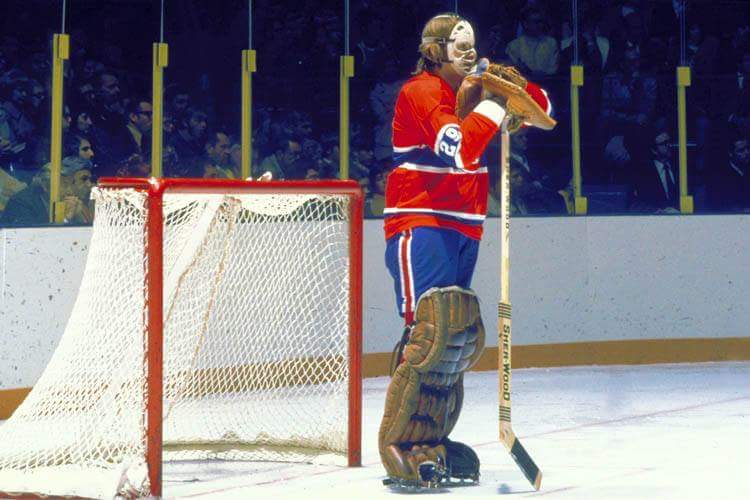
Miscellaneous: On November 1, 1959, goalie Jacques Plante blocked a shot with his face, resulting in a broken nose. While Plante had practiced with a mask previously, head coach Toe Blake wouldn’t allow him to wear it during games, fearing it would obstruct his vision. On this night, Plante returned to the ice after being stitched up, donning the mask. He went on an 18-game unbeaten stretch, popularizing the use of the mask as protective equipment.

Montreal Canadiens: Habitant

Habitant

  • 1.5 oz Whiskey
  • Splash of Lemon Juice
  • Dash of Maple Syrup
  • Dashes of Peychaud’s Bitters
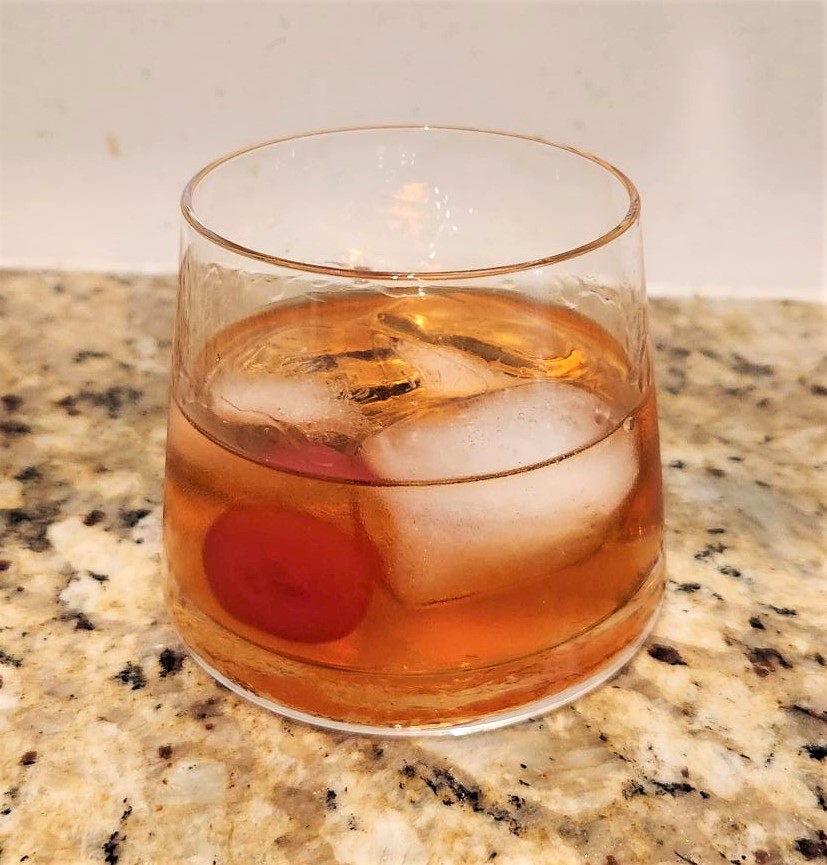
  • Garnish with a Maraschino Cherry

This cocktail was created by Larry Dennis of the Seignory Club in Quebec. Les Habitants is a popular nickname for the Canadiens. Other monikers for the club include Le Bleu-Blanc-Rouge, La Sainte-Flanelle, Le Tricolore, Les Glorieux, Le Grand Club, and Les Plombiers.

Sip Trips #223: Provincial Playtime

June saw Mrs. Sip and I (along with the kids for two of the three) travel to a trio of different locales around British Columbia. This made the month fly by, as it seemed we were always either heading out somewhere or returning from the destination. Here’s what we got up to:

Before we could get to our first expedition of June, the Sip Advisor had a long-planned night out with the boys to survive. We started our day by grabbing beers at 33 Acres, settling at Jonathan Rogers Park to consume them. After downing a handful of brews each, some food was necessary. For that, we walked to the nearby Steamworks – Mt. Pleasant, where we split Hawaiian and Pepperoni Pizzas, along with some Onion Rings. To drink, I had the Heroica Red Ale.

The main event of the evening was watching a Vancouver Whitecaps game. While a couple more beers were enjoyed, I didn’t record what they were, but random photos on my phone tell me they were big and tasty. Not ready to go home just yet, we had an encore of sorts at Devil’s Elbow, where I believe whiskey entered the fray, before it was finally time to call it a night.

Guys Night Out

The next morning, the Sip Family was off to Whistler for a week of relaxing in the resort community. We didn’t get out into the village as much as I thought we would, but did have one good happy hour meal at El Furniture Warehouse. I loved my General Tao Bowl with Chicken, while also partaking in Spicy Margarita and Jack & Coke beverages.

In the middle of the month, we had a friend’s birthday, celebrated at The Farmer’s Apprentice. Here, they served a family style set menu for the table, costing each person $85. The food was all pretty good, as were the cocktails I tried. These included the Junipero (mezcal, gin, carpano bianco, poire Williams, and lavender bitters) and Legal High (bourbon, unicum, devils club, maraschino, Benedictine, and verjus). I finished the feast with a glass of Powell Street Tangerine Dream.

Following the meal, and while we waited for rideshare prices to go down, Mrs. Sip and I popped into Cactus Club for a nightcap. I selected the Parallel 49 Stir Crazy Hazy, as it was on late night happy hour pricing. Mrs. Sip also added some Truffle Fries for our sitting, despite the fact we had just finished a massive feast.

Night Cap

Days later, Mrs. Sip and I travelled to Sechelt, since she had some work to do there. This was our first time ever taking a seaplane over to the Sunshine Coast, and it was nice to share that experience together. While waiting for our plane to board, I noticed that the Cockpit Cafe Lounge, with the Seaplane Air Terminal, offered a limited edition Harbour Air-affiliated beer available, so we split a tall can of the Bowen Island Harbour Hazy Days of Summer/Memories of Summer Pale Ale, as we watched some other planes takeoff and land.

While in Sechelt, Mrs. Sip and I tried a number of local food options. We started with Batch 44 Brewing, drawn in by their fun and energetic (great host, who worked hard to make sure everyone enjoyed themselves) Rock N’ Roll Bingo. To drink, we started with a pint each of the Old Creeker West Coast Cream Ale, which were $2 off. We also split a serving of Strips & Fries and capped the event off with the Gone Nutty cocktail (Red Head Macadamia Nut Rum, Bacardi Rum, passionfruit, pineapple, cardamom bitters, soda).

Before returning to our hotel room, we went to the Lighthouse Pub next door and shared an order of 2-piece Fish & Chips, along with Potato Boats. To drink, I had the Foamers’ Folly Yada Yada IPA and we enjoyed the tranquil setting on the water, watching the sun disappear for the day.

Bingo

For lunch the next day, Mrs. Sip and I tried Lucky’s Barbecue House/Lucky’s Smokehouse. There, we shared an order of Pulled Pork Sliders with Potato Salad and Baby Cornbread. I also ordered the Tapworks Storm Rider IPA to wash the food all down.

That afternoon, we enjoyed happy hour at El Segundo. Our drinks included the Sechelt Mule, Blue Hawaiian, Danger Bae (Pandan Leaf Infused Vodka, pineapple, coconut, ube, lime) and Honolulu Fizz (Gin, orange, lemon, pineapple, simple syrup, egg white, Angostura bitters, soda). The food here was fantastic and we very much liked our Dynamite Bowl and Crispy Shrimp Tacos with Truffle Tots. The atmosphere at this restaurant was also fun.

That evening, we returned to the Lighthouse Pub for a few more drinks – Foamers’ Folly Hot Box IPA and a Rum & Coke – before playing a couple rounds of pool, where I had forgotten just how bad I was at the game!

Pool

For Father’s Day, Mrs. Sip let the kids each pick out a beer for me, with Girl Sip picking the Rewind Rainbow Road because she likes rainbows, while Boy Sip selected the Phillips Dinosour Stone Fruit Sour because he’s a massive dinosaur fan. As a treat to myself, I also later picked up a bottle of Howler’s Head Whiskey.

To celebrate Girl Sip’s graduation from kindergarten, she chose Old Spaghetti Factory for a family dinner. I enjoyed my Chicken Parmagiana with Fries and Salad, which I paired with a double Long Island Iced Tea. I’m not the biggest ice cream guy, but I do like the spumante/spumoni ice cream offered by the eatery.

Our final getaway of the month, was taking off to the Okanagan for the Canada Day long weekend. We stayed at a house at Orifino Vineywards, thanks to friends who are members of the winery. The weekend was largely spent travelling to eight wineries in the region. I didn’t taste much, given I was on child care duty, but I was impressed with how most of the places were welcoming of our kiddos.

Wine

Prior to heading home, we stopped at Abandoned Rail Brewing, which I thought had a really good setup, amongst the countless wineries that make up the Naramata Bench area. There, I tried the Weizenbock, while Mrs. Sip with a Doppelbock. We also grabbed cans of the Red Hefeweizen for the road.

That wraps a very busy June (and the start of July). The summer only heats up from here, with much of the calendar already booked and what’s left filling up quickly!

Minnesota Wild – Wild Thing

Throughout the year, the Sip Advisor will alphabetically travel the National Hockey League (NHL), discovering the best and worst each team has to offer in a variety of subjects. We will also featuring a drink based off the franchise. Today, we enter ‘The State of Hockey’ to see what the Minnesota Wild have to offer:

Establishment Story: The Wild joined the NHL as an expansion team in 2000, although they had been founded on June 25, 1997. The franchise was promised to the city when the Minnesota Stars were relocated to Dallas in 1993. Before settling on the Wild nickname, other monikers considered were Blue Ox, Freeze, Northern Lights, Voyageurs, and White Bears. The Winnipeg Jets were almost moved to Minnesota in the mid-1990s, but no arena deal could be reached.

Stanley Cups: The Wild have never won the Stanley Cup, having furthest reached the Western Conference Final in 2003 and even that was a surprisingly successful run. Since that 2003 achievement, the Wild have only advanced to the second round of the playoffs twice (back-to-back in 2014 and 2015), while missing the post-season altogether seven times during that span.

Celebrity Fan: Richard Dean Anderson, best known as the star of the original MacGyver TV show, is a proud Minnesotan, who played hockey while growing up. When the Minnesota Stars were relocated to Dallas, a fandom void was left for Anderson that wasn’t filled until the Wild debuted. Anderson was also a regular for celebrity charity hockey games back in the day.

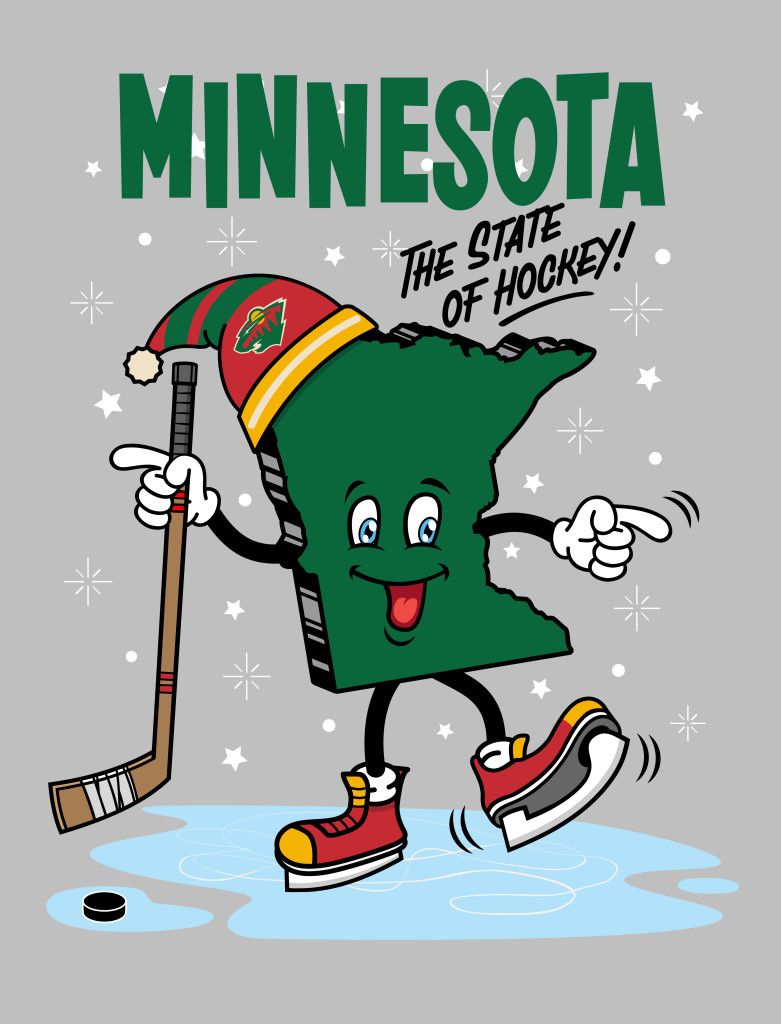
State of Hockey

Super Fan: Alyssa Nelson, dubbed the Lady in Pink, first garnered attention during the 2014 playoffs for her passionate cheering of the Wild. When the team staved off elimination in Game 6 of their series versus the Colorado Avalanche, she became a lucky charm of sorts. Minnesota would end up completing the comeback and move on to the second round of post-season action.

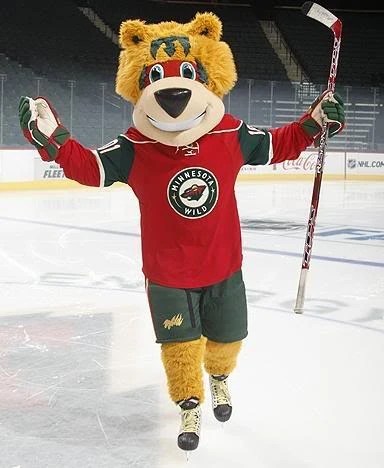
Mascot: Nordy is an animal – some say he’s a puma, others a bear or fox – where the only thing certain about him is he’s wild. Nordy wears the jersey number 18,001, a reference to The Team of 18,000, the number of fans at a sold out Wild game. Nordy debuted in 2008 and is available to be booked for birthday parties and even wedding receptions, where he’ll show up for photos or time on the dance floor.

Tradition: The Wild had a very unique tradition from 2017-2020, dubbed This is Our Ice, where fans were invited to help the team form its ice sheet, using water from their local ponds, lakes and rinks. It would then be filtered and frozen for arena use during an event called Flood the Rink. The Wild also host Hockey Day Minnesota each year, with the 2023 rendition being the 17th annual running of the spectacular.

Appearances in Media: Becoming Wild, an Emmy award-winning TV and online series, has aired since 2011, giving viewers a behind the scenes look at the players of the Wild, including their personal lives and how they navigate each season. The club has also released a couple of DVDs, including Minnesota Wild: The State of Hockey (2004) and Minnesota Wild Hockey Club: Celebrating a Decade in the State of Hockey (2010).

Nordy

Events/Scandals: In a November 2020 lawsuit, Wild GM Bill Guerin was named for his role in allegedly covering up a reported sexual assault that occurred while Guerin was GM of the Wilkes-Barre/Scranton Penguins. The incident was said to have been perpetrated by head coach Clark Donatelli on the wife of assistant coach Jarrod Skalde. An investigation was launched by the U.S. Center for SafeSport, with a variety of punishments possible if it’s proved Guerin acted inappropriately.

Rivalry: The Wild’s biggest adversary is the collection of teams that make up the rest of the NHL’s Central Division, particularly the Colorado Avalanche, Chicago Blackhawks, Winnipeg Jets and St. Louis Blues. They also had a brief rivalry with the Vancouver Canucks, when both teams were part of the Northwest Division from 2000 to 2013. Some fans may also harbour some resentment for the Dallas Stars, given the franchise’s move from Minnesota in 1993.

Tragedy: In September 2012, Wild goalie Josh Harding was diagnosed with multiple sclerosis (MS). He attempted to play through the disease and continue his career, being awarded the Bill Masterton Memorial Trophy in 2013 for his “perseverance, sportsmanship, and dedication to ice hockey.” Unfortunately, Harding’s career came to an end during the 2014-15 season, as a member of the Wild’s American Hockey League team, as he could not overcome his MS.

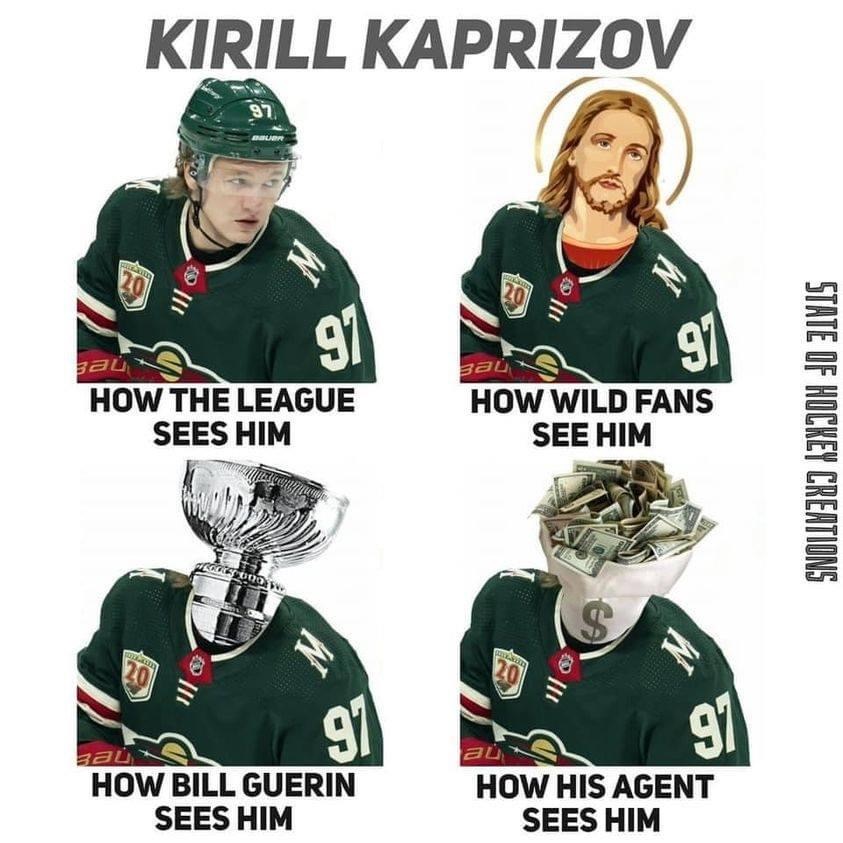
Player Nicknames: When Kirill Kaprizov finally joined the Minnesota Wild in 2020, five years after being drafted by the team, he immediately became a fan favourite, scoring 27 goals and adding 24 assists in 55 games, winning the Calder Memorial Trophy as the NHL’s rookie of the year. He was dubbed Kirill the Thrill and signed a five-year, $45 million contract, ensuring he continues to wow Minnesota crowds for years to come.

Kaprizov

Line: Dubbed the Big Line, the trio of Pavol Demitra, Brian Rolston and Marian Gaborik enjoyed great success playing together. More recently, the unit of Kirill Kaprizov, Ryan Hartman and Mats Zuccarello have rewritten portions of the Wild record books, while as their name suggests, the GREEF Line of Jordan Greenway, Joel Eriksson Ek and Marcus Foligno have made Minnesota frustrating to play against.

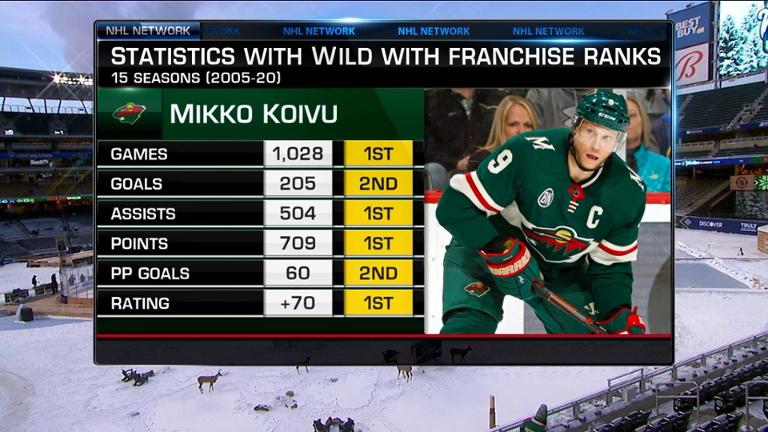
Captain: Mikko Koivu spent all but seven games of his NHL career with the Wild. Starting in February 2008, Koivu served as one of Minnesota’s rotating captains. He was named the Wild’s first permanent captain for the 2009-10 season, a role he held until 2020. After only seven games with the Columbus Blue Jackets, Koivu announced his retirement. Koivu’s number was the first retired in franchise history in 2022.

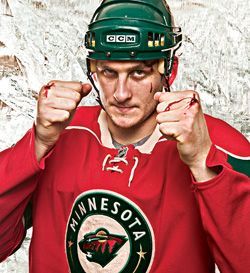
Enforcer: The Wild signed Derek Boogaard (nicknamed Boogeyman) during the 2002-03 season, placing him with their East Coast Hockey League (third tier) affiliate. From there, Boogaard worked his way up to the NHL, claiming numerous fighting victims along the way. Boogaard made the Wild out of their 2005 training camp, thanks to his intimidation factor. Boogaard finished his Wild tenure with 544 penalty minutes over 255 games.

Family Values: Uncle and nephew Jacques Lemaire and Manny Fernandez were members of the Wild together, as Lemaire served as the franchise’s first head coach from 2000 to 2009, while Fernandez minded the Minnesota net from its earliest days until a 2007 trade to the Boston Bruins. That must have made some starting goalie decisions awkward. Also, cousins Marc and Eric Chouinard played together during the 2003-04 campaign.

Mikko Koivu

Returning Players: Andrew Brunette played two stints with the Wild and returned a third time as an advisor to the hockey operations department and later assistant coach of the team. Brunette was very durable for the Wild, playing at least 80 games in all six of his seasons with the franchise. His two tours of duty with Minnesota were split up by three seasons with the Colorado Avalanche.

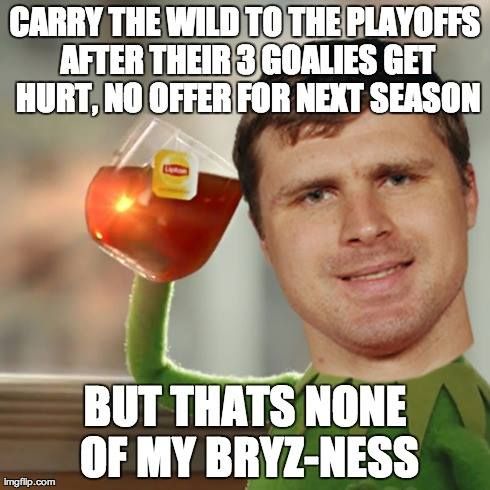
Short Stint: Enigmatic goalie Ilya Bryzgalov played 12 games for the Wild in 2014, after coming to the team at the trade deadline. In those contests, Bryzgalov posted a 7-1-3 record and also saw playoff action with Minnesota, as the team was eliminated in the second round. Bryzgalov then became an unrestricted free agent and didn’t sign his next contract until December of that year, with the Anaheim Ducks.

Undrafted: Niklas Backstrom was signed by the Wild in June 2006 to be the team’s back-up goalie. It wasn’t long before he took over the starter role and by 2009, he was runner-up for the Vezina Trophy, awarded to the NHL’s best goaltender. Backstrom was traded to the Calgary Flames in 2016, before returning to Finland for the final three seasons of his career.

Trade: Some of the Wild’s best transactions have involved acquiring goaltenders, such as Manny Fernandez in 2000, Devan Dubnyk in 2015 and Filip Gustavsson in 2022. The worst trade in franchise history saw the Wild send Brent Burns to the San Jose Sharks at the 2011 NHL Draft. In California, Burns would flourish as a multiple time all-star and win the 2017 Norris Trophy as the NHL’s best defenseman.

Bryzgalov

Signing: When the Wild signed Eric Staal in 2016, few could have imagined he’d return to his early career form. Staal recorded 92 goals and 193 points over that three-year deal. As for the Wild’s worst signings, on July 4, 2012, Zach Parise and Ryan Suter agreed to identical 13-year, $98 million pacts. The massive splash landed Minnesota two of the most coveted free agents of that off-season, but the team was criticized for the length of the deals and for overpaying.

Draft Pick: The earliest the Wild have ever picked is third overall, when they snagged sniper Marian Gaborik in 2000. The following year, they selected future captain Mikko Koivu sixth overall. The Wild’s greatest diamond in the rough find was Kirill Kaprizov at 135th overall in 2015. Kaprizov finally debuted with the team in 2021, following five seasons in Russia, and immediately became a superstar.

Holdouts: Going into the 2003-04 season, the Wild were dealt a double whammy of having both Marian Gaborik and Pascal Dupuis unable to sign new contracts with the team. Dupuis rejoined the team first, followed a week later by Gaborik, who went through a few agents and returned to his native Slovakia, in an attempt to gain some leverage in negotiations. Gaborik signed for half of the $6.5 million he was originally requesting.

Buyouts: In the 2021 off-season, GM Bill Guerin decided to buyout the twin contracts of Zach Parise and Ryan Suter, with four years remaining on each deal. The buyouts will cause significant salary cap ramifications for the team up to the 2024-25 season and will remain on their books until 2027-28. Parise would end up signing with the New York Islanders, while Suter landed with the Dallas Stars.

Parise and Suter

Unique Game: As part of the 2010 NHL Premiere, the Wild opened their season with two games against the Carolina Hurricanes in Helsinki, Finland. They have also participated in two outdoor games, a 2016 Stadium Series match versus the Chicago Blackhawks and the 2022 Winter Classic against the St. Louis Blues. For the 2023 Global Series, Minnesota will join three other teams in Stockholm, Sweden for another pair of games.

Goal: The Wild have only reached the Western Conference Final once and the goal that pushed them there was scored by Andrew Brunette, in overtime, against the Colorado Avalanche in Game 7 of the 2003 Western Conference Quarterfinals. The goal had added significance, as it was the last tally ever scored on legendary goalie Patrick Roy, who announced his retirement a month later.

Fight/Brawl: Among Derek Boogaard’s many notable bouts was an October 2006 scrap with Todd Fedoruk of the Anaheim Ducks. The fight was short, as just moments in, Boogaard landed a punch that fractured Fedoruk’s cheekbone. Surgery, including metal plates and mesh, was required to repair the injury. Sadly, Boogaard died in 2011 due to an accidental overdose, while a member of the New York Rangers.

Injury: On March 20, 2008, Wild defenseman Kurtis Foster suffered a broken leg when he crashed into the boards while racing against San Jose Sharks forward Torrey Mitchell for an icing call. Foster missed almost a full year recovering from the injury. As a result of the incident, the NHL altered its icing rules, making dangerous contact during a race for the puck illegal. Players could only attempt to play the puck and not contact the opposing player.

Boogaard

Penalty: Matt Cooke’s long history of suspensions for dangerous hits followed him to Minnesota, where he was banned for seven games following a knee-on-knee hit on Colorado Avalanche defenseman Tyson Barrie during the 2014 playoffs. Barrie was injured on the play and missed the remainder of Colorado’s post-season run. Cooke would play one more season for the Wild before being bought out in 2015 and retiring.

Wildest Story: During the 2022 off-season, Kirill Kaprizov returned to his native Russia, despite GM Bill Guerin preferring he stay in Minnesota, amidst the Russia-Ukraine War. In July 2022, news broke that Kaprizov was wanted by Russian authorities for allegedly purchasing a fraudulent military ID card, in order to avoid the mandatory military service for all males aged 18 to 27. It took three attempts for Kaprizov to escape Russia and return to the U.S.

Blooper: Cal Clutterbuck, the NHL’s leader for career hits with 3,756, began his career with the Wild. Always looking for his next target, opposing players must be aware of his presence on the ice, as crafty Vancouver Canucks winger Alex Burrows was during a March 2011 game. Clutterbuck had Burrows lined up, but at the last moment, Burrows spun away, causing Clutterbuck to go flying into the Canucks bench.

Miscellaneous: The story of Wild original Matt Johnson is a tragic one. Johnson, a popular enforcer, nicknamed Moose by Wild fans, played the final four seasons of his 10-year career in Minnesota. He retired following the 2004-05 NHL lockout, as he did not want to be a fighter anymore. Johnson’s life after hockey was documented in the 2017 piece Searching for Matt Johnson, which revealed he had been missing for close to a decade and was later discovered homeless in Southern California.

Minnesota Wild: Wild Thing

Wild Thing

  • 1.5 oz Tequila
  • Top with Cranberry Juice and Club Soda
  • Splash of Lime Juice
  • Garnish with a Lime Wheel

For a time, Xcel Energy Center, home arena for the Wild, also sold a drink called Wild for Jack, with ingredients including Jack Daniel’s Whiskey, Peach Schnapps, Lemon-Lime Soda, Raspberry Puree and Lemon Juice. I went with the Wild Thing recipe because it matched items I had on hand and wanted to put together.

Los Angeles Kings – The Kings Ice

Throughout the year, the Sip Advisor will alphabetically travel the National Hockey League (NHL), discovering the best and worst each team has to offer in a variety of subjects. We will also feature a drink based off the franchise. Today, we hit the bright lights of Hollywood… or Hockeywood as it has come to be known, with a look at the Los Angeles Kings:

Establishment Story: The Kings joined the NHL in the 1967 expansion from six to 12 teams. Along with the Oakland Golden Seals, they became the first west coast teams in the league. A fan contest was held to name the team, with the winning entry being Kings, thanks to owner Jack Kent Cooke wanting the franchise to have “an air of royalty”. This is also why the team’s original colour scheme was purple and gold.

Stanley Cups: The Kings have won two Stanley Cups, in 2012 and 2014, defeating the New Jersey Devils and New York Rangers, respectively. Prior to that, they had only appeared in one Stanley Cup Final, losing to the Montreal Canadiens in 1993. The Wayne Gretzky years were supposed to bring more success, but the 1993 Finals appearance was preceded by playoff struggles and followed by not making the post-season at all.

Celebrity Fan: With the arrival of Wayne Gretzky in 1988, the Great Western Forum in Inglewood was the place to be, drawing many Hollywood celebrities to games. Actors such as John Candy and Alan Thicke (both transplanted Canadians) could regularly be seen at games, while Tom Cruise and Julia Roberts were spotted on occasion. Today, the likes of Will Ferrell and Snoop Dogg are supporters of the Kings.

Will Ferrell

Super Fan: Original fans who greeted the team at the airport as they arrived to move into their new Los Angeles home dubbed themselves the Kings Court. Supporters groups are still part of the Kings fan experience today, with an official club known as the Royal Army. Royal Army membership perks include a gift from the Kings, access to exclusive events and various discounts.

Mascot: Bailey is a lion, who debuted for the Kings in 2007. He wears jersey number 72, a reference to Los Angeles’ average temperature and was named after Garnet ‘Ace’ Bailey, who was the Kings Director of Pro Scouting, when he was aboard one of the flights crashed into the World Trade Center on 9/11. Previously, the Kings mascot was a snow leopard named Kingston, but it was introduced and retired within the same year in 1990.

Tradition: For a team that has existed since the 1967 expansion, I had a surprisingly tough time finding content to fill this section. The Kings current goal song is called Hey Hey by Twilight Trio, while a former track used to celebrate scores was Randy Newman’s I Love LA. For a time, each player on the Kings had their own goal song, with a mix of rap, country, pop and rock songs comprising the list.

Appearances in Media: The Kings have appeared in a couple of movies, including Tooth Fairy and The Love Guru, making Dwayne ‘The Rock’ Johnson and Justin Timberlake fictional members of the team, as Derek ‘Tooth Fairy’ Thompson and Jacques ‘Le Coq’ Grande, respectively. Wayne Gretzky also rocked Kings paraphernalia in a couple skits as part of his Saturday Night Live hosting gig in May 1989.

Bailey

Events/Scandals: On October 20, 2014, defenseman Slava Voynov was arrested for domestic violence against his wife. He was immediately suspended by the NHL and later charged with a felony count for “corporal injury to a spouse”. In July 2015, Voynov plead guilty to a lesser misdemeanor charge and was sentenced to 90 days in jail and three years probation. In order to avoid deportation, Voynov voluntarily returned to Russia. His six-year, $25 million contract signed in June 2013 was terminated.

Rivalry: The Kings two biggest rivals are their fellow California clubs. First, there’s the Anaheim Ducks, as both teams play within the Los Angeles metropolitan area. Their feud is known as the Freeway Face-Off, as Interstate 5 separates the two locales. Next, is the San Jose Sharks, with the team’s rivalry being part of a Northern vs. Southern California comparison. The Kings beat both teams en route to the 2014 Stanley Cup.

Tragedy: During the 1978-79 season, forward Scott Garland played six games for the Kings, along with 45 contests for their American Hockey League affiliate, the Springfield Indians. That off-season, Garland was killed while driving in Montreal, Quebec, when he blew a tire and crashed into a retaining wall. Garland was only 27 years old. He had previously played for the Toronto Maple Leafs.

Player Nicknames: There are some pretty good nicknames from the Kings history. For example, Luc Robitaille was dubbed Lucky, while Bernie Nicholls – a personal favourite of mine from childhood, after he winked at me while watching the Kings warm up for a game against the Vancouver Canucks – was called Pumper, a reference to pumpernickel bread. More recent memorable monikers include The Colonel for Kyle Clifford and Mr. Game 7 for Justin Williams.

LA Rivals

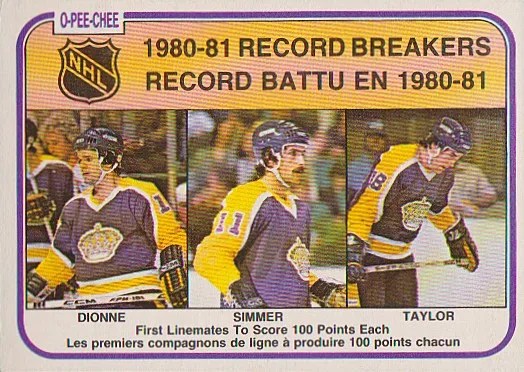
Line: One of the most prolific lines in NHL history was the Triple Crown Line, comprised of Dave Taylor, Charlie Simmer and Marcel Dionne. The trio played together from 1979 to 1984, with the 1980-81 season being their most successful, as the unit combined for 328 points. They became the first line in NHL history with each player recording a 100-plus point season.

Captain: Dustin Brown played his entire 18-season career with the Kings, after being drafted 13th overall by the team in 2003. Brown was named captain in of the Kings in 2008 and held the mantle for both of their Stanley Cup championships. In 2016, the captaincy was passed to Anze Kopitar. In April 2022, Brown announced plans to retire following the playoffs and was named captain for his final regular season contest. He was honoured with a statue outside Crypto.com Arena on the night of his jersey retirement.

Enforcer: When Wayne Gretzky was traded to the Kings, he requested Marty McSorley be part of the deal, ensuring he had someone to watch his back coming along with him to Los Angeles. McSorley knew his role well, piling up a franchise single-season record 399 penalty minutes in 1992-93. McSorley also holds the Kings all-time penalty minute record with 1,846 over two stints with the club.

Family Values: From 1996 to 1998, brothers Jan and Roman Vopat were members of the Kings organization together. Similarly, brothers Mario and Adrian Kempe were both signed with the Kings in 2019, although Mario only played 16 games in the minors, before having his contract mutually terminated, while Adrian has been an NHL mainstay since 2017-18.

triple-crown-line

Returning Players: Luc Robitaille had three stints with the Kings. Drafted by the team in 1984, he spent the first decade of his career with the franchise. After stints with the Pittsburgh Penguins and New York Rangers, Robitaille returned to Los Angeles for four more seasons. Robitaille would then move to the Detroit Red Wings for two years, before retiring with the Kings in 2006, wearing the captain’s ‘C’ in his final game.

Short Stint: Jarome Iginla wrapped up his celebrated career with a 19-game stint with the Kings, after being traded to Los Angeles on March 1, 2017. Although he produced six goals and three assists in those contests, Iginla was not re-signed following the season. He announced his retirement on July 30, 2018. The run with the Kings allowed him a final appearance against the Calgary Flames, allowing fans to cheer for the former face of the franchise one more time.

Undrafted: Steve Duchesne was signed by the Kings in October 1984, debuting for the team for the 1986-87 season, where he would be named to the NHL All-Rookie Team. Duchesne played five seasons with Los Angeles, before bouncing around the league for a number of years. He played another 60 games with the Kings in 1998-99. Duchesne’s final three campaigns were spent with the Detroit Red Wings, where he would retire after winning the 2002 Stanley Cup.

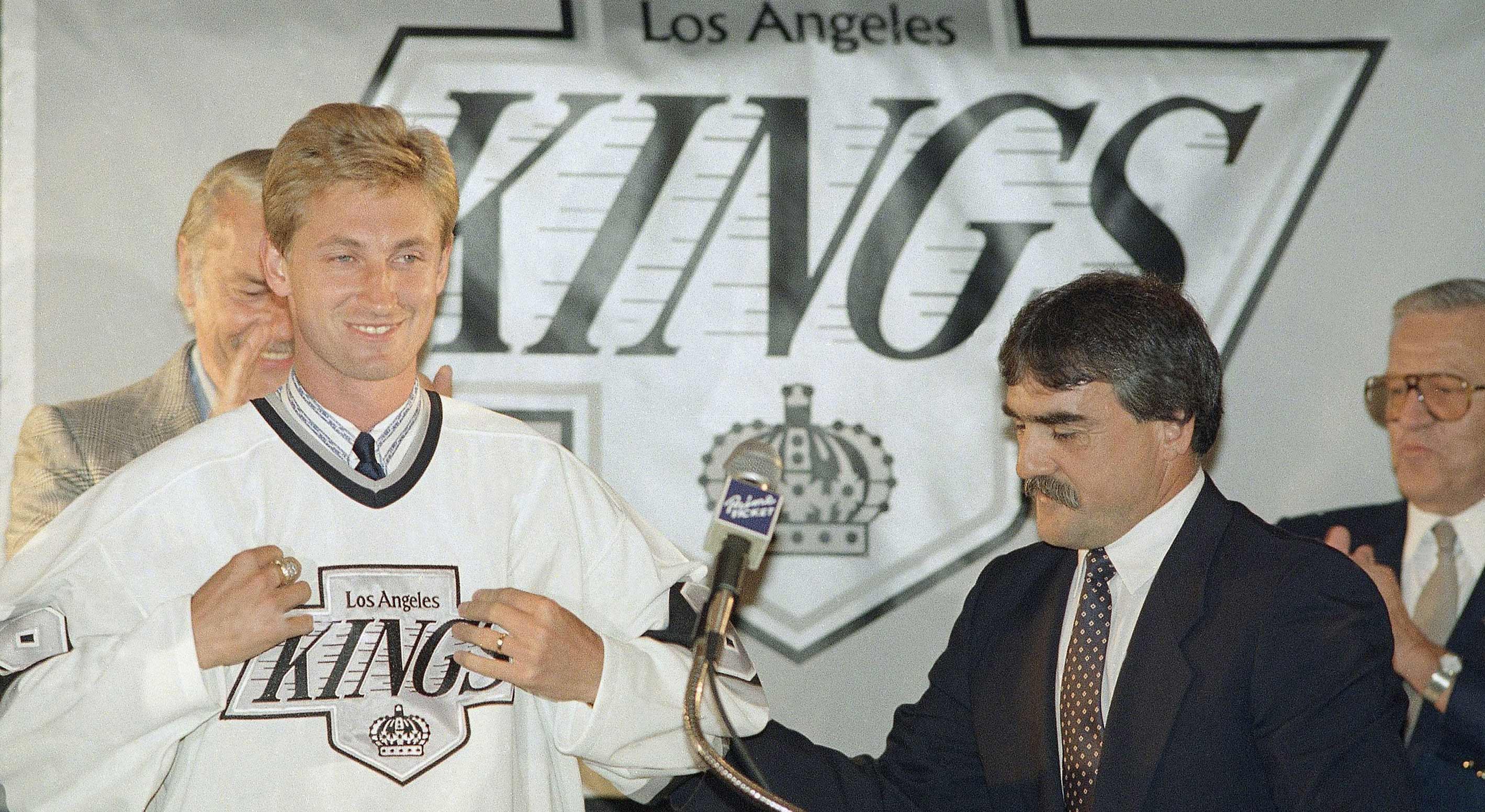
Trade: Well, the deal that brought Wayne Gretzky to Los Angeles not only shook the NHL’s foundation, it also changed the entire North American sports landscape. So, I think that has to go here. Gretzky was acquired, along with Marty McSorley and Mike Krushelnyski, in exchange for Jimmy Carson, Martin Gelinas, $15 million and three first-round draft picks. The deal is cited as the reason the NHL was able to expand into much of the U.S. over the next decade.

Gretzky Trade

Signing: The Kings best free agent signing was Willie Mitchell, who they landed in 2010. Mitchell’s rugged defensive play greatly helped Los Angeles on their road to both the 2012 and 2014 Stanley Cups. Among the team’s worst signings were Simon Gagne and Ilya Kovalchuk. Gagne was signed to a two-year, $7 million deal, but only managed to appear in 45 games over those two seasons. Kovalchuk returned from Russia to join the Kings, before a messy contract termination in the second season of his three-year pact.

Draft Pick: The Kings have only selected first overall once in franchise history, when they picked Rick Pagnutti in 1967. Pagnutti never played in the NHL. The team has done well with the second overall pick, selecting Jimmy Carson (1986), Drew Doughty (2008) and Quinton Byfield (2020). Carson was used as part of the package to bring Wayne Gretzky to Los Angeles, while Doughty was a leader for the team’s two Stanley Cup championships. Byfield comes to the Kings as a highly-touted prospect.

Holdouts: Speaking of Drew Doughty, prior to the 2011-12 season, the star defenseman needed a new contract. A sticking point in the negotiations was the team not wanting to pay Doughty more than Anze Kopitar’s $6.8 million per year. With the regular season fast approaching – Doughty missed most of the Kings pre-season – the sides finally settled on an eight-year, $56 million deal ($7 million per year), going on to win the 2012 Stanley Cup.

Buyouts: After two seasons with the Kings, defenseman Dion Phaneuf was bought out of the final two seasons of his seven-year, $49 million contract, signed with the Toronto Maple Leafs on December 31, 2013. The buyout was split between Los Angeles and the Ottawa Senators, who had retained 25 per cent of Phaneuf’s salary, when they traded him to Los Angeles. The Kings paid Phaneuf $4.25 million over four years.

Drew Doughty

Unique Game: On September 27, 1991, the NHL staged an outdoor pre-season game in Las Vegas, Nevada. The contest took place between the Kings and the New York Rangers, played on a rink constructed on the parking lot of the Caesars Palace resort. This was the NHL’s first outdoor game and it saw the Kings win 5-2. Temperatures reached as high as 95 °F (35 °C). A rematch between the teams was scheduled for two days later in Charlotte, North Carolina, but was cancelled due to unsafe ice conditions.

Goal: A number of Wayne Gretzky goals remain highlights for the franchise. These include breaking Gordie Howe’s all-time points (1989 – assisting on a Bernie Nicholls marker) and all-time goals (1994) records. There’s also Alec Martinez’s double overtime winner, clinching the 2014 Stanley Cup for the Kings and Daryl Evans OT tally, completing the 1982 Miracle on Manchester triumph, the largest comeback victory in NHL playoff history.

Fight/Brawl: During Game 2 of the Kings 1981 playoffs series against the New York Rangers, a bench-clearing brawl broke out at the end of the first period. The resulting chaos included players not dressed for the game getting involved, such as Nick Fotiu of the Rangers coming down from the stands in a suit to join the fray. Fotiu wasn’t in the lineup because he was serving an eight-game suspension for previously going into the stands to fight fans. The Kings won the game, but the Rangers won the series.

Injury: Tony Granato’s career was almost ended in January 1996, when following a game against the Hartford Whalers, bleeding was discovered on his brain. It did mark the end of Granato’s time with the Kings, but the winger was able to return with the San Jose Sharks the following season. Sadly, head injuries did prematurely end the career of Adam Deadmarsh during the 2002-03 campaign.

Caesars Palace Game

Penalty: During Game 2 of the 1993 Stanley Cup Finals, the Kings were up 2-1 in the game and 1-0 in the series. All was going well until Montreal Canadiens coach Jacques Demers asked for a check of Marty McSorley’s stick. McSorely’s stick had an illegal curve and he was given a minor penalty. Montreal scored the tying goal on that power play and won the game in overtime, going on to win Game 3-5 and clinch the Stanley Cup.

Wildest Story: The Kings went through some serious turmoil in the mid 1990s, when owner Bruce McNall was levied with conspiracy and fraud charges after he swindled six banks of $236 million over 10 years. McNall was sentenced to 70 months in prison, with the Kings ultimately forced to declare bankruptcy in 1995. In the end, you can’t the guy too much, given he was partly responsible for bringing the movie Weekend at Bernie’s to the world as a producer.

Blooper: Although Jonathan Quick is arguably the greatest goalie the Kings have ever had, we all make mistakes. On October 7, 2013, against the New York Rangers, Quick came out of his net to play a puck dumped in from his own zone by Ryan McDonagh of the Rangers. As Quick lost his stick, the puck ricocheted off his blocker and into the net, making for an easy goal. Quick was understandably upset at the gaffe, which became the insurance tally in a Rangers 3-1 win.

Miscellaneous: In September, the Kings will take part in the first ever NHL games to take place in the Southern Hemisphere, when they play two pre-season contests against the Arizona Coyotes in Melbourne, Australia, as part of the 2023 NHL Global Series. Los Angeles has also played international games – mostly exhibition matches – in Austria, the United Kingdom, Germany, Sweden, and China.

Los Angeles Kings: The Kings Ice

The Kings Ice

  • Rim glass with Sugar
  • Sage Leaves
  • 1.5 oz Vodka
  • 0.5 oz Elderflower Liqueur
  • Splash of Lime Juice
  • Dash of Simple Syrup
  • Garnish with a Sage Leaf

This cocktail comes from the Tipsy Diaries blog. I haven’t worked a whole lot with sage as an ingredient, but I liked the earthiness it brought to this cocktail. The drink can be served either on the rocks or martini style.

Florida Panthers – Florida Panther

Throughout the year, the Sip Advisor will alphabetically travel the National Hockey League (NHL), discovering the best and worst each team has to offer in a variety of subjects. We will also feature a drink based off the franchise. Today, we make our way to the Sunshine State to learn about the Florida Panthers and their ratty history:

Establishment Story: The Panthers joined the NHL as an expansion team in 1993, along with the Mighty Ducks of Anaheim. The franchise’s original owner was Wayne Huizenga of Blockbuster Video, who also founded Major League Baseball’s Florida Marlins and owned a share of the National Football League’s Miami Dolphins. Panthers was chosen as the team’s nickname because the big cat is an endangered species of the Florida Everglades area.

Stanley Cups: The Panthers have no Stanley Cups to their name. Twice in their history, they have made Cinderella runs to the Stanley Cup Finals, only to be swept by the Colorado Avalanche in 1996 and defeated in five games by the Vegas Golden Knights in 2023. Florida won their first Presidents’ Trophy in 2022, given to the team who finishes the regular season with the best overall record.

Celebrity Fan: Musician Ariana Grande has been a fan of the Panthers since childhood, when she attended games with her father. Grande even sang the U.S. National Anthem prior to a Florida game when she was only eight years old. Apparently, Grande was twice hit with pucks at Panthers games as a kid. She was also photographed by a newspaper riding the Zamboni at a game when she was five.

Ariana Grande

Super Fan: Matt Fagan, known as x-Superfan on Twitter, has been a Panthers supporter since the earliest days of the franchise and a season ticket holder since 2000, where he can be easily recognized by the red cape he wears to games. When the team is on the road, he watches from his viewing room, dubbed the Panther Den. Fagan was named the Panthers first 7th Man honouree in 2003.

Mascot: The Panthers have a rare pair of costumed crowd pleasers with Stanley C. Panther and Viktor E. Rat. Stanley C. is named as a reference to the Stanley Cup and debuted with the rest of the team in 1993. Victor E. is a play on the word victory, with the rodent joining the franchise in 2014. While the two mascots differ on most subjects, one thing they agree on is their affection for the movie Slapshot.

Tradition: Prior to the Panthers opening game of the 1995-96 season, a rat scurried across the team’s dressing room, before it was killed by forward Scott Mellanby. That night, Mellanby scored two goals in a winning effort. Goalie John Vanbiesbrouck called the performance a Rat Trick, playing off the hat trick hockey feat. That season, the team’s run to the Stanley Cup Finals featured thousands of toy rats rained onto the ice after each goal.

Appearances in Media: It ain’t much, but in the 2010 film Tooth Fairy, starring Dwayne ‘The Rock’ Johnson, the Panthers are the opposing team when Johnson’s character finally makes the NHL as a member of the Los Angeles Kings. Not only that, but Johnson scores a goal against the Panthers. Other than that, I can’t find any other popular culture appearances for the franchise.

Panthers Mascots

Events/Scandals: While the Chicago Blackhawks sex assault scandal was emerging in 2021, Joel Quenneville was coach of the Panthers. He was the coach of the Blackhawks at the time of the 2010 assault and was cited as being vocal about keeping the incident quiet. Quenneville, who had led the Panthers to a perfect 7-0-0 record to start the season, was forced to resign from his post and has remained outside the NHL since.

Rivalry: The Battle of Florida, between the Panthers and Tampa Bay Lightning, has always existed, but it’s heated up in the last couple seasons, as the Lightning made three straight Stanley Cup Finals from 2020-2022, winning two championships in that time, while the Panthers have risen to the top of the league and become top contenders. At times, the team that wins the season series has received a trophy with varying names.

Tragedy: The 2018 mass school shooting in Parkland, Florida didn’t directly affect members of the Panthers, but it shook the entire community. Members of the organization lived in Parkland and the team’s practice facility is located nearby. At the Panthers next home contest, a pre-game memorial was held for the 17 victims, capped by goalie Roberto Luongo delivering an emotional speech.

Player Nicknames: When center Noel Acciari joined the Panthers for the 2019-20 season, he was dismayed to learn there were no cookies offered as part of the team’s pre-game meal catering. The nickname ‘Cookie’ was then bestowed upon him by teammate Keith Yandle. Acciari got in on the new moniker, dressing as the Cookie Monster for the team’s Halloween party, while his wife went as a cookie.

Panthers Season

Line: One of the Panthers greatest lines in franchise history was dubbed the Russian Line. The unit saw Canadian Ray Whitney (who had been nicknamed Ray Whitney-ov during his time playing with Igor Larionov and Sergei Makarov with the San Jose Sharks) along with Russians Viktor Kozlov and Pavel Bure. The trio was formed for the 1999-2000 campaign, with each player enjoying their best offensive outputs with the Panthers. Bure even earned a Hart Trophy nomination for his season.

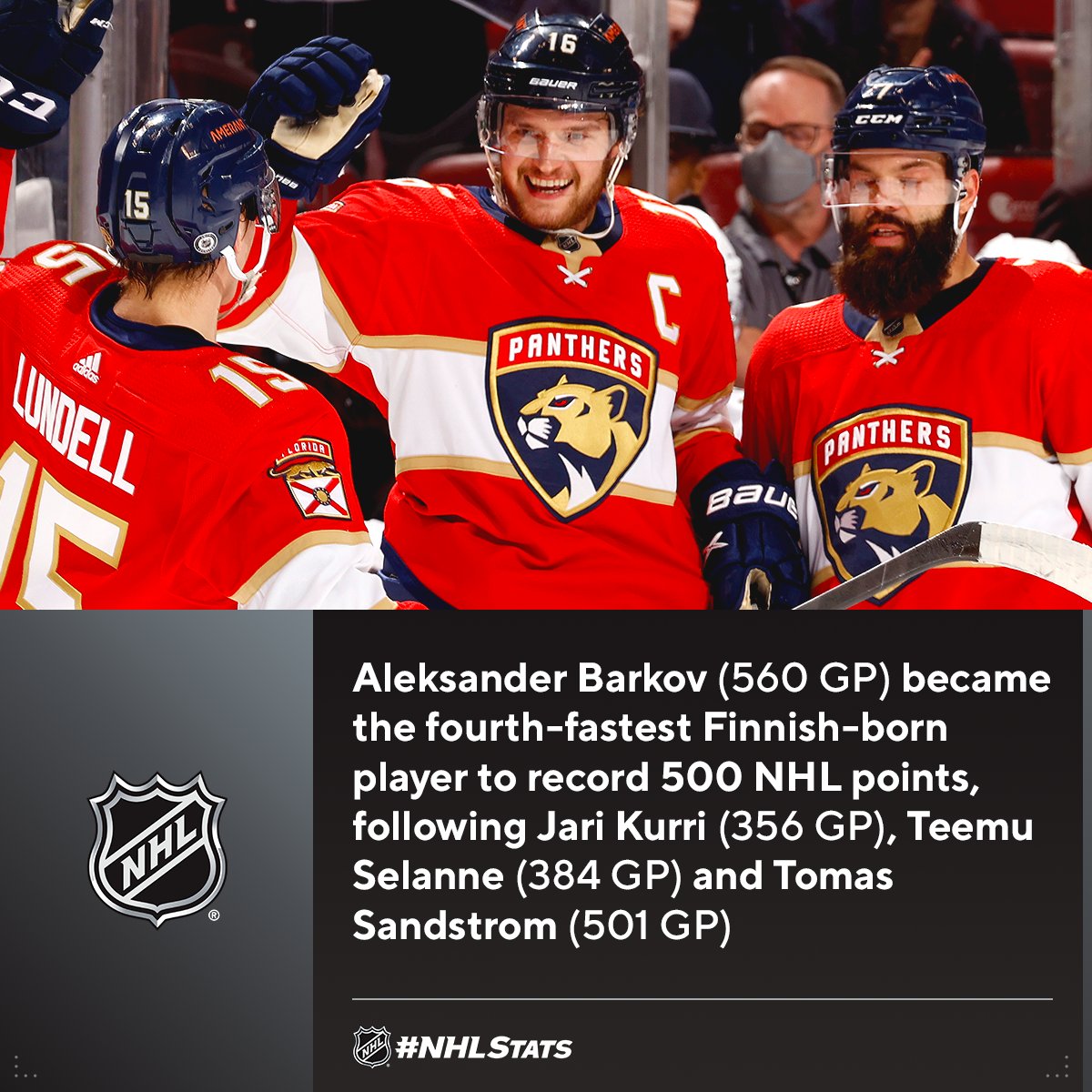
Captain: Aleksander Barkov was named captain of the Panthers prior to the 2018-19 season, leading them through the most successful stretch in the franchise’s history. The Panthers have made the playoffs in four of Barkov’s five campaign’s at the helm and won their only Presidents’ Trophy during his reign. Barkov is signed to the Panthers through the 2029-30 season, so he should lead the club for some time to come.

Enforcer: Paul Laus came to Florida in the 1993 Expansion Draft, making his NHL debut that season. Laus would play the rest of his career with the Panthers, racking up a franchise record 1,702 penalty minutes. The cult favourite even co-captained the team for a season. In 1996-97, Laus set an NHL record with 39 fighting majors in 77 games. He was also the last original member of the Panthers, before retiring in 2002.

Family Values: For what would be Pavel Bure’s final season (2001-02) with the Panthers, the team brought in his younger brother Valeri. Unfortunately, both siblings suffered various injuries, limiting how much they got to play together. During the same season, brothers Jeff and Brad Norton also played parts of the year with the Panthers. For the 2022-23 campaign, brothers Eric and Marc Staal played for Florida.

Aleksander Barkov

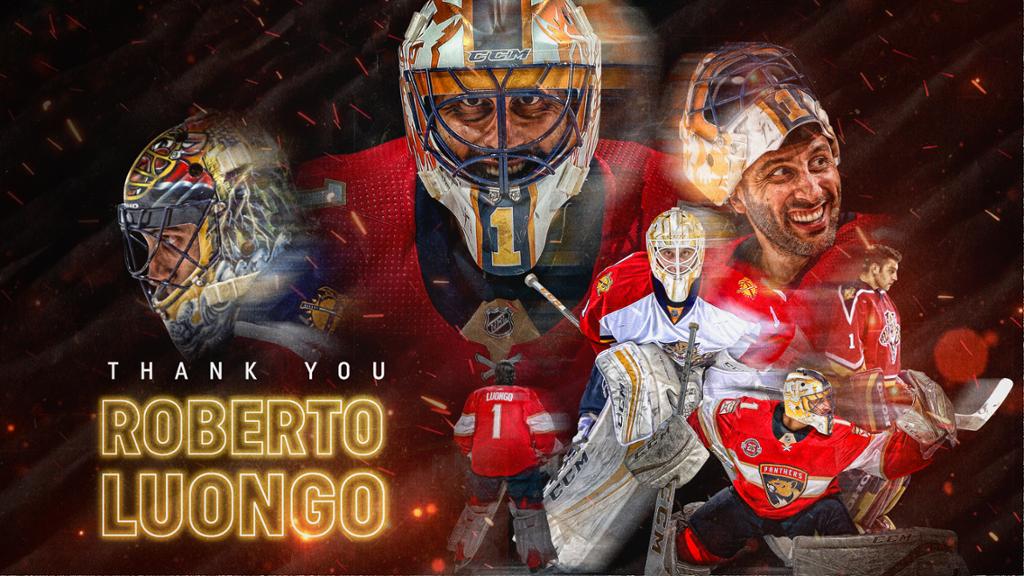
Returning Players: Perhaps the greatest player in franchise history, Roberto Luongo returned to the Panthers after his stint with the Vancouver Canucks. Luongo first joined the Panthers in 2000-01, a mere 24 games into his NHL career. He would play the next five seasons with the team, growing into one of the best goalies in the league. Luongo would return at the 2014 trade deadline, before retiring as a member of the Panthers in 2019.

Short Stint: Two of the three pieces dealt to Florida from Vancouver, in exchange for Roberto Luongo, lasted only one season with the team. Todd Bertuzzi played a mere seven games with the Panthers, following surgery on a herniated disc, before being dealt to the Detroit Red Wings at the 2007 trade deadline. Meanwhile, Alex Auld was supposed to replace Luongo as Florida’s starting goalie, but lost the job to Ed Belfour and left the club following 27 games.

Undrafted: Defenseman Dan Boyle signed with the Panthers in March 1998, following four years of college hockey. After working his way through Florida’s developmental system, Boyle was traded to the Tampa Bay Lightning, where he would be a key component of their 2004 Stanley Cup championship. Boyle finished his career with 1,093 games played and an Olympic gold medal with Canada in 2010.

Trade: The best and worst trades in Panthers history all revolve around goaltender Roberto Luongo. Both times the team icon was brought to Florida (2000 and 2014) are among the best swaps the organization ever made, while his 2006 exit from the Panthers did little to improve the team’s fortunes. Other notable deals include the acquisition of franchise players such as Pavel Bure and Matthew Tkachuk.

Roberto Luongo

Signing: The Panthers 2023 Stanley Cup Finals run did much to repair goalie Sergei Bobrovsky’s popularity in Florida, but prior to this, the seven-year, $70 million contract he signed in 2019 was much derided, as the highest paid active NHL netminder had lost the top job to other goalies. Another bad signing was Dave Bolland at $27.5 million over five years. Bolland played two injury-plagued seasons before being forced to retire.

Draft Pick: Over a four-year span, the Panthers built a team core that propelled them to their early 2020s success, selecting Jonathan Huberdeau (3rd overall in 2011), Aleksander Barkov (2nd overall in 2013) and Aaron Ekblad (1st overall in 2014). Another first overall pick for the franchise was Ed Jovanovski in 1994. Jovanovski would later be used as part of the package to bring Pavel Bure to Florida, returning to the franchise for the final three seasons of his career.

Holdouts: Upon being acquired from the Calgary Flames in the 2001 off-season, Valeri Bure was in need of a new contract. He was coming off a season of 27 goals and 55 points and had tallied career highs of 35 goals and 75 points the year before that. The team and player couldn’t agree on a new deal, causing Bure to sit out the start of Florida’s training camp, before finally signing a pact.

Buyouts: The biggest buyout in Panthers history was the $4.96 million payment to Keith Yandle, to get out of the final two seasons of the seven-year, $44.45 deal he signed with the team in 2016. Yandle was chasing the NHL iron man record at the time of his release, only 42 games behind Doug Jarvis, who had held the streak record since 1986. Yandle signed with the Philadelphia Flyers for the 2021-22 campaign, passing Jarvis on January 25, 2022, and retiring at the end of that season.

Bobrovsky

Unique Game: On September 23, 2006, the NHL presented a pre-season game in San Juan, Puerto Rico. The contest – the first ever NHL tilt played in the Caribbean – pitted the Panthers against the New York Rangers, with the Rangers winning 3-2. Tickets to the game sold poorly, with only about 5,000 people (many of them children bused in from housing projects to fill seats) turning out to the 18,500-seat Jose Miguel Agrelot Coliseum.

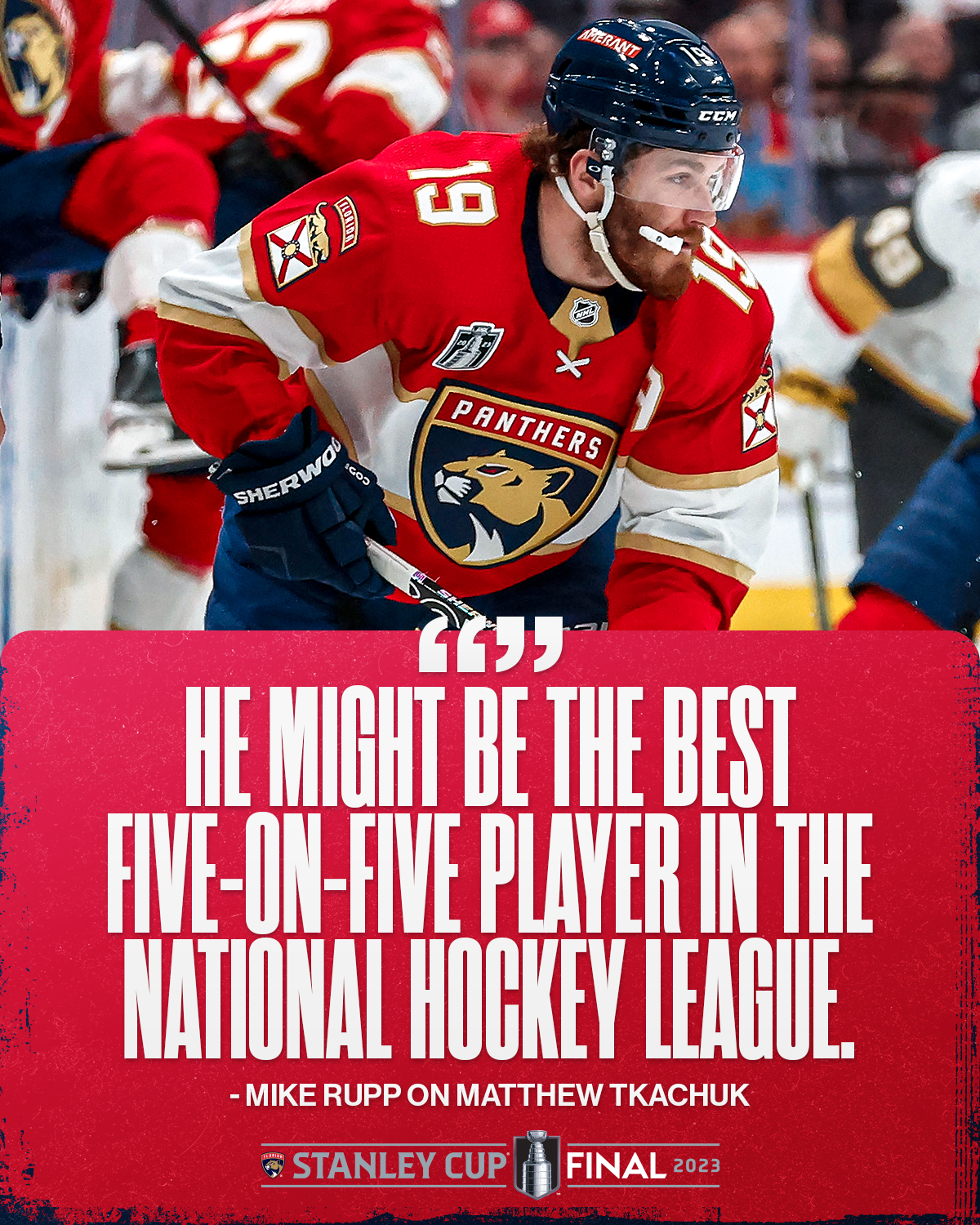
Goal: Matthew Tkachuk scored a number of clutch goals during the Panthers 2023 playoff run. Perhaps most notable was his winner in Game 1 of the Eastern Conference Finals, in the fourth overtime period, the sixth longest game in NHL history. Tkachuk would also score the winning goal in Game 4 of that series with mere second remaining in regulation, sending Florida to the finals.

Fight/Brawl: With fighting increasingly disappearing from the NHL, it was a throwback of sorts to see Alex Petrovic of the Panthers and Evander Kane of the Buffalo Sabres battle three times during one February 2016 game. The combatants dropped the gloves twice in the second period and once more in the third. Following that final tilt, both players were ejected from the game, which Florida won 7-4.

Injury: On February 10, 2008, Panthers captain Olli Jokinen lost his balance behind the Buffalo Sabres net. This resulted in his skate coming up and cutting the common carotid artery of teammate Richard Zednik. Zednik quickly left the ice and was treated by paramedics and the Sabres team doctor, before being transported to hospital. Zednik missed the rest of the season recovering, but returned for the following campaign.

Matthew Tkachuk

Penalty: The Rat Trick tradition has stood the test of time, still being utilized by Panthers fans to this day. However, when fans celebrated the 20th anniversary of the event in 2016, littering the ice with rubber rats when the home team scored, Florida was twice assessed delay of game penalties. The Panthers still managed to win the contest 3-2, but players were frustrated that fan behaviour could cost them.

Wildest Story: The Panthers have endured a fair bit of dysfunction during their 30-year history. Imagine how much crazier things would have been if Donald Trump were the team’s owner. This almost happened in the late 1990s, when Wayne Huizenga looked to sell the franchise and the Trump Organization made inquiries. In the end, team president Bill Torrey was tasked with finding local ownership for any deal.

Blooper: After being scored on during a November 2009 game, defenseman Keith Ballard looked to take his frustration out on the goal post. Except when Ballard swung his stick, he accidentally hit his own goalie Tomas Vokoun in the head instead. Vokoun had to be taken off the ice on a stretcher and a cut on his ear required stitches to repair. Ballard apologized profusely and Vokoun later laughed off the incident.

Miscellaneous: Disgraced actor Kevin Spacey was once associated with the Panthers. During the 2015-16 season, the MVP of the game for Florida was given a hoodie that featured Spacey’s head floating in space. The team also sold the shirts at home games, donating the proceeds to charity. Spacey acknowledged the tradition and appeared at a game donning the hoodie. This all took place before Spacey was accused of sexual misconduct in October 2017.

Florida Panthers: Florida Panther

Florida Panther

  • 1 oz Tequila
  • 1 oz Orange Vodka
  • 1 oz Melon Liqueur
  • Top with Lemon-Lime Soda
  • Dash of Grenadine
  • Garnish with a Maraschino Cherry

While this cocktail is more for the animal than the hockey team, I thought I’d give it a try. Another cocktail that caught my eye was the Rumberto. Named after Roberto Luongo, the drink is a basic rum and cola recipe, which was served at all FLA Live Arena bars for Luongo’s jersey retirement in March 2020.

Sip Trips #222: Goin’ to the Lodge

May flew by quickly, highlighted by our first ever expedition to the Great Wolf Lodge in Grand Mound (Centralia), Washington. Aside from that, there was much adventure enjoyed by all. Let’s see how it all unfolded:

The month began with me meeting Mrs. Sip and the kids after work in Port Coquitlam. There, we had dinner at Patina Brewing, where I combined the Fries N’ More Pile (with Pulled Pork) with pints of the brewery’s Hazy Pale Ale and Amber Lager. The barbecue at Patina is some of the best I’ve come across locally and Mrs. Sip and I continually return for the meats.

A few days later, it was Cinco de Mayo. Mrs. Sip and I were granted a date night by Ma and Pa Sip, so made quite the evening of it. First, we ventured to Port Moody’s Brewer’s Row, drawn by a social media post by Parkside Brewing. While I was hoping to try the Paloma Ale Cask they advertised, apparently the beer presented more as a Lime Margarita Ale Cask, so was renamed. While there, we did have a decadent Churro Donut and split some delicious tacos (Braised Beef with Jalapeno Cheese Crust and Korean Pork from the Taps & Tacos food truck.

Lucha Libre

Up next, was our first visit to Rewind Brewing, where I loved the 80s/90s theming. To drink, I had the Scantron Saison (a collab between Rewind and Brassneck), while Mrs. Sip compiled a flight, consisting of the Leg Warmers Hot Cocoa Ale, The Dark Crystal Dark Ale, Hammer Time Hazy Pale Ale and Rainbow Road Passionfruit-Guava-Pomegranate Fruit Ale/Sour. The flight was served on a cafeteria tray, which I thought was a neat touch. Our last stop on the Row was Rocky Point Spirits, where Mrs. Sip ordered a Horchata Hootch and I went with a Margarita.

With a buzz going, it was time to head to our main event (literally!), as we travelled to Downtown Vancouver’s infamous Commodore Ballroom for a Nation Extreme Wrestling show. Tickets were $47.75 each, with lucha libre matches and a mariachi band advertised. The venue also offered tacos and quesadillas, along with Mexican beers. To pair with my tacos, I had a Stanley Park Trail Hopper IPA, followed later in the show by a Mexican Mule cocktail.

Later in the month, Mrs. Sip and I had another date night, taking advantage of the opportunity to see Guardians of the Galaxy Vol. 3 at the Cineplex VIP Theatre in Coquitlam. Arriving as the previews started, I quickly ordered a Whiskey Business (whiskey, blackberry syrup, basil, lime, ginger ale), which was tasty. Following the movie, we went for a late dinner at the nearby Cactus Club, where I selected the Chicken Tenders and an Ugly Wheat Ale.

Chicken Tenders

The next night, we were back at it, this time with the kids in tow. Following the Jurassic Quest event at the Vancouver Convention Centre – which we would never do again, by the way – we took the kids to White Spot for eats. I paired the Legendary Burger (with Caesar Salad) with a Granville Island Beachcomber Hefeweizen, while revelling in the Toronto Maple Leafs defeat and elimination from the NHL playoffs.

For the May long weekend, we packed up our swim trunks and our flippy floppies, crossing the border en route to the Great Wolf Lodge. On the way, we stopped for dinner at Red Lobster in Olympia, Washington. Although I was tempted to order some lobster, the Sesame-Soy Salmon Bowl caught my attention thanks to the combo of ingredients included in it, such as edamame beans and crispy Brussels sprouts, not to mention the delicious sauces. I completed the meal with a Blue Moon beer.

To stock up our room for the weekend, we bought the White Claw Bring the Wave Variety Pack (Citrus Yuzu Smash, Tropical Pomelo Smash, Watermelon Lime Smach, Wildberry Acai Smash), a four-pack of Cutwater Tiki Rum Mai Tai ready-to-enjoy cocktail and a bottle of Bacardi Spiced Rum.

Clawserole

Our entire family, kids and adults alike, enjoyed the stay at Great Wolf Lodge. While the resort is definitely geared towards youngsters, Mrs. Sip and I felt there was enough for adults to join in on, not to mention we felt comfortable walking around the place with drinks in hand. To set up our crew with the visit, Mrs. Sip purchased the Sip & Savor Pass, which provided the following:

  • 1 appetizer at Lodge Wood Fired Grill
  • 2 rounds of Howl at the Moon Mini Golf
  • 1 Wine Down or Northwest Brews Package
  • $20 Arcade Card at Northwest Lights Arcade
  • Choice of 2 Mimosas or Bloody Mary drinks at Loose Moose
  • 2 Tiki Souvenir Sippers at Grizzly Rob’s

For our meal at Lodge Wood Fired Grill, we used our free appy on 12 Jumbo Wings, selecting a mix of Korean and BBQ Dry Rub. We also ordered a plate of Potato Chip Nachos. For beverages, I enjoyed the Gold Rush (Jameson Whiskey, honey, lemon, pineapple, Angostura bitters, ginger beer), while Mrs. Sip had a Lodge Mojito (Light Rum, coconut water, mint, lime juice, club soda). I liked that the Kid’s Meals included all three side options, giving picky kids lots of choice.

Great Wolf Lodge

We also had one lunch at the nearby Burger Claim restaurant. I had an Original Burger with Fries, paired with a bottle of Elysian Space Dust IPA.

After checking out, we drove the short distance to Talking Cedar Brewing, which also houses Heritage Distilling. We ate at the facility’s restaurant, with my feast including a Cellar Door Wheat Ale with Jordanian Sage Tea and Fried Chicken Sandwich. As we were leaving, we bought a bottle of Cocoa Bomb Chocolate Whiskey to bring home.

One last stop on the drive home was Rail Hop’n Brewing in Auburn. As Boy Sip could watch the many trains that pass the location, Mrs. Sip and I were able to enjoy pints of their Firebox Jalapeno Amber and Strawberry Patch Cream Ale. The jovial owner and brewer also offered us samples of other wares, including his Jalapeno Blonde.

Chug Life

The next day, we took visiting friends to Steel & Oak Brewing, where I tried the Yuzu Guava Pale Ale (collab with Fieldhouse). Mrs. Sip went with the Gin & Spruce cocktail, as she was back to her keto diet. We also took our friends to Frankie G’s Pub for a quick bite to eat, before they flew out that night. For eats, I had the Pulled Pork Sandwich, paired with a pint of Four Winds La Maison Tropical Ale.

That wrapped the month of May for the Sip Family. June is already fully booked, with excursions to Whistler, Sechelt and the Okanagan on the calendar. There’s also celebrations such as birthdays (young and old) and Father’s Day to be mindful of!

Edmonton Oilers – The 99

Throughout the year, the Sip Advisor will alphabetically travel the National Hockey League (NHL), discovering the best and worst each team has to offer in a variety of subjects. We will also feature a drink based off the franchise. Today, we travel to the City of Champions, to examine the Edmonton Oilers and see if that title still applies:

Establishment Story: The franchise began playing in the World Hockey Association (WHA) in 1972 as the Alberta Oilers. Previous attempts to bring an NHL team to Edmonton had failed, so a WHA team was sought. The following season, the name was changed to Edmonton Oilers. With the NHL-WHA merger in 1979, the Oilers used Wayne Gretzky’s personal services contract with owner Peter Pocklington to force the NHL into allowing Edmonton into the NHL.

Stanley Cups: The Oilers won their five Stanley Cups in a seven-year span (1984-1990), resulting in Edmonton being considered a dynasty. They also found themselves on the losing end of the Finals in 1983 and 2006. Following the Oilers victory in 1988, the team gathered on the ice for a group photo with Stanley Cup. This started the tradition of teams doing so after winning the big one.

Celebrity Fan: Despite being born in Calgary, comic book artist and creator, Todd McFarlane, is a huge a fan of the Oilers. So much so, that he once had an ownership stake in the team. He also created the club’s first ever third jersey, known amongst Oilers fans as the ‘McFarlane Jersey’. At one time, McFarlane’s company, McFarlane Toys, made a line of NHL action figures.

McFarlane Jersey

Super Fan: Ben Stelter gained the attention of fans across the NHL and even those who don’t follow hockey when he became associated with the team. Stelter, who was fighting a form of brain cancer, brought such good luck to the Oilers, they went on a 10-game undefeated streak when the six-year-old was in the building. Sadly, Stelter passed away in August 2022 and he was mourned across the league.

Mascot: Hunter is a Canadian lynx who was first introduced for the 2016-17 season. Named after William ‘Wild Bill’ Hunter, one of the original owners of the franchise, Hunter wears jersey number 72, in homage of the team’s first year of play. Hunter’s favourite songs are Cat Scratch Fever and The Good Ole Hockey Game, while his preferred movies are The Aritsocats and Slapshot.

Tradition: The Blue Mile (aka Copper Kilometre) first became the celebration area for Oilers fans following their upset of the Detroit Red Wings, en route to the team’s 2006 Stanley Cup Finals run. The strip, found along Whyte Avenue in the Old Strathcona District of Edmonton, became a place of concern following the arrest of at least 350 people during the 2006 playoffs. Edmonton Mayor Stephen Mandel even threatened to shutdown the Blue Mile if the violence continued.

Appearances in Media: The Oilers jersey has appeared on a few TV shows, including Everybody Hates Chris, Robot Chicken and The Simpsons (worn by noted Oilers celebrity supporter Kevin Smith). It should also be mentioned Wayne Gretzky, an avid soap opera fan, made a 1981 cameo appearance on The Young and the Restless as a mob member from “the Edmonton operation”.

Ben Stelter

Events/Scandals: The 1988 trade of Wayne Gretzky to the Los Angeles Kings was much more than a sports story. Even the Canadian government got involved in the fracas, while an effigy of owner Peter Pocklington was burned in public. Speaking of Pocklington, prior to selling the team in May 1998 to local investors, he threatened to move the franchise to places such as Hamilton and Minneapolis and almost sold to Houston Rockets owner Les Alexander, who planned to move the club to Houston, Texas.

Rivalry: Of course, there’s the Battle of Alberta with the Calgary Flames. This resulted in some of the greatest hockey of the 1980s, with one team playing in each Stanley Cup final from 1983 to 1990. The Oilers also had a long feud with the Los Angeles Kings, intensified after Wayne Gretzky was traded to L.A. The Oilers and Kings have met in the playoffs seven times. Another rival of the Oilers was the original Winnipeg Jets, dating back to the two teams’ WHA history.

Tragedy: On April 6, 2020, as the NHL season was paused because of the COVID-19 pandemic, Oilers center Colby Cave became ill. A brain bleed was later discovered and operated on, while Cave was placed into a medically-induced coma. Sadly, Cave never came out of the coma and died on April 11. In response, the Oilers created the Colby Cave Memorial Fund, which runs a number of programs to help the community.

Player Nicknames: Wayne Gretzky has long been known as ‘The Great One’. According to Gretzky, the moniker has stuck with him since he was 10 years old. The name is fitting, as many believe Gretzky is the greatest to ever lace up a pair of skates. When Gretzky retired from hockey, he held an astonishing 61 NHL records. Gretzky continues to be a voice in the game, as a TV analyst.

Great One

Line: The Oilers have had some lethal two-player combos over the years, including Wayne Gretzky and Jari Kurri, Mark Messier and Glenn Anderson and Connor McDavid and Leon Draisaitl. Gretzky and Kurri found success with Mike Krushelnyski and Esa Tikkanen, Messier and Anderson with Matti Hagman and Ken Linesman, and McDavid and Draisaitl with Pat Maroon and Zack Kassian.

Captain: Connor McDavid is already the Oilers longest-tenured captain, despite being only eight seasons into his own career. For his sophomore year, in 2016, McDavid was named captain, becoming the youngest ever to wear the ‘C’ in NHL history. McDavid is the consensus best player in the game today, winning five Art Ross Trophies, two Hart Memorial Trophies, three Ted Lindsay Awards and one Rocket Richard Trophy. No wonder he’s been nicknamed McJesus.

Enforcer: When you have the greatest player of all-time in your lineup, you have to surround him with tough guys for protection. Dave Semenko, nicknamed ‘Cement Head’ for being able to take a ton of damage and not be fazed, was perfect in this role. Semenko was later replaced by Marty McSorely, who would leave the Oilers with Gretzky to continue watching his back in Los Angeles.

Family Values: A number of father-son duos have played for the Oilers during their respective careers. This includes Keith and Will Acton, Brian and Matt Benning, Kevin and Keegan Lowe, Frank and David Musil, Kent and Robert Nilsson, and Craig and Dillon Simpson. Of the duos listed, the Lowes have the greatest combined games played total with 1,039, although Keegan only accounts for two of those contests.

Dave Semenko

Returning Players: When Ryan Smyth was traded out of Edmonton at the 2007 trade deadline, following 12 season with the Oilers, a tearful, emotional press conference followed. After playing four seasons elsewhere, Smyth requested to be traded back to the Oilers and was granted his wish. After three more years with Edmonton, Smyth decided to hang up the skates, being named the Oilers captain for his final NHL game.

Short Stint: A number of important players have only lasted one season with the Oilers. First, Jimmy Carson, who was the main player piece returning to Edmonton in the Wayne Gretzky deal, grew disgruntled having to live up to Gretzky’s lofty standards and wanted to move on after a single campaign. Next, Chris Pronger was brought to the Oilers in a 2005 trade, leading the team to the 2006 Stanley Cup Final, but requested a trade out of Edmonton, following that lone season.

Undrafted: While I’d like to put Wayne Gretzky here, he was technically brought into professional hockey by the WHA’s Indianapolis Racers, playing only eight games for them at 17 years old, before being sold to the Oilers. Instead, we’ll go with Charlie Huddy, who was signed by Edmonton in 1979. He would go on to become one of only seven players to be part of all five Oilers Stanley Cup championship teams.

Trade: In the trade that changed the landscape of the entire NHL, the Oilers sent superstar Wayne Gretzky, along with Marty McSorley and Mike Krushelnyski, to the Los Angeles Kings for Jimmy Carson, Martin Gelinas, three first-round draft picks and $15 million. Gretzky’s move to the U.S. helped hockey grow immensely there. Following the deal, many now say “If Wayne Gretzky can be traded, anyone can be traded!”

Gretzky Trade

Signing: The summer of 2016 saw a number of awful contracts handed out and the Oilers were among the teams to fall into this trap, giving winger Milan Lucic a seven-year, $42 million deal. After three seasons of declining returns, Lucic was traded to Calgary for fellow bad contract recipient James Neal. Another questionable signing was the three-year, $13.5 million pact handed to goalie Mikko Koskinen from GM Peter Chiarelli, who would be fired just days later.

Draft Pick: The Oilers reeled in massive hauls in the 1979 and 1980 drafts, gathering the talent that, along with Wayne Gretzky, would lead them to a dynastic run. This included Kevin Lowe, Mark Messier and Glenn Anderson in 1979 and Paul Coffey, Jari Kurri and Andy Moog in 1980. They also had a string of first overall selections from 2010 to 2015, highlighted by generational talent Connor McDavid (2015), especially when paired with Leon Draisaitl (third overall in 2014).

Holdouts: A number of the 1980s dynasty members ended up staging holdouts for various reasons. In each case, the player was eventually dealt to another team, with defenseman Paul Coffey going to the Pittsburgh Penguins in 1987, goalie Andy Moog sent to the Boston Bruins in 1988, Mark Messier leaving for the New York Rangers in 1991, and Jari Kurri ending up with the Los Angeles King also in 1991.

Buyouts: The biggest buyout the Oilers have handed out was to James Neal. After coming to Edmonton in the previously mentioned trade for Milan Lucic, Neal played two seasons for the Oilers, before they pulled the plug on the failed experiment. The organization owed Neal $7.66 million spread over four years. Neal attempted to continue his career, joining the St. Louis Blues for 19 games in 2021-22, scoring twice.

Draft Picks

Unique Game: The first regular season outdoor NHL game took place with the 2003 Heritage Classic, when the Oilers faced the Montreal Canadiens. 57,167 fans braved freezing temperatures to watch the contest, which the Oilers lost 4-3. Edmonton also played the 2016 Heritage Classic versus the Winnipeg Jets, winning 3-0. The Oilers will play the 2023 Heritage Classic this October against the Calgary Flames.

Goal: When one of the greatest goal scorers of all-time wore your team’s jersey during the prime of his career, some of those tallies are going to be among the most memorable in franchise history. Among Wayne Gretzky’s many feats, perhaps one of the most notable was hitting the 50-goal plateau in only 39 games. To set the record for fastest to 50, Gretzky scored five times against the Philadelphia Flyers on December 30, 1981. He would finish that season with 92 goals, another record likely to never be broken.

Fight/Brawl: Speaking of The Great One, he certainly wasn’t a fighter, which made his December 1982 tilt with Neal Broten of the Minnesota North Stars notable. Gretzky only “fought” three times in his career, with this being the only bout that occurred during a televised game. It didn’t last very long, with Broten landing a few punches before the linesmen intervened. It should be noted, Gretzky dropped his gloves first.

Injury: The Oilers have had some scary incidents with skate cuts in recent times. First, in warm up for a January 2012 game, Taylor Hall slipped and teammate Corey Potter was forced to leap over him. Potter’s skate sliced Hall’s head, resulting in a nasty gash that needed 30 stitches to seal. Later, during a November 2022 game, Evander Kane had his wrist accidentally cut by an opponent’s skate, with emergency surgery needed to fix the wound.

Gretzky Fight

Penalty: The record for most combined penalties in a game belongs to the Oilers and Los Angeles Kings, who accumulated a total of 86 penalties (356 penalty minutes) during a February 28, 1990 contest. The penalties were split fairly evenly between the two clubs. Individually, Marty McSorley led the way with 37 penalty minutes, fighting three times during the match. If anyone cares – the players didn’t seem to! – the Kings won 4-2.

Wildest Story: The Oilers owe their NHL existence to the fact Wayne Gretzky was a member of the team for the NHL-WHA merger. But how did the 17-year-old prodigy became property of the franchise? The story goes, Indianapolis Racers owner Nelson Skalbania boarded a plane with Gretzky, with possible destinations including Edmonton or the Winnipeg Jets. When Jets owner Michael Gobuty declined a game of backgammon, with Gretzky/shares in the Jets at stake, the flight landed in Edmonton and the rest is history.

Blooper: The Oilers won the Stanley Cup in 1984, 1985, 1987 and 1988. What happened in 1986 to break up what could have been a five-year dynastic run? While trying to make a play from behind his own net, defenseman Steve Smith banked the puck off goalie Grant Fuhr for an own goal. The marker would end up being the deciding goal of Game 7 of the second round, sending the Calgary Flames to the Conference Final.

Miscellaneous: Joey Moss joined the Oilers locker room staff in the mid-1980s, at the suggestion of Wayne Gretzky, who was dating Moss’ sister at the time. Moss, born with Down syndrome, quickly impressed with his hard work, also joining the Canadian Football League’s Edmonton Eskimos. Sadly, Moss passed away in 2020, at the age of 57. In recent years, after home wins, La Bamba by Ritchie Valens (Moss’ favourite song) is played. Also, the Oilers outdoor playoff game viewing area is known as the Moss Pit.

Edmonton Oilers: The 99

The 99

  • 1 oz Whiskey
  • Splash of Lime Juice
  • Dash of Simple Syrup
  • Float of Red Wine

I found this drink on the Liquor Control Board of Ontario website and it uses Wayne Gretzky branded whiskey and wine. Another easy-to-make Oilers-themed beverage that caught my attention was the Orange Crush of vodka, orange juice and lemon-lime soda.

Detroit Red Wings – Detroit Red Wing

Throughout the year, the Sip Advisor will alphabetically travel the National Hockey League (NHL), discovering the best and worst each team has to offer in a variety of subjects. We will also feature a drink based off the franchise. Today, we cruise the Motor City and get a crash course on the Detroit Red Wings:

Establishment Story: One of the NHL’s Original Six franchises, the Red Wings were founded in 1926. The franchise began life as the Cougars (after buying players from the Victoria Cougars Western Hockey League team to begin operations), then Falcons, before finally settling on Red Wings in 1932. The change to Red Wings was initiated by new owner James Norris, who liked the ‘winged-wheel’ logo of the Montreal Amateur Athletic Association and thought it fit well with Detroit’s Motor City nickname.

Stanley Cups: The Red Wings have won 11 Stanley Cups, the most of any American NHL team. The team qualified for the playoffs for 25 straight seasons, from 1983-84 to 2015-16, one of the longest streaks in NHL history. They won four of their Stanley Cups during this run. The Red Wings success in the mid 1990s, led to the team registering the trademark Hockeytown for the city of Detroit.

Celebrity Fan: Musician Kid Rock has had a long association with the Red Wings. The Michigan native even wrote and recorded one of the team’s goal songs ‘Hey Hey Hockeytown’. Kid Rock has often appeared at games and celebrated Stanley Cup wins with the likes of Chris Chelios, along with being the act that opened Detroit’s Little Caesars Arena in 2017, with four consecutive concerts.

Kid Rock

Super Fan: Heather ‘Wing-Nut’ Petrie, who is recognizable for her red hair, hat, jacket, tutu, and car, attended every Detroit home game from December 23, 2014 until the pandemic. From Windsor, Ontario, which has a large pocket of Red Wings supporters, given its proximity to Detroit, Petrie was named Windsor’s biggest Red Wings fan in a 2019 radio contest and was a finalist in the 2021 Upper Deck My MVP contest.

Mascot: Al the Octopus isn’t your typical costumed mascot, but an inflatable one that is used to pump up the crowd as the Red Wings take the ice. The prop is then lifted to the arena’s rafters. Wearing jersey number 8, a reference to an octopi’s eight tentacles, Al is missing a tooth, completing the hockey player look. Detroit’s previous mascot was the Red Winger, appearing from 1982 to 1987.

Tradition: The Legend of the Octopus dates back to 1952, when fish market owner Peter Cusimano tossed one onto the Detroit ice, the octopi’s eight legs signifying the number of wins it took at that time to win the Stanley Cup. Former ice manager Al Sobotka is best associated with the present tradition, which included him swinging the octopi around after collecting it from the ice.

Appearances in Media: A number of characters in TV shows and films have donned a Red Wings jersey, long thought to be one of the best sweaters in all of sports. Cameron from Ferris Bueller’s Day Off, Joey from Full House and Dr. Cox from Scrubs each wore the famous winged-wheel kit. Even Homer Simpson has sported a Detroit jersey, with his wearing being a throwback to Ferris Bueller’s Day Off.

Al the Octopus

Events/Scandals: The seeds for the NHL Players’ Association were planted by long-time Red Wings star Ted Lindsay (along with Doug Harvey of the Montreal Canadiens). Due to their association with the union efforts, Lindsay and Harvey faced punishments of sorts, as both were traded away and dealt with threats from the league and team owners, along with strained relationships with teammates. A TV movie on the subject, titled Net Worth, was released in 1995.

Rivalry: As one of the oldest teams in the NHL, the Red Wings have made many enemies along the way. The list includes former division rival the Chicago Blackhawks, repeated playoff foes the Colorado Avalanche and Pittsburgh Penguins, and cross border adversaries the Toronto Maple Leafs. All of these rivalries have had their ebbs and flows over the years, particularly with the Red Wings current downturn.

Tragedy: Following a team party just six days after clinching the 1997 Stanley Cup, a limo transporting defenseman Vladimir Konstantinov crashed. Konstantinov suffered a brain injury and was in a coma for two months. The injuries forced Konstantinov’s retirement from hockey at only 30 years old and in the prime of his career. Making matters worse, the limo driver, who fell asleep, causing the accident, was driving on a suspended license for drunk driving.

Player Nicknames: When you’re called Mr. Hockey, as Red Wings icon Gordie Howe was, that means you’re synonymous with the sport. Howe had the moniker trademarked, along with Mrs. Hockey for his wife Colleen. Other nicknames given to Howe throughout his career include Mr. Everything, Mr. All-Star, The Great Gordie, The King of Hockey, The Legend, The Man, and Mr. Elbows.

Mr. Hockey

Line: The Red Wings not only had a famous line of forwards, they had a complete unit of players that were often iced together. Dubbed the Russian Five, the group consisted of Sergei Fedorov, Slava Kozlov, Igor Larionov, Vladimir Konstantinov, and Slava Fetisov. A later homage to the Russian Five was the Swedish Five, comprised of Nicklas Lidstrom, Niklas Kronwall, Henrik Zetterberg, Mikael Samuelsson, and Tomas Holmstrom.

Captain: Steve Yzerman was only 21 years old when he was named captain of the Red Wings in 1986. He would serve the team in that role for the rest of his career, retiring in 2006. Yzerman’s 19 seasons and 1,303 games as captain is the longest tenure in North American sports history. His mark on Detroit saw him once voted the most popular athlete in the city’s long and storied sports history.

Enforcer: Perhaps the greatest and most feared fighter in NHL history was Bob Probert. He patrolled the ice for the Red Wings for nine seasons and holds the franchise records for penalty minutes in a season and total penalty minutes. Probert’s main task was to protect stars like Steve Yzerman. When paired with fellow fighter Joey Kocur, the two were known as the Bruise Brothers.

Family Values: Frank ‘Big M’ and Pete ‘Little M’ Mahovlich played for the Red Wings from 1967 to 1969, while Frank was a superstar and Pete (Detroit’s 2nd overall draft pick in 1963) was breaking into the league. Similarly, Bryan and Dennis Hextall were teammates during part of the 1975-76 season. The Red Wings have also had a handful of father-son combos play for the team, most notably, Gordie and Mark Howe.

Russian Five

Returning Players: Legendary goalie Terry Sawchuk did three tours of duty with the Red Wings over his 21-season career. He was signed by Detroit in 1947, debuting in 1950. After a stint with the Boston Bruins, Sawchuk returned to the Red Wings in 1957. He was claimed by the Toronto Maple Leafs in the 1964 NHL Intra-League Draft, also suiting up for the expansion Los Angeles Kings, before playing a final 13 contests for Detroit in 1968-69. Sawchuk died in 1970, following one season with the New York Rangers.

Short Stint: Derian Hatcher had a curious stint with the Red Wings. Despite signing a five-year, $30 million contract with Detroit in 2003, Hatcher only played 15 games with the franchise. He was injured early in the 2003-04 season, with the following campaign wiped out by the NHL lockout. When teams prepared to return to action with the newly introduced salary cap, the remaining years of Hatcher’s contract were bought out.

Undrafted: When the Red Wings signed Adam Oates in 1985, they landed a future Hall of Fame member, even if he made a name for himself elsewhere. Oates chose Detroit over other offers, with his $1.1 million contract making him the highest paid rookie in the NHL in his debut campaign. The Red Wings traded Oates to the St. Louis Blues in 1989, in what is regarded as one of the worst trades in franchise history.

Trade: The acquisition of Brendan Shanahan in 1996 is a move that is often cited as one that pushed the Red Wings over the hump in the late 1990s, leading to three Stanley Cups in 1997, 1998 and 2002. Shanahan came to Detroit along with Brian Glynn, in exchange for Keith Primeau, Paul Coffey and a first-round draft pick. Shanahan played a total of nine seasons with the Red Wings, racking up 633 points in 716 games.

Brendan Shanahan

Signing: Looking to load up for another Stanley Cup run, in the 2001 off-season, the Red Wings signed two of the greatest goal scorers in league history, Brett Hull and Luc Robitaille, each to two-year pacts. Both players took less money from Detroit, in order to join a star-studded squad. They were rewarded with winning the 2002 Stanley Cup, where Hull led the NHL in playoff goals.

Draft Pick: The Red Wings greatest draft pick was taking Steve Yzerman fourth overall in 1983. The team can also be credited with one of the best draft classes ever in 1989, when they selected Nicklas Lidstrom (54th overall), Sergei Fedorov (74th overall) and Vladimir Konstantinov (221st overall). The Red Wings have also done very well finding diamonds in the rough, including Tomas Holmstrom (257th overall in 1994), Pavel Datsyuk (171st overall in 1998) and Henrik Zetterberg (210th overall in 1999).

Holdouts: Sergei Fedorov’s 1997-98 holdout would lead to the largest single season payment to an NHL player. The Carolina Hurricanes signed Fedorov to a $38 million offer sheet, which was matched by Detroit. Federov received a $14 million signing bonus, $2 million base salary and $12 million bonus for the Red Wings making the Conference Finals. A total of $28 million for 21 regular season games and 22 playoff contests, but Fedorov did lead Detroit in goals as they won their second consecutive Stanley Cup.

Buyouts: The Red Wings have twice bought out contracts with three years remaining on them. First, in 2015, they parted ways with Stephen Weiss, two seasons into a five-year deal. They owed him $10 million over the next six years. Later, in 2020, lifetime Red Wing Justin Abdelkader was released four years into a seven-year pact. He is being paid out $6.33 million, spread out until 2025-26.

Steve Yzerman

Unique Game: The first NHL games to take place outside North America occurred when the Red Wings and Montreal Canadiens toured Europe in 1938 for a nine-game exhibition series. The contests took place in London and Brighton, United Kingdom, as well as Paris, France. Detroit also played a 1954 game at Marquette Branch Prison, defeating the Marquette Prison Pirates 18-0 (they stopped keeping score after the first period). This was the first outdoor game ever for an NHL team.

Goal: When the Red Wings battled the star-loaded St. Louis Blues in the second round of the 1996 playoffs, the series went to a seventh game, taking until double overtime to finally be decided. The end came, when Steve Yzerman stole the puck – from Wayne Gretzky, no less – and ripped a slap shot past Blues goalie Jon Casey. Another famous tally was Darren McCarty’s 1997 Stanley Cup clincher versus the Philadelphia Flyers.

Fight/Brawl: Many tales exist about the legendary Gordie Howe. Among them, is his fight with Lou Fontinato, one of the most feared combatants of the era. The two players had feuded for some time, but on February 1, 1959, Howe cemented his status as a player not to be pushed around, pounding Fontinato’s face, resulting in a broken nose and dislocated jaw. The sound of the punches was described as like an axe chopping wood.

Injury: On November 21, 2005, during a game against the Nashville Predators, Red Wings defenseman Jiri Fischer went into cardiac arrest, collapsing on the bench. Fischer was unconscious for six minutes, needing CPR and a defibrillator to be revived. The contest became the first in NHL history postponed due to an injury. Fischer never played in the league again, moving into the role of Director of Player Development with Detroit.

Gordie-Lou

Penalty: On November 5, 1975, Dan Maloney came to the defense of teammate Bryan Hextall, after he was hit by Brian Glennie of the Toronto Maple Leafs. Maloney repeatedly punched and slammed Glennie to the ice, resulting in a concussion. In the aftermath, Maloney became the third player in NHL history to be charged with assault for an on-ice incident, although he was acquitted months later.

Wildest Story: In 1993, Kris Draper was acquired by the Red Wings for a whopping $1. To that point, Draper had only played 20 NHL games for the Winnipeg Jets, since being drafted in 1989. Draper would go onto become one of Detroit’s mainstays through the successful 1990s and 2000s, playing 1,137 games with the club and being a member of four Stanley Cup championship squads.

Blooper: Two playoff gaffes by goalie Chris Osgood are well-remembered by Red Wings fans. First, in 1994, the rookie netminder went to clear the puck late in the seventh game of their first round series versus the San Jose Sharks, only to play it to an opponent, who quickly scored the deciding goal. Next, in the 1998 Western Conference Finals, Jamie Langenbrunner of the Dallas Stars scored the game five overtime winner from center ice on Osgood. The Red Wings still went on to win the Stanley Cup that year.

Miscellaneous: In 1985, Petr Klima (drafted 86th overall in 1983 by Detroit) became the first player to defect from Czechoslovakia to a U.S.-based NHL team, with the help of Red Wings officials Jim Lites and Nick Polano. In his escape, Klima had to avoid police and request refugee status in the U.S. In honour of his successful move to North America, Klima wore jersey number 85 throughout his career.

Detroit Red Wings: Detroit Red Wing

Detroit Red Wing

  • 1.5 oz Cinnamon Schnapps
  • Top with Ginger Ale
  • Garnish with Maraschino Cherries

Another Red Wings cocktails combines Raspberry Vodka, Lemon-Lime Soda and Grenadine. The beverage I selected seemed to be the most popular option, with drinkers supposed to use Vernors Ginger Ale, a Detroit-area favourite soda, first served in 1866.

Dallas Stars – Dallas Stars Shot

Throughout the year, the Sip Advisor will alphabetically travel the National Hockey League (NHL), discovering the best and worst each team has to offer in a variety of subjects. We will also feature a drink based off the franchise. Today, we travel to Texas, where everything’s bigger, including the Dallas Stars:

Establishment Story: Dallas received an NHL team when the Minnesota Stars relocated there in 1993. The franchise kept the Stars nickname, as it seemed to fit with Texas (Lone Star State), just as much as it did with Minnesota, which was originally named the North Stars. Minnesota joined the NHL for the 1967 expansion, which doubled the league from six to 12 teams. In 1978, the North Stars and the Cleveland Barons (previously the California Golden Seals) merged, remaining in Minnesota.

Stanley Cups: Dallas has a lone Stanley Cup to its name, winning the big one in 1999, defeating the Buffalo Sabres. Unfortunately, the victory is largely remembered for its controversial ending (more on that later). The Stars have appeared in four other Stanley Cup Finals, losing to the New York Islanders in 1981, Pittsburgh Penguins in 1991, New Jersey Devils in 2000 and Tampa Bay Lightning in 2020.

Celebrity Fan: Actress/singer/model/reality TV personality Willa Ford took her fandom of the Stars to new heights when she married team legend Mike Modano in 2007. The couple were together for five years, before announcing their amicable split. While a couple, Ford and Modano were featured in an episode of MTV Cribs. Ford also wrote a blog for ESPN during the 2007 playoffs.

North Stars

Super Fan: Two supporters, for very different reasons, have gained the attention of Stars fans and media over the last couple years. First, um… curvy model (yeah, let’s go with that) Natalie Gauvreau gained viral popularity when she was spotted sitting behind the Dallas bench during the 2022 playoffs. On the other end of the spectrum, nine-year-old Max Hinojosa, who is unable to play hockey due to his battle with Myelomonocitic Leukemia, was signed to a two-day contract by the team.

Mascot: Victor E. Green is an out-of-this-world supporter of the Stars, with hockey stick antennas. The alien, from a galaxy far, far away, is named after the Dallas jersey colour of victory green. Victor is the first mascot in franchise history, debuting for the 2014-15 season. His favourite movies include E.T., Monsters Inc. and Wall-E, films I assume he watches with his documented roommate the Zamboni.

Tradition: Many of the Stars rituals are music-based. During the singing of the American national anthem, anytime the word ‘stars’ comes up, Dallas fans loudly shout the word. Next, the team takes the ice at the start of each game to Puck Off (aka Dallas Stars Fight Song) by Texas metal band Pantera. Finally, the club’s victory song is The House is Rockin’ by Texas musicians Stevie Ray Vaughan and Double Trouble.

Appearances in Media: With The Mighty Ducks being set in Minnesota, it made sense for some North Stars players to make cameo appearances in the film. Basil McRae and Mike Modano were selected to chat with the rag tag group of kids and coach Gordon Bombay, following their watching of a Minnesota practice. McRae and Modano were credited as North Star Player #1 and North Star Player #2, respectively.

VictorEGreen

Events/Scandals: In 1990, Minnesota owners George and Gordon Gund wished to relocate the franchise to the San Francisco Bay Area. This was denied by the NHL, with an expansion team offered to the Gunds instead. The result was a rare dispersal draft, with players being divided between the new San Jose Sharks and the North Stars, followed by an expansion draft with both clubs participating. Famously, Minnesota used their final selection on NHL legend Guy Lafleur, who had already decided to retire.

Rivalry: While the franchise was still located in Minnesota, the Stars had a long-standing feud with the Chicago Blackhawks. Another rival of the Stars is the St. Louis Blues. Both teams joined the NHL as part of the 1967 expansion and have shared the same division for much of their existences. The two clubs have met in the playoffs 14 times.

Tragedy: Tragedy struck early for the Minnesota/Dallas franchise. In the team’s first year of operating, center Bill Masterton was involved in a collision, falling backwards and hitting his head on the ice. He died two days later from a severe brain injury. Masterton is the only player in NHL history to die from injuries suffered in a game. The Bill Masterton Memorial Trophy is awarded annually to the NHL player who best displays perseverance, sportsmanship and dedication to the sport.

Player Nicknames: When Jamie Benn joined the Dallas Stars as a rookie for the 2009-10 campaign, he was given the nickname Chubbs by teammate James Neal. Instead of being upset about the comment on his playing weight, Benn embraced the moniker, even getting it written on his gloves, where his last name would typically go. Benn has played his entire 14-season career with Dallas, captaining the squad since 2013.

Jamie Benn

Line: A top line for the Stars during their time at the top of the league in the late 1990s and early 2000s was the trio of Mike Modano, Brett Hull, and Jere Lehtinen. Around the same time, The Grumpy Old Men unit of Kirk Muller, John MacLean and Mike Keane was very productive, despite being a combined 105 years old. More recently, the combo of Jamie Benn, Tyler Seguin and Alexander Radulov enjoyed success together.

Captain: Hard-hitting defenseman Derian Hatcher was captain of the Stars when they won the 1999 Stanley Cup, becoming the first American-born captain to lead his team to the championship. Hatcher wore the ‘C’ for Dallas from 1995 to 2003. Including his time with the franchise while it was located in Minnesota, Hatcher played 12 seasons for the Stars and was inducted into the United States Hockey Hall of Fame in 2010.

Enforcer: The pair of Basil McRae and Shane Churla were forces to be reckoned with, playing four seasons together. Over McCrae’s five seasons with Minnesota, he took over the records for both most penalty minutes in a season (378) and total (1,567) for the franchise. Churla suited up for eight seasons with Minnesota/Dallas and now holds the franchise record for total penalty minutes at 1,883.

Family Values: The Stars have had a number of brother combos play for the team at the same time. Most notably, three members of the Broten family, Neal, Aaron and Paul, suited up for the Stars, with Neal playing with both brothers at different times. Also, Kevin and Derian Hatcher patrolled the Dallas blueline from 1994 to 1996 together and Jamie and Jordie Benn were teammates from 2012 to 2017.

Basil McRae

Returning Players: Defenseman Darryl Sydor played three separate stints with the Stars. He first joined Dallas via trade in 1996, playing seven and a half seasons with the club. In the 2003 off-season, Sydor was traded to the Columbus Blue Jackets, before ending up with the Tampa Bay Lightning. He rejoined Dallas for the 2006-07 campaign and again in 2008-09, sandwiching time with the Pittsburgh Penguins.

Short Stint: Two trade deadline acquisitions should be noted here. Tim Thomas finished his career as a member of the Stars, playing eight games with the team in 2014, after coming over to serve as Dallas’ backup goalie. Another interesting tenure was that of Mats Zuccarello, who came to the Stars in 2019, but only played two games before being injured. He did return for 13 playoff contests, before signing with the Minnesota Wild in the off-season.

Undrafted: Dino Ciccarelli was signed by Minnesota in September 1979, joining the big league team in 1981. He would play the next eight seasons with the North Stars, filling nets with pucks, including two 50-goal seasons. Ciccarelli finished his tenure with Minnesota with 332 goals and 319 assists for 651 points, good for third all-time with the club. Ciccarelli was inducted into the Hockey Hall of Fame in 2010.

Trade: While they gave up a major asset in top prospect Jarome Iginla to get him, the acquisition of Joe Nieuwendyk would eventually lead to Stanley Cup glory for the Stars. Another deal that fortified the Stars lineup and reaped the rewards of a Stanley Cup, was bringing in defenseman Sergei Zubov, swapped for fellow rearguard Kevin Hatcher, prior to the 1996-97 season.

Dino Ciccarelli

Signing: Looking to take the next step in their pursuit of a Stanley Cup, in back-to-back off-seasons, the Stars signed players that would be crucial to their 1999 championship. First, on July 2, 1997, Dallas signed goaltender Ed Belfour to a three-year deal worth reportedly $10 million per season. Exactly one year later, the Stars brought in Brett Hull on another three-year $17 million pact.

Draft Pick: The Stars have selected first overall on three occasions. Those choices could perhaps be called the great, the good and the ugly, with Mike Modano (1988), Bobby Smith (1978) and Brian Lawton (1983), receiving the rankings, respectively. Although too recent to fully assess, the 2017 draft for Dallas looks like a grand slam, with the team picking Miro Heiskanen (3rd overall), Jake Oettinger (26th overall) and Jason Robertson (39th overall).

Holdouts: Coming out of the 2012-13 NHL lockout, Jamie Benn remained unsigned by the Stars. He would miss the first four games of the shortened season, before signing a five-year, $26.25 million deal with Dallas. This wasn’t the first time the franchise struggled to sign a top star, as in 1991, Neal Broten began the season playing in Germany, before returning to Minnesota.

Buyouts: Valeri Nichushkin was drafted 10th overall in 2013 by the Stars and joined the team in his draft season. When his entry-level contract expired, a new deal failed to come together and Nichushkin played two seasons in the Kontinental Hockey League. He finally returned to Dallas in 2018, but after failing to score a single goal in 57 games that season, the final year of his deal was bought out.

Ed Belfour

Unique Game: The Stars played the 2020 Winter Classic against the Nashville Predators at the infamous Cotton Bowl in Dallas. They won the game 4-2, in front of a crowd of 85,630 fans, the second highest attendance in NHL history. The Stars also participated in the 1977–78 tour of Czechoslovakia and Super Series; 1980 DN-Cup in Stockholm, Sweden; 1982-83 Super Series; 1985-86 Super Series, 1988-89 Super Series, 1989-90 Super Series; 1990 Friendship Tour across the USSR; and 1990-91 Super Series.

Goal: The only goal in franchise history that earned the Stars the coveted Stanley Cup has to take this category. Brett Hull’s third overtime tally in game six of the Stanley Cup Finals against the Buffalo Sabres came with the controversy of Hull having his foot in the crease, which had previously caused goals to be disallowed. Nevertheless, the score counted and made Hull a hero.

Fight/Brawl: On February 26, 1981, Minnesota and the Boston Bruins combined for 406 penalty minutes, setting an NHL record at the time. The first fight occurred just seven seconds into the game and the first period took one hour and 37 minutes to complete, with an NHL record 67 penalties (341 penalty minutes) added to the scoresheet. Following the contest, Minnesota and Boston coaches Glen Sonmor and Gerry Cheevers almost fought, as well.

Injury: Stars forward Rich Peverley’s scary cardiac incident during a March 10, 2014 game still haunts players and fans who experienced it. Peverley, 31 years old at the time, collapsed on the bench due to a previously diagnosed irregular heartbeat. His heart rate actually flatlined for two minutes, before he was revived by medical officials. Despite a complete recovery, Peverley never played another NHL game, moving into other roles with the organization.

Rich Peverley

Penalty: During a January 6, 1988 game against the Toronto Maple Leafs, North Stars forward Dino Ciccarelli attacked Maple Leafs rookie Luke Richardson with his stick. Ciccarelli was ejected from the game and suspended by the NHL for 10 days. His punishment didn’t stop there, though, as Ciccarelli was convicted of assault by a Toronto court and sentenced to one day in jail and a $1,000 fine.

Wildest Story: Sean Avery was one of the most controversial players in NHL history, bringing trouble with him wherever he went. That didn’t stop the Stars from signing him to a four-year, $15.5 million contract in 2008, although the experiment only lasted 23 games, before Avery was sent packing. The issue: Avery made derogatory remarks about other players dating his ex-girlfriends, earning him a six-game suspension and enrollment in a counselling program.

Blooper: During a January 4, 2007 game against the Edmonton Oilers, the Stars were up 5-4 with seconds remaining, when Patrik Stefan moved in on an empty net to seal the victory. Except Stefan lost control of the puck and the Oilers took it the other way, scoring to tie the contest. TV analyst Ray Ferraro said the incident was the most ridiculous thing he’d ever seen and that Stefan should be embarrassed.

Miscellaneous: One of the most curious trades in NHL history occurred on November 22, 1990, when Minnesota goalie Kari Takko was swapped with defenseman Bruce Bell of the Edmonton Oilers. The Takko Bell Trade, as it was dubbed, a play on the Taco Bell fast food chain, resulted in 11 games played by Takko with Edmonton and Bell playing out the rest of his career in the minor leagues and Europe.

Dallas Stars: Dallas Stars Shot

Dallas Stars Shot

  • 0.75 oz Melon Liqueur
  • 0.75 oz Goldschlager

You can substitute Green Crème de Menthe for the Melon Liqueur, if you desire. I like how the flakes in Goldschlager are supposed to resemble stars floating amongst the green liquor… until they all settle at the bottom, at least. I put the shooter in my cowboy boot shot glass to complete the presentation!