Sip Trips #226: Sip-Tember Celebrations

September is always a crazy time, filled with numerous birthdays and at least one getaway. This year, was no different. Here’s how it all played out:

The month began with a trip to Bellis Fair Mall in Bellingham, Washington, where we let the kids run wild at Playdate, as we took turns doing some shopping. Our drinks at the cafe included the Terramar Amber Ale and Stemma Hazy IPA. I still maintain there should be more places like this, where kids can play, while adults enjoy a beverage.

Following a friend’s wedding over the Labour Day long weekend, the Sip Family had lunch at Firecrust Pizza, a place Mrs. Sip had long wanted to check out. We ordered the California Club and Prosciutto Arugula pizzas, as well as a side of Mozza Bread for the kids. For dessert we all split two of their Epic Shakes in the Kit Krush and Candyland varieties. While I personally wouldn’t need to do the shakes again, I know the kids won’t allow that. My California Club pizza was delicious.
Pizza

More shopping occurred early in the month, as we geared up for birthdays and vacations. Following one trip, we had dinner at White Spot, where I had a Legendary Burger with Caesar Salad, paired with a Vancouver Island Beachcomber Hefeweizen. This has become my go to meal there over the summer and it’s quite satisfying.

As part of my 40th birthday celebrations, we hosted a Sip, Chip and Dip party, where guests were asked to bring their favourite sip, chip and go for a dip in Ma and Pa Sip’s pool, if weather permitted (and it did!). I was generously gifted a number of treats from family and friends, including many liquor bottles, beers and other items. The chip buffet went over very well and I hope to make this event an annual tradition on the social calendar!

The next day, after meeting with another family at the Museum of Surrey, we had a meal together at Hawthorne Beer Market. For drinks, I enjoyed the Twin Sails Could Crush Watermelon Wheat Ale and Bridge Get to the Choppa IPA, while Mrs. Sip and I shared the Nachos Callejeros. I hope to return to this restaurant in the future to try more items from their extensive menu.

Birthday

Later that week, prior to our performance of Little Shop of Horrors at The Stanley Theatre, we ate at the nearby Cactus Club. My dinner consisted of the Ugly Wheat Ale and Chicken Tenders and Fries, which was solid as usual.

For my actual birthday, we took the Sipplings for a game of bowling at Lucky 9 Lanes. This was followed by lunch at Monkey 9 Brewing, where I capitalized on the free birthday flight I was emailed, compiling the El Jefe Hefeweizen, Guava Loves Mango IPA, Chimp and Dales Hazy IPA and Mizaru Brown Ale. To eat, I had the Pork Belly Rice Bowl.

With the kids dropped off at Ma and Pa Sip’s place for a sleepover, Mrs. Sip and I attended the House of Comedy to see Josh Blue perform. My two item minimum was used on the Crispy Chicken Sandwich with Fries and a tall can of Steel & Oak Royal City Ale. The show was good, but there was a weird vibe with the crowd, with patrons constantly disrupting the show.

Stand Up

The next morning, we set off for our Vancouver to San Francisco cruise. This was the first time we ever bought the drink package aboard a ship, as it came with so many other perks (free internet, gratuities paid, premium desserts, etc.), it was really the best route to go. My mission for the voyage was to have 40 different cocktails and I finally finished the feat a few hours before we disembarked the ship. Some drinks, ordered through the Princess Cruises app, don’t even tell you what ingredients they include, but simply that they contain alcohol, so those were always a fun adventure!

Once off the cruise, we did a day excursion that ended with us all being dropped off at the airport. A highlight of this tour was the Sip Family walking across the famous Golden Gate Bridge, which took about 45 minutes to traverse. Lunch on this outing took place at the Ferry Building Marketplace, where we combined El Porteno Empanadas (Jamon, Champinion, Acelga) with a tall can of Bike Dog Dog Year’s IPA.

While the Sipplings, Ma and Pa Sip and Cousin Sip’s family all returned home, Mrs. Sip and I travelled to Las Vegas for the next leg of our 40th birthday vacation festivities. After checking into our awesome room at The Vdara (complete with kitchen amenities), we were off in search of a late night dinner. I wanted to go to Shake Shack, where I had a ShackBurger and shared some Bacon Cheddar Fries and Oreo Cookie Funnel Cake Shake with Mrs. Sip.
Vegas

The next morning, we continued to settle into Sin City, making our way to Gordon Ramsay Burger for lunch. I had a fantastic Stout Burger (complete with mushrooms and crispy onions), while we split a 32oz serving of Mother Earth Cali Creamin’ Vanilla Cream Ale. The Truffle Parmesan Fries here were also very good.

Our main event for the first full day in Vegas was visiting Lost Spirits Distillery. I had learned about this attraction prior to one of Mrs. Sip’s girl trips and given the awesome time they had, Mrs. Sip vowed to share the next experience there with me. We purchased the package that offered four rum tastings (20,000 Leagues Under the Sea [bought bottle at end of the night], Pineapple, Creme de Cerise and Navy Style), along with four cocktails between us. We really enjoyed the whole outing, constantly entertained by acrobats and dancers, while savouring our sips. We lucked out by deciding to go mid-week, as not only were ticket prices cheaper at $99 each, but attendance was around 200 people, compared to 500 folks on weekends.

During our walk on the night we arrived, the sign for Scottish brewery BrewDog caught my eye and we made a reservation for their outdoor patio. This is an element I love about the city, as you often go with some places planned out (old favourites and new destinations) and just walking around and having a keen eye can pad the rest of the stay. We hit BrewDog for their happy hour, which offered $10 cocktails, $7 beers and two-for-one appies. To eat, we shared the Wood-Fired Flatbread and Bang Bang Chicken, while each trying a beer (Crimson Amber Ale and Hazy Jane Guava NEIPA) and a cocktail (Whiskey Sour and Elvis Paloma [made with Elvis Juice IPA]). Combining the chicken and flatbread was into one bite was a great move on my part.

Happy Hour

From BrewDog, we walked down the strip to Fuel Bar, where we’ve enjoyed many drinks together. Using their 2-for-1 coupons, we ordered a pair of The Bizz (Dragonberry Rum, Coconut Puree, Cranberry Juice, Citrus Sour) and watched some of their flair bartending displays.

Continuing our journey, we ended up at The Venetian to inquire about their Atomic Saloon show. The guy running the ticket desk said he could get us into the next show at a discounted rate, so we made impromptu purchases of front row seats and 45 minutes later were encompassed by the chaos of the wild, Wild West show. Given our seats, we became part of the action, with three different characters using me as a prop, while we were pelted at times by dinner rolls, ping pong balls and even some sugar glass! For the performance, I ordered the Where There’s Smoke cocktail (Tequila, Chipotle, Peach, Cinnamon, Lime).

The next day, we targeted the Arts District for a brewery crawl. We began at Able Baker Brewing, which has a very cool theme. I drank a pint of the Ententanz Oktoberfest, while Mrs. Sip’s flight consisted of the Class A Detonator Doppelbock, Mango Calutron Girl Hefeweizen, Of Balloons & Unicorns Hazy IPA and Our-Cha-Tah Cream Ale. We also split some Pulled Pork Tacos, which were very tasty.
Brewery

Next up was Nevada Brew Labs, which was just a block from Able Baker. I had the Ariana Rye IPA, while Mrs. Sip put together another flight, this time having the Hefeweizen, Brulee Dunkelweizen, Oktoberfest and Blood Orange Hefe.

After that, we went next door to HUDL Brewing, where we combined our beers – Toasted Pecan Ale for me, High Hatter Hefe on Pineapple for Mrs. Sip – with some amazing Disco Fries (BBQ spiced fries with cheese sauce, pulled pork and giardiniera) from Soulbelly BBQ, which is also housed on the property.

Stop number four was SerVehZah, where I tried one of the bottle shop and tap room’s own brews, the Nueva Esperanza (Mexican Lager), complete with Tajin rim. Mrs. Sip got a taster of the Bad Beat Japanese Lager with Hibiscus. Our final visit of the crawl was Hop Nuts Brewing, where we split a Papa’s Red Ale, before returning to the Strip.

Tajin

Once back among the bright lights, we popped into Ocean One in the Miracle Mile Shops. This place offers much cheaper food than your typical Vegas locales, along with three-for-one cocktails at $12. To eat, I had a very good Honey Dijon Chicken Club (only $10!), to go along with a set of cocktails, including a Long Island Iced Tea, Tom Collins and Moscow Mule. Mrs. Sip got her own trio, which I helped her finish, so I was feeling pretty loose by the end of the night!

We began the next day going for a long walk to the Pinball Hall of Fame. Here, we enjoyed a number of the classic arcade games at 25-75 cents per play. We spent close to two hours here, with the only downsides being a number of games being out of order and there being no bar on site. Still, I would recommend this place to anyone interested in a respite from the Strip.

On our journey back, we got martinis at The Chocolate Bar in New York-New York. I went with the decadent Hershey’s Chocolate Caramel Martini, while Mrs. Sip had the equally yummy Reese’s Peanut Butter Cup Martini.

Pinball

For dinner that night, we returned to the Miracle Mile Shops and tried Flights, where most menu items are served in trio flights – food and drinks – and there is a fun overall travel theme. The featured drink flights change throughout the day, as some take off, while others land. Over our sitting, we had the Mule Flight (Moscow, Kentucky, Mexican) and Mojito Flight (Classic, Watermelon, Strawberry). For eats, we had the Mac N’ Cheese Flight (four-cheese, crispy bacon mac and cheese sticks, truffle) and Tacos Flight (steak, chicken, carnitas). The dessert cheesecake flight also looked good, but we were quite stuffed already.

The following day, Mrs. Sip wanted to have afternoon tea at Petrossian in The Bellagio. While there, I had a Franziskaner Weissbier and picked at some of the scones offered to Mrs. Sip.

Our late dinner that evening was at Vanderpump à Paris, where we were seated at the exact same table we had been at for the restaurant’s soft opening in March 2022. To drink, I had the Tickle Your Fancy cocktail (tequila, Cointreau, white peach, lime, pink peppercorns, orange bitters, firewater bitters), while we split the Truffle-Stuffed Vanderpump Baguette, Ratatouille Frites and Boeuf Wellington-Style Sliders. This was a delicious meal in a unique setting.

Appetizers

On our final day, we attended the Immersive Disney Animation exhibit, which we hope eventually makes its way to Vancouver, so we can take the Sipplings. The one-hour show, includes great art, music and special effects, to really make you feel part of the Disney world.

After a brief rest, we went to our dinner at Superfrico, stopping briefly into the Ski Lodge speakeasy that adjoins the restaurant. At Ski Lodge, we had a pair of cocktails in the Devil’s Dimples (mezcal, genepy, grapefruit, celery, agave) and Sticky Pajamas (vodka, lychee, grape, lemon, coconut honey) drinks. The theming of this hidden bar – somehow only the first true speakeasy the Sip Advisor has ever visited – is very cool and everyone seems to get into the spirit.

Our feast at Superfrico took on a whole new life when I pointed out to Mrs. Sip that there was a Chef’s Menu. For $149 each, we received a nine course meal, including gem salad, tuna, carpaccio, meatballs, scallops, butternut squash, chicken parm, Brussels sprouts, and cheesecake for dessert. Mrs. Sip got the wine and cocktail pairings (white, red, Poolboy, Espresso Martini), while I had a pair of beverages in the Make It Snap Pea (gin, snap pea, lime, aquavit, white miso) and emMa-ReNAe (bourbon, sherry, ginger, lemon, toasted coconut honey). We left the place feeling full and impressed by the spread.

Speakeasy

Before returning to our hotel, we hit one more speakeasy in Ghost Donkey, where I had a Smoked Corn & Coconut Manhattan. We tried to complete the Cosmopolitan speakeasy crawl, but The Barbershop was closed for a private party… or so that’s what they said!

Upon flying back to Bellingham, we went for a meal with the Sip Family at Buffalo Wild Wings. I liked my Southern Chicken Sandwich, paired with a Wild Herd Kolsch (brewed by Goose Island). Ma and Pa Sip, along with Boy and Girl Sip, also enjoyed their meals and we will be back in the future.

Well, that wraps an intensely busy September. October, by comparison, is looking much lighter, even as we dive into the school and kid activity calendar. There will also surely be many Halloween activities to keep us busy!

San Jose Sharks – Shark Bite

Throughout the year, the Sip Advisor will alphabetically travel the National Hockey League (NHL), discovering the best and worst each team has to offer in a variety of subjects. We will also feature a drink based off the franchise. Today, we visit the Bay Area and go swimming with the San Jose Sharks:

Establishment Story: The Sharks joined the NHL as an expansion team in 1991. The Gund family wished to return a team to the San Francisco Bay Area, having previously operated the California Golden Seals there. The Seals were relocated to Cleveland and later merged with the Minnesota North Stars, which the Gunds wanted to sell their share of. A Dispersal Draft was held to divvy up players between the Sharks and North Stars.

Stanley Cups: The Sharks have never won the Stanley Cup and have only made one Finals appearance, losing to the Pittsburgh Penguins in six games in 2016. This, despite long stretches of time being considered among the best teams in the league, reaching the Western Conference Finals on four other occasions. San Jose have qualified for the playoffs in 21 of the 31 seasons they have been an NHL franchise.

Celebrity Fan: The Sharks have a number of famous followers, including musician Neil Young, tech guru Steve Wozniak and members of the band Metallica. Young and Wozniak have been season ticket members for years, while Metallica – who have been based in San Francisco for much of their careers – have provided the team with their entrance song, Seek & Destroy, since 2013 and were honoured with Metallica Night in January 2015.

Sharks

Super Fan: Sam Tageson grew up a fan of the Sharks. On March 18, 2014, the then 18-year-old, who suffers from hypoplastic left heart syndrome, was signed to a one-day contract by the team. Tageson participated in the teams pre-game practice and hit the ice with them for their contest that night against the Florida Panthers. The night was immortalized with an Upper Deck rookie trading card of Tageson posing by the team’s shark entrance prop.

Mascot: S.J. Sharkie debuted a few months after the rest of the Sharks, in January 1992. He has been called ‘The Hardest Working Fish in Sports’, making 450 public appearances each year, including fundraisers, birthday parties, corporate events and even weddings. S.J. Sharkie was named the 2012 Most Awesome Mascot for the Cartoon Network’s Hall of Game Awards, becoming the first hockey mascot to win the honour.

Tradition: For home games, Sharks players enter through a menacing looking shark mouth, while Seek & Destroy by Metallica blasts throughout the arena. A former entrance song, Get Ready for This by 2 Unlimited, is the team’s current goal song. Another long-standing ritual for fans is to do a chomping gesture with their hands, particularly while the team is about to go on a power play, as the memorable theme track from the movie Jaws plays.

Appearances in Media: Due to his unique look and personality, during his time with the Sharks, defenseman Brent Burns appeared in two episodes of the TV series Vikings and was featured in commercials for Kit Kat Chunky chocolate bars and CCM Hockey equipment. Also, the character of Lester Averman wears a Sharks hoodie in The Mighty Ducks, years before San Jose and the Mighty Ducks of Anaheim would be rivals.

Tageson

Events/Scandals: Evander Kane was no stranger to controversy by the time he joined the Sharks in 2018, but things seemed to get worse during his San Jose tenure. Incidents included Kane being sued for unpaid gambling debts, Kane filing for bankruptcy, accusations from Kane’s estranged wife that the player bet on his own games, as well as assaulted her, and Kane using a fake COVID-19 vaccine card. In the end, the organization had enough and terminated his contract in January 2022.

Rivalry: The Sharks chief rival is the Los Angeles Kings, who they met in the playoffs four times between 2011 to 2016, with each club taking two series. The feud is not surprising, given rivalries between San Francisco Bay Area and Greater Los Angeles teams in other leagues (Giants-Dodgers [MLB], 49ers-Rams [NFL] and Earthquakes-Galaxy [MLS]) and the general Northern California vs. Southern California opposition.

Tragedy: Bryan Marchment, who had played parts of six seasons with the Sharks from 1998 to 2003, had moved into coaching and scouting roles with the team after retiring in 2006. On July 6, 2022, while attending the 2022 NHL Draft in Montreal in his scouting capacity, Marchment died suddenly. No cause of death was released. Sharks GM, Mike Grier, paid tribute to Marchment prior to the team’s first-round draft selection.

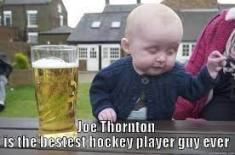
Player Nicknames: Long-time Sharks star Joe Thornton was given the nickname Jumbo, thanks both to his large stature and also because there is a statue of the famous circus elephant of the same name in Thornton’s hometown of St. Thomas, Ontario, where the elephant died after being hit by a train. Thornton gained another nickname, Big Joe, in contrast to teammate Joe Pavelski, who was dubbed Little Joe. Pavelski was also known for a time as The Big Pavelski, a reference to the film The Big Lebowski.

Evander Kane

Line: The Jumbo Heated Patty Line (also known as the Burger Line), consisted of Joe Thornton (Jumbo), Dany Heatley (Heated) and Patrick Marleau (Patty). When defensemen Dan Boyle (Boiled) and Marc-Edouard Vlasic (Pickles) were added to the mix, you had the Boiled Jumbo Heated Patty with Pickles Line. These players comprised the core of the Sharks roster for many seasons.

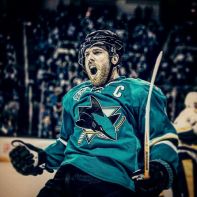
Captain: Doug Wilson was the first captain in Sharks franchise history, leading the team for two seasons (1991 to 1993), prior to retiring. Wilson would return to the organization as GM in 2003, serving in the role until stepping down in April 2022, due to health issues. The team’s current captain, Logan Couture, has held the position since the 2019-20 season. Couture was drafted by San Jose ninth overall in 2007.

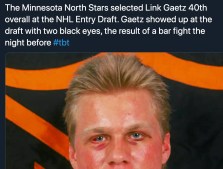
Enforcer: Although Link Gaetz only played 48 games with the Sharks, his NHL career ended by a car accident, he’s fondly remembered, in part because of his wild reputation and willingness to take on all combatants. Gaetz was nicknamed ‘The Missing Link’ and legend has it, he showed up to the 1988 draft with two black eyes from a bar fight the night before. In his brief Sharks tenure, Gaetz recorded 326 penalty minutes, a franchise single-season record.

Family Values: Cousins Scott and Joe Thornton played together with the Sharks for the 2005-06 season. Also, father and son, Ulf and Jonathan Dahlen, both enjoyed tenures with San Jose. Ulf played parts of four seasons (1994 to 1997) with the club, while Jonathan suited up for a single season (2021-22). Lastly, brothers Jamie and Tye McGinn had separate stints with the organization.

Link Gaetz

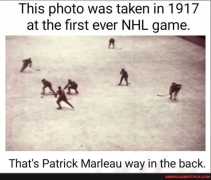
Returning Players: Patrick Marleau had three separate stints with the Sharks. The first began with him being drafted second overall in 1997 and lasted two decades. Following two seasons with the Toronto Maple Leafs, Marleau had his contract bought out and he returned to San Jose. Following a trade deadline deal to the Pittsburgh Penguins, Marleau returned again, allowing him to surpass Gordie Howe’s NHL games played record where it all began.

Short Stint: Hall of Fame goalie, Ed Belfour, was shockingly traded to the Sharks on January 25, 1997, when he refused to sign a contract extension with the Chicago Blackhawks. Belfour’s time with San Jose did not go well, winning only three games in 13 appearances. While with the Sharks, Belfour changed his number from 30 to 20, as a tribute to legendary netminder, Vladislav Tretiak, who was his coach with the Blackhawks.

Undrafted: Jeff Odgers was signed by the Sharks in 1990, joining the team for their inaugural 1991-92 season. Over his five years in San Jose, Odgers set the franchise record for all-time penalty minutes with 1,001, and holds the runner-up spot for penalty minutes in a season with 253. Odgers also served as Sharks captain for a season and a half. He finished his career with 821 games played, 75 goals, 70 assists and 2,364 penalty minutes.

Trade: The Sharks acquisition of Joe Thornton from the Boston Bruins early in the 2005-06 season is regarded as one of the most lopsided deals in NHL history. Thornton, a former first overall draft pick in 1997, was dealt for forwards Marco Sturm and Keith Primeau, as well as defenseman Brad Stuart. Thornton would go on to win the Art Ross (NHL regular season points leader) and Hart Memorial (NHL MVP) Trophies in his first season in teal and become a league superstar.

Patrick Marleau

Signing: In 2010, the Chicago Blackhawks loss, was the Sharks gain, as San Jose picked up the most recent Stanley Cup winning goalie (the first Finnish backstop to do so) on a relatively team-friendly deal. Antti Niemi had been rewarded $2.75 million by an arbiter, but Chicago was forced to walk away from the decision, due to their salary cap constraints. The Sharks swooped in and signed Niemi to a one-year, $2 million pact. He would go on to become San Jose’s netminder for the next five seasons.

Draft Pick: The Sharks have never drafted first overall, but have done well with the second choice, highlighted by selecting Patrick Marleau in 1997. The team also has a couple diamond in the rough picks that looked like steals later in Evgeni Nabokov (219th overall in 1994) and Joe Pavelski (205th overall in 2003). Time will tell how recent high draft picks, such as William Eklund (seventh overall in 2021) and Will Smith (fourth overall in 2023) turn out.

Holdouts: Goalie Evgeni Nabokov was one of the NHL’s best goalies going into the 2002-03 season and he wanted to be compensated as such. Five games into the season, after the Sharks managed to win only one contest, the team and Nabokov finally agreed on a new deal. One year prior, defenseman Mike Rathje sat out 24 games, before a four-year, $8.25 million contract brought him back into the fold.

Buyouts: In July 2017, the Sharks signed Martin Jones to a six-year, $34.5 million contract extension. Just three seasons into that deal, following a drop in performance (three straight .896 save percentages), Jones was bought out, owed $10 million over the next six years. Jones has bounced around the NHL since departing San Jose, playing for a different team in each subsequent season.

Joe Pavelski

Unique Game: The Sharks opened their 1998 season with a pair of games against the Calgary Flames in Tokyo, Japan. They also took part in the 2010 NHL Premiere with two contests against the Columbus Blue Jackets in Stockholm, Sweden, as well as back-to-back matches against the Nashville Predators in Prague, Czechia, for the 2022 NHL Global Series. A 2015 Stadium Series event featured San Jose against the Los Angeles Kings.

Goal: The Sharks have a history of upsetting favoured teams in playoff Game 7s, based on memorable goals. Underdog Sharks teams defeated both the Detroit Red Wings and Calgary Flames back-to-back in 1994 and 1995, with goals from Jamie Baker and Ray Whitney in double overtime, respectively. In 2000, Owen Nolan’s center ice slap shot tally helped to eliminate the St. Louis Blues. Also, goaltender Evgeni Nabokov became the first European backstop to score a goal, when he did so on March 10, 2002.

Fight/Brawl: The playoffs brings a whole new level of intensity to NHL hockey. A great example of that occurred during the first round of the 2009 post-season, when the Sharks battled their California rivals, the Anaheim Ducks. In Game 6 of the series, Joe Thornton fought Ryan Getzlaf, while later Joe Pavelski scrapped with Ryan Whitney. All four players were not known for their fisticuffs, but rose to the occasion at the most important time of the year. The Ducks would go on the win the series.

Injury: It’s not often that an injury leads to good. That was the case in the 2019 playoffs, when Joe Pavelski fell to the ice after being hit by Cody Eakin of the Vegas Golden Knights and suffered a head injury. Eakin received a five-minute major, during which San Jose scored four goals, to erase a 3-0 deficit. While Pavelski did not return to the contest, the Sharks would go on to win the deciding Game 7 in overtime.

Joe Thornton

Penalty: Raffi Torres had a long history of NHL discipline before his hit to the head of Anaheim Ducks forward Jakob Silfverberg during a 2015 pre-season contest. Torres was suspended for 41-games (half the season, which is the longest ban in NHL history for a hit and longest non-lifetime suspension in league history). Torres never played again in the NHL, being assigned to the Sharks minor league affiliate after serving his punishment.

Wildest Story: The Sharks once invested in a Chinese hockey team, agreeing to send five players and three coaches to China. Thus, the China Sharks briefly existed, lasting two seasons from 2007 to 2009 in Asia League Ice Hockey, before the NHL Sharks were done with the international experiment and pulled their funding. Perhaps the most notable occurrence of the team’s existence, was Claude Lemieux beginning his comeback attempt there with two contests, before suiting up for San Jose for 18 games.

Blooper: Blunders happen, but it’s not often they result in playoff elimination. Game 5 of the 2011 Western Conference Finals went to double overtime, with the Vancouver Canucks one win away from a Stanley Cup Finals berth. Suddenly, Canucks defenseman Kevin Bieksa was celebrating, while few others had any idea he had just scored the winning goal. Replays showed the puck had bounced off a glass stanchion, allowing Bieksa to shoot the puck on net, while others on the ice had lost sight of the biscuit.

Miscellaneous: A little more on how the Sharks team name was chosen, the moniker could have been Blades, based on the name winning a fan vote, but concerns about the term’s association with violence, led to Sharks being selected, as it was the runner-up amongst 5,000 submissions. It should be noted, the Sharks minor league affiliate from 1990 to 1996 was the Kansas City Blades.

San Jose Sharks: Shark Bite

Shark Bite

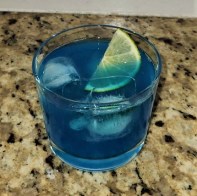
  • 0.75 oz Spiced Rum
  • 0.75 oz Light Rum
  • 0.5 oz Blue Curacao
  • Top with Lemon-Lime Soda
  • Drops of Grenadine
  • Garnish with Shark Gummies

I amalgamated a couple different Shark Bite recipes here. This was a fun drink that took a little more prep than your typical cocktail, but was totally worth it!
Pittsburgh Penguins – The Pittsburgh Penguin

Throughout the year, the Sip Advisor will alphabetically travel the National Hockey League (NHL), discovering the best and worst each team has to offer in a variety of subjects. We will also feature a drink based off the franchise. Today, we travel to the Steel City to get constructive with the Pittsburgh Penguins:

Establishment Story: The Penguins joined the NHL as it expanded from six to 12 teams in 1967. The original ownership group included some heavy hitters, including H.J. Heinz III, heir to the Heinz Company, and Pittsburgh Steelers owner Art Rooney. The name Penguins was chosen from a contest, where 700 of the 26,000 entries suggested the nickname. Previously, the Pittsburgh Pirates had played in the NHL from 1925 to 1930.

Stanley Cups: The Penguins have won five Stanley Cups, including two back-to-back sets in 1991/1992 and 2016/2017. They also brought home the league championship in 2009. Their only Stanley Cup Final loss came the year before, at the hands of the Detroit Red Wings, who they beat in the 2009 rematch. The Penguins five Stanley Cup victories ties them with the Edmonton Oilers for most among non-Original Six clubs.

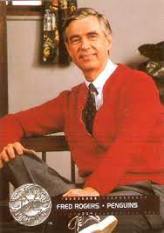
Celebrity Fan: Michael Keaton, star of movies such as Batman, Beetlejuice and The Founder, resides in Pittsburgh and is an avid supporter of the city’s teams. Keaton has appeared as a presenter at some of the NHL Awards ceremonies. Another unlikely Penguins fan was Fred Rogers, aka Mr. Rogers. Rogers appeared on a 1992 Pro Set hockey card as a Celebrity Captain of the club, donning his trademark sweater and sneakers.

Mr. Rogers

Super Fan: Cy Clark, nicknamed The Hulk for his Hulk Hogan-inspired look, was an avid Penguins fan, first gaining media attention during Pittsburgh’s 2009 Stanley Cup run. In October 2011, Clark was invited to Penguins practice by coach Dan Bylsma, an honour the fan truly cherished. Sadly, Clark passed away in June 2014, following a battle with cancer. Both the Penguins organization and former Philadelphia Flyers player Scott Hartnell, who had a good-natured feud with Clark, sent condolences.

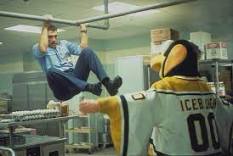
Mascot: The Penguins have had two mascots in their history. First, there was Penguin Pete, who was a real-life Humboldt penguin that was taught to skate on custom made skates. Pete only made seven appearances from February to November 1968, prior to dying. A second Penguin Pete, used in 1971-72, was nicknamed Re-Pete. In 1992, Iceburgh, a king penguin, debuted as mascot for the team, wearing jersey number 00.

Tradition: A pair of long-time Penguins employees became fixtures of Pittsburgh games for fans. First, Vince Lascheid was the Penguins organist from 1970-2003. He was inducted into the Penguins’ Hall of Fame in 2005, passing away in 2009 at the age of 85. Next, Jeff Jimerson has been the team’s national anthem singer for three decades, most notably being credited as ‘Anthem Singer’ in the movie Sudden Death.

Appearances in Media: The Penguins feature heavily in the Jean-Claude Van Damme action movie Sudden Death, as the film takes place during a fictional 1995 Stanley Cup Finals between Pittsburgh and the Chicago Blackhawks. When a group of terrorists invade a VIP suite with the U.S. Vice-President in it, Van Damme’s character has to come to the rescue, including some on-ice and around the arena fight scenes.

Sudden Death

Events/Scandals: Coming out of the 2004-05 NHL lockout, a formula had to be decided upon to see who would get to draft teenage phenom Sidney Crosby. The Penguins, who were battling financial issues and relocation rumours at the time, won the weighted lottery (dubbed the ‘Sidney Crosby Sweepstakes’) and the right to select the generational talent. Many view the event as having saved the franchise, as three Stanley Cups and a new arena have transpired during Crosby’s tenure.

Rivalry: The Penguins top rival is the Philadelphia Flyers, with their feud known as the Battle of Pennsylvania. Both teams joined the NHL as part of the ‘Next Six’ 1967 expansion and have met seven times in the playoffs. Pittsburgh has also had a long-running rivalry with the Washington Capitals, reignited by superstars Sidney Crosby and Alex Ovechkin, who entered the league at the same time, following the 2004-05 NHL lockout.

Tragedy: After a solid rookie season with the Penguins in 1969-70, Michel Briere returned home to Quebec, where he was to marry his long-time girlfriend and mother of his son. Sadly, Briere would be involved in a single-vehicle car accident, where he was thrown from the vehicle. Briere was placed in a coma, but passed away 11 months later at the age of 21. Even worse, the ambulance carrying Briere struck and killed a cyclist who was a friend of Briere.

Player Nicknames: The Penguins two franchise players have memorable nicknames. First, Mario Lemieux was dubbed Super Mario, a play on the Nintendo video game character, as both are able to achieve unbelievable acts. Next, Sidney Crosby has been known as Sid the Kid since he was, well, a kid, but the moniker has stuck even as Crosby plays the latter stages of his career.

Crosby and Ovechkin

Line: The combo of Mario Lemieux and Jaromir Jagr figured into two of the Penguins most dominant trios, with Kevin Stevens as the towering Sky Line and with Ron Francis as the unstoppable Great Line. Other notable units include the Century Line (Syl Apps Jr., Lowell MacDonald and Jean Pronovost), the HBK Line (Carl Hagelin, Nick Bonino and Phil Kessel) and the Option Line (John Cullen, Mark Recchi and Kevin Stevens).

Captain: It’s hard to give this category to one player, given how much Mario Lemieux and Sidney Crosby have each meant to the Penguins organization. Lemieux served three separate stints (1987-94, 1995-97 and 2001-06) as the team’s captain. The Lemieux era gave way to the Crosby era, as Crosby took over the captaincy in 2007, becoming the youngest captain in NHL history and, in 2009, the youngest captain to win a Stanley Cup. All five of the Penguins Stanley Cups have been won with one of these two at the helm.

Enforcer: Defenseman Paul Baxter holds the Penguins franchise record for penalty minutes in a season at 409. This mark is the runner up for the NHL single-season record. Baxter sits sixth on the team’s all-time penalty minute list, despite only playing three seasons with the club. Other notable brawlers for Pittsburgh include Georges Laraque, Eric Godard, Bob ‘Battleship’ Kelly, Dave Schultz, and Jay Caufield.

Family Values: Few know that Mario Lemieux’s brother Alain also played for the Penguins, with the two dressing for a single game together during the 1986-87 season. This would be Alain’s final NHL contest of 119 career games. Other brother combos had longer stints together in Pittsburgh, including Doug and Greg Brown in 1993-94 and twins Chris and Peter Ferraro in 1997-98.

Lemieux and Crosby

Returning Players: Mark Recchi had three stints with the Penguins. He began his NHL career with the team, drafted 67th overall in 1988. After winning the Stanley Cup with Pittsburgh in 1991, Recchi was used as a trade chip to bring Rick Tocchet and Kjell Samuelsson to the Penguins. He returned in 2005, only to be traded to the Carolina Hurricanes, where he would win a second Stanley Cup. Recchi’s final Pittsburgh run, in 2007, resulted in being a waiver claim by the Atlanta Thrashers.

Short Stint: As the Penguins have perennially pursued Stanley Cups, hoping to cash in on the Sidney Crosby era, a number of top players have joined the team for playoff runs, only to leave for other clubs following post-season elimination. This includes Jarome Iginla and Patrick Marleau, who suited up for Pittsburgh for 28 and 12 games (regular season and playoffs combined), respectively.

Undrafted: Although his career ended in great controversy, Marty McSorely enjoyed quite a professional run for an undrafted player. He was signed by the Penguins in 1982, debuting for the team in the 1983-84 season. McSorely was traded to the Edmonton Oilers in September 1985, becoming the bodyguard of Wayne Gretzky for most of the next decade. During his brief time with Pittsburgh, he recorded 239 penalty minutes in only 87 games. McSorely also played 47 contests for the Penguins in 1993-94.

Trade: The best and worst transactions in Penguins history were both trade deadline day deals. The best was bringing in Ron Francis, Ulf Samuelsson and Grant Jennings from the Hartford Whalers in 1991, which resulted in back-to-back Stanley Cups. The worst was sending Markus Naslund to the Vancouver Canucks in 1996 for Alex Stojanov. Stojanov played a mere 45 games for Pittsburgh, while Naslund became one of the NHL’s best player for a few seasons.

Penguins Trade

Signing: Among the best signings the Penguins ever made, were for depth players who were veteran leaders, helping the team finally get over the hump and win back-to-back Stanley Cups. For the 1991 and 1992 championships, this role was played by Bryan Trottier, who came to Pittsburgh after his contract was bought out by the New York Islanders. For the Penguins 2016 and 2017 titles, Matt Cullen provided a solid two-way game, while in the twilight of his career.

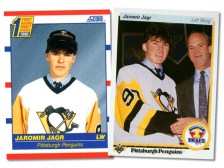
Draft Pick: The Penguins have done very well with the first overall pick, selecting generational talents Mario Lemieux (1984) and Sidney Crosby (2005). Pittsburgh has also done well with the number two choice, taking Evgeni Malkin (2004) and Jordan Staal (2006). Lastly, nabbing Jaromir Jagr at fifth overall in 1990 was a huge steal, perhaps based on Jagr telling teams drafting earlier than the Penguins that he would not leave Czechia immediately to play for them.

Holdouts: Petr Nedved is the only Penguins player to stage a contract holdout, when he sat out the entire 1997-98 season and the start of the following year. The holdout was ended when Nedved was traded to the New York Rangers. The move colossally backfired for Nedved, who earned less than he would have had he accepted Pittsburgh’s original offer in 1997.

Buyouts: The Penguins have only bought out one contract in their history. That distinction belongs to defenseman Jack Johnson, who had his five-year $16.25 million deal bought out with three seasons remaining. Johnson’s contract will count against the Penguins salary cap through the 2025-26 season. The buyout may have worked in Johnson’s favour, as two years after his Penguins dismissal, he won the Stanley Cup with the Colorado Avalanche.

Jaromir Jagr

Unique Game: The Penguins have participated in numerous Winter Classics (2008 vs. Buffalo Sabres, 2011 vs. Washington Capitals, 2023 vs. Boston Bruins) and Stadium Series (2014 vs. Chicago Blackhawks, 2017 and 2019 vs. Philadelphia Flyers) contests. Internationally, they opened their 2000-01 season with a pair of games against the Nashville Predators in Saitama, Japan, as well as taking part in the 2008 NHL Premiere, with two matches against the Ottawa Senators in Stockholm, Sweden.

Goal: One of the greatest feats in NHL history was Mario Lemieux scoring five goals in a game, in five different ways. On December 31, 1988, against the New Jersey Devils, he scored even-strength, power-play, short-handed, penalty shot, and empty net goals. Lemieux also recorded three assists that night, being involved in every goal of an 8-6 victory. In 2017, the achievement was voted the greatest moment in the NHL’s first 100 years.

Fight/Brawl: Things got real nasty on February 11, 2011, when the Penguins faced the New York Islanders. Their previous match saw two Islanders concussed and retribution was expected. As the game got out of hand (the final score was 9-3 for the Islanders), melees broke out everywhere, totalling 15 fighting majors and 21 game misconducts. The aftermath saw three players suspended and the Islanders fined $100,000.

Injury: On May 14, 1993, Penguins power forward Kevin Stevens went to hit New York Islanders defenseman Rich Pilon. The collision resulted in Stevens being knocked unconscious and falling face first onto the ice. Many of the bones in Stevens face were shattered and required metal plates to be reconstructed. Worst of all, the injury led Stevens to battle an addiction with prescription drugs that ended his marriage and affected the rest of his career.

Penguins Islanders Brawl

Penalty: Matt Cooke gained a reputation for delivering dangerous hits to the head of opponents during his Penguins tenure. Cooke was suspended four times for infractions, starting with a pair of two-game bans, followed by sitting out four games and 10 games plus the first round of the 2011 playoffs. His worst hit, practically ending the career of Marc Savard, wasn’t punished at all, but led to changes in NHL rules regarding blindside hits to the head.

Wildest Story: The Stanley Cup is the holy grail of hockey. After a summer of celebrating their 1991 championship victory, Penguins forward Phil Bourque noticed a rattling sound coming from within the trophy. When Bourque opened the Stanley Cup up to make repairs, he noticed others who had worked on it prior had inscribed their names inside. Bourque joined them, his message reading: “Enjoy it, Phil Bubba Bourque, ’91 Penguins.”

Blooper: As the Penguins pursued a wild card playoff spot for the 2023 post-season, they were coming up against the lowly Chicago Blackhawks with two important points in the standings up for grabs. Despite being heavy favourites, Pittsburgh lost the contest 5-2. This ended the Penguins 16-year playoff qualification streak (at the time the longest in major North American sports leagues) and opened the door for the Florida Panthers to go on their Cinderella run to the Stanley Cup Finals.

Miscellaneous: In 1993, Penguins owner Howard Baldwin invested in the HC CSKA Moscow team, hoping to gain better access to Russian players. The Russian Penguins played each of the 13 International Hockey League teams once during the 1993-94 season, only winning two games. Alumni from the club included goaltender Nikolai Khabibulin and forward Sergei Brylin. A 2019 documentary, titled Red Penguins, detailed the short history of the club.

Pittsburgh Penguins: The Pittsburgh Penguin

The Pittsburgh Penguin

  • 1.5 oz Kahlua
  • 1 oz Goldschlager
  • Splash of Cream of Coconut
  • Garnish with Coconut Shavings

The Cocktails with the Penguins blog had a number of options for me to use, but I went with this one, an adaptation of the Panda Bear drink. There’s also a Pittsburgh Penguins Martini out there, using white chocolate liqueur, Irish cream, vanilla vodka and chocolate syrup.

Sip Trips #225: Voracious Vegas

Well, August flew by, thanks to various travels and spending half the month trying to entertain Boy Sip as best as possible, while Mrs. Sip and Girl Sip were off the France. Let’s see how the Sip Advisor survived the spell:

Out one day in Langley, early in the month, Mrs. Sip and I were both in need of a washroom, so decided to drop into the nearest brewery. We ended up at Five Roads Brewing, where I ordered the Leprechaun Museum Irish Red Ale. We also split Tater Tot Poutine and Pork Al Pastor Tacos, with the poutine being particularly good.

In the middle of the month, the Sip Advisor enjoyed a Las Vegas bachelor party weekend. Our adventure began with lunch at Browns Socialhouse at the Bellingham Airport. Here, I paired a Widmer Hefeweizen with the delicious Sesame Ginger Gyoza appetizer. I loved the sauces accompanying the dumplings and now crave this dish. A round of tequila shots was also had, as a good start to the guys’ getaway.

Gyoza

After arriving and settling into our hotel, The Mirage, we walked over to Gilley’s at Treasure Island for some dinner. I had the Pulled Pork Sliders, while our crew shared a bucket of beers. Collectively, this wasn’t among our favourite stops of the weekend.

The next day, following hitting a gun range and prior to hopping into the resort’s pool, we had lunch at Diablo’s Cantina at The Mirage. I enjoyed my Southwest Chicken Caesar Salad, along with a massive 32 oz serving of Elysian Superfuzz Blood Orange Pale Ale. We also did some jello shots from an outlet across the way from the restaurant and I still don’t understand why these have ever gained any popularity.

For dinner that evening, we went to Best Friend at Park MGM. There, we had the Chef’s Menu ($69 per person), which featured items such as Kogi Tacos, Slippery Shrimp, Kimchi Fried Rice, Garlic Chicken, and others. I’ll be honest with you, I don’t remember many details about this meal (like which beverages I ordered) after a full day of drinking, but I’m sure I enjoyed the Korean-Mexican fusion spot.

Memory Loss

The next day, we hit the Fremont area of the city, spending some time at the Circa Resort sports book and doing some gambling. I had my second meal ever at White Castle, looking to get some food in my tummy before massive beers and rum and cokes, and I just don’t get the appeal. This is how I felt the first time around in 2013, but thought a second chance was deserved. The meal was very meh.

We next made our way to the Sahara resort. Prior to our dinner, we had drinks and a snack at Uno Mas. There, I had a tasty Michoacan Margarita (818 Silver Tequila, Tanteo Habanero Tequila, Bols Watermelon, Cantaloupe Syrup, Lime Juice).

Our dinner was at Bazaar Meat. We began by sharing the scrumptious Vittore 1950 Carpaccio. My main for the meal was Thai Lobster, which melted in my mouth. Side dishes for our table included mashed potatoes, carrots and Brussels Sprouts, all perfectly seasoned and presented. For drinks, I had the Nitro Caipirinha and an Enriched Tom Collins, which I really enjoyed. We were even given a dessert platter on the house, in celebration of the stag.

Lobster

Following our feast, we ventured to the Rio’s Comedy Cellar, where we saw a very funny show. My favourite comedian of the night was Dustin Ybarra, who may be best known for his appearances on the TV show Kevin (Probably) Saves the World. I had a cocktail at the performance, but didn’t note what it was and the venue has no drink menu online for me to verify.

Once back at home, we were on the road again, as Mrs. Sip had court in Kelowna. On our way there, we stopped at Empty Keg Brewing, a favourite break spot of ours, on drives to and from the Okanagan. There, I had the Kilt Lifter Scottish Ale, while we snacked on Taquitos and very good Soft Pretzels. We learned any local outside food (even fast food options) is allowed at the place, which is a cool policy.

Upon arriving in Kelowna, we visited White Spot for their annual Adult Pirate Pack Day. I had the Legendary Burger option, paired with a Spot Size Nat’s Pale Ale. Everyone left happy, following servings of ice cream and a chocolate coin.

Chocolate Coins

The next day, we had lunch at Vintner’s Grill, the restaurant for our hotel. We had another good German Pretzel here, while my meal of the Prime Rib Burger with Caesar Salad was incredible. It reminded me of how good a similar burger used to be a The Keg restaurants.

That evening, we went to Unleashed Brewing, hoping to partake in their Music Bingo. Unfortunately, a wildfire had broken out in nearby West Kelowna and folks who usually run the bingo were understandably preoccupied with potentially having to evacuate their home. We decided to stick around for some drinks, with my selections being the All Dogs Go to Hefeweizen and Fuggley Dog Irish Red Ale, while Mrs. Sip went with a flight, which was cleverly served in a dog bowl. It was fascinating and a little scary to watch the wildfire grow over the course of the night and we were a little relieved to head home and out of any danger the next day.

On our journey home, we stopped at Old Yale Brewing’s new Abbotsford location. I had the Tropical Fruited Hefeweizen, along with the breweries Sunset Slider Trio (pulled pork, cheeseburger and hot fried chicken). I liked being able to try all three sliders, so I know what to perhaps get a full order of on our next visit.

Bingo

Towards the end of the month, Boy Sip and I picked up Ma and Pa Sip from the airport and were treated to dinner at White Spot for our efforts. After years of contemplating changing my traditional order at the restaurant, I finally pulled the trigger and tried The White Spot Club. It did not disappoint and going forward, I will have a difficult decision to make when perusing the menu. Complimenting the sandwich, I had a Spot Size Vancouver Island Beachcomber Hefeweizen.

Finally, out in Pitt Meadows/Maple Ridge for a kid’s birthday party, we dropped into Foamers Folly for a pint. I really enjoyed my Zesty Slice Key Lime Pie Ale (Nitro), while Cousin Sip tried their Barbie Flight, which featured three pink brews and a hard seltzer.

September promises to be its usual level of crazy, with so many family and friend birthdays taking place during the month. Among them, the Sip Advisor’s big number 40 occurs, so there will be much celebrating to document!

Philadelphia Flyers – Philly Flyer

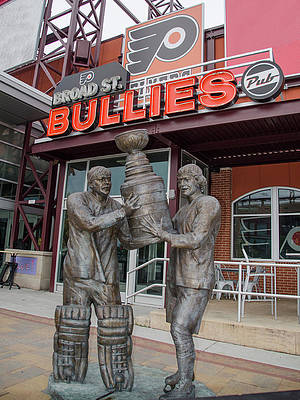
Throughout the year, the Sip Advisor will alphabetically travel the National Hockey League (NHL), discovering the best and worst each team has to offer in a variety of subjects. We will also feature a drink based off the franchise. Today, we visit the City of Brotherly Love, home to the infamous Broad Street Bullies, aka Philadelphia Flyers:

Establishment Story: The Flyers joined the NHL as an expansion team in 1967, when the league expanded from six to 12 teams. Previously, Philadelphia had an NHL team for the 1930-31 season, when the Pittsburgh Pirates relocated to become the Philadelphia Quakers. The team’s Flyers nickname was suggested by owner Ed Snider’s sister Phyllis. Other monikers considered, included Liberty Bells, Ramblers and a return to Quakers.

Stanley Cups: The Flyers won back-to-back Stanley Cups in 1974 and 1975, becoming the first of the 1967 expansion teams to accomplish the feat. However, since then, the franchise has been on the losing end of six straight Stanley Cup Finals appearances (1976 to Montreal Canadiens, 1980 to New York Islanders, 1985 and 1987 to Edmonton Oilers, 1997 to Detroit Red Wings, and 2010 to Chicago Blackhawks).

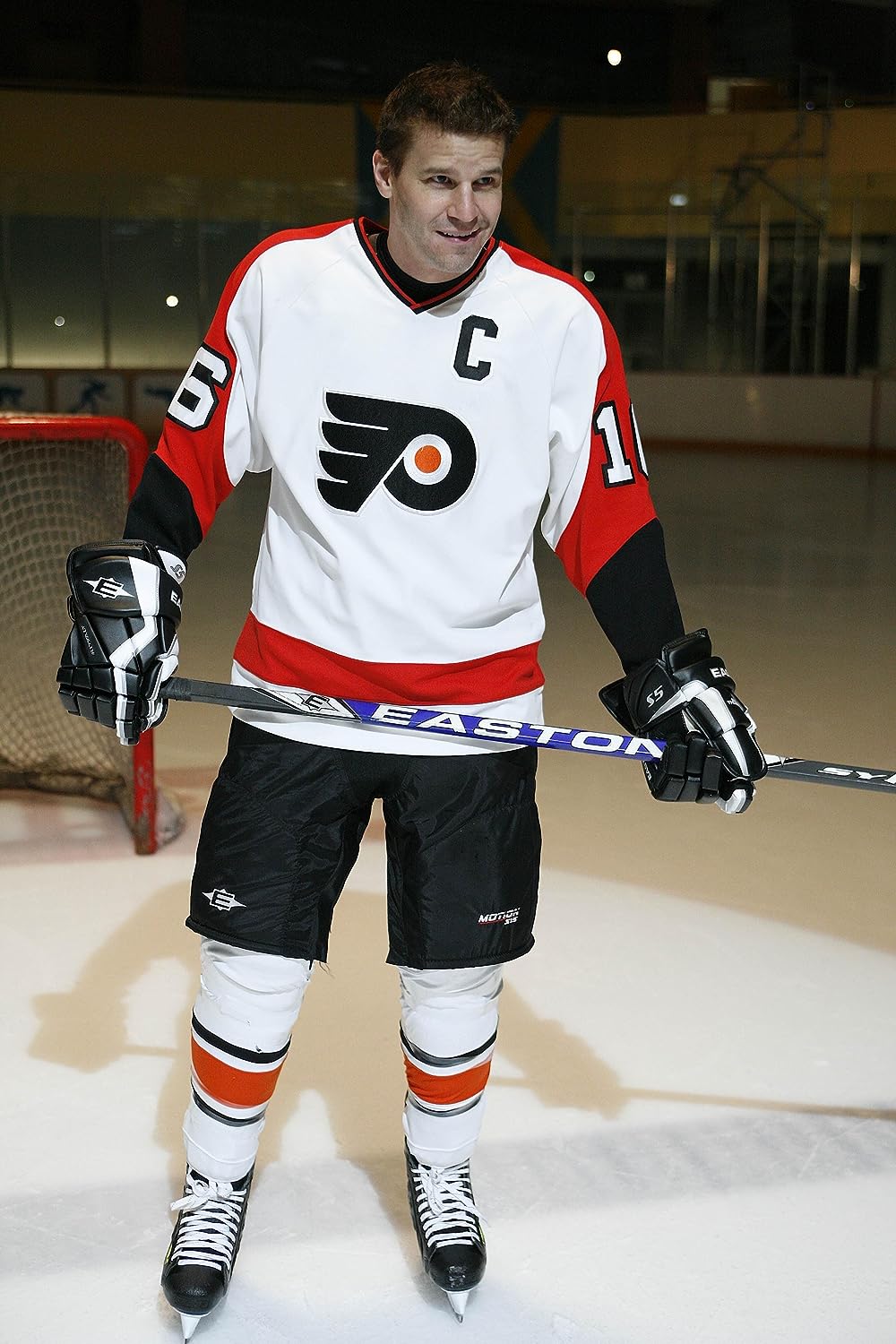
Celebrity Fan: Actor David Boreanaz, who has starred on shows such as Buffy the Vampire Slayer, Angel and Bones, is a massive Flyers fan. So much so, that his character on Bones wears Flyers shirts or jerseys in a number of episodes. Boreanaz even wrote about his fandom for an essay that was included in the program for the 2012 Winter Classic. U.S. President and First Lady, Joe and Jill Biden, are also supporters of the team.

David Boreanaz

Super Fan: Bill Schoeninger has turned the basement of his Pennsylvania home into a shrine dedicated to the Flyers. His collection includes signed sticks and trading cards, as well as a variety of pucks, jerseys, game tickets and other memorabilia. Elsewhere, Larry Mathers calls himself the “biggest Flyers fan in Canada!” Mathers, from Exeter, Ontario, has put together three levels of Flyers souvenirs, highlighted by his Flyers-themed Christmas tree.

Mascot: In Gritty, the Flyers may have not only the greatest mascot in the NHL or even all of sports, but perhaps the greatest mascot EVER. Sure, he had a 2019 brush with the law, where he was accused of punching a 13-year-old in the back of the head (Gritty was later cleared of the accusation), but appearances on talk shows such as The Tonight Show and Last Week Tonight have made the giant orange creature immensely popular.

Tradition: On December 11, 1969, prior to puck drop, God Bless America sung by Kate Smith was played, rather than The Star-Spangled Banner (U.S. national anthem). Fans loved the change and the Flyers won the game, so it was decided to use the song for select important contests. At times, Smith performed the song live, especially during the playoffs, and the Flyers record is overwhelmingly good when it’s used.

Appearances in Media: The Flyers have appeared in a number of TV shows, included characters attending games on The Goldbergs and It’s Always Sunny in Philadelphia. The starting lineup of the 1976 Flyers also appear as animated jury members (Jury of the Damned) on The Simpsons, when Homer is on trial for making a deal with the devil in one of the Treehouse of Horror segments. Lastly, Gritty appears in a Robot Chicken skit, spoofing the Tonya Harding-Nancy Kerrigan scandal.

Gritty

Events/Scandals: The Flyers organization has made some interesting decisions regarding coaches and players diagnosed with cancer. First, coach Roger Neilson was replaced and later dismissed after leaving the team in 2000 to undergo treatment. Years later, in 2019, player Oskar Lindblom was diagnosed with the disease. The team supported him throughout his battle, even resigning him to a three-year, $9 million contract when he was ready to return, but bought him out of that deal in 2022, with one year remaining.

Rivalry: Given their reputation as the Broad Street Bullies, the Flyers have made many enemies over the years. This includes state rival the Pittsburgh Penguins (Battle of Pennsylvania), New Jersey Devils (Battle of the Jersey Turnpike), New York Rangers (Broadway vs. Broad Street), Boston Bruins (Big Bad Bruins vs. Broad Street Bullies), and Washington Capitals – the two teams separated by only 124 miles.

Tragedy: The Flyers have experienced a number of deaths over the franchise’s 50-plus seasons. These include Pelle Lindbergh’s fatal car accident, Dmitri Tertyshny having his throat slashed by a boat propeller, and Yanick Dupre and Barry Ashbee passing away from cancer as members of the organization. Also, in 1990, Kathy Kerr, the wife of former Flyers star Tim Kerr, died 10 days after giving birth to the couple’s first child, due to an infection.

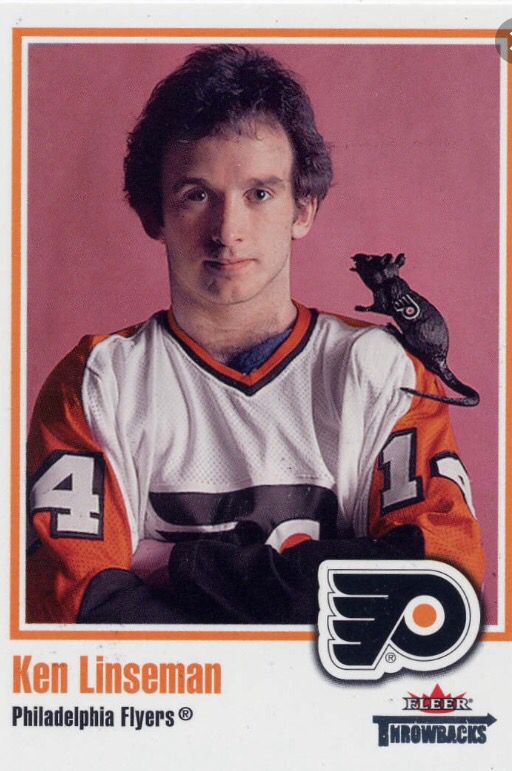
Player Nicknames: Ken Linesman had an interesting career, even before he became a pro player. His lawsuit was responsible for the World Hockey Association and later the NHL to change the minimum age a player could be drafted. Based on his appearance and the way he played (on the dirtier side of the ledger), Flyers teammate Bobby Clarke nicknamed him The Rat. Linesman originally played four seasons with Philadelphia and another 29 games years later.

Ken Linesman

Line: The Legion of Doom, comprised of Eric Lindros, John LeClair and Mikael Renberg, was one of the NHL’s highest scoring lines ever, but they could also hurt opponents with physical play, given each member was at least 6’2” and 230 lbs. Their best season as a trio, the 1995-96 campaign, saw them score 121 goals combined. Lindros (#88) also featured in the popular Crazy 8s Line with Mark Recchi (#8) and Brent Fedyk (#18).

Captain: With Bobby Clarke as captain from 1973 to 1979, the Flyers identity as a tough and unpleasant team to play against was fortified. Clarke led Philadelphia to their back-to-back Stanley Cup championships in the mid 1970s. When Clarke was named a playing assistant coach, NHL rules stated he must relinquish the captaincy. Clarke became captain again from January 1983 to May 1984, when he retired and became GM of the club.

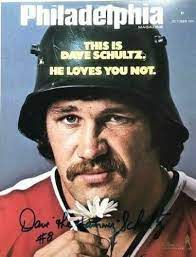
Enforcer: Dave ‘The Hammer’ Schultz not only holds the Flyers record for most penalty minutes in a season at 472 (1974-75), but it’s also an NHL record. He also ranks fifth all-time in career penalty minutes with the team. Schultz’s popularity in Philadelphia led to him recording the local hit song The Penalty Box and appearing as a guest referee for a Broad Street Bully Match (No Holds Barred) at World Championship Wrestling’s Slamboree 1994 event.

Family Values: A few brothers have played together with the Flyers. This includes Joe and Jimmy Watson, who won two Stanley Cups together during their Flyers stint from 1973 to 1978, as well as twins Rich and Ron Sutter (1983 to 1986) and Luke and Brayden Schenn (2013 to 2016). Also of note, Bill Dineen was coach of the team from 1991 to 1993, while his son Kevin was a member of the franchise.

Dave Schultz

Returning Players: Brian Boucher always seemed to find his way back to the Flyers, playing three stints with the team. He was drafted by Philadelphia 22nd overall in 1995, debuting in the 1999-2000 season. He was traded to the Phoenix Coyotes in June 2002, suiting up for four other NHL teams, before returning to the Flyers as a free agent in 2009. After spending time with the Carolina Hurricanes, Boucher played four final games with Philadelphia in 2013, ending his NHL career.

Short Stint: When Keith Yandle signed with the Flyers for the 2021-22 season, he was in pursuit of the NHL’s iron man streak record. Through his 77 games with Philadelphia, Yandle broke Doug Jarvis’ previous mark, finishing with 989 consecutive games, before he was made a healthy scratch. When he was taken out of the lineup, Yandle ranked worst in a number of defensive statistical categories. He retired in September 2022.

Undrafted: Tim Kerr was signed as an undrafted free agent in 1980. From 1983-84 to 1986-87, Kerr recorded four straight 50-plus goal seasons, before injuries hampered much of the rest of his career. He returned to form for the 1988-89 campaign, scoring 48 goals in 69 games, earning the 1989 Bill Masterton Trophy for perseverance and dedication in the process. Kerr never played more than 40 games in a season again, despite suiting up for another four years.

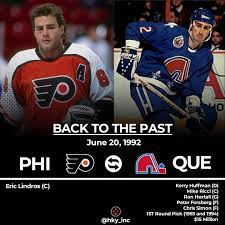
Trade: The biggest trade in Flyers history was landing Eric Lindros at the 1992 NHL draft, one year after he refused to ever play for the Quebec Nordiques, who had drafted him first overall. The price was hefty, with Philadelphia giving up six players (including future Hall of Famer Peter Forsberg), first round draft picks in 1992 and 1993 and $15 million. While Lindros was a dominant force for a handful of years, the Nordiques would become the Colorado Avalanche and win two Stanley Cups during Lindros’ career.

Lindros Trade

Signing: Two top signings by the Flyers were Jeremy Roenick in 2001 and Danny Briere in 2007. Roenick played three seasons for Philadelphia, recording 173 points in 216 regular season games. He was traded to the Los Angeles Kings coming out of the 2004-05 NHL lockout. Briere inked an eight-year, $52 million deal with the Flyers, helping the team turn around from being the worst team in the league in 2006-07 to a Stanley Cup Finals appearance in 2010.

Draft Pick: The 1969 draft was integral to shaping the Flyers identity, as the club selected Bobby Clarke (17th overall) and Dave Schultz (52nd overall). Philadelphia has only selected first overall once, taking Mel Bridgman with the top choice of the 1975 draft. Their two second overall choices could be seen as misfires, as they took James van Riemsdyk in 2007 and Nolan Patrick a decade later in 2017.

Holdouts: Eric Lindros was no stranger to holding out on a team to force a trade. That’s how he ended up in Philadelphia in the first place. After eight seasons with the Flyers, Lindros now wanted to play elsewhere, following poor treatment by medical staff, having his captaincy stripped by GM Bobby Clarke and being offered a two-way contract as a restricted free agent. Lindros wanted to play for the Toronto Maple Leafs, but after sitting out the entire 2000-01 season, was dealt to the New York Rangers.

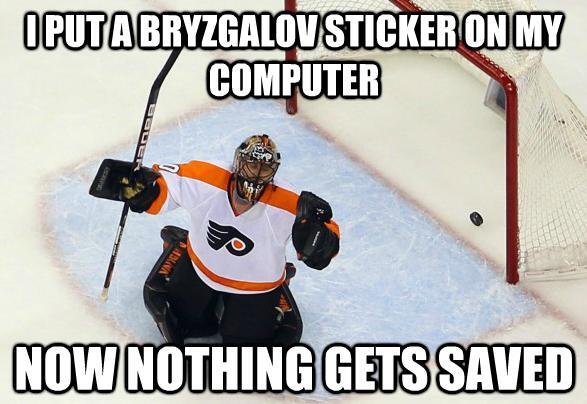
Buyouts: Ilya Bryzgalov was signed in 2011 to a nine-year, $51 million contract, with the organization hoping they’d finally found a franchise goalie. Instead, inconsistent play and bizarre behaviour lead to Bryzgalov being nicknamed Mr. Universe. With two compliance buyouts granted to each team coming out of the 2013 NHL lockout, Philadelphia used one of these get-out-of-jail-free cards on Bryzgalov. They were on the hook to pay him $23 million, but his contract didn’t count against their salary cap.

Bryzgalov

Unique Game: The Flyers have participated in two Winter Classics contests, first versus the Boston Bruins in 2010 and next against the New York Rangers in 2012. They have also faced the Pittsburgh Penguins in a pair of Stadium Series games in 2017 and 2019. Lastly, Philadelphia took on the Boston Bruins, as part of the NHL Outdoors at Lake Tahoe in 2021. They will next play outdoors as part of the 2024 Stadium Series, opposite the New Jersey Devils.

Goal: On December 8, 1987, Ron Hextall became the first goalie to score a direct goal in NHL history, when he fired a shot from deep in his own zone into the Boston Bruins’ empty net. Speaking to media following the game, Hextall stated: “I knew I could do it. It was a matter of when.” Hextall scored again during the 1989 playoffs, adding first goalie to score a direct goal during the post-season to his resume.

Fight/Brawl: Being known as the Broad Street Bullies comes with the reputation as being a tough team. That was evident in previously documented in this project brawls with the Montreal Canadiens (1987 warm-up scrap) and Ottawa Senators (2004 melee that set a new NHL record for combined penalty minutes at 419). One lesser discussed fracas occurred in 1972 between the St. Louis Blues and Flyers fans and even police patrolling the Spectrum, which saw a number of Blues players and coach Al Arbour arrested.

Injury: During the 2009-10 season, gritty forward Ian Laperriere twice blocked a shot with his face. The first caused him to lose seven teeth and receive 50-100 stitches. The second came in the first round of the playoffs, resulting in a mild concussion and orbital injury. Although he returned to action, symptoms of post-concussion syndrome surfaced during the 2010 training camp and Laperriere was forced to never play again. He was awarded the 2011 Bill Masterton Trophy for his dedication and perseverance.

broad-street-bullies-pub

Penalty: Given the team’s reputation as bullies, it shouldn’t be a surprise that a number of Flyers have served long suspensions for various transgressions. Enforcer Dave Brown was handed a 15-game suspension in 1987 for crosschecking Tomas Sandstrom, causing a broken jaw and concussion. In the 2007 pre-season, Steve Downie received a 20-game ban for an illegal hit on Dean McAmmond. Just weeks later, Jesse Boulerice crosschecked Ryan Kesler in the face, leading to a 25-game suspension.

Wildest Story: During a February 8, 1972 game against the Vancouver Canucks, Flyers goalie Bruce Gamble suffered a heart attack (diagnosed the next day after he travelled with the team and his chest pains continued), but managed to finish the game and earn a 3-1 win. Unfortunately, this incident would end Gamble’s pro career and over a decade later, another heart attack would claim Gamble’s life.

Blooper: One of the most infamous scenes in hockey history saw Flyers fan Chris Falcone fall into the penalty box after the glass divider gave way, following being sprayed with water by Toronto Maple Leafs goon Tie Domi. Once he fell, Falcone was punched a couple times by Domi, who was fined $1,000 for the incident. Falcone later sued Domi and others involved, but settled with the player, burying the hatchet, after Domi offered tickets to a couple Leafs playoff games to Falcone and his family.

Miscellaneous: The NHL record for going undefeated (including ties) was set by the 1979-80 Flyers, who went without a loss for 35 games, from October 14, 1979 to January 6, 1980. The mark not only tops the NHL’s all-time list, but all North American professional sports leagues. Despite the regular season success, the Flyers were defeated by the New York Islanders in that year’s Stanley Cup Finals.

Philadelphia Flyers: Philly Flyer

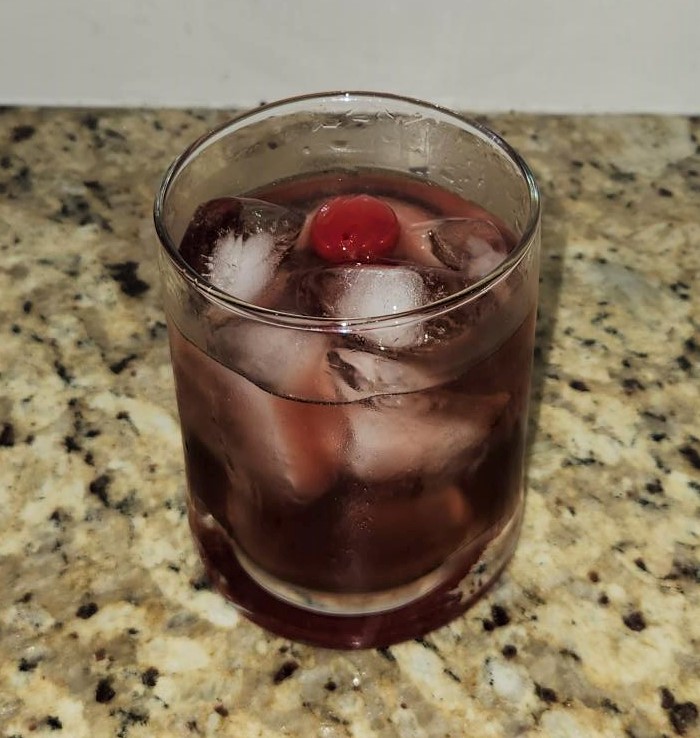
Philly Flyer

  • 2 oz Gin
  • 0.33 oz Maraschino Liqueur
  • 0.25 Crème de Cassis
  • Splash of Lemon Juice
  • Garnish with a Maraschino Cherry

This cocktail was created by Philadelphia Magazine to be the signature cocktail of Philadelphia. You can also find some other great beverage options compiled by Broad Street Hockey contributor Kelly Hinkle.

Ottawa Senators – The Statesman

Throughout the year, the Sip Advisor will alphabetically travel the National Hockey League (NHL), discovering the best and worst each team has to offer in a variety of subjects. We will also feature a drink based off the franchise. Today, we’re off to Canada’s capital city for some parliamentary meetings with the Ottawa Senators:

Establishment Story: The Senators – not to be confused with the original Ottawa Senators (1883-1934) – entered the NHL as an expansion team for the 1992-93 season. The successful expansion bid began with a ‘Bring Back the Senators’ campaign, launched by real estate developer Bruce Firestone. After 11,000 season ticket pledges were secured, Firestone was granted the new franchise in 1990.

Stanley Cups: The original Senators claimed the Stanley Cup 11 times, with only one championship coming under NHL operation, when they won the first NHL Stanley Cup Finals over the Boston Bruins in 1927. Version 2.0 of the Senators has never won the big prize, coming closest in 2007, where they were defeated by the Anaheim Ducks in the Finals in five games.

Celebrity Fan: While fans’ hopes for movie star Ryan Reynolds to become part of the franchise’s new ownership group didn’t pan out, it should be noted Friends star Matthew Perry has been a supporter of the Senators for the team’s entire existence. Perry was raised in Ottawa and attends occasional games. Another long-time fan is comedian Tom Green, who wore a Senators hat in the video for Check the O.R., by his rap group Organized Rhyme.

Senators Logo

Super Fan: Jonathan Pitre was born with a rare skin disease, which results in painful blisters. Pitre worked hard to spread awareness of his condition, including being named an honourary scout of the Senators on November 21, 2014. He later attended the NHL Awards as an invitee of the team. Sadly, Pitre passed away on April 4, 2018. The hardest working player at Senators developmental camp is presented the Jonathan Pitre Award.

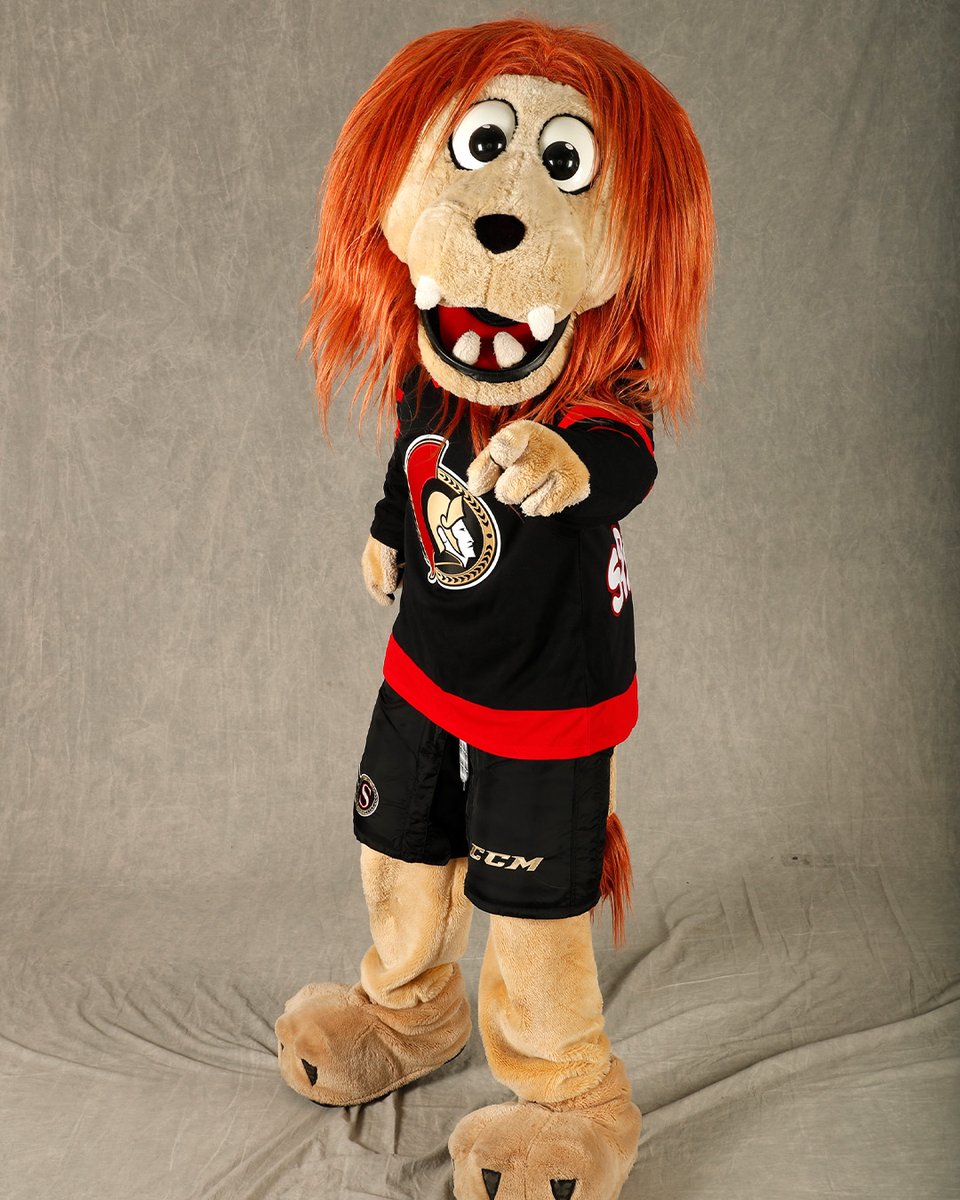
Mascot: Spartacat is a lion, whose ‘paw-sition’ with the Senators is Ambassador of Fun. Spartacat debuted with the rest of the team on October 8, 1992, with his ‘mane’ goal being to make people laugh. One of his preferred hobbies is “raking Leafs”. Spartacat is heavily involved in community programs, such as Read to Succeed and regularly visits the Sens Zone at the Children’s Hospital of Eastern Ontario.

Tradition: During playoff runs, fans of the team (the diehards are known as the Sens Army, with some even dressing in Roman legion gear) tend to congregate along Sens Mile, otherwise known as Elgin Street. These gatherings are called Red Rallies. The Senators also have their own theme song, created by Carmelo Scaffidi, who would often play the trumpet tune from the stands of the arena. When Scaffidi passed away in 2016, the Senators paid tribute to his association with the club.

Appearances in Media: The Game Changers documentary series ran from 2015 to 2019 and profiled the not-for-profit community programs being operated by the Senators organization and the people behind them. With the tagline “Passion has no off-season”, initiatives highlighted by the show included mental health awareness, pediatric palliative care, school programs and summer camps and work being done by the wives and girlfriends of Senators players.

Spartacat

Events/Scandals: For years, the Senators have pursued a new arena closer to downtown Ottawa, as they currently play in the suburb of Kanata. The most likely site for this project is the LeBreton Flats land, which is currently owned by the National Capital Commission. Former Senators owner Eugene Melnyk had a development deal in place for the area in 2016, but issues between Melnyk and his own partners resulted in the deal falling through and multiple lawsuits being filed.

Rivalry: Ottawa has long-time feuds with geographical rivals the Toronto Maple Leafs, known as the Battle of Ontario, and the Montreal Canadiens. All three teams have shared the same division since the 1998-99 season. In the early 2000s, the Senators and Maple Leafs met in the playoffs four out of five years, including three straight from 2000 to 2002. Toronto won all four heated encounters.

Tragedy: Bryan Murray was a hockey lifer, his coaching career beginning in 1976 and taking him through multiple leagues before he finally reached the NHL in 1981. From there, Murray spent time with a number of teams, in various roles. Murray joined the Senators in 2004 and remained with the club until his death on August 12, 2017 from colon cancer, which he had battled for a few years. In December 2016, Murray was the first member inducted into Ottawa’s Ring of Honour.

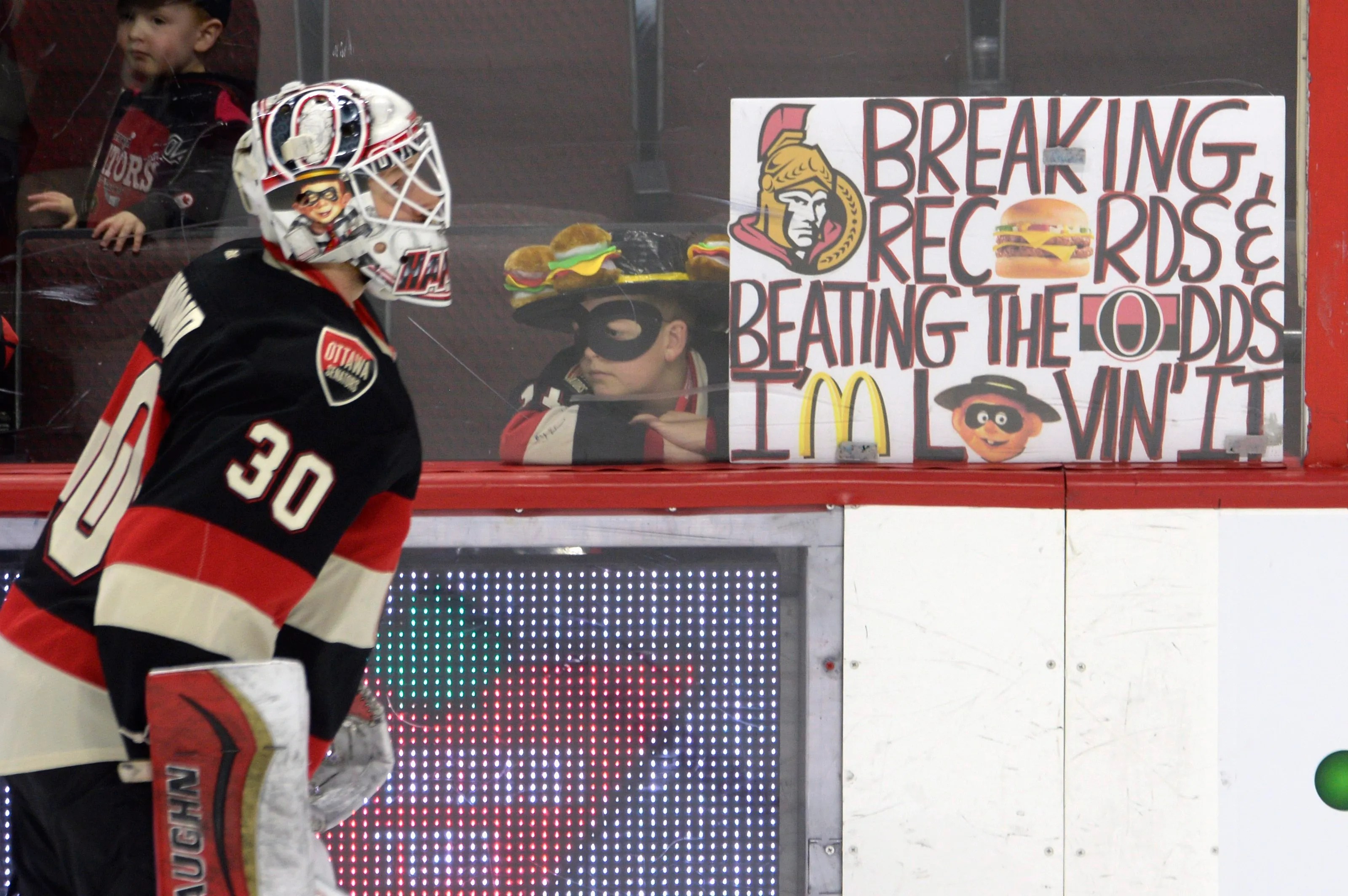
Player Nicknames: When Andrew Hammond joined the Senators from their minor-league team late in the 2014-15 season, it was unlikely the team would make the playoffs. Hammond, nicknamed Hamburglar, put together a record of 20 wins, one loss and two overtime/shootout losses, to propel the Ottawa into the post-season. Given his nickname, fans began throwing McDonald’s hamburgers on the ice following wins.

Hammond

Line: The unit of Daniel Alfredsson, Jason Spezza and Dany Heatley was so successful they earned at least three nicknames, including Capital Punishment Line (Ottawa being the capital of Canada), CASH Line (Captain Alfredsson/Spezza/Heatley) and Pizza Line (due to a promotion from the Pizza Pizza chain, which saw fans be able to convert a home game ticket into a free slice of pizza, if the Senators scored at least five goals).

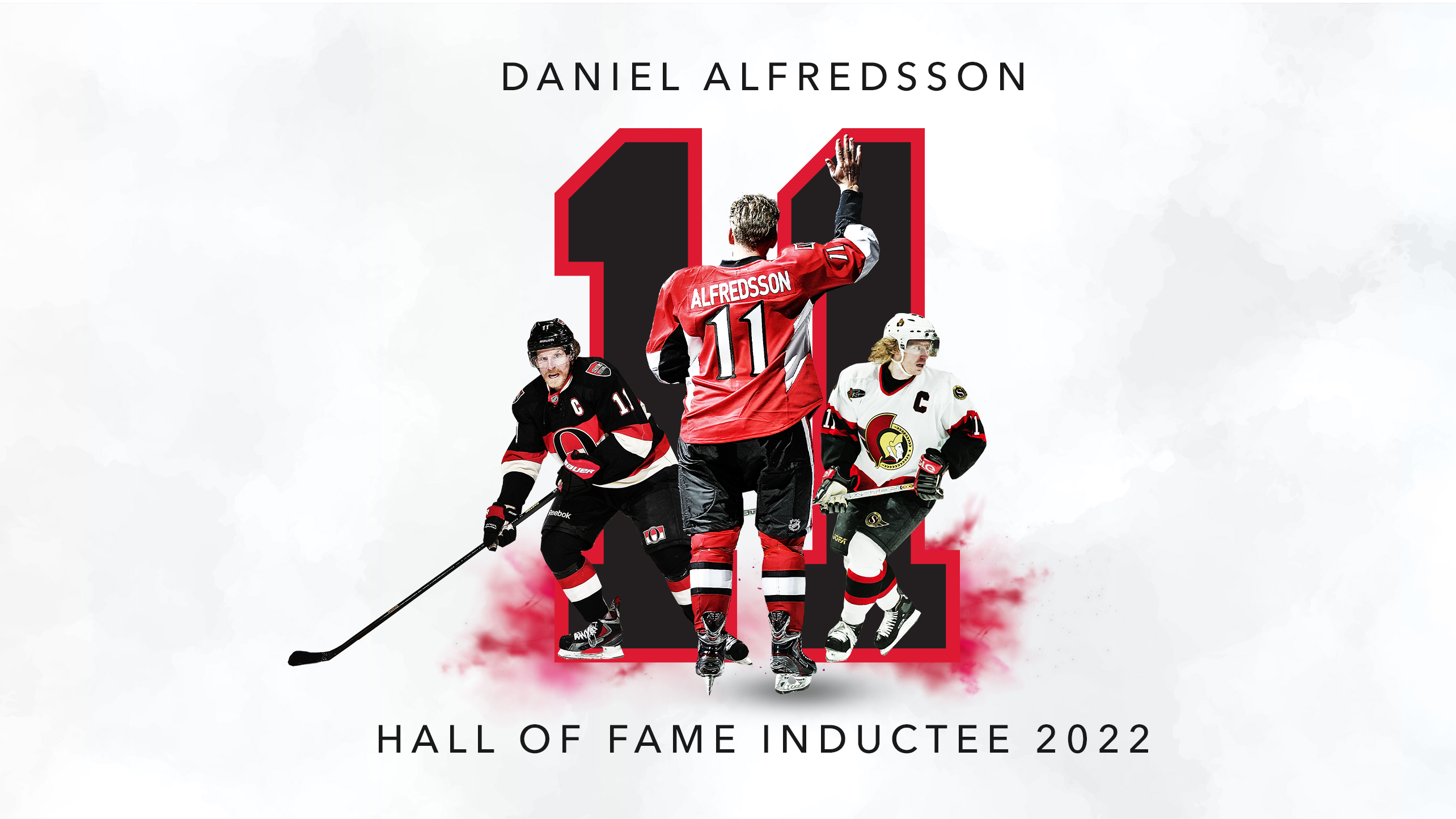
Captain: Daniel Alfredsson served as the Senators captain for 13 seasons and holds numerous team records, including goals (426), assists (682), points (1,108), power play goals (131), short-handed goals (25), game-winning goals (69), hat tricks (8), and more. His number was retired by the team in 2016, becoming the first modern day Senator to receive that honour.

Enforcer: Chris Neil played his entire NHL career with the Senators, amassing a team record 2,522 penalty minutes over 1,026 games. He added a further 204 penalty minutes in 95 playoff contests. Along with his physicality, Neil also provided offense, scoring 112 goals and 250 points. Neil’s tenure with Ottawa ended unceremoniously in 2017, as the sides agreed to part ways, with Neil later announcing his retirement.

Family Values: Brothers Gord and Kevin Dineen both played for the Senators, albeit not at the same time. Gord was a member of the team during its expansion years, playing two campaigns with the club from 1992 to 1994 and being named captain for the last 17 games of his Ottawa tenure. Kevin played a single season with the Senators in 1999-2000, before being left unprotected for the 2000 NHL Expansion Draft.

Alfredsson

Returning Players: Chris Kelly was drafted by the Senators 94th overall in 1999. He spent the first 10 seasons of his career with the organization and was part of their 2007 Stanley Cup Finals run. Kelly was traded to the Boston Bruins in February 2011, going on to win the Stanley Cup that year. The checking forward returned to Ottawa for the 2016-17 campaign, appearing in all 82 games, despite breaking his leg the previous season. In 2018, Kelly retired and joined the Senators coaching staff.

Short Stint: Legendary goalie Dominik Hasek signed with Ottawa for the 2005-06 season, stating he hoped to play with a Stanley Cup contender. He played well in his 43 games, but was injured at the 2006 Winter Olympics and lost for the rest of the regular season and playoffs. Given his age (41 years old) and injury history, Ottawa chose not to re-sign Hasek, who returned to the Detroit Red Wings and won a second Stanley Cup before retiring from the NHL.

Undrafted: Defenseman Artem Zub was signed by the Senators on May 1, 2020, based on his play in the Kontinental Hockey League and as part of the gold medal-winning Olympic Athletes from Russia at the 2018 Winter Olympics. Zub has signed two more contracts with Ottawa, his latest taking him through the 2026-27 season. The stay-at-home defenseman doesn’t pile up the points, but has solidified the team’s defensive efforts.

Trade: A great move by the Senators was trading constant headache Alexei Yashin to the New York Islanders, in exchange for defenseman Zdeno Chara, forward Bill Muckalt and the 2001 second overall draft pick, used to select future top center and star Jason Spezza. Another good transaction was trading for Dany Heatley, sending Marian Hossa and Greg de Vries to the Atlanta Thrashers, before Heatley also became a problem for the team.

Yashin

Signing: Among the best signings in club history was bringing in Claude Giroux (three years, $19.5 million) in 2022 to provide veteran leadership for the up and coming Senators. Giroux would record the 300th goal and 1,000th point of his career in his first season with Ottawa, notching a career-high 35 goals. If Giroux can keep up his production, while the team’s young stars develop, the future is looking bright for the Senators.

Draft Pick: In a four-year span, the Senators held the first overall pick three times, selecting Alexandre Daigle (1993), Bryan Berard (1995) and Chris Phillips (1996). The results were mixed, with Daigle being viewed as one of the biggest draft busts ever and Berard being traded within his draft year, never suiting up for the team, while Phillips became a lifetime Senator. A great draft steal was selecting Daniel Alfredsson 133rd overall in 1994, while the 2020 draft netted Tim Stuetzle (3rd overall) and Jake Sanderson (5th overall).

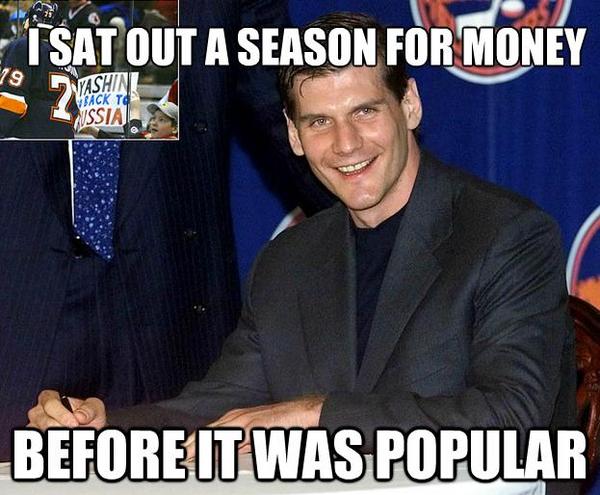
Holdouts: Drafted second overall in 1992, Alexei Yashin was a constant thorn in the side of Senators management, repeatedly trying to renegotiate his contract with the team. Yashin refused to play the final season of his deal and missed the entire 1999-2000 campaign. The two sides went to arbitration afterwards, with the ruling being that Yashin’s rights still belonged to Ottawa and he would have to play the final year of his pact. He was eventually traded to the New York Islanders in 2001.

Buyouts: The largest financial buyout in Senators history went to winger Bobby Ryan, with the final two seasons of his seven-year, $50.75 million deal signed in 2014 wiped out, with $7.33 million paid out over four seasons. Fellow forward Colin White also had an abrupt ending to his tenure in Ottawa, having the final three seasons of his six-year, $28.5 million pact bought out in 2022, resulting in $5.25 million owed to him over six seasons.

Daigle

Unique Game: The Senators have taken part in the 2014 Heritage Classic versus the Vancouver Canucks, as well as the NHL 100 Classic versus the Montreal Canadiens. They have twice travelled to Sweden for games, first for the 2008 NHL Premiere, taking on the Pittsburgh Penguins in a pair of contests and next for the 2017 Global Series, where they played another pair of matches against the Colorado Avalanche.

Goal: With a spot in the 2007 Stanley Cup Finals just a win away, Daniel Alfredsson scored the overtime winner in Game 5 of the 2007 Eastern Conference Final, giving the Senators their first championship round appearance in franchise history. Speaking of firsts, it took a Steve Duchesne goal in the final game of the 1996-97 season to clinch Ottawa’s first playoff berth since their 1992 debut.

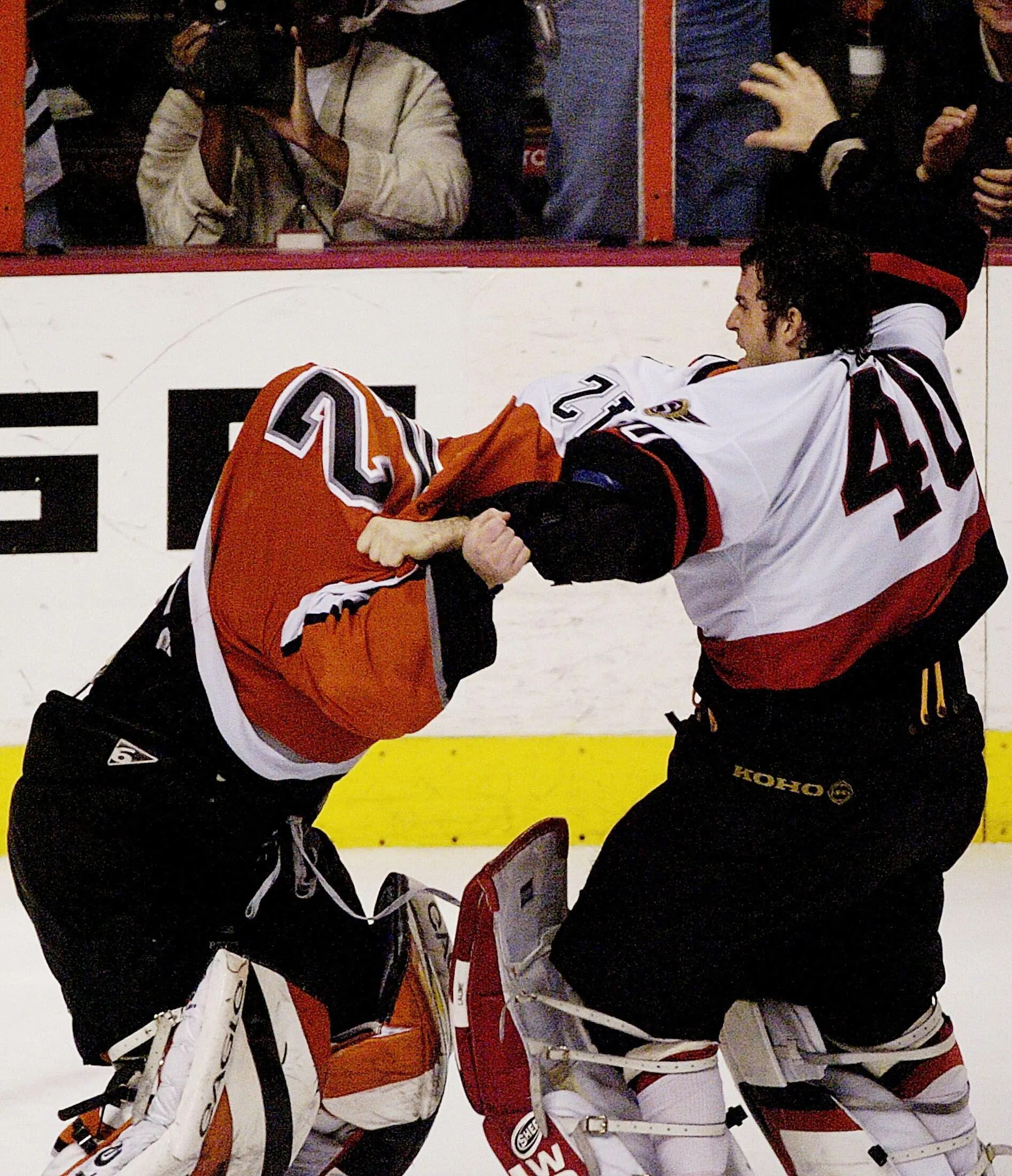
Fight/Brawl: On March 5, 2004, the Senators and Philadelphia Flyers combined to set a new NHL record for penalty minutes in a game with 419, most of which occurred in the final two minutes of the contest. The mischief started when respective enforcers Rob Ray and Donald Brashear fought, causing a line brawl including goalies. More fights occurred after each restart. The final score, a 5-3 Philadelphia win, is largely forgotten.

Injury: Two injuries at the hands of Philadelphia Flyers players stand out in the history of the Senators. First, in October 1998, forward Andreas Dackell was driven head-first into the glass by hulking star Eric Lindros. 36 stitches to the face and a concussion was the result for Dackell. Next, in January 2000, winger Magnus Arvedson was hit into an open bench door by checker Marc Bureau, requiring emergency intestinal surgery. Arvedson still suffers from stomach issues to this day.

Brawl

Penalty: More about the Senators-Flyers brawl, following the fight-filled affair, which resulted in only three Flyers and two Senators being left on the bench, it took officials 90 minutes to sort out all the penalties. For the following season, the NHL added a rule that gave one-game suspensions to anyone instigating a fight in the final five minutes of a game, while coaches could be fined $10,000.

Wildest Story: 2018-19 was a difficult year for the Senators, due to off-ice issues. Prior to the season’s start, defenseman Erik Karlsson and his wife Melinda filed a protection order against Monika Caryk, the fiancée of teammate Mike Hoffman, over harassing online messages. Both Karlsson and Hoffman would be traded before the start of the campaign. Months later, a number of Senators players were caught on viral video by their Uber driver criticizing assistant coach Martin Raymond. The players later apologized.

Blooper: During a December 2022 game, defenseman Thomas Chabot was taking his frustrations out on his stick while on the Senators bench when he accidentally hit teammate Travis Hamonic in the head. Luckily for Chabot and the team, Hamonic wasn’t seriously injured and remained in the game. The Senators would eventually go on to win 3-2 over the Nashville Predators.

Miscellaneous: Modern day Senators who have had their numbers retired are joined by Frank Finnigan in the rafters of the Canadian Tire Centre. Finnigan played for the original Senators from 1923 to 1931 and 1932 to 1934, and was the last surviving member of the 1927 Stanley Cup champions team. He participated in the ‘Bring Back the Senators’ campaign, but passed away before the team’s 1992 return. Finnigan was to have dropped the ceremonial face-off for the team’s first ever game.

Ottawa Senators: The Statesman

The Statesman

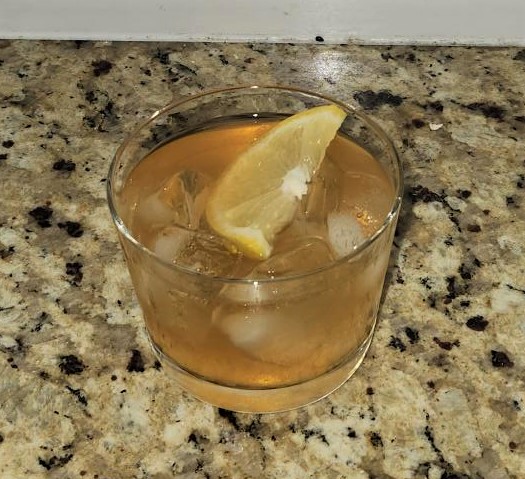
  • 2 oz Rye Whiskey
  • Splash of Lemon Juice
  • Splash of Maple Syrup
  • Dashes of Angostura Bitters
  • Float of Peated Scotch
  • Garnish with a Lemon Twist

Another team I struggled to find a cocktail for, which is more surprising given it’s a Canadian franchise and we’re all looking to combine our two favourite loves of hockey and drinking together. Do better, Canada!

New York Rangers – The Broadway Blueshirts

Throughout the year, the Sip Advisor will alphabetically travel the National Hockey League (NHL), discovering the best and worst each team has to offer in a variety of subjects. We will also feature a drink based off the franchise. Today, we head to the Big Apple and take a bite out of the New York Rangers:

Establishment Story: The Rangers are one of the NHL’s Original Six franchises, founded in 1926. The club was originally owned by George ‘Tex’ Rickard, who wanted a second team to play out of Madison Square Garden (MSG), which he was president of, based on the success of the New York Americans. Rickard’s team quickly earned the nickname ‘Tex’s Rangers’ and the latter half stuck.

Stanley Cups: The Rangers were the first U.S. team to win the Stanley Cup and have won a total of four championships. The team ended a 54-year drought when they defeated the Vancouver Canucks in 1994. Since then, they have appeared in one Stanley Cup Final, losing to the Los Angeles Kings in 2014. Other championship round losses include 1929, 1932, 1937, 1950, 1972 and 1979.

Celebrity Fan: Playing at one of the most famous arenas in the world, in a VIP hub like New York City, brings a lot of star power to games. Some particular luminaries known to drop by MSG, sporting their Rangers threads, includes Liam Neeson, Kate Upton, Spike Lee, Susan Sarandon and Tim Robbins, John McEnroe, Jason Bateman, and others. On any given night, you can spot multiple celebs supporting the Rangers.

Rangers

Super Fan: Bobby Granger was a fictional super fan, created by the Rangers for a series of TV commercials. The character was played by real-life fan Kev Kage, with ads including Granger teaching Rangers players how to say “Fuhgeddaboudit”, learning to speak Czech from Jaromir Jagr and taking a slap shot to the groin from Brendan Shanahan. Granger was also used to pump up the crowd prior to playoff games.

Mascot: The Rangers have never had a mascot in their close to a century-long history. As of the 2022-23 season, the Rangers remain the only team in the league to not have a mascot and that may never change. Some have suggested a Statue of Liberty type, while others lean towards some sort of animal. There’s even an online petition, launched with the hopes of the team adding a mascot.

Tradition: Denis Potvin hasn’t played in the NHL since 1988, but that hasn’t stopped Rangers fans from chanting “Potvin Sucks” at every home game since the former New York Islanders captain inadvertently injured Ulf Nilsson in February 1979. The chant became so popular, spurred on by the organ tune Let’s Go Band, it was released on a vinyl album by the band Bobby Nyse and the Scrotums.

Appearances in Media: The plot of the 1999 movie Mystery, Alaska deals with an amateur hockey team preparing for an exhibition game with the Rangers. The film starred Russell Crowe, Hank Azaria, Burt Reynolds and Mike Myers, while the likes of Phil Esposito, Little Richard, Jim Fox and Barry Melrose appeared as themselves. Unfortunately, the movie did not do well critically or financially.

Potvin Sucks

Events/Scandals: Some believe the Rangers half-century championship drought was due to the Curse of 1940, aka Dutton’s Curse. The story goes that MSG owners paid off their mortgage to coincide with the Rangers 1940 Stanley Cup win, so burned the document in the treasured trophy, resulting in the curse. Another version has New York Americans owner Red Dutton declaring the Rangers wouldn’t win again in his lifetime, after his team was not reinstated into the NHL following World War II. Dutton died in 1987.

Rivalry: The Rangers have long-standing rivalries with a number of their Metropolitan Division adversaries. This includes the New York Islanders (Battle of New York), New Jersey Devils (Battle of the Hudson River), Philadelphia Flyers (Broadway vs. Broad Street), and Washington Capitals. During their founding years, they also feuded with the New York Americans, which they practically drove out of the NHL… and were cursed for doing so.

Tragedy: There is a lot of death surrounding the Rangers. Minor leaguer Wayne Larkin (heart attack in training camp), legendary goaltender Terry Sawchuk (pulmonary embolism weeks after a roughhousing accident with a teammate), forward Roman Lyashenko (suicide), prospect Alexei Cherepanov (heart attack during Kontinental Hockey League game), and enforcer Derek Boogaard (accidental overdose) all died as members or recent members of the organization.

Player Nicknames: At a height of 5’9”, tenacious winger Pat Verbeek was given the nickname ‘Little Ball of Hate’ by teammate Glenn Healy in 1995. Fellow teammate Ray Ferraro was known as the ‘Big Ball of Hate’, standing a whole inch taller than Verbeek. Another popular moniker in the franchise’s history was ‘The King’, attached to goalie Henrik Lundqvist by fans and media during his stellar rookie season.

Curse of 1940

Line: The Rangers have had some really great line names. This includes the Mafia Line (“Godfather” Phil Esposito and his two “Dons” Don Maloney and Don Murdoch), as well as the Czechmates (Petr Nedved, Jan Hlavac, Radek Dvorak). Their most productive line of all-time, was dubbed the GAG Line or Goal-A-Game Line. Comprised of Jean Ratelle, Vic Hadfield and Rod Gilbert, the unit played together from 1968-69 to 1973-74.

Captain: Mark Messier is so synonymous with the term leader in hockey that the Mark Messier Leadership Award has been given to an NHL captain or other leader since the 2006-07 season. Perhaps Messier’s greatest leadership moment was guaranteeing the Rangers would win Game 6 of the 1994 Eastern Conference Finals. They did, thanks to a natural hat trick for Messier, then went on to take Game 7 and later won the Stanley Cup.

Enforcer: Jeff Beukeboom played eight seasons for the Rangers, leading the team in penalty minutes in a season three times. Beukeboom sits second for the franchise record for total penalty minutes at 1,157, just 69 minutes behind the leader, Ron Greschner, who spent his entire 16-season NHL career with the club. Beukeboom was used in a popular ESPN This is SportsCenter ad, where he attacked sportscaster Steve Levy, after Levy referred to him as “Puke-a-boom”.

Family Values: The Patrick family is synonymous with the long history of the Rangers. Lester Patrick was the first GM in team history, guiding the club from 1926 to 1946 and winning three Stanley Cups. Lester’s sons, Lynn and Muzz, both played for the team during Lester’s reign, with Lynn later becoming a coach and Muzz a GM for New York. Finally, Lynn’s son Craig served as GM of the franchise from 1980 to 1986, including temporarily coaching the team at times.

Messier

Returning Players: Following the 1996-97 season, the Rangers were prepared to part ways with captain Mark Messier. Messier moved on to the Vancouver Canucks for three disastrous seasons personally and organizationally, before returning to New York in 2000. Messier regained the captaincy from Brian Leetch, as well as his previous playing form. Messier would remain with the team through the 2003-04 campaign, officially retiring in September 2005.

Short Stint: NHL Hall of Fame members Guy Lafleur and Pat LaFontaine played 67 games each for the Rangers. Lafleur had been retired from the league since 1985, when he staged a comeback and joined New York in 1988. After one season, Lafleur left for the Quebec Nordiques. As for LaFontaine, he joined the Rangers for the 1997-98 season, with a history of concussions following him. In a March 1998 contest, he collided with a teammate, suffering another head injury and never played again, officially retiring in 1999.

Undrafted: In 1978, World Hockey Association (WHA) stars Anders Hedberg and Ulf Nilsson were lured to the NHL by twin $600,000 deals offered by the Rangers. Their WHA team, the Winnipeg Jets, simply couldn’t afford to match those offers. Another European fan favourite, Mats Zuccarello (nicknamed The Hobbit, for his 5’8” stature), came to the Rangers organization in 2010, playing with the team for nine seasons.

Trade: GM Neil Smith earned the nickname ‘Big Deal Neil’ during his tenure with the Rangers from 1989 to 2000. His biggest acquisition was trading for Mark Messier in 1991, giving up Bernie Nicholls, Louie DeBrusk and Steven Rice in exchange. Messier would lead the team to their 1994 Stanley Cup, which also included other Edmonton Oilers dynasty members Kevin Lowe, Adam Graves, Glenn Anderson, Esa Tikkanen, Craig MacTavish, and Jeff Beukeboom.

Zuccarello

Signing: For a time, the Rangers seemed to try and sign every top free agent available, often to awful deals they would later regret. Wade Redden (six-year, $39 million), Brad Richards (nine-year, $60 million), Scott Gomez (seven-year, $51.5 million), Chris Drury (five-year, $35.5 million), Bobby Holik (five-year, $45 million), Theoren Fleury (four-year, $28 million), and Kevin Shattenkirk (four-year, $26.65 million) all signed loaded contracts they never lived up to.

Draft Pick: Despite their long history, the Rangers have rarely had a top pick to utilize. The jury is still out on 2020 first overall selection Alexis Lafreniere, as well as 2019 second overall choice Kaapo Kakko. Pavel Brendl, taken fourth overall in 1999, never played for New York and only had 78 total NHL games. Some great picks for the Rangers were diamond in the rough goalie finds Henrik Lundqvist (205th overall in 2000) and Igor Shesterkin (118th overall in 2014).

Holdouts: Mark Messier, who ended up in New York after a holdout with the Edmonton Oilers, became a legend in the city as the team won their first Stanley Cup since 1940. His popularity waned a bit before the next season could start, as Messier wanted to negotiate a new contract with the Rangers. The 1994-95 NHL lockout meant nobody played until January, but Messier was still without a new contract until days into the shortened season.

Buyouts: The Rangers have capitalized on using buyouts to get themselves out of bad free agent deals, but a stunning buyout was that of goalie Henrik Lundqvist, a fan favourite and backbone of the team for years. He was sent packing in 2020, with one year remaining on his deal, landing with the Washington Capitals. Before he could ever play for another team, it was discovered Lundqvist was suffering from an irregular heartbeat, which would eventually lead to his retirement.

Henrik Lundqvist

Unique Game: The Rangers have been featured in many NHL special events, including the 1991 Las Vegas outdoor game vs. Los Angeles Kings, a 2006 pre-season game in San Juan, Puerto Rico vs. Florida Panthers, the 2011 NHL Premiere (two games in Stockholm, Sweden), the 2012 Winter Classic vs. Philadelphia Flyers, a pair of 2014 Stadium Series contests vs. New Jersey Devils and New York Islanders, and the 2018 Winter Classic vs. Buffalo Sabres. The Rangers and Islanders will play as part of the 2024 Stadium Series.

Goal: The Rangers 1994 Stanley Cup would not be possible had it not been for Stephane Matteau’s Game 7 double overtime winner in the 1994 Eastern Conference Finals. The tally is best remembered for play-by-play man Howie Rose’s call of ‘Matteau, Matteau, Matteau!” Another memorable goal was Marek Malik’s 2005 between-the-legs shootout winner to end the longest shootout in NHL history. Malik was not known for his scoring ability, but ended the game in fashion in the 15th round.

Fight/Brawl: Brawls with the Boston Bruins (1979) and Los Angeles Kings (1981) have already been covered during this project, so we’ll focus on a 1971 melee with the Toronto Maple Leafs, that is best remembered for Leafs goalie Bernie Parent’s mask going missing for 41 years. During the fracas, Rangers captain Vic Hadfield tossed Parent’s face shield into the crowd and it wasn’t seen again by Parent until a memorabilia collector asked him to authenticate the mask in 2012. It was the real deal.

Injury: During a November 1998 game against the Los Angeles Kings, Jeff Beukeboom was sucker punched by Kings enforcer Matt Johnson. This resulted in another concussion for Beukeboom, whose physical playing style had resulted in other head injuries throughout his career. Johnson was suspended 12 games for his actions. While Beukeboom did return to action, another hit to the head in 1999 ended his career, due to post-concussion syndrome.

Matteau

Penalty: During the 2008 playoffs, the Rangers were facing the New Jersey Devils. While on a power play, super pest Sean Avery decided to use a new tactic against legendary goalie Martin Brodeur, by wildly waving his arms and stick in front of the netminder to distract him. The next day, the NHL ruled that this could be penalized as unsportsmanlike conduct in the future, resulting in a minor penalty. The statute is commonly known as ‘The Avery Rule’.

Wildest Story: Tony DeAngelo’s time with the Rangers came with much controversy, especially the end of his tenure. DeAngelo was put on waivers on January 31, 2021, following a reported physical confrontation with teammate Alexandar Geogiev. The altercation stemmed from DeAngelo saying something to the goalie following a loss and Georgiev electing to attack the defenseman. DeAngelo was dismissed from the Rangers and bought out of his contract at the end of the season.

Blooper: Wayne Gretzky played the final three seasons of his career with the Rangers (1996-99). Despite being the most famous hockey star of all-time, on October 30, 1997, for a game against the New York Islanders, the equipment team spelled the Great One’s name GRETKZY on the back of his jersey. Gretzky would have a similar jersey name bar mishap when visiting English Premier League team Tottenham Hotspur, who gave him a custom jersey with GRETSKY on the back.

Miscellaneous: On March 13, 1948, Larry Kwong became the first non-white and Asian player in NHL history, breaking the colour barrier, when he played one shift with the Rangers at the end of what would prove to be his only NHL game. Kwong, who played most of his later career in Quebec senior leagues, had previously been invited to training camp with the Chicago Black Hawks in 1942, but the Canadian government declined to process the paperwork needed for Kwong to leave the country.

New York Rangers: The Broadway Blueshirts

The Broadway Blueshirts

  • 2 oz Tequila
  • Top with Coconut Water
  • Splash of Lime Juice
  • Dash of Agave Nectar
  • Dashes of Angostura Bitters
  • Garnish with a Lime Wedge

This recipe comes from Hornitos Tequila, with its name coming from a nickname for the Rangers. For those wanting more Rangers cocktail options, the Blueshirts Bartender on Instagram creates a new Rangers-themed beverage before every game.

Sip Trips #224: Swift Summer

Man, I feel like I was blitzed half the month (if not more), but it was light on actual outings. At least light compared to what our months typically look like. Here’s what the Sip Family got up to for July:

Midway through the month, we joined friends for a birthday dinner at The Keg. Over the course of the meal, I had the Smoke on the Guava (Mezcal, Aperol, guava, lemon, egg white) and Mai Tai (Havana Club 7, Cointreau, almond syrup, pineapple, lime, amarena cherry) cocktails, paired with the Prime Rib Sliders. I also got to try Mrs. Sip’s Lobster Gratinee appy, as part of the restaurant’s Lobster Summer menu and we finished with some Billy Miner Pie for dessert. Another solid visit at The Keg, as per the usual.

The Keg

The following week, we had friends visiting from Ontario, so met them at Miku Sushi. Mrs. Sip has long wanted to try this restaurant and it did not disappoint. Sure, the sushi is more expensive than your typical sushi joint, but if you’re expecting it, the experience is worth it. Mrs. Sip and I shared the Lobster Ceviche, Oshi Sushi Sampler, Miku Roll, Surf & Turf Roll, and Red Wave Roll and all of it was delicious.

After dinner, we walked over to Devil’s Elbow for a drink. Mrs. Sip and I both had the Moon Under Water This Is Hefeweizen, an old favourite of ours that we don’t see too often anymore. Following that, we popped into Ludica Pizza for dessert and a game. Over snacks, consisting of their Two-Cheese Garlic Breadsticks and Nutella Pizza (as well as a pitcher of Phillips Blue Buck Ale), we played a game called Red Flags that was a lot of fun.

Games

To wrap the month, Mrs. Sip and I hit up the Paddlewheeler Pub for their trivia night. Over the course of the evening, Mrs. Sip and I shared a bunch of beers, including the Wildeye 7th Secret French Wheat, Fernie Ridgewalk Red Ale and 33 Acres of Darkness Schwarzbier. We also feasted on a trio of items, such as the Smashburger (Wednesday special), Triple Chefs Clubhouse and Creole Chicken Lollipops with Cornbread. Chicken Lollipops should stay in the test kitchen, but everything else was good to great, with the Clubhouse being particularly tasty, thanks to the candied bacon addition. My final thoughts on the trivia: music rounds suck so hard!

See, that’s a relatively paltry Sip Trips. We did spend a fair bit of time hosting friends and Ma and Pa Sip’s wonderful retreat, as well as visiting some folks for nights out. August should be a little busier, with a bunch of stuff already on the calendar, including a stag in Las Vegas!

New Jersey Devils – Dance with the Devil

Throughout the year, the Sip Advisor will alphabetically travel the National Hockey League (NHL), discovering the best and worst each team has to offer in a variety of subjects. We will also feature a drink based off the franchise. Today, we head to the swamplands of New Jersey and make a deal with the Devils:

Establishment Story: The Devils came to exist when the Colorado Rockies were relocated to New Jersey in 1982. The franchise had previously moved from Kansas City – where it had been founded in 1974 as the Scouts – to Colorado in 1976. Even while winning their first Stanley Cup in 1995, rumours were circulating that the team could move yet again, this time to Nashville. In response, the state pledged to fund a new arena for the franchise.

Stanley Cups: The Devils have won three Stanley Cups, from five appearances in the Stanley Cup Finals. They were triumphant in 1995 vs. the Detroit Red Wings, in 2000 vs. the Dallas Stars and in 2003 vs. the Mighty Ducks of Anaheim. Their losses came at the hands of the Colorado Avalanche in 2001 and the Los Angeles Kings in 2012. In a seven year span, from 1995 to 2001, New Jersey appeared in four championship series.

Celebrity Fan: Kevin Smith, creator of the View Askewniverse movies (Clerks, Mallrats, Dogma, etc.), is from New Jersey and has been a lifetime fan of the Devils. He has even blogged about the team for NHL.com. Smith can often been seen in Devils gear and hockey is featured in nearly all of Smith’s movies in some form, including the Devils jersey making appearances in the Clerks film franchise.

Kevin Smith

Super Fan: Mark Baumann, known simply as Baumann, is a long-time season ticket holder and is credited with creating the D-E-V-I-L-S chant in 1995. He wears a Devils jersey with his last name and the number 00 on it. The Devils also have two well-known supporters’ sections at their home games, the Crazies (Section 233) and the Diablos (Section 122), both recognized for their chants and other conduct.

Mascot: NJ Devil is about what you’d expect as a representative of the team. He’s meant to have a resemblance to the mythical Jersey Devil, which is said to inhabit the state of New Jersey. The franchise’s previous mascot was Slapshot, a large puck, but the man inside the suit was accused of touching three women inappropriately and agreed to counselling to settle the lawsuit. As a result, the mascot was retired in 1993.

Tradition: In the mid-1990s, the Devils became known for their implementation of the neutral zone trap, a defensive system which stifles offensive production and led to what is now called the Dead Puck Era (lack of scoring, also resulting from penalties for clutching and grabbing not being called). The trap’s success led to three Stanley Cups for New Jersey in a nine-year span, so the results were there, even if the exciting on-ice product wasn’t.

Appearances in Media: In the May 1995 episode of Seinfeld, titled The Face Painter, character David Puddy reveals his eccentric support of the Devils while taking Elaine Benes to a New Jersey-New York Rangers game at Madison Square Garden. His face is painted in the team’s colours and he behaves wildly, removing his shirt and clashing with rival Rangers fans. When Benes says he can’t paint his face anymore, he starts painting his chest.

David Puddy

Events/Scandals: After already being moved from Kansas City to Colorado and then onto New Jersey, the Devils organization continued to struggled. Things were so bad, following a 13-4 Edmonton Oilers victory over the Devils in 1983, Wayne Gretzky called the team “a Mickey Mouse operation” that was “ruining the whole league”. Although Gretzky later apologized for his statements, for the next game between the two clubs, fans showed up wearing Mickey Mouse apparel.

Rivalry: The Devils have two main rivals, largely based on geographic location. First, their feud with the New York Rangers is known as the Battle of the Hudson River, the body of water which separates the states. Second, there’s the Philadelphia Flyers, with the grudge known as the Battle of the Jersey Turnpike, with the Flyers even having their practice rink located in New Jersey. All three teams currently play in the Metropolitan Division.

Tragedy: Pat Burns coached the Devils for two seasons (2002-2004), leading the team to their 2003 Stanley Cup championship, before he was forced to resign his position and focus on his health, following colon and liver cancer diagnoses. Sadly, the cancer returned in 2009 and had metastasized to Burns’ lungs. He passed away on November 19, 2010 and was posthumously inducted into the Hockey Hall of Fame in 2014.

Player Nicknames: Ken Daneyko played his entire NHL career with New Jersey, earning the nickname ‘Mr. Devil’. Following his retirement, the three-time Stanley Cup winner has even moved into a colour analyst role for Devils game broadcasts. Daneyko holds the franchise records for games played (1,283) and penalty minutes (2,516), with his jersey being retired by the team in 2006.

Mickey Mouse Operation

Line: While some lines scored more, the Crash Line, consisting of Bobby Holik, Randy McKay and Mike Peluso, is fondly remembered for their aggressive checking, neutralizing the top stars of opposing teams. The trio played a very important role in the Devils 1995 Stanley Cup championship, providing secondary scoring to go along with their combined intimidation factor.

Captain: Scott Stevens is the longest-serving captain in franchise history, holding the role for 12 seasons from 1992 until his retirement in 2004. Stevens originally refused to report to the team, following his 1991 trade to the Devils, as compensation for the St. Louis Blues signing away restricted free agent Brendan Shanahan. In the end, his decision to finally play for the organization was a good one, resulting in three Stanley Cup wins.

Enforcer: Nicknamed ‘The Polish Hammer’, Krzysztof Oliwa holds the Devils single-season record for penalty minutes with 295. Oliwa patrolled the ice for New Jersey for parts of four seasons, after being drafted by the team 65th overall in 1993. Oliwa is the only player from Poland to win a Stanley Cup, which he did as a member of New Jersey’s 2000 championship squad.

Family Values: Brothers Jack and Luke Hughes were both high draft picks of the Devils, being selected first (2019) and fourth (2021) overall, respectively. Jack is already a superstar with the team, while Luke is among the club’s top prospects, having made his NHL debut late in the 2022-23 season. Twin brothers Patrik and Peter Sundstrom played part of the 1989-90 season together with New Jersey, while Patrik’s son Alexander was drafted by the Devils in 2005, but never played in the NHL.

Scott Stevens

Returning Players: Brendan Shanahan was drafted by the Devils second overall in 1987. When he became a restricted free agent in 1991, he signed an offer sheet from the St. Louis Blues, which New Jersey elected to not match. 17 seasons later, after not playing for the first half of the 2008-09 campaign, Shanahan returned to the Devils for what would be the final season of his Hall of Fame career.

Short Stint: High-scoring defenseman Phil Housley bounced around the NHL quite a bit over his 21-season career, including 22 games played with the Devils in 1996. He performed well, recording 16 points in those games, but left for the Washington Capitals as a free agent. Somehow, Housely’s time in New Jersey wasn’t the shortest stint of his eight NHL teams, as he only played a single game for the Toronto Maple Leafs in 2003.

Undrafted: In 1999, the Sporting News named Brian Rafalski the best hockey player outside of the NHL. The 25-year-old defenseman was signed by the Devils and would go on to be a member of their 2000 and 2003 Stanley Cup championship teams, largely playing with Scott Stevens. Rafalski left New Jersey in 2007, joining the Detroit Red Wings for back-to-back Stanley Cup Finals appearances, before retiring in 2011.

Trade: When the Devils traded defenseman Tom Kurvers to the Toronto Maple Leafs one game into the 1989-90 season, they received a 1991 first round draft pick in return. Little did they know that selection would turn into the third overall choice, bringing Scott Niedermayer to New Jersey. Niedermayer would be an integral member of three Stanley Cup championship teams, winning a Norris Trophy in 2004, his final season with the club.

Scott Niedermayer

Signing: Among the Devils worst signings of all-time was their 17-year, $102 million deal to retain the services of Ilya Kovalchuk, who they had traded for a few months earlier. Since the deal was ruled to have violated the NHL’s salary cap, it was nullified and New Jersey was punished with a $3 million fine and the loss of draft picks. A 15-year, $100 million pact was eventually given to Kovalchuk, who bolted for Russia anyway after three seasons.

Draft Pick: The Devils have benefitted from two first overall selections in recent years, taking Nico Hischier in 2017 and Jack Hughes in 2019. Other top picks that have worked out well for New Jersey include John MacLean (6th overall in 1983), Brendan Shanahan (2nd overall in 1987), Scott Niedermayer (3rd overall in 1991). It’s also hard to believe they landed Martin Brodeur at 20th overall in 1990, given his legendary run with New Jersey.

Holdouts: Scott Niedermayer had two significant contract disputes with the Devils during his tenure with the team. First, Niedermayer missed the first month of the 1998-99 season after rejecting an initial offer of $3.25 million. Niedermayer also sat out the first two months of the 2000-01 season, wanting to be paid an average salary comparable to the best defensemen in the NHL. He finally settled for a four-year, $16 million pact.

Buyouts: The Devils biggest buyout came in 2020, when they bought out the remaining two years of goalie Cory Schneider’s seven-year, $42 million contract. Schneider came to New Jersey to be the heir to Martin Brodeur’s goaltending throne and for a time, he was an apt replacement to the legend. Sadly, a string of injuries hampered Schneider’s performance, including a 21-game losing streak, spanning over a year.

Kovalchuk

Unique Game: The Devils took part in a trio of Super Series exhibition matches against teams from the USSR in the late 80s and early 90s. New Jersey took part in the 2018 NHL Global Series, playing a single game against the Edmonton Oilers in Gothenburg, Sweden, to open their 2018-19 season. The Devils also took part in a 2014 Stadium Series contest versus the New York Rangers. A decade later, they will face the Philadelphia Flyers, as part of the 2024 Stadium Series.

Goal: With Game 6 of the 2000 Stanley Cup finals tied, the contest entered double overtime. A win earned the Devils their second Stanley Cup in franchise history. Jason Arnott provided the heroics, putting away the Dallas Stars. Also, Martin Brodeur holds the NHL record for goalie goals, with two scored in the regular season and one in the playoffs. Only one of his tallies was a shot on goal, while the other two, including one game-winner, were own goals by the opposing team.

Fight/Brawl: While the Devils have participated in a number of brawls over the course of their history, a one-on-one fight has become part of hockey folklore, thanks to its spread on social media. During Brendan Shanahan’s early years in the NHL, he once attacked Buffalo Sabres veteran Rick Vaive after a faceoff. Vaive had no clue what he did to deserve being jumped, but it was soon revealed a 14-year-old Shanahan had asked Vaive for an autograph, but was turned down and this was the long-awaited revenge.

Injury: During an October 2014 game, Devils forward Martin Havlat was hit by Jason Chimera of the Washington Capitals. Havlat fell into referee Darcy Burchell, as well as the boards, which caused the visor of his helmet to push into his face. The result was severe lacerations to his nose and upper lip, requiring numerous stitches to close the wounds. Havlat joked about the incident, saying he didn’t need any mask for upcoming Halloween celebrations.

Jason Arnott

Penalty: In one of the most infamous confrontations in hockey history, Devils coach Jim Schoenfeld got into an argument with referee Don Koharski following his team’s loss in the 1988 playoffs. Koharski fell, but accused Schoenfeld of pushing him. Koharski stated he hoped the incident was caught on video, to which Schoenfeld replied: “Good, ’cause you fell, you fat pig! Have another doughnut! Have another doughnut!” Schoenfeld was suspended one game and fined $1,000, while the team was fined $10,000.

Wildest Story: On January 22, 1987, an extreme blizzard in New Jersey resulted in only 334 fans (of an expected 11,247, based on tickets sold) showing up to a Devils game versus the Calgary Flames. Those that did manage to make the dangerous trek and attend the contest, where New Jersey won 7-5, were all made members of the 334 Club. Each fan was later sent a badge commemorating the unique game.

Blooper: During the 2003 Stanley Cup Finals, legendary Devils goalie Martin Brodeur came out of his net to play a dumped in puck. Unfortunately, Brodeur lost the handle on his stick and as it fell to the ice, the puck deflected off it and into the net. It was a rare mistake for one of the best puck playing goalies of all-time. The Devils still managed to win the Stanley Cup, so no harm, no foul, I guess.

Miscellaneous: When New Jersey won the 1995 Stanley Cup, a new tradition was born. For the first time, each player (and some other members of the organization) got to spend a day with the trophy. Since then, children have been baptized in it, dogs have eaten meals out of it, kids have [accidentally] used it as a toilet, and it has travelled the globe, including to some of the most famous sites in the world.

New Jersey Devils: Dance with the Devil

Dance with the Devil

  • 1.5 oz Bourbon
  • 0.75 oz Triple Sec
  • Top with Passionfruit Juice
  • Splash of Lemon Juice
  • Dashes of Tabasco Sauce
  • Garnish with a Maraschino Cherry

It floors me how difficult finding drinks for each NHL team has been throughout this project. Perhaps I’m being too picky, but I thought that aspect would be the easy part of my 2023 mission. Anyway, I was curious about the combo of ingredients in this cocktail, so wanted to see how it all came together.