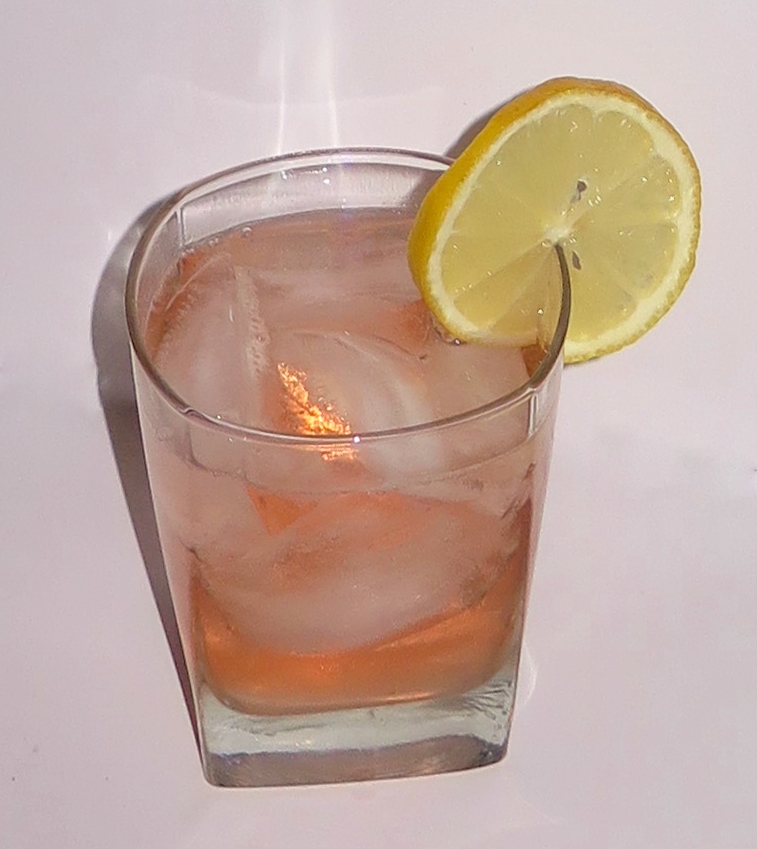
Bolivia – Manzana Smash

Drive with Destiny

North Yungas Road in Bolivia has been given the menacing title of ‘World’s Most Dangerous Road.’ The stretch of 60-plus kilometer highway, connecting the capital city of La Paz to Bolivia’s Amazon Rainforest, is estimated to kill between 200-300 travelers each year. Now, the Sip Advisor likes his occasional doses of danger, but this seems a little too treacherous. Buckle up tightly, cause here we go!

Bolivians refer to the road as El Camino de la Muerte, which translated means ‘Road of Death’. It has also acquired monikers like Grove’s Road, Coroico Road, Camino de las Yungas, Death Road, or Road of Fate (the name which I prefer the most). While a couple of those don’t sound so bad, the last two are particularly worrisome. Interestingly, the road was built in the 1930’s by Paraguayan prisoners, during the Chaco War. I wonder how many died during construction of the hazardous route.

Old-Yungas-Road-Bolivia

I know what you’re thinking: if the road is so dangerous, why would anyone in their right mind ever take it. Well, it is one of the only routes that will get you into the Amazon Rainforest. Personally, I think I’ll take my rainforest in the Rainforest Café style, where I can have a nice wrap, fries, and beverage in a collectible cup instead! There is also a South Yungas Road, connecting La Paz to the town of Chulumani, that is said to be just as dangerous and the northern route.

After leaving La Paz, drivers will ascend 15,000-feet, followed by a 4,000-feet descent into the town of Coroico. The road is often only one lane wide and if you expect to see many guardrails, best of luck to you. That’s one “I spy with my little eye” game that will not yield results. The road is marked with crosses in many spots where vehicles have gone off the pavement and fallen off the cliffs, so that might be a better “I spy” item. If you do go off the road, you’re looking at a potential 600-meter fall.

As if things weren’t challenging enough already, during Bolivia’s rainy season, from November to March, rain and fog can severely obstruct visibility, as well as affect the road, turning it into a muddy mess and causing loss of traction. Falling rocks and dust from other vehicles can also be issues drivers have to deal with. Lastly (perhaps literally), if you get too close to the edge, the roadway may slip out from under you.
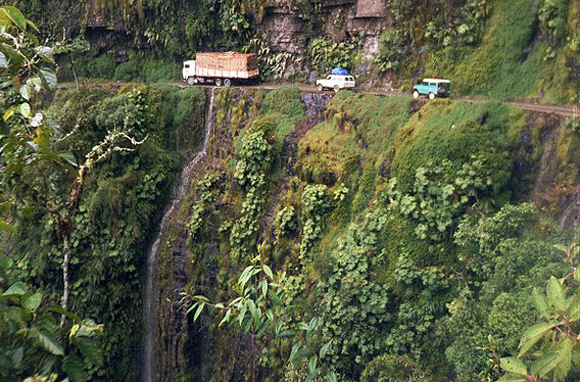
Yungas Road Traffic

Rules of the road include the downhill driver giving the right of way to the uphill drive, to ensure the faster moving downhill vehicles slow down when coming upon a car going in the other direction and driver’s having to be on the left side of the road (a contrast to the rest of the country), so they can view their outside wheels and position against the cliff when making passes.

In 2006, a project to update the highway was completed. Added features included widening sections of the road to accommodate two lanes, updated paving, new bridges, drainage, and even an entirely original section between the towns of Chusquipata and Yolosa, bypassing one of the worst portions of the old road. The work took 20 years to complete and yes, they finally added some damn guardrails!

Yungas Road Crosses

While North Yungas Road has become a death trap to many motorists, thrill-seeking mountain bikers have come to love the route, which includes a massive downhill portion of about 64 kilometers. There’s even tour groups operating to suit the needs of daredevil cyclists. Since 1998, 18 cyclists (and perhaps more) have not survived the Road of Death. It has also become a popular destination for those who want to try their hand (ahem, luck) at the treacherous route.

North Yungas Road has been featured in TV shows such as Top Gear, Ice Road Truckers: Deadliest Roads, and World’s Most Dangerous Roads, as well as a Mitsubishi Outlander commercial – the first to ever be filmed on the death trap. We’ll depart (bad choice of word) with this chilling fact: the single worst accident to occur happened in 1983 when a bus left the road, rolling down into a canyon below and killing over 100 passengers.

Bolivia: Manzana Smash

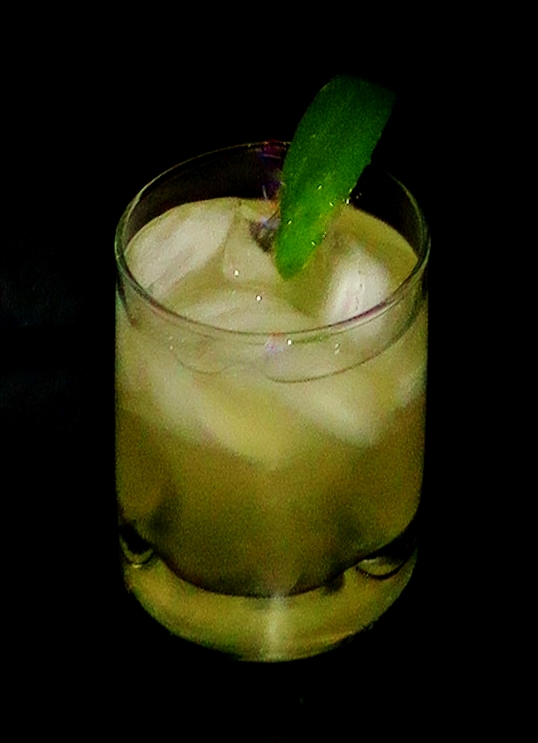
Manzana Smash Cocktail

  • Muddle Lime and Apple Wedges
  • 1.5 oz Agwa
  • Splash of Apple Juice
  • Dash of Simple Syrup
  • Garnish with an Apple Wedge

While they weren’t killed by El Camino de la Muerte, this seems like as perfect a time as any to reveal that legendary outlaw duo of Butch Cassidy and the Sundance Kid died in Bolivia, following a long shootout with Bolivian soldiers. It’s believed one of the bandits shot the other to put him out of his misery after a fatal wound and then turned the gun on himself.

Sip Advisor Bar Notes (4 Sips out of 5):
There’s a bunch of really good recipes (particularly shots) at the Agwa site and I only wish I had more than two mini bottles of the liquor to try them all. The best part about this cocktail is how nice the Apple and Lime mixes. No wonder there’s an Apple-Lime Juice, which has become one of my favourite non-soda mixers!
Bolivia – Agwacadabra

Leafy Greens

In Bolivia, it’s common to see working-class folks drinking an illegal cocktail called Casquito (a mix of pure alcohol used for medical purposes and soft drinks or juices). The name translates to Little Helmet, describing the blue cap that the alcohol comes with, but I think it better describes the casket you may end up in after consuming the potent cocktail. And while that all sounds like an awesome experiment to undertake, that’s not the purpose of our stop in the country. So, let’s spin the wheel and learn about… the coca leaf!

Coca leaves are a cash crop for a number of South American countries, but are perhaps most notable in Bolivia, where they have played a role in the nation’s democracy, including the rise of the Cocalero Movement and that group’s leader, Evo Morales, becoming president of Bolivia in 2005. The movement was established in 1987 as the United States worked to crack down on drugs coming into the country.

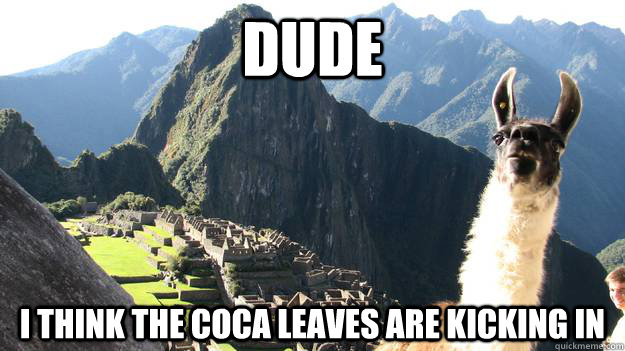
coca leaves llama

As a result of the United States’ war on drugs, attempts to eliminate the coca leaf from existence have occurred with varying results. The Cocaleros have set-up blockades, attempted to write their own law proposals, and protest marches against the eradication of the plant. This has caused deaths, arrests, fights between growers and opposing forces, and even the Villa Tunari Massacre, which saw 16 Cocaleros murdered.

With Morales in power, new laws are being created and considered, with the elimination of the plant being scaled back. While other crops (coffee and citrus fruits) were offered in exchange for getting rid of coca operations, the profit return was dramatically less than farmers could get from their coca production and I’d be pissed too, if someone all of a sudden came in and told me I couldn’t make something that my family had been creating for years and surviving from.

Coca is also commonly used in medicines, usually in anesthetics and analgesics, providing relief from headaches, altitude sickness, and arthritis. In Bolivia, it is also used by locals to treat ulcers, asthma, digestion, and even malaria. Chewing on the leaves, or using them in teas will not provide similar results to using the drug cocaine. Although the same leaves do provide the psychoactive alkaloid for cocaine, it can only be removed through a chemical process known as acid/base extraction.

Drugs Draw the Line

Throughout Bolivia and other coca manufacturing countries, teas, granola bars, cookies, hard candies, and other items are sold in grocery markets. It is an ingredient in Agwa, the herbal spirit that we will be using during our pit stop in Bolivia. Most infamously, the coca leaf was used in the production of Coca-Cola from 1885 to 1929 and a similar product is used to this day, with the cocaine element removed from the plant.

The coca leaf is illegal in Brazil and Paraguay. In the United States, only one company brings the plant into the country (although others are registered to do so). The Stepan Company receives hundreds of tons of coca leaf each year, turning some of it into pure cocaine for medical use and the rest as a cocaine-free flavouring agent for Coca-Cola.

Bolivia: Agwacadabra

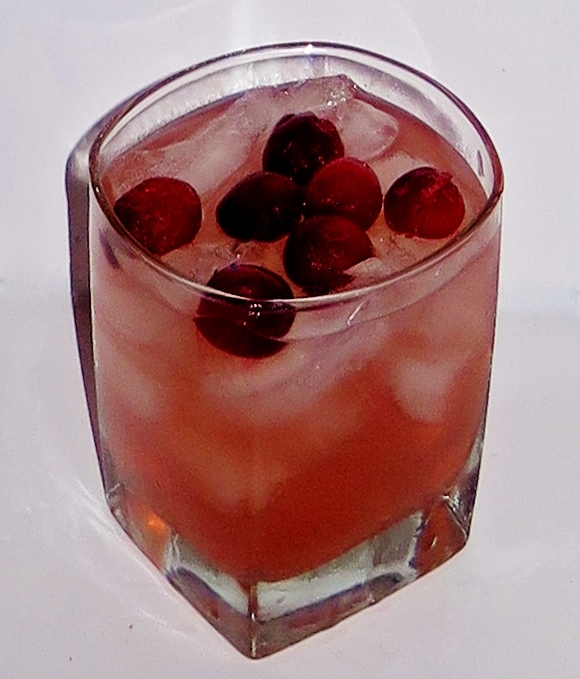
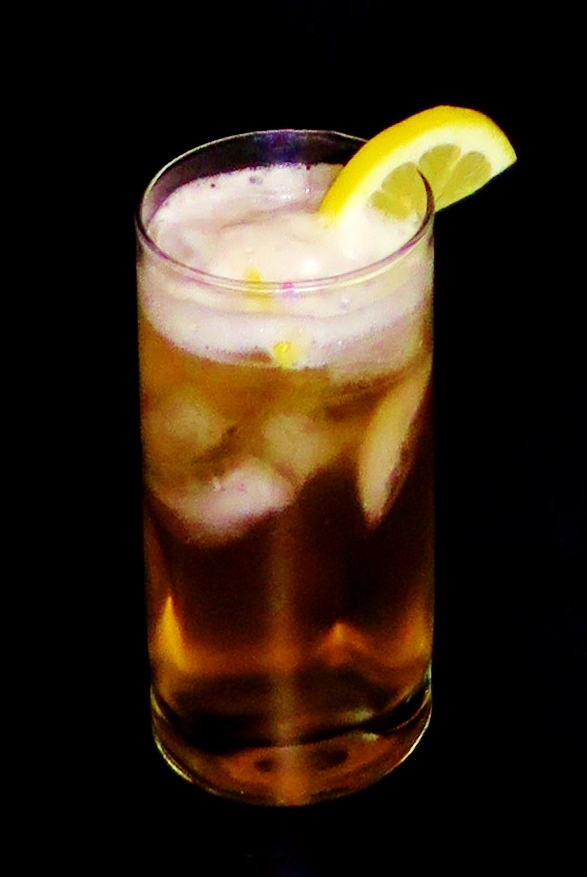
Agwacadabra Cocktail

  • 1 oz Agwa
  • 1 oz Gin
  • 0.25 oz Cointreau
  • Top with Cranberry Juice
  • Splash of Sour Mix
  • Garnish with Cranberries

I’ve never been a big Coca-Cola fan, preferring my mixers to come in the form of Pepsi or Dr. Pepper, but it would be interesting to take a trip (perhaps literally) in the ‘way back machine’ to a time when the soda contained drugs. I’m sure you’d have to down copious amounts of the pop to get any effect, but it might be an experiment worth undertaking!

Sip Advisor Bar Notes (4 Sips out of 5):
Mrs. Sip and I were lucky to stumble upon some mini bottles of Agwa in the Iceland Airport Duty Free, of all places. The Coca Leaf Liqueur is light and has a nice smell and taste to it. I absolutely love the name of this cocktail and it was very tasty with the Gin kicking in at the end of each sip. I had hoped to garnish the drink with a coca leaf, but no such luck.

October 22 – Angry Dan

Festival Phooey

My little sippers, my thesis is simple: the price of some liquor events is insane!

Case in point, Mrs. Sip and I were looking forward to attending our first Vancouver Hopscotch event this November, even making peace with the $50 (plus tax and service charge) cost that came along with the whiskey and scotch lover’s dream experience. That is, until we began looking into just what exactly our near $60 entrance fee entailed.

All you get for your little nest egg of an investment is a souvenir glass and five drink tokens. FIVE tokens! That works out to more than $10 a pop for a little tiny sample. Sure, they bring in stuff from around the world (around 300 products), including some libations you may never have the chance to taste otherwise, but that’s ridiculous value for your hard-earned cash. It also sounded like some booths could charge you more than one token per sample. That could translate to paying $20 or more for a little sip of liquor that you might not even enjoy.

Similarly, I turned down invites this summer to go to the Vancouver Craft Beer Week Beer Festival, not because I had other plans, but because I didn’t agree with the perks of the event. For $35 (plus taxes and fees, of course), attendees received a miniscule three tokens and the typical commemorative taster glass. Why in the world would I pay $10-plus per beer sample, when I could go to many local bars and get the same brews in pint-size servings for the same price? Hell, why wouldn’t I invest that $10 towards an entire pack or case of beers, at any nearby liquor store?

expensive-taste-low-budget

Sure, it only cost $1.10 (they couldn’t just round it off at a buck!?) at Hopscotch and $1.25 at the VCBW Beer Festival, for additional tokens, but that’s just added charges on top of your already high dowry. And guess what, if you happen to get a little hungry, you still have to pay extra for any food that may or may not be available.

For events like these, I’d rather they nix the bands or other entertainment and souvenir glass (how many of these do I really need cluttering up my cupboards?) and give everyone 10 tokens… even then, you’re not getting good bang for your buck. I know many vendors don’t even ask for your ticket or token, but some people (ie. your faithful Sip Advisor) usually gives it up willingly, in order to avoid that awkward moment between server and drinker.

Liquor events aren’t all bad, though. Mrs. Sip and I, along with Ma and Pa Sip, attended the Portland Beer and Wine festival last Easter and what an amazing event that was. For only $20, we received a souvenir glass and a whopping 10 tokens that could be spent on beer, wine, spirits, food items, a used vehicle (okay, not that one), etc. And additional tokens were only $1! Not to mention the live entertainment and info sessions that were all part of the spectacle. We will be back, as info for the 2015 event is already online with deals such as $22 for entry, a glass (wine or beer), and 10 tokens. That’s on top of free entry to the first 500 visitors on the Friday.

bender beer festival

Even in Canada, you can come across great events. In August, to celebrate our 2nd wedding anniversary, Mrs. Sip and I attended the Made with Love cocktail competition. We paid only $55 (the early bird price, but even full fare was only $65) and were treated to unlimited cocktail samples from 13 of the city’s top bartenders. On top of that, food was included and damnit, it was good. It still has me craving fried plantains!

Earlier the same summer, the Sip Alliance went to the annual Tip N’ Taste event in Langley, B.C. We had been a couple times many years before, but had lost interest when event organizers lost their way and dramatically raised prices to the event. This year, the price was back down to what it should be, $25. With that, attendees received five drink tokens and five food tokens with a great variety of vendors on both sides of the equation.

Well, now that I’ve cleared my conscious and had my little rant, let’s have a little drink together!

Sip Commentary #1: Angry Dan

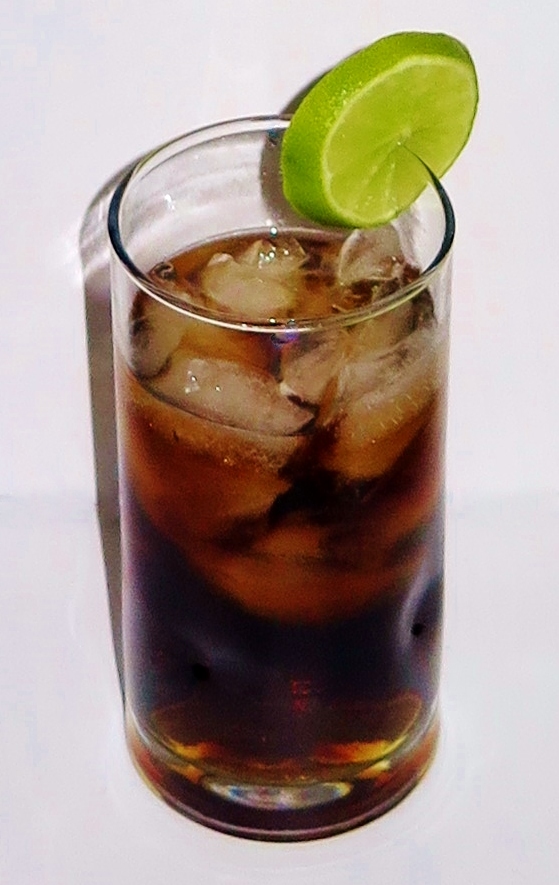
Angry Dan Cocktail

  • 2 oz Southern Comfort
  • 2 oz Fireball Whiskey
  • Top with Cola
  • Garnish with a Lime Wheel

Want to get your own displeasure with liquor event pricing off your chest? Feel free to vent with a profanity-laced comment below!

Sip Advisor Bar Notes (4 Sips out of 5):
For this inaugural commentary (aka rant) post – more to come in the future – I wanted a drink that had the word “Angry” in it and coincidentally, this cocktail actually includes the Sip Advisor’s first name! The drink was quite nice with a soft burn at the end of each sip. The only downside is that it’s a typical liquor and mixer cocktail, lacking any real complexity.

Ukraine – Black Sea Blackout

Hearty Homage

While I’m not of Ukrainian descent in any way, Ma Sip always made a point of celebrating Ukrainian Christmas in late January. With that, came a healthy dose of perogies and cabbage rolls. Borsht is also an originally Ukrainian dish, which has been adapted around the world. You might not want to read this article on an empty stomach, because we’re delving into the best of Ukrainian cuisine!

Borscht

This soup, made from beets, cabbage, potatoes, tomatoes, carrots, onions, and spices is a Ukraine original. There is said to be about 30 different varieties of borscht, depending on ingredients used. Borscht can be served either hot or cold, just like pizza, although I don’t think the Teenage Mutant Ninja Turtles will be going out of their way for soup. The country is also known for a number of other brothy offerings, none of which seem overly appetizing, in the Sip Advisor’s opinion.

Borscht Dog

Similar to the fabled Bible Belt in the United States, there is a Borscht Belt, referring to parts of Upstate New York, where many Jewish immigrants vacationed between the 1920s and 1970s, bringing the Ukrainian dish with them over to America. Also dubbed the Jewish Alps, the area consists of many out of business summer resorts, although many stars got their start performing there, including comedians, singers, dancers, musicians, and variety acts. The area even inspired Fozzie Bear!

Pierogies

Although the pierogy was invented in Poland, it is a staple of Ukrainian meals. The people of Ukraine call these dumplings varenyky and they can be found stuffed with potato and cheese, meat, cabbage, mushrooms, or anything else that meets your fancy. Pierogies can be either savory or sweet and while some choose to boil their dumplings, the Sip Advisor is an advocate for the fried variety, especially if topped with crisp bacon, sautéed onions, and drizzled with ketchup and ranch dressing (freaky deaky!).

Pierogi Eater

The dessert pierogy options are typically stuffed with various berries or even cheese. They are topped with anything from butter to jam to honey. There is even a type of pierogy called Lazy Varenyky and we all know how fond of laziness the Sip Advisor can be. Varenyky monuments can be found in a couple Ukrainian towns and have even popped in in Glendon, Alberta, Canada, and Minneapolis, Minnesota, United States.

Cabbage Rolls

While never likely to make the Sip Advisor’s list of favourite foods, cabbage rolls have a devoted following around the world. In the Ukraine, cabbage leaves are either pickled or parboiled and then usually stuffed with only rice. This was because cabbage rolls were a meal of the peasants and meat was too expensive. Of course, the recipe has evolved in recent times to include meats, vegetables, and even tofu.

Cabbage Rolls Food

Cabbage rolls are typically cooked in or topped with sauces such as tomato juice, beef or vegetable stock, or different soup broths. Variations of this Eastern European classic have travelled the globe, to places including China (bai cai juan); Japan (rōru kyabetsu); Brazil (charuto de repolho); Iran (dolmeye kalam); Quebec, Canada (cigares au chou); and numerous other locales.

Babka

Famously known for its inclusion in an episode of Seinfeld, where Jerry and the gang are picking up a cake for a party they’ve all been invited to and in typical fashion, things go quite differently than intended. The Babka is a sweet bread, often baked with raisins and other dried fruit. It is mostly only produced at Easter to celebrate the resurrection of Jesus Christ – as the dough rises, so shall the lord… or something to that effect!

Babka Barker

Unlike most cakes, which are long/round, the Babka is tall and cylindrical. The Babka dates back thousands of years, with evidence that ancient Greeks and Romans dined of the delicacy. Some versions of the dessert, typically from Sardinia, Italy, are decorated intricately with flowers and become more of an art form than a holiday food item. You’d feel horrible scarfing down something that looked so festive. Now that we have an appetizer, main, side, and dessert, I think it’s time for a drink!

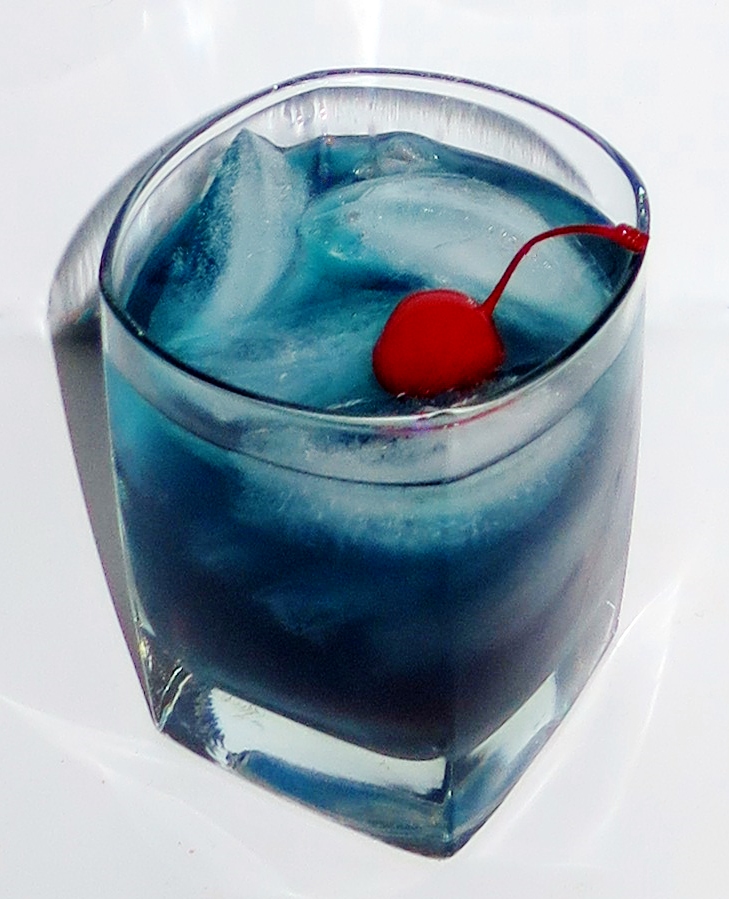
Ukraine: Black Sea Blackout

Black Sea Blackout Cocktail

As I mentioned in one of my 25 Days of Christmas articles, Ukrainians (as well as other Eastern Europeans) also have a 12-course Christmas Eve feast, consisting of 12 meatless dishes, meant to symbolize the 12 Apostles. This year, I will do my own 12-course meal consisting of 12 different flavours of potato chips!

Sip Advisor Bar Notes (4 Sips out of 5):
This cocktail is supposed to use the regular Khortytsa Vodka and more Blue Curacao than I was willing to let into a drink, so I adapted the recipe a smidge. The results were quite nice, especially when paired with my Cran-Lemonade mixer, which is a wonderful addition to any bar. The Honey Hot Pepper Vodka also lends a nice little burn at the end of each sip.

Germany – Black Blood

Beer Bash

It is certainly on mine and Mrs. Sip’s boozy bucket list to one day attend the Oktoberfest event in Munich, Germany. After all, Germany is already a place where we absolutely love the beers, food, and snacks, so why not join some fellow revelers. For now, though, let’s take a journey together to Munich and get into the spirit of the festival. Don’t forget your lederhosen!

Although named Oktoberfest, the event begins on the third weekend of September – coincidentally right around the time of the Sip Advisor’s birthday! – and lasts until the first Sunday of October. The event is over 200 years old and was first celebrated in commemoration of the marriage between King Ludwig and Queen Therese in 1810. The grounds which have always housed the festival are called Theresienwiese and are known by locals as the Wiesn.

Oktoberfest

Only breweries operating within Munich are allowed to supply the festival with their suds and each has a tent on the fairgrounds that holds thousands of people. The beers available include: Hofbräuhaus München, Spaten-Franziskaner-Bräu, Paulaner Bräu, Löwenbräu, Hacker-Pschorr Bräu, and Augustiner Bräu. There’s a couple in that list I know I’ve enjoyed in the past, so things are looking up for Mr. and Mrs. Sip!

In the beginning, the beer was brewed in March with a higher alcohol percentage, so it could last through the summer. It was then expended in the fall, so as to diminish the stock for the next brewing season… and the circle of life continues endlessly. It should be noted that there is also a wine tent during the modern day Oktoberfests, appeasing all walks of life.

The festivities aren’t allowed to begin until an official 12-gun salute, followed by the mayor announcing “O’ zapft is!,” meaning “It’s tapped!” The first mug of ale is then handed to the Minister-President of the State of Bavaria, and only then can us regular folks start boozing. Oktoberfest has a carnival feel to it, as the event began as a county fair, featuring horseracing, various contests, and freak shows. The activities have changed over time, but the freak show is now just a natural occurrence.

Oktoberfest Punishment

If accompanied by an adult, 14 year olds are allowed to partake in all the joys of Oktoberfest and 16 year olds can join the fun on their own accord. Young children are even allowed to attend the festival (without drinking), although I’m not sure I’d want to leave my kids at any daycare tent there. The child crowd has resulted in numerous cases of missing kids, as many as 100 reports in 2012, thanks to parents imbibing a little too much.

In fact, the Lost and Found department is quite busy during Oktoberfest, having approximately 4,000 misplaced items come to their attention each year. Other lost possessions have included cell phones, wallets, passports, glasses, keys, clothing items, dentures, crutches, wheelchairs, strollers, and even dogs. Perhaps the most bizarre item turned in was a Viking helmet… although, it does kind of fit the whole theme.

Although swigging from glass beer steins is a highlight of the party, they weren’t used until 1892. Before that, stone and metal steins were filled with wonderful German brews. The current glass is called a Maß (good luck with the pronunciation!), which holds 1 litre of beer and will cost around €12 each pour. These steins are great souvenirs, but rather than purchase one, many tourists will try to steal it (Mrs. Sip, I’m looking at you!). This can result in a charge of theft if caught by security guards.

Oktoberfest Lost Child

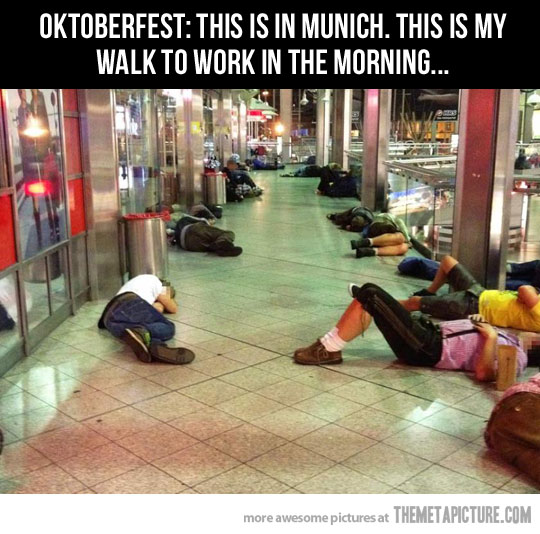
If you can’t handle the stronger beer mixed with hot temperatures, you may be labeled with the term Bierleichen, which translated means Beer Corpse. Water and pop are also available for purchase to quench your thirst, but cost nearly as much as the booze, so you might as well keep drinking beer. Food options include roasted chickens, sausages, giant pretzels, and other traditional German fare.

Some downsides: While tourists may have visions of oom-pah bands playing the day away, while getting their drink on, music above 85 decibels isn’t allowed to be played until after 6:00pm. Also, to use a toilet, you will likely be charged, but that’s no different to other parts of the country and continent. This concept has provided some funny stories for the Sip Advisor over the years and travels.

To get a spot in one of the packed tents, visitors may have to purchase food and drink vouchers beforehand, sort of a reservation, exhibiting that you will make full use of the tent and drop some good money inside. Similarly, hotels book up very quickly during this time and making arrangements one year in advance is common. The price for accommodation will also be at a premium, so beware!

Oktoberfest Sleep

In 2004, a counterfeit ticket ring was busted after waiters inside a couple of the tents contacted police when they were handed suspicious vouchers. Had the scheme worked, the beer companies would have lost about $500,000 thanks to the nearly 30,000 forgeries. Sticking with crime, stein fights are known to occur and serious injuries have happened. Prosecution can lead to sentences of between six months and life in prison, depending on severity of the injuries.

Sadly, Oktoberfest has been forced into cancellation 24 times, mostly as a result of war and cholera epidemics. There were also issues during the 1920’s depression, which caused the event to be missed. On the bright side, Paris Hilton was banned from future Oktoberfests after attending the festival in 2006 as a spokesperson for a local canned wine product. She was said to have cheapened the event… a serious no-no in Munich circles.

Amid all the celebrating, a terrorist attack occurred at the 1980 Oktoberfest, where a pipe bomb was detonated, killing 13 people and injuring more than 200. Officials concluded that it was the work of right-wing extremist Gundolf Köhler, who died while placing the explosive. There is some dispute over whether Köhler acted alone or was part of a larger conspiracy.

Oktoberfest 2013 - Opening Day

The festival has jumped into the digital age with a few apps that enhance the whole experience. The event’s official app lets users input their height, weight, and how much beer they’ve consumed to learn their blood-alcohol level and how long it will take to sober up. There’s also the ‘Wiesn Flirt and Find’ app, which allows visitors to meet on the grounds for romance, a quick hook-up, or whatever else they may fancy.

If you can’t get to Germany, Oktoberfest events around the world include: Cincinnati, Ohio (largest in the United States); Denver, Colorado; Kitchener-Waterloo, Ontario (largest in Canada); Blumenau, Brazil; Lima, Peru; Hong Kong, China; Bangalore, India; Hoh-Chi-Minh City, Vietnam; and Taybeh, Palestinian, of all places. Taybeh is home to the only brewery in all of the West Bank region.

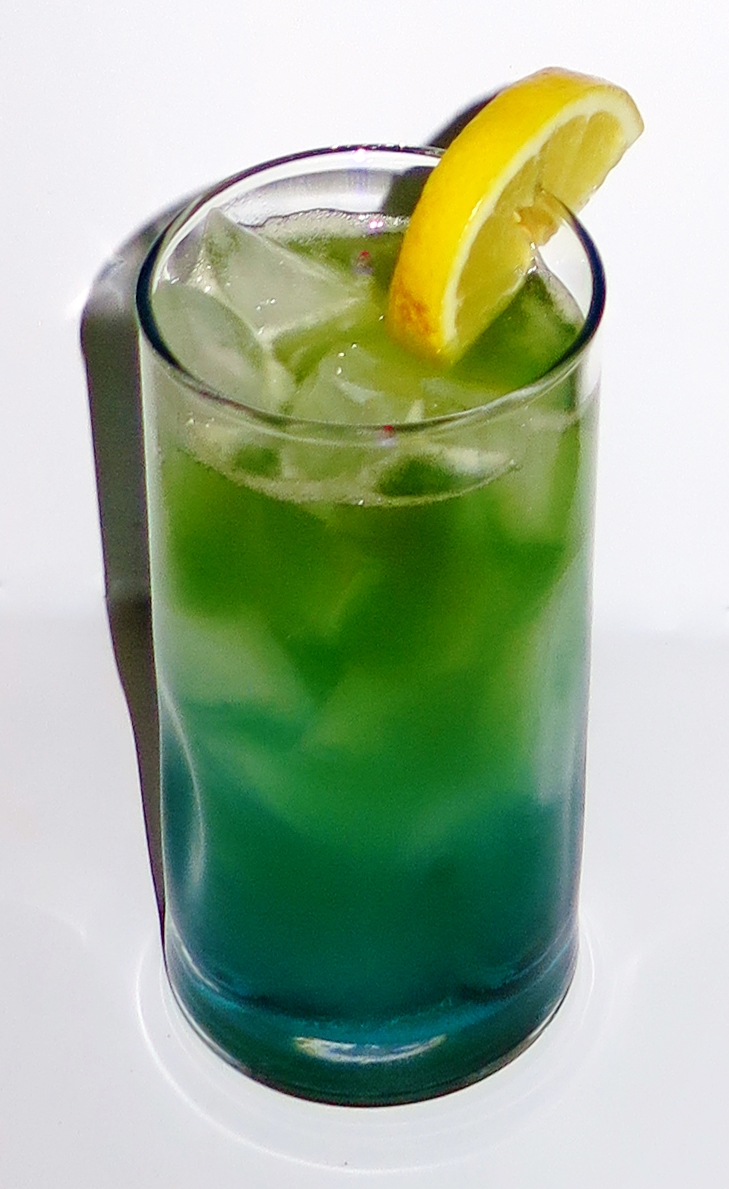
Germany: Black Blood

Black Blood Cocktail

  • 1 oz Jagermeister
  • 1 oz Blue Curacao
  • Top with Squirt
  • Garnish with a Lemon Wedge

If anyone out there wants to sponsor the Sip Advisor’s trip to Oktoberfest, that would be awesome. In exchange, I’ll try to steal a stein for you, risking freedom and well-being for my generous benefactor. I think it would totally be worth it!

Sip Advisor Bar Notes (3.5 Sips out of 5):
As per usual, I went with Grapefruit Soda over Grapefruit Juice because I’ve learned over time that I just don’t like heavy juices (orange, pineapple, etc.) in my cocktails. These colours came together really interestingly, with the yellow Squirt turning some of the Blue Curacao and Jagermeister green. It certainly isn’t black, like the drink’s name would have you thinking.

Norway – Cloud Walker

Munch Mix

Norwegian artist Edvard Munch is famous for his masterpiece, The Scream. Let’s take a look at the man and what drove him to create such a haunting image, which is universally appreciated and an icon of Norway:

Munch was born on Decmber 12, 1863 in Löten, Norway, the second of five children. Tragedy seemed to follow the Munch family. When Edvard was very young, his mother died from tuberculosis, followed by one of his sisters. Another sister was troubled with mental illness issues and committed to an asylum in her teens and a brother died young after a bout of pneumonia. Munch, himself, suffered from mental health issues, which were exacerbated by alcoholism. The artist spent periods of time in a private sanitarium.

the-scream-grumpy-cat

After originally studying to be an engineer, Munch left school to pursue art, which he did at the Royal School of Art and Design, starting in 1881. From there, he rented a studio with six other artists, with the intention of creating an exhibition. Munch specialized in Expressionism and some historians believe he was the father of the movement, before it took off in the early 1900’s.

Munch’s first major work was called The Sick Child and illustrated the death of his sister. It was also based on times he visited ill patients with his father, who was a doctor. When it was first unveiled, the painting drew harsh criticism, with many detractors claiming the piece was unfinished. Munch made six copies of the painting, which reside in galleries around the world.

After moving to France in 1889, Munch got down to business, creating a number of pieces based on feelings for the 1902 Berlin Exhibition. These works included Despair, Melancholy, Anxiety, and Jealousy. Munch’s claim to fame, The Scream, was also created during this period. It is actually based on a real location in Ekeberg, Norway. With Oslo pictured faintly in the background, past the safety railing and down the hill was the sanitarium which housed Munch’s sister. There was also a slaughterhouse nearby and it’s claimed that screams could be heard emanating from both buildings.

The Scream Cat

There are four versions of the famous image. One hangs in the Norwegian National Gallery, one in the Munch Museum, and pastel and lithograph varieties also exist. The National Gallery’s version of The Scream was stolen in 1994 on the opening day of the Lillehammer Winter Olympics, with the two male burglars leaving behind a note that read: “Thanks for the poor security.” The National Gallery refused to pay a $1 million ransom for the piece and a police sting operation recovered the painting a few months later, as well as procuring convictions against four men that were later overturned.

The Scream was also one of two pieces stolen from the Munch Museum in Oslo, Norway in 2004. Masked gunmen nabbed The Scream, as well as Munch’s ‘Madonna’. The work suffered some damage before it was recovered in 2006. The piece was put on display for a short time, with damage and all, before disappearing for restoration work. It finally returned to being on display again in 2008. In all, six men were arrested in connection with the theft.

In 2012, The Scream sold for $120 million U.S., breaking the record previously set by Pablo Picasso’s “Nude, Green Leaves and Bust,” which went for $106.5 million U.S. in 2010. The piece went up in value because the frame is also painted by Munch and includes a poem describing his motivation for creating it. Bidding began at a mere $40 million, with the auction lasting more than 12 minutes.

the-scream movie

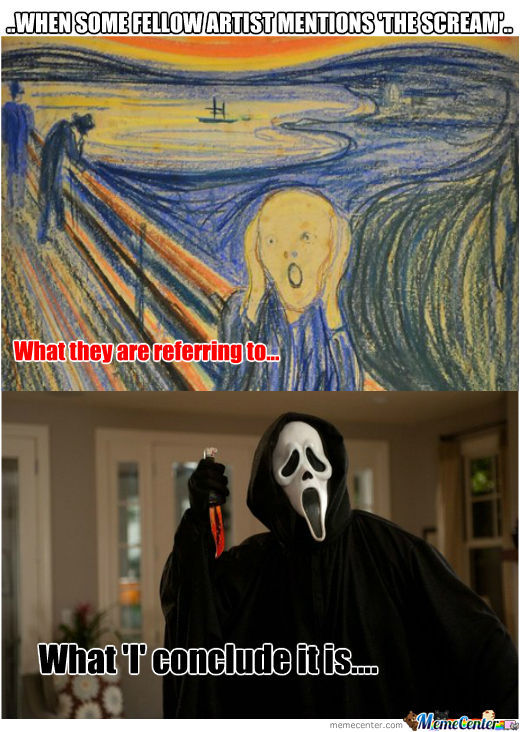
The Scream has found its way into numerous avenues of popular culture. It was the inspiration for Ghostface’s mask for the Scream movie franchise, which is known the world over. Pop artist Andy Warhol recreated the piece as a silk print, which became quite famous. It was also chosen by the Norwegian Postal Service as one of four Munch works to be turned into stamps. Imaging getting a letter with that haunting face staring back at you. No wonder so many Scandinavians go crazy!

In 1938, The Nazi’s declared Munch’s catalogue of work “degenerate art” and removed his collections from German galleries, putting them up for auction. Norwegian art dealer Harald Holst Halvorsen (the original Triple H) nabbed as many of the pieces as he could to return them to their homeland. Halvorsen then distributed some of the pieces to other parts of the continent, based on discussions he had with Munch and Munch’s desire for recognition in other parts of Europe.

Munch moved to Ekely, Norway and chose to live mostly in isolation, where he died on January 23, 1944, aged 81. He enjoyed painting the landscape and farm life in his twilight years, but perhaps more importantly, he did a fair bit of work on nude paintings with a slew of female models, some of which he likely had relationships with. Now, that is the mark of a true master!

Norway: Cloud Walker

Cloud Walker Cocktail

  • 1 oz Cloudberry Liqueur
  • 0.75 oz Whiskey or Bourbon
  • Top with Lemonade
  • Splash of Lime Juice
  • Garnish with a Lime Wedge

I must admit, that as I did research for this article, I was able to appreciate The Scream and other works by Munch more. Sadly, when the Sip Syndicate visited Oslo and tried to visit the Munch Museum, the place was closed. We all screamed in agony and then went to drown our sorrows at a nearby bar!

Sip Advisor Bar Notes (4.5 Sips out of 5):
Lemonade goes so well with Whiskeys and Bourbons. Luckily I’ve been around recently when a couple friends have had doubts to that. The Cloudberry Liqueur is the icing on this classic southern recipe cake and this was a wonderful cocktail which I will serve again in the future!

Norway – Kitten Cuddler

Raid and Pillage

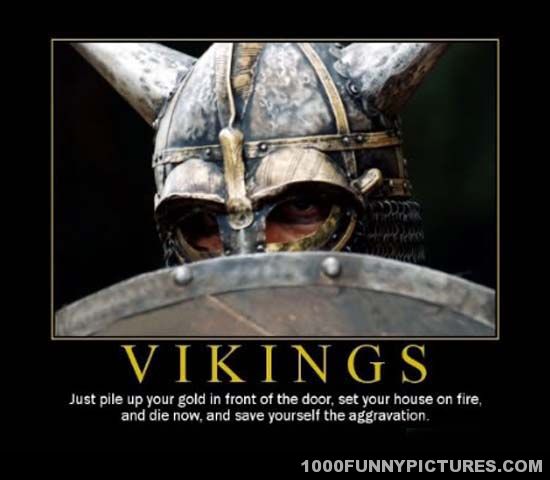
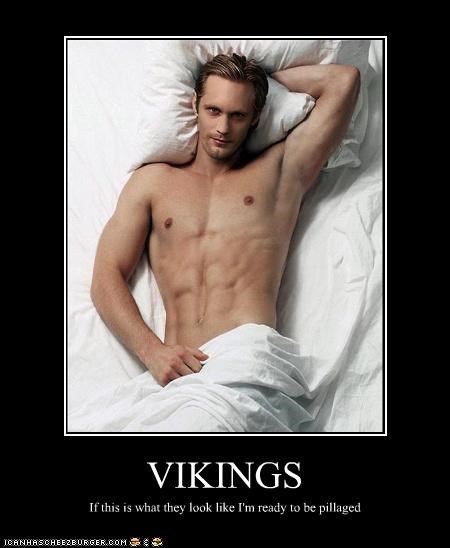
The Vikings have a badass reputation and frankly, it’s well deserved. Many of these figures, hailing from Scandinavia and particularly Norway, have rap sheets that would make a writer for Game of Thrones light up, as it opens new doors to wrath and associated violence. Let’s take a look at the exploits of some of the greatest Vikings:

Erik the Red

Erik the Red’s early life was built around repeatedly being exiled after committing murder. Therefore, he created his own Viking colony on what is now Greenland, which he also discovered. There, Erik the Red was free to do whatever he wanted. Although bloodshed is largely associated with Erik, his nickname ‘The Red’ more likely referred to his hair and beard. He was father to other Viking notables, explorer Leif Eriksson and warrior princess (not Xena) Freydis Eriksdottir.

Vikings-Give Up

Ragnar Lodbrok

In order to prove he was a badass to a princess, Lodbrok demolished a horde of invading poisonous snakes. Karma caught up to him eventually, though, as he was executed by being thrown into a pit of serpents. Although Lodbrok’s actual existence has been questioned, he was said to be father to other legendary Vikings, including Björn Ironside, Halfdan Ragnarsson, Sigurd Snake-in-the-Eye, and Ivar Ragnarsson.

Ivar Ragnarsson

Speaking of the devil, Ivar was a ruthless warrior who used captured kings as playthings, expending them for target practice and other horrific executions. Ivar’s nickname, ‘The Boneless,’ was thought to refer to anything from an ailment causing his bones to break easily, to being impotent, to being incredibly flexible. Regardless, Ivar ruled parts of what is now Denmark and Sweden, as well as Dublin.

Leif Eriksson

Eriksson is most notable for discovering North America (500 years before Christopher Columbus), although the finding was likely accidental. He had meant to return to Norway, but his ship was blown off course towards modern day Canada. Eriksson was more of an explorer and not a Viking in the classic raid and pillage sense. He was said to be quite intelligent, while also possessing the strong frame of a typical Viking. The U.S. even celebrates Leif Eriksson Day every October 9th!

Vikings Pillaged

Eric Haraldsson

Eric had a thirst for blood and power, even killing his own brothers to become King of Norway. This earned him the moniker, Eric Bloodaxe. His reign over the Norwegian kingdom was short-lived, however, as one remaining broski returned and overthrew Eric, who had angered many of the nobility with his ruling tactics. Eric turned his attention to Northumbria and became king there, before dying in battle.

Sweyn Forkbeard

Forkbeard first came to prominence by going to war with his own father and emerging as the King of Denmark, upon being victorious. Following that, it seemed he held a major grudge against England, attacking them repeatedly over the rest of his life and even ruling the realm for a time. His anger towards England was thought to be based on his sister dying during the kingdom’s massacre of Danish citizens. Forkbeard also invaded Norway and divided up the country with his allies.

Vikings Fight

Harald Hardrada

While exiled from Norway, Hardrada became leader of the Byzantine emperor’s Varangian Guard. When he returned to Norway, he fought to become king. Hardrada means “Hard Ruler,” a name he received for his constant wars and harsh reign. Hardrada believed he had a claim to the throne of England, upon the death of that king, and died in battle, after being shot in the throat with an arrow, trying to make good on his perceived right.

Egil Skallagrimsson

Skallagrimsson was both a warrior and a poet, covering every aspect that makes a lady swoon (not to mention the namesake of an Icelandic brewery!). He is said to have written his first works at the young age of three, but also killed for the first time at seven years old. When the Norwegian king grew tired of Skallagrimsson’s exploits, he was exiled and began his years of terror, amassing a fortune and high kill count. He even murdered the slave who helped him bury his treasure.

Norway: Kitten Cuddler

Kitten Cuddler Cocktail

  • 1 oz Vodka
  • 1 oz Crème de Bananes
  • 0.5 oz Cloudberry Liqueur
  • Top with Lemon-Lime Soda
  • Splash of Apple Juice
  • Splash of Lemon Juice
  • Dash of Grenadine
  • Garnish with a Lemon Wedge

I wonder what my Viking nickname would have been. I’m thinking Word Whisperer sounds alright, but I’d hope my contemporaries would incorporate my legendary boozing into the moniker and call me something like Liquor Leviathan!

Sip Advisor Bar Notes (5 Sips out of 5):
Cloudberry Liqueur is made from berries found in Norway. This is quite the complex recipe, but it is totally worth the intricate construction. I think the cocktail name is quite funny in contrast to the article it’s combined with… kitten cuddlers and raiding and pillaging Vikings don’t really go hand-in-hand. I topped this cocktail with my Bols Banana Liqueur foam and it was a perfect touch to the drink.

Guyana – Hart of Darkness

Cult Following

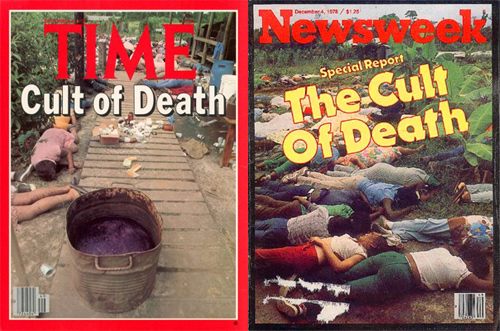
While we happily looked at the legendary city of El Dorado after arriving in Guyana on this worldwide tour, today we take a somber twist and discuss the Jonestown Massacre, an event which brought the most international attention to Guyana, following the mass suicide/murder of 909 Peoples Temple cult members:

First, let’s get some background on these folks. The Peoples Temple was founded in 1956 and led by reverend Jim Jones. First established in Indianapolis, Indiana, the church was moved to Redwood Valley, California in 1966. Seeking to build a communistic community, free from the U.S. government’s involvement, the Peoples Temple set up shop in Guyana after buying jungle land from that government in 1973.

jonestown_news

As an article about Jones was set to be printed, featuring quotes from ex-Peoples Temple members, the cult leader moved his operation to Guyana, dubbing the compound, Jonestown. Things got off to a rocky start in Jonestown, as there weren’t enough cabins, making those that existed overfilled. Followers were also split up according to gender, separating married couples and families.

The conditions were rough in the humid jungle, where members were required to work long days and rest wasn’t rewarded in the evening, as Jones broadcast his non-stop thoughts over a loudspeaker all through the night. Followers weren’t allowed to leave the armed-guarded compound and escape was futile, given the remote location deep in the bush.

On November 18, 1978, U.S. congressman Leo Ryan, who was visiting Jonestown (along with worried family members of Peoples Temple worshippers and various news crews, reporters, and photographers) after hearing stories about the situation, offered to bring anyone who wanted to leave the compound back with him to America. Only a few followers accepted the proposition, scared of Jones and his power.

Jonestown Airport

As the group was set to leave, a Peoples Temple member attempted to attack Ryan. This let the whole group know they were in danger and they made their way to the nearby airport, but tragically, the planes weren’t ready to take off yet. As the ensemble waited, cult followers opened fire on them, killing five, including Ryan. Ryan’s death made him the first congressman to perish during official government duty.

Jones gathered his worshippers, told them of the attack on Ryan and his group, and warned them of repercussions from the U.S. government. He advocated for a “revolutionary act” of mass suicide and quelled the one objection to the plan. Tubs of a grape-flavoured drink (I never was a fan of grape drink), mixed with cyanide, chloral hydrate, and Valium were brought out and distributed to members – women and children first – with armed guards enforcing everyone to drink the potion.

It only took approximately five minutes for the whole congregation to perish, 303 of which were kids. As for Jones, he died after being shot in the head, although it’s inconclusive if the bullet was self-inflicted or not. Only 33 people (some of them children) survived the whole ordeal, including members who hid within the compound, escaped into the jungle or were part of the group not killed at the airport.

Jonestown Tombstone

It was later discovered that Jones, referred to as ‘Dad’ by his followers, was addicted to various drugs, which didn’t bode well for his rampant paranoia. Jones had even been arrested in the men’s room of a Los Angeles movie theatre, five years before the tragedy, for soliciting sex from an undercover cop. Although sex was banned (LAME!) at Jonestown, Jones regularly participated in intimate acts with female and male worshippers, saying it was to bring them a closer connection to him.

While the massacre bred the term ‘Drink the Kool-Aid,’ Kool-Aid wasn’t even the refreshing beverage used at all, but a knockoff called Flavor-Aid. I hope the fine makers of Kool-Aid, represented legally by their mascot the Kool-Aid Man, took every person who used the line to court and if they didn’t change their ways, were the recipient of one of Kool-Aid Man’s classic wall crashing “Oh-Yeah’s.”

Today, what was once Jonestown has disappeared back into the jungle landscape, with the buildings destroyed and the plant life overgrowing and dominating the area again. The massacre was the greatest loss of U.S. civilian life (not including natural disasters) until the September 11, 2001 terrorist attacks.

Guyana: Hart of Darkness

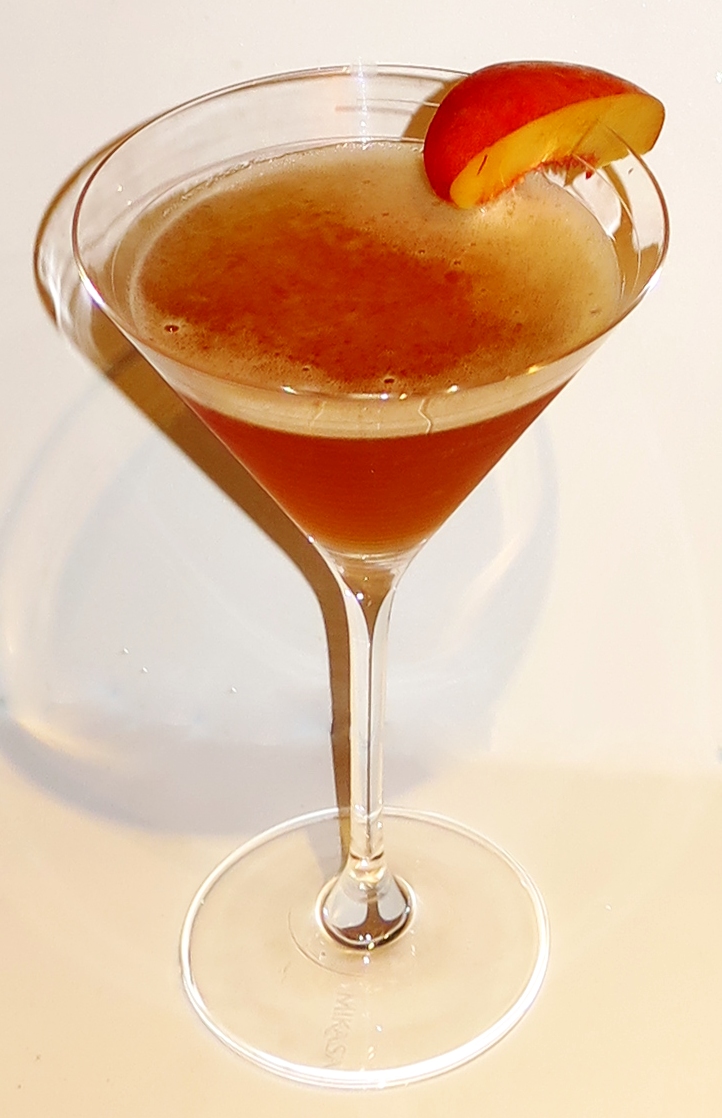
Hart of Darkness Martini

  • 1.5 oz Lemon Hart Rum
  • Top with Club Soda
  • Splash of Sweet & Sour Mix
  • Dash of Passion Fruit Syrup
  • Dash of Honey
  • Garnish with a Peach Wedge

It’s crazy to think that anyone can be swayed so dramatically as to kill themselves and allow their families to suffer such a horrible fate. Tragically, cults have popped up from time to time across the globe, feasting on the minds of the weak and needy. At least in the Cult of Sip you get frequent doses of booze… join me, won’t you!?

Sip Advisor Bar Notes (4 Sips out of 5):
This was a very nice martini, but I wonder if I would have enjoyed it more had I subbed in Lemon-Lime Soda, rather than Club Soda to give it a little more flash and flair. The Lemon Hart Rum is quite nice and will make for many good cocktails in the future.

Guyana – Gold Way Cocktail

Gold Digger

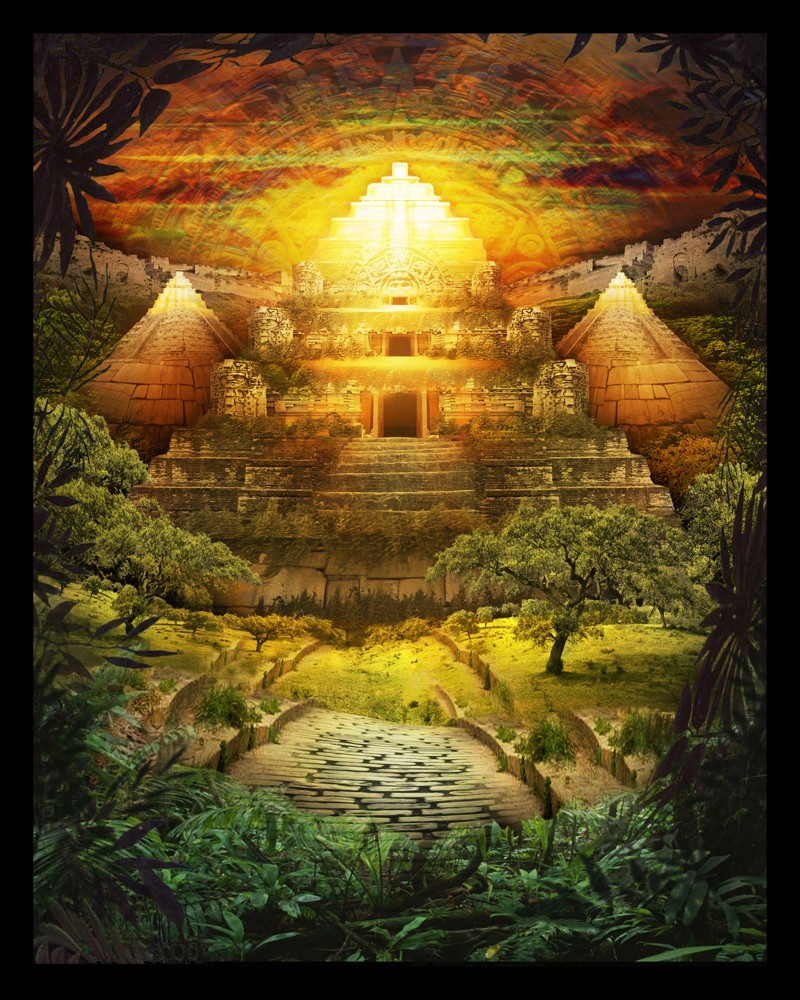
Guyana is said to be the location of the fabled El Dorado, or as it’s more popularly known, the Lost City of Gold. Like Scrooge McDuck and Flintheart Glomgold, I intend on finding this massive fortune, so join me if you dare, as we discover the truth about this lucrative legend!

The term El Dorado first referred to the king of the Muisca people, who were based in what is now Colombia. He would powder himself with gold dust and then jump into Lake Guatavitá as an offering to the creators of the universe. After learning of the legend, Spanish conquistadors swiftly conquered the Muisca folks, but when their findings of gold were so minimal, they refused to believe that they had actually located El Dorado and continued their fruitless search.

El Dorado

As with many legends, its stature grew with time and retellings, changing from being about a king to an entire city of gold. With occasional minor hauls of gold, inspiration continued to thrive, but the mother lode was never located. The Spanish weren’t alone in their pursuit of the wealthy empire and were joined by German explorers and even some English. Sadly, when Sir Walter Raleigh failed to find the city after two expeditions, he returned to England and was executed.

Another element that helped spread the myth was the various South American civilizations, who were getting slaughtered, realizing that the best way to get rid of the invading treasure seekers was to tell them that El Dorado was not where they currently were, but somewhere further on. This kept the search continuing and widening to the furthest reaches of the continent.

On the plus side, this all led to great advancements in exploring and mapping South America. Most notably, Francisco de Orellana discovered the Amazon River and traced it to the Atlantic Ocean. Maps in Europe during this time, even depicted the fabled golden city as existing in the mountains of Guyana. Of course, it was never actually found there, but like the Lost City of Atlantis, that doesn’t mean people have stopped searching for it.

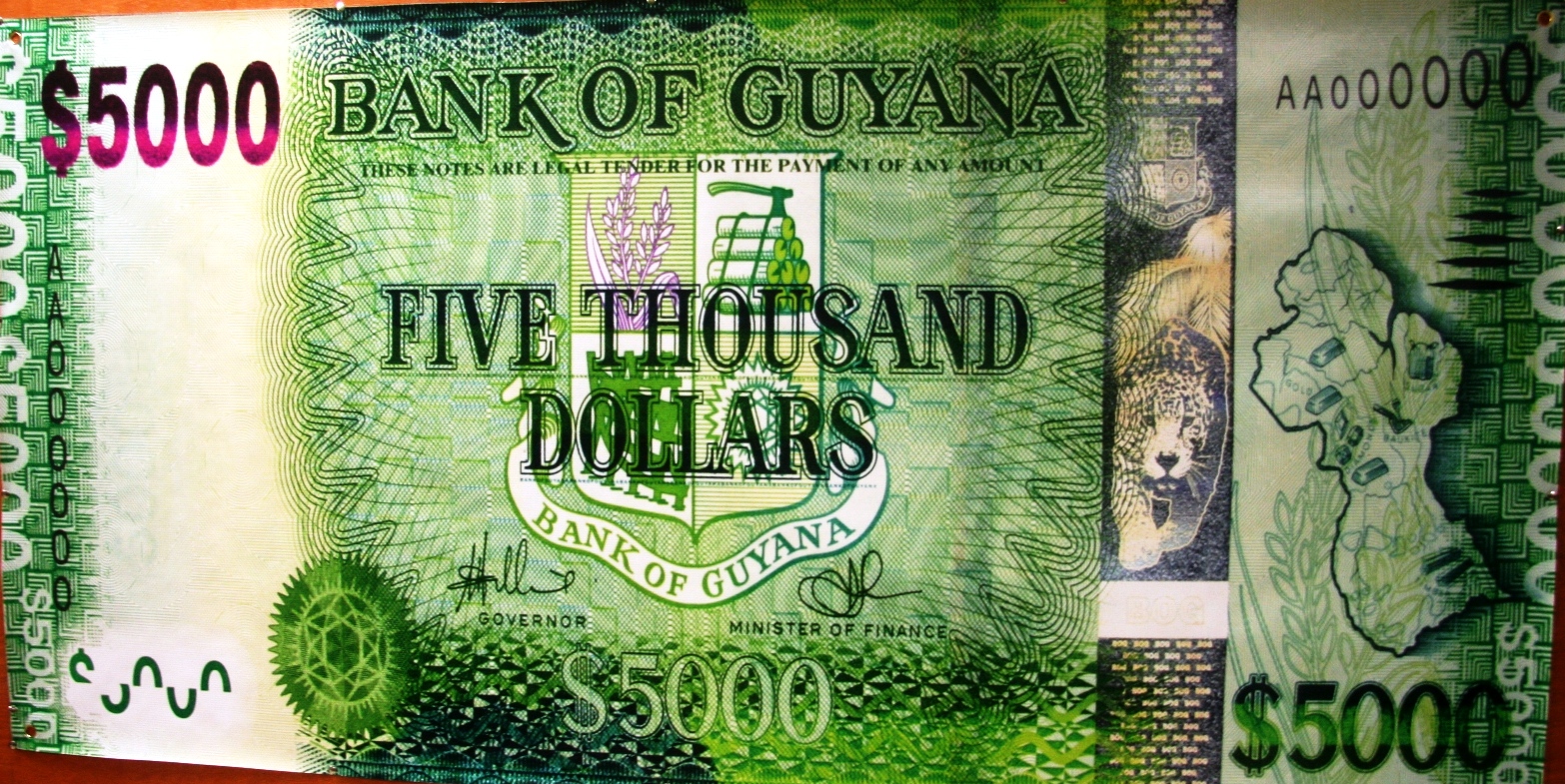
Guyana Money

Maybe El Dorado is in Guyana, given they’re rocking $5,000 bank notes!

Lope de Aguirre became known as the ‘Madman of El Dorado’ when he usurped power over an expedition led by Pedro de Ursúa, murdered many in the party and went on to attack Spanish settlements, declaring his group independent from Spain. Aguirre was finally dealt with by the Spanish, but not before leading a brief reign of terror. Perhaps he went insane in his search for the lost city.

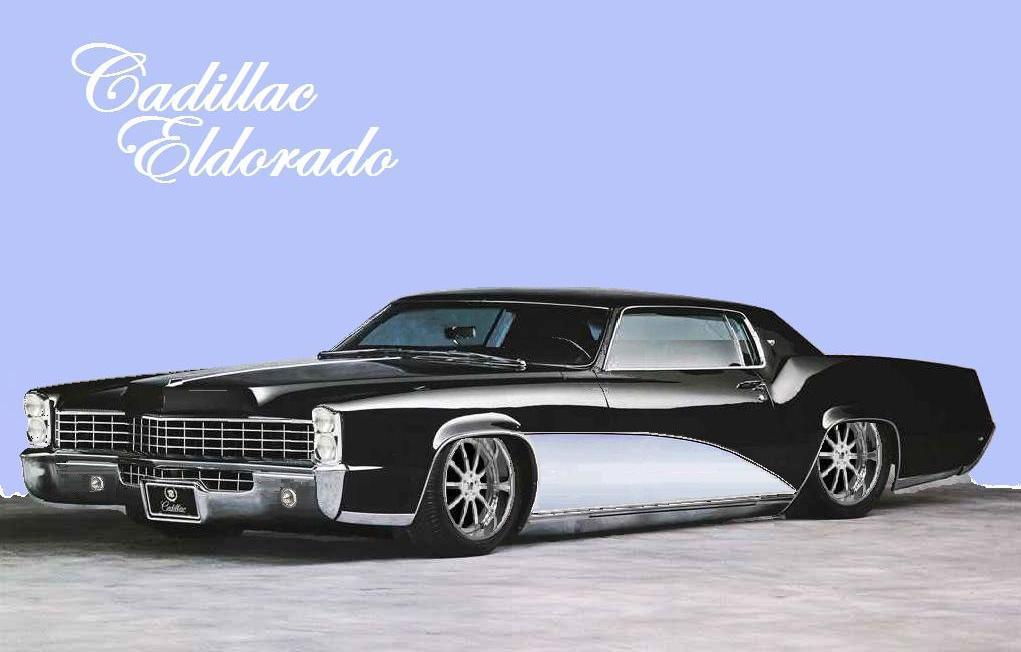
The El Dorado name has spread across the globe, often being used as a moniker for a mining town or other place that riches can be sought quickly. There’s El Dorado County in California and in contrast, Helldorado was a nickname earned by Tombstone, Arizona. Both the El Dorado and Helldorado tags have been used by beer brewing companies. Also, General Motors bestowed upon its most expensive model the name Cadillac Eldorado, in honour of the mythical city.

Cadillac-eldorado

DreamWorks animated film The Road to El Dorado may be the most recognized piece of popular culture referencing the myth. Starring the voice talent of Kevin Kline and Kenneth Branagh and having a stacked lineup for its soundtrack, the movie follows two Spanish explorers who discover the Lost City of Gold and are viewed as gods by the citizens of El Dorado. They try to con these fine El Doradians in the hope they can get away with all their loot and hijinks ensues.

The concept of El Dorado has been turned into metaphor, as it could involve anything a person longs for, whether that be wealth, love, happiness, etc. It can also be used to describe something unattainable. If you are said to be “looking for El Dorado,” you’re basically being told that your mission is hopeless and will result in nothing but misery. The Sip Advisor’s ‘El Dorado’ may be the success of this site and thankfully for all you little sippers, I’m just too dumb to give up!

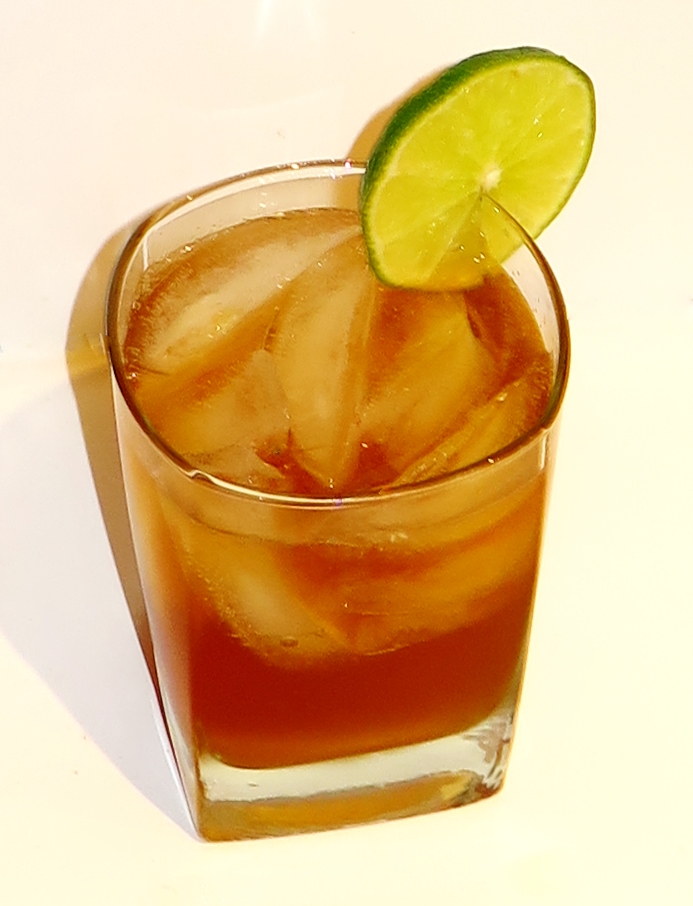
Guyana: Gold Way Cocktail

Gold Way Cocktail

  • 1.5 oz Lemon Hart Rum
  • 0.5 oz Galliano
  • Top with Club Soda
  • Splash of Lime Juice
  • Garnish with a Lime Wheel

I think it would have been fun to live in a time when all these mysteries weren’t disproved… when a sense of adventure and discovery existed and we couldn’t just Google everything to learn the answer. That said, I’m quite comfortable playing around on the internet, rather than going out to find answers on my own, so let’s just call the whole thing a wash!

Sip Advisor Bar Notes (4 Sips out of 5):
The recipe calls for Vanilla Syrup, but I subbed in Galliano instead and it was the highlight of the drink, coming in at the end on top of the Rum and Club Soda. I should also note that there is an El Dorado rum out there, that would be even more interesting if it included gold leaf!

Morocco – Night in Casablanca

Lights, Camera, Action

If we’re being honest, for some people, the only exposure they have to Morocco is through the classic film Casablanca. Ironically, not a single scene of the movie was filmed on location in the city for which it’s named. Morocco, however, has become a popular destination for some of the world’s greatest directors and stars. These popular productions share Morocco as a location, despite rarely being set in the African country:

Game of Thrones

The immensely popular HBO TV series has filmed scenes around the world and that includes Morocco (Ait Benhaddou and Essaouira), which has provided the setting for the cities of Yunkai, Astapor, and Essos. This is where Daenerys Targaryen travels in season three to build her army. Morocco was also used in the pilot episode of the series and can perhaps take a little credit in the massive success of the show… but probably not the copious amount of sex, nudity, murder, and other misdeeds.

game-of-thrones-naked

Lawrence of Arabia

This cinematic gem was originally pegged to be filmed entirely in Jordan, but added other locales during production. Ouarzazate, Morocco doubled for the Syrian town of Tafas (site of the Tafas massacre), with Moroccan armed forces subbing in for the Turkish army. Apparently filming was problematic because of the unaccommodating soldiers. In the end, all Arab countries (except for Egypt) banned the movie due to its portrayal of Arabian culture.

The Mummy & The Mummy Returns

While four days was about all the Sip Advisor needed in Marrakesh, the first Mummy production stayed for 17 weeks. Kidnapping insurance was taken out on each of the movie’s stars, who weren’t told of this until shooting had wrapped. The sequel only used the Erg Chebbi Dunes as its “Egyptian” desert. For some reason, Morocco wasn’t used for The Scorpion King prequel to the franchise, nor the third film in the trilogy Tomb of the Dragon Emperor, although that story was based out of China.

Inception

The Christopher Nolan, Leonardo DiCaprio thriller featured a couple scenes filmed in Morocco, most notably the exciting chase scene set in the narrow alleys of the Tangier, Morocco medina. It also served as the place where Dominick Cobb adds con artist Eames and chemist Yusef to his team, prior to the dash. Finally, it is the setting for the riot images, as Cobb infiltrates Japanese businessman Saito’s mind at the start of the film.

inception-explained

The Man Who Knew Too Much

Another Alfred Hitchcock-Jimmy Stewart collaboration which sees an innocent family become embroiled in an international assassination plot, with their son even being kidnapped. The opening scenes of the film, including the murder of a French intelligence operative, are all filmed in Marrakesh, where Stewart and family are vacationing. This movie (murder, kidnapping, and assassination plots, oh my) provided the basis of what I expected from Morocco!

Gladiator

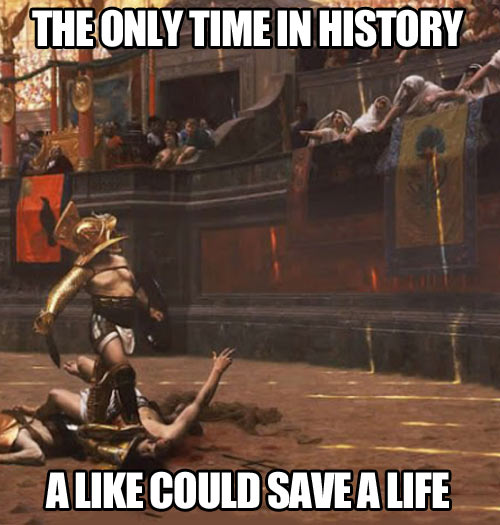
While this Ridley Scott, Russell Crowe epic is set in the Roman Empire, a large chunk of the movie was actually filmed in Ouarzazate, Morocco (which Mrs. Sip and I visited). This Berber city provided the location for Maximus’ gladiator training, early slave life, and scenes traversing the desert. A mud brick stadium for the battle sequences was built using local techniques. I guess that’s all fair enough, given the Roman Empire did extend into Africa.

gladiator-like-life

Othello

One of the first foreign productions to capitalize on Morocco as a filming destination, this Orson Welles adaptation of William Shakespeare’s classic tragedy ran into a number of logistical issues, resulting in using some unique filming techniques. This included a battle sequence was first filmed in Morocco, but finished while on location in Rome a few months later. When the film won the Palme d’or at the 1952 Cannes Film Festival, it was recognized as a Moroccan creation.

Prince of Persia

While perhaps not on the same level as the other films listed in this article, I have to mention this one, because Mrs. Sip and I were inside one of the Berber homes used during a battle scene of the movie. In fact, the production spent eight weeks in Morocco, which isn’t a huge surprise given the movie largely takes place in the desert. Hell, the movie’s subtitle is The Sands of Time… Morocco was an obvious choice for filming.

Morocco: Night in Casablanca

Night in Casablanca Cocktail

  • 2 oz Mahia
  • 1 oz Dry Vermouth
  • 0.25 oz Bourbon
  • Dash of Peychauds Bitters
  • 1 Sugar Cube
  • Garnish with a Lemon Wheel

Of course, not every movie made in Morocco is a classic… after all, Sex and the City 2 filmed there. Given it was hard for our crew to find cocktails around the country, I wonder how easily the girls were able to locate their favoured Cosmopolitans!?

Sip Advisor Bar Notes (2.5 Sips out of 5):
This cocktail was pretty strong, but the ingredients come together well. The Sugar Cube really helps even out the drink. Mahia is an interesting spirit and I’m not quite sure how I feel about it yet. I’ll have to give it another shot and see how it works out with different bed fellows…