St. Louis Blues – Monday Night Miracle

Throughout the year, the Sip Advisor will alphabetically travel the National Hockey League (NHL), discovering the best and worst each team has to offer in a variety of subjects. We will also feature a drink based off the franchise. Today, we journey through the Gateway to the West, checking in with the St. Louis Blues:

Establishment Story: The Blues entered the NHL during the 1967 expansion from the Original Six to 12 teams. The league had previously dabbled with the city by relocating the original Ottawa Senators there, becoming the St. Louis Eagles. The Eagles played one season (1934-35) before folding. The Blues are named for the W.C. Handy song Saint Louis Blues, released in 1914.

Stanley Cups: The Blues lone Stanley Cup victory occurred in 2019. The team also made the Stanley Cup Finals three times in their first three seasons, when the league’s divisions were split into the Original Six and the 1967 expansion teams (Next Six). St. Louis lost each time, twice to the Montreal Canadiens and once to the Boston Bruins. Revenge against Boston finally came with that 2019 championship.

Celebrity Fan: There are a number of famous supporters of the Blues, including actors Jon Hamm and Jenna Fischer, who both call St. Louis home. Hamm and Fischer were honourary coaches during the 2020 NHL All-Star Game in St. Louis and were prominent in the Blues Stanley Cup run in 2019. Because of his lifelong love of the Blues, Hamm has also done a fair bit of work for the NHL, including hosting the NHL100 event.

Jon Hamm

Super Fan: Laila Anderson is often credited with inspiring the Blues to turn around their 2018-19 season, which climaxed with their Stanley Cup championship. Anderson, who battled a rare auto-immune disease during that season, became a mascot of sorts for the club, as she celebrated the Stanley Cup win with them on the ice and at their rally. Anderson was also presented with a Stanley Cup ring, which is etched with her name on the inside.

Mascot: Louie is a blue polar bear, who debuted during the 2007-08 season. Louie’s backstory says he travelled to St. Louis from the Arctic Circle, inspired to search out his favourite hockey team. A 2021 poll conducted by Play Canada ranked Louie as the fourth most popular mascot in the NHL, but given the winner of the poll was Carlton the Bear of the Toronto Maple Leafs, the poll loses all credibility.

Tradition: The Blues and their fans have a couple rituals of note. First, following a goal, a bell tone is played for each tally scored that night, as the crowd counts along. Also, during the team’s 2018-19 season turnaround and Stanley Cup run, the song Gloria by Laura Branigan became the Blues theme track, played after each win. The tune was retired after St. Louis celebrated raising their Stanley Cup banner.

Appearances in Media: The Tom Hanks post-apocalyptic movie Finch is set in St. Louis and features his characters wearing a classic Blues jersey. Also, musician Nelly, a proud St. Louis native, can be seen alternating between St. Louis Cardinals and Blues gear throughout the music video for his hit song Country Grammar. Nelly can often be seen in Blues paraphernalia and is a big fan of the team.

Nelly

Events/Scandals: Just days after the Blues were eliminated from the 2004 playoffs, player Mike Danton was arrested on a conspiracy to commit murder charge. Danton had attempted to hire a hitman to murder his agent David Frost. Danton was sentenced to 90 months in prison, serving 63 before he was released. Danton later claimed his estranged father was the intended target of the murder-for-hire plot.

Rivalry: The Blues have had a long-standing feud with the Chicago Blackhawks, as the two teams have shared a division since 1970. While brawls between the clubs were common, one particular melee in 1991 is known as the St. Patrick’s Day Massacre. The result of the fights was 12 players ejected and three players suspended. Interestingly, all six Sutter brothers were members of each team in 1991-92.

Tragedy: Bob Gassoff played for the Blues from 1973 to 1977. At a party following the 1976-77 season, hosted by teammate Garry Unger, Gassoff was involved in a motorcycle accident, killing him at only 24 years old. Following his death, Gassoff’s number 3 jersey was retired by the Blues and the Bob Gassoff Trophy was created, rewarded to the most improved defenseman of the Central Hockey League. Gassoff holds the Blues record for penalty minutes in a season at 306.

Player Nicknames: Brett Hull’s father, Bobby Hull, was nicknamed the Golden Jet during his illustrious hockey career. Therefore, the moniker the Golden Brett was bestowed upon Brett, who shared his father’s scoring touch. Once Brett joined the Blues in 1988, he became one of the league’s most dangerous scorers, holding the franchise records for single-season and career goals. Hull’s jersey number 16 was retired by the Blues in 2006.
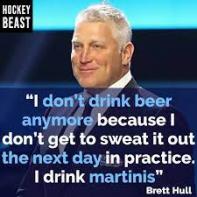
Brett Hull

Line: Sometimes, it doesn’t matter who the third member of a line is, so long as the first two pieces have tremendous chemistry. Such was the case when Brett Hull and Adam Oates were paired together, comprising the duo of Hull & Oates, a play on the musical tandem Hall & Oates. Together, Hull and Oates played together from 1989 to 1992, with Hull scoring 212 goals during that span, while his frequent playmaker Oates recorded 228 assists.

Captain: Brian Sutter was the longest-serving captain in Blues history, holding the mantle from 1979 up until his retirement in 1988. Sutter played his entire career with St. Louis, drafted by the team 20th overall in 1976. After hanging up his skates, Sutter became head coach of the Blues, leading them behind the bench from 1988 to 1992. Sutter’s number 11 jersey was retired by the organization on December 30, 1988.

Enforcer: Kelly Chase and Tony Twist were known as the Bruise Brothers while they played together for the Blues in 1989-90 and later from 1997 to 1999. The two had been together in junior hockey with the Saskatoon Blades and the minor leagues with the Peoria Rivermen. Despite being good friends and Twist living in Chase’s house while he was with the Hartford Whalers, the two even fought each other during a March 9, 1996 game.

Family Values: The Plager brothers (Bobby, Barclay and Bill) played together for the Blues from 1968 to 1972. The trio helped lead St. Louis to their three straight Stanley Cup Finals appearances after the Blues joined the NHL. Another brother set to suit up together with St. Louis was Gino and Paul Cavallini. They were both members of the franchise from 1987 to 1992.

Plager Brothers

Returning Players: David Perron has had three stints with the Blues. He was drafted by the team in 2007, playing six seasons, before being traded to the Edmonton Oilers in 2013. Perron returned to St. Louis as a free agent in 2016, but after one season, was the Vegas Golden Knights Expansion Draft choice from the Blues. He was back in St. Louis in 2018, playing four seasons, before signing as a free agent with the Detroit Red Wings in 2022.

Short Stint: Some of the greatest players of all-time have had such short stints with St. Louis, that seeing them in a Blues jersey looks odd. This includes goalies Martin Brodeur (seven games after two decades with the New Jersey Devils), and Tom Barrasso (six games), along with Peter Stastny (27 games, regular season and playoffs combined), and even Wayne Gretzky (31 games, regular season and playoffs combined).

Undrafted: Curtis Joseph, nicknamed Cujo, from the Stephen King novel of the same name, was signed out of the NCAA University of Wisconsin in 1989. He would remain in St. Louis until 1995, gaining a reputation as one of the best goalies in the league, including being a Vezina Trophy finalist for the 1992-93 season. In 2015, Joseph was inducted into the St. Louis Sports Hall of Fame.

Trade: Among the Blues better acquisitions were bringing in Brett Hull from the Calgary Flames in March 1988 (along with Steve Bozek for Rob Ramage and Rick Wamsley), followed by Adam Oates from the Detroit Red Wings in June 1989 (along with Paul MacLean for Bernie Federko and Tony Mckegney). The two combined to make one of the most lethal offensive duos in NHL history, as noted above.
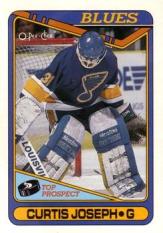
Curtis Joseph

Signing: In the early 90s, the Blues made a number of offer sheet signings to restricted free agents. They threw out contracts to the likes of Scott Stevens (twice!), Dave Christian, Brendan Shanahan, Michel Goulet, Marty McSorely, Petr Nedved, and Shayne Corson. Only Goulet, McSorely and Stevens (the second time) didn’t end up with the club, but the cost of the acquisitions was a number of draft picks and key players lost in compensation.

Draft Pick: The Blues have had an interesting draft history. The team passed on their opportunity to make any picks in their very first draft in 1967, didn’t participate in the 1983 draft, and had five straight first rounders (1991-95) transfer to the Washington Capitals, as compensation for the successful Scott Stevens offer sheet. They have selected first overall just once, taking defenseman Erik Johnson in 2006.

Holdouts: Alex Pietrangelo only missed one training camp practice before signing a seven-year, $45.5 million contract with the Blues in 2013. The hope was that Pietrangelo would spend his entire career with the team, but the defenseman, who was selected fourth overall in 2008, joined the Vegas Golden Knights in free agency in 2020 (seven years, $61.6 million), upon the expiry of the aforementioned pact.

Buyouts: The Blues have only used two buyouts in their history and none since 2009. In 2007, the team parted ways with captain Dallas Drake, following six seasons in St. Louis. Drake would move onto the Detroit Red Wings for a season, retiring as a Stanley Cup champion. Two years later, defenseman Jay McKee was bought out of the final year of his four-year, $16 million contract signed in 2006. His final campaign came with the Pittsburgh Penguins.
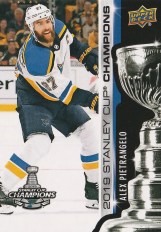
Pietrangelo

Unique Game: The Blues have participated in two Winter Classic games. First, they hosted the rival Chicago Blackhawks in 2017, followed by facing the Minnesota Wild in 2022. St. Louis and the Edmonton Oilers also participated in the 1990 Epson Cup in Dusseldorf, West Germany, which included a game against each other as part of the tournament. Finally, the Blues opened their 2009-10 season with a pair of games against the Detroit Red Wings in Stockholm, Sweden, for the 2009 NHL Premiere.

Goal: Blues fans waited 52 years for the club’s first Stanley Cup and it took a 4-1 win in Game 7 of the finals against the Boston Bruins to get that title. The St. Louis faithful were put at ease when Ryan O’Reilly tallied the opening goal of that game at 16:47 of the first period and the Blues never looked back. O’Reilly was later named the Conn Smythe Trophy recipient as playoff MVP.

Fight/Brawl: Blues history is littered with infamous brawls. These include melees against the Philadelphia Flyers (1972), Pittsburgh Penguins (1973), New York Rangers (1974), Chicago Blackhawks (1991 St. Patrick’s Day Massacre), and Detroit Red Wings (1993). The fracas with the Penguins occurred during a pre-season contest and lasted 20 minutes, with fighting occurring in the penalty boxes and the hallway leading from them to St. Louis’ dressing room.

Injury: Two Blues defensemen have suffered serious heart issues during games with the team. First, during the 1998 playoffs, Chris Pronger was hit with a slapshot to the chest in a contest against the Detroit Red Wings. This caused Pronger to go into cardiac arrest due to his heart rhythm being disrupted. Next, in 2020, Jay Bouwmeester collapsed on the bench due to cardiac arrest. Thankfully, both players survived their ordeals, but Bouwmeester never played in the NHL again.

Ryan O'Reilly

Penalty: During a 1969 pre-season game, Wayne Maki got into a stick swinging fight against Ted Green of the Boston Bruins. Maki clubbed Green over the head, resulting in a fractured skull and brain injury. Both players were charged with assault, becoming the first NHL players to face criminal prosecution for an on-ice incident, but were acquitted. Maki was suspended 30 days, while Green missed the entire season recovering.

Wildest Story: The Blues were almost moved to Saskatoon, Saskatchewan in 1983, but the NHL’s Board of Governors voted to reject the proposed $12 million sale. This led to lawsuits between then owner Ralston Purina (of the Purina animal food empire) and the NHL, with control of the franchise taken over by the league. The result was the Blues stayed in St. Louis, when a new ownership group, led by businessman Harry Ornest, was put together.

Blooper: In February 2006, Blues defenseman Dennis Wideman made one of the most memorable shootout attempts of all-time… memorable for all the wrong reasons. As Wideman swiftly skated towards Chicago Blackhawks goalie Corey Crawford, he made a nice deke move, but lost a skate edge and went flying up in the air, landing flat on his back, with the puck sliding into the corner of the rink.

Miscellaneous: Bernie Federko deserves some mentioning, as he’s the Blues career leader in games, assists and points, while sitting second all-time in goals. Federko was drafted by St. Louis seventh overall in 1976, remaining with the team until a 1989 trade to the Detroit Red Wings. Federko would have his number 24 jersey retired by the Blues in 1991 and for an extended period was the color commentator on the team’s TV broadcasts.

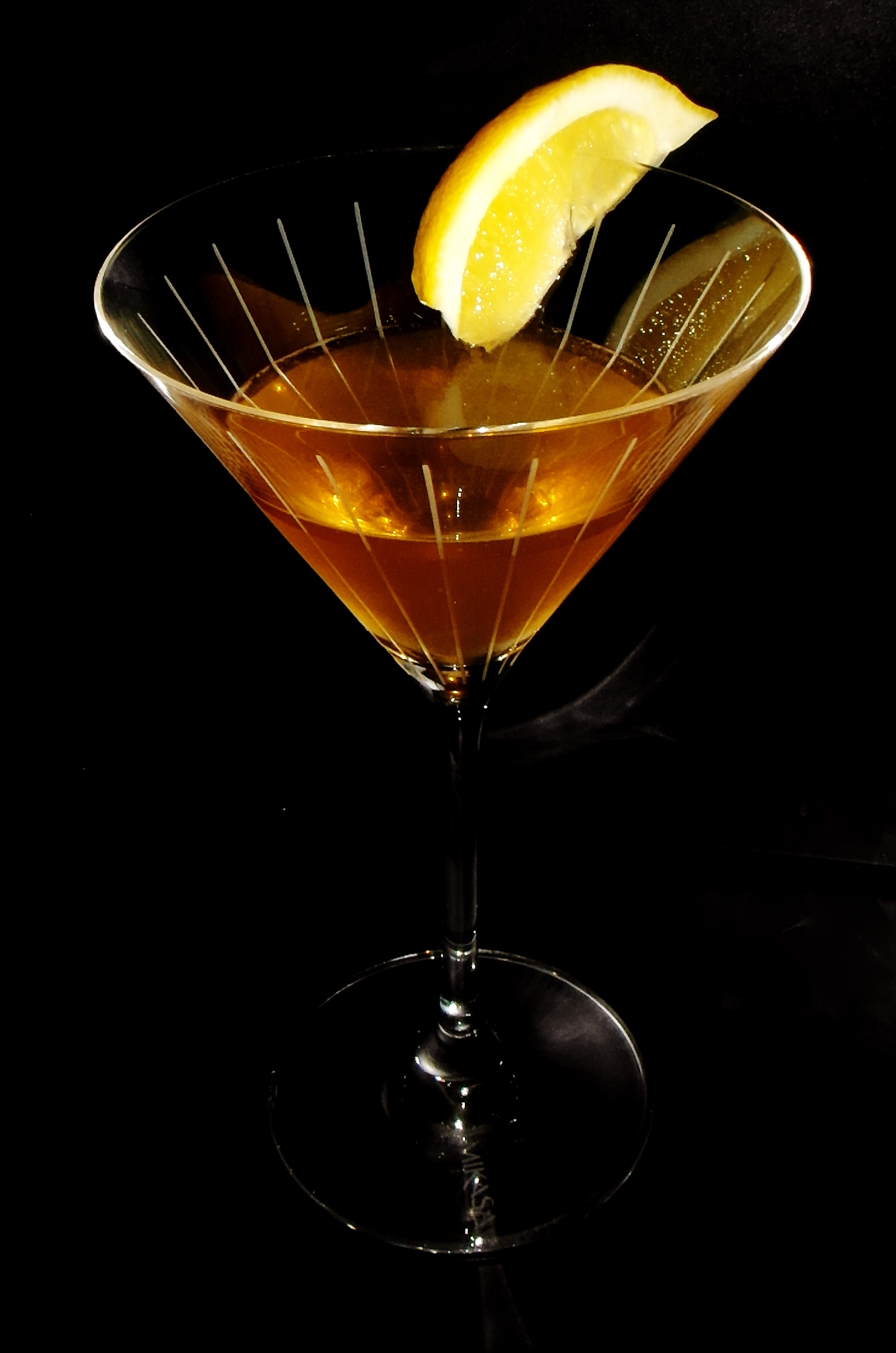
St. Louis Blues: Monday Night Miracle
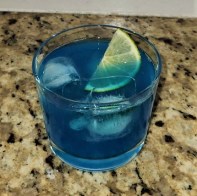
Monday Night Miracle

  • 1.5 oz Gin or Vodka
  • 1 oz Blue Curacao
  • Splash of Lime Juice
  • Garnish with a Lime Slice

This cocktail is named after the greatest comeback in Blues history, Game 6 of the Campbell Conference Finals, which occurred on Monday, May 12, 1986. The Blues were down 5-2 with 12 minutes left in the contest, when they rallied to force overtime and won 6-5. Despite the momentum change, they would still lose the series to the Calgary Flames.


Colorado Avalanche – Avalanche Shot

Throughout the year, the Sip Advisor will alphabetically travel the National Hockey League (NHL), discovering the best and worst each team has to offer in a variety of subjects. We will also feature a drink based off the franchise. Today, we may need some oxygen, as we visit the high altitudes of Colorado and try to survive the Avalanche:

Establishment Story: What is now the Colorado Avalanche began as the Quebec Nordiques, one of the original franchises of the World Hockey Association (WHA) in 1972. The Nordiques joined the NHL in 1979, as part of the NHL-WHA merger. The franchise was sold and relocated to Denver, Colorado in 1995 and renamed the Avalanche. Other possible names for the team included Extreme, Blizzards and Black Bears.

Stanley Cups: The Avalanche won the Stanley Cup in their first year in Colorado, helped along by the Avalanche picking up Patrick Roy from the Montreal Canadiens, a double shot at the province of Quebec. The team reached the league pinnacle again in 2001 and 2022, totalling three Stanley Cups. They have won each of their Stanley Cup Finals appearances. As the Nordiques, the franchise also won one WHA Avco Cup in 1977.

Celebrity Fan: South Park creators Trey Parker and Matt Stone are Avalanche supporters, as both grew up in Colorado. Another famous fan of the team is baseball Hall of Fame member Larry Walker, who played for the Colorado Rockies for 10 seasons. Walker, a Canadian who grew up also playing hockey, was honoured by the Avalanche for his 2020 Hall of Fame election by being named the team’s honourary emergency back-up goalie for a game.

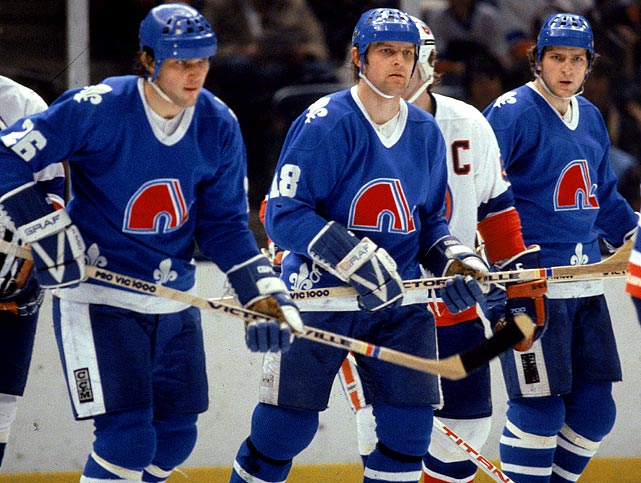
Nordiques

Super Fan: During the Avalanche’s Stanley Cup-winning 2022 season, one fan was banned from the team’s home games, but it was for a somewhat noble reason. Ryan Clark was caught throwing a small bag of his friend’s ashes onto the ice during a January 8, 2022 contest. The friend was Kyle Stark, a die-hard Avalanche supporter, who died unexpectedly the previous December. Clark admitted the tribute may not have been the best idea, but had no regrets.

Mascot: Bernie the St. Bernard debuted on October 3, 2009, replacing Howler the Yeti, who was retired in 1999 after an issue with an opposing team fan. Bernie wears jersey #1, with a bone used to make the number. The Nordiques mascot was Badaboum, who first appeared for the Rendez-vous ’87 series between NHL All-Stars and the Soviet National Team in Quebec City. Badaboum was a furry blue creature, similar to a seal.

Tradition: For the past few seasons, the Avalanche have used the Blink-182 song All the Small Things as a theme song. For a portion of the track, the audio is cut off, so fans can sing the parts themselves. As the Avalanche made their run to the 2022 Stanley Cup, the tradition was often highlighted by the media. Blink-182 lead singer Mark Hoppus joined the team as they raised the Stanley Cup banner, leading the crowd in a rendition of the tune.

Appearances in Media: In the South Park episode Stanley’s Cup, Stan Marsh is forced to coach a kid’s hockey team, parodying The Mighty Ducks movie. When Marsh’s team is invited to play during the intermission of a Colorado Avalanche-Detroit Red Wings game, the other peewee team no-shows. As consolation, the Avalanche let Marsh’s team play the third period against Detroit, where they get absolutely annihilated, losing 32-2.

All the Small Things

Events/Scandals: Avalanche goalies have a history of being arrested for domestic violence. First, in October 2000, Patrick Roy was detained after an argument with his wife. His case was later dismissed for not meeting the standard of criminal mischief. 13 years later, Semyon Varlamov was arrested and charged with the misdemeanor assault of his girlfriend. The charges were dropped when prosecutors couldn’t prove their case.

Rivalry: As the Quebec Nordiques, the team had a long-standing feud with provincial rivals the Montreal Canadiens, known as the Battle of Quebec. The teams met in the playoffs five times and even battled over TV rights. As for the Colorado Avalanche, their greatest battles occurred with the Detroit Red Wings, as the two teams battled for Western Conference and league supremacy in the late 1990s.

Tragedy: Peter McNab was the color analyst for the Avalanche from their debut in 1995 up until his death from cancer on November 6, 2022. He was 70 years old. McNab played in the NHL for 14 seasons, before moving into the broadcast booth, first with the New Jersey Devils. For all of his contributions to the game, McNab was inducted into the U.S. Hockey Hall of Fame in 2021.

Player Nicknames: Two of the Avalanche’s most legendary players also have the most memorable nicknames in team history. Joe Sakic was known as Mr. Clutch throughout his long tenure with the franchise, always coming up big when it mattered most. Sakic’s former teammate, Peter Forsberg, was dubbed Peter the Great, a nod to the Tsar of Russia from 1682 to 1721.

Joe Sakic

Line: Colorado’s dominant top line over the last few seasons has consisted of Gabriel Landeskog, Nathan MacKinnon and Mikko Rantanen. The trio has piled up points since being combined and were integral members to the Avalanche winning the 2022 Stanley Cup. Two other notable lines were comprised of Alex Tanguay and Milan Hejduk on the wings, with Joe Sakic or Peter Forsberg at center, for the JAM Line and AMP Line, respectively.

Captain: After serving as the Nordiques co-captain for the 1990-91 season, Joe Sakic was named the permanent captain for the 1992-93 campaign and held the mantle through to his retirement in 2009. Another enduring captaincy is that of Gabriel Landeskog, who was the youngest NHL captain ever, when he began his term in 2012. Landeskog is still the team’s captain to this day.

Enforcer: Nicknamed ‘The Sheriff’, Scott Parker patrolled the ice for the Avalanche for 237 games, over two separate stints. During his time with the franchise, Parker tallied 538 penalty minutes, to go along with five goals and 11 assists. Parker was a member of the Avalanche’s 2001 Stanley Cup championship team, suiting up for four games of the team’s playoff run.

Family Values: The Stastny brothers (Peter, Marian and Anton) starred for Quebec through the early 1980s, piling up points as the team’s top line. The Nordiques even helped the brothers defect from Czechoslovakia to play hockey in Canada, a move which opened the door for other Iron Curtain players to follow. Later, Paul Stastny, son of Peter, was drafted by Colorado, playing eight seasons with the Avalanche.

Stastny

Returning Players: Peter Forsberg played 10 seasons for the Nordiques/Avalanche franchise, before moving on to the Philadelphia Flyers and later Nashville Predators. He then sat out most of the 2007-08 season, recovering from foot surgery, before rejoining the Avalanche for nine games. After two seasons in Sweden, Forsberg attempted an NHL comeback with Colorado, but only lasted two games, citing his chronic foot issues as a reason for his retirement.

Short Stint: When Paul Kariya and Teemu Selanne came to the Avalanche for the 2003-04 season, the reunion of the two star players was supposed to bolster an already strong team. Kariya and Selanne both underperformed, though, and Colorado was eliminated from the playoffs in the second round. Following the 2004-05 NHL lockout, Kariya would sign with the Nashville Predators, while Selanne returned to the Mighty Ducks of Anaheim.

Undrafted: Peter Stastny’s Hall of Fame career began by fleeing Czechoslovakia with his pregnant wife, assisted by Nordiques President and CEO, Marcel Aubut. Stastny dominated the NHL upon arrival, breaking the record for most points in a season by a rookie, including a two consecutive game effort of seven goals and seven assists. Stastny would also play with the New Jersey Devils and St. Louis Blues over 15 seasons.

Trade: The greatest move the franchise ever executed was sending Eric Lindros to the Philadelphia Flyers for a massive package of assets. This included Peter Forsberg, Ron Hextall, Steve Duchesne, Mike Ricci, Kerry Huffman, Chris Simon, two first round draft picks and $15 million. While Lindros was a dominant player in the league for a time, the Avalanche would go onto win two Stanley Cups during Lindros’ career.

Forsberg

Signing: In 2019, the Avalanche took an $850,000 chance on forward Valeri Nichushkin, who was coming off being bought out by the Dallas Stars, following a season where he failed to score over 57 games. Nichushkin rebounded with Colorado, finding the form that made him the 10th overall pick of the 2013 draft. In 2021-22, Nichushkin recorded 25 goals and 27 assists, as well as contributing 15 points in the team’s Stanley Cup victory. This resulted in an eight-year, $49 million contract extension.

Draft Pick: The Nordiques/Avalanche have done very well with the first overall selection, including three consecutive top choices from 1989 to 1991 (Mats Sundin, Owen Nolan and Eric Lindros). The franchise also selected Nathan MacKinnon first overall in 2013. Additionally, choosing defenseman Cale Makar at fourth overall in 2017 may go down as one of the greatest draft steals of all-time.

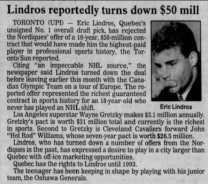
Holdouts: Going into the 1991 NHL Entry Draft, Eric Lindros and his camp made it clear he would not play for the Nordiques, despite them owning the first overall selection and Lindros being the clear cut favourite to be picked. The Nordiques took Lindros anyway, resulting in the player refusing to put on the team’s jersey. At the 1992 NHL Entry Draft, the Nordiques traded Lindros to the Philadelphia Flyers, ending the impasse.

Buyouts: Three years in a row, from 2016 to 2018, the Avalanche used buyouts on aging defensemen, ending the Colorado tenures of Brad Stuart, Francois Beauchemin and Brooks Orpik in subsequent seasons. The Stuart buyout cost the team $2.4 million, while the Beauchemin and Orpik releases cost $3 million each. Orpik’s buyout came just weeks after he was traded to the Avalanche, allowing him to return to the Washington Capitals on a cheaper deal.

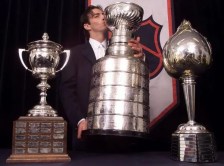
Lindros

Unique Game: From 1997 to 2016, the Avalanche played a pre-season game almost each year, dubbed Frozen Fury, against the Los Angeles Kings in Las Vegas. Colorado also returned to Quebec City for an exhibition game in 2002 against the Montreal Canadiens. The franchise has played a few outdoor games, including the 2016 Stadium Series vs. Detroit Red Wings, 2020 Stadium Series vs. Los Angeles Kings and NHL Outdoors at Lake Tahoe Saturday vs. Vegas Golden Knights.

Goal: Defenseman Uwe Krupp was injured for much of the Avalanche’s inaugural 1995-96 season, returning just in time for the end of the campaign. Good thing, as Krupp would score the winning goal in the third overtime period of Game 4 of the Stanley Cup Finals versus the Florida Panthers, clinching Colorado’s first championship. In doing so, Krupp became the first German-trained player to win the Stanley Cup.

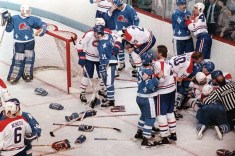
Fight/Brawl: Two of the NHL’s most memorable brawls involved the Nordiques/Avalanche franchise. First, the Good Friday Massacre between the Nordiques and Montreal Canadiens occurred during the 1984 playoffs, resulting in 11 ejections and 252 penalty minutes. Second, the 1997 Brawl in Hockeytown between the Avalanche and Detroit Red Wings was the outcome of tempers boiling over from the previous year’s playoff meeting.

Injury: When the Avalanche played the Vancouver Canucks on March 8, 2004, Colorado’s Steve Moore was a marked man for his previous elbow on Canucks captain Markus Naslund. With the Avalanche up 8-2, Canucks players began targeting Moore, with Todd Bertuzzi punching him from behind. As a result of the punch, the players falling to the ice and a pile up that ensued, Moore suffered three fractured neck vertebrae, a concussion and cuts to his face. This ended Moore’s career and led to a lawsuit settlement.

Good_Friday_Massacre

Penalty: Speaking of the Brawl in Hockeytown, it was all precipitated by Claude Lemieux’s hit-from-behind on Detroit’s Kris Draper in Game 6 of the 1996 Western Conference Finals. Draper ended up with a concussion, broken jaw and shattered cheek and orbital bones. Lemieux was ejected from the contest and subsequently suspended by the NHL for two games.

Wildest Story: Further complicating the Eric Lindros trade saga, the Nordiques had actually arranged two different deals for the coveted player. The other transaction was negotiated with the New York Rangers and an independent arbiter was needed to settle the matter. The Flyers deal was enforced, while the Rangers offer of Tony Amonte, Alexei Kovalev, Sergei Nemchinov, James Patrick, either Mike Richter or John Vanbiesbrouck, multiple first-round draft picks, and $20 million was voided.

Blooper: Patrick Roy was one of the greatest goalies in NHL history, but he is also remembered for this major error, made during the 2002 Western Conference Finals, against the Detroit Red Wings. Roy made a sprawling glove save, but when he went to show off the stop, he dropped the puck, allowing the Red Wings to score. The Avalanche, who were leading the series 3-2, went on to lose this game and the next, with the Red Wings advancing to the Stanley Cup Finals.

Miscellaneous: Another great trade for the Avalanche, was bringing in defenseman Ray Bourque from the Boston Bruins in 2000. Bourque waited 23 long seasons to finally win the Stanley Cup. When the Avalanche finally did so in 2001, captain Joe Sakic didn’t hesitate to immediately pass the trophy to Bourque, once it was presented to him. The joy and relief on Bourque’s face, as he skated the championship around the ice was evident. This would mark the end of Bourque’s NHL career, going out on top.

Colorado Avalanche: Avalanche Shot

Avalanche Shot

  • 0.75 oz Raspberry Vodka
  • 0.75 oz Blue Curacao

This is the first shooter of the NHL project, as I could find no suitable cocktails. You’re supposed to drop the shot into a glass of Red Bull, but I don’t like working with that ingredient. The colours of the shot replicate Avalanche jerseys hues.

Slovakia – Royal Tatrateani

Roll Call

Admittedly, I don’t know much about our next stop, Slovakia. I know a few hockey players from the European country: Marian Hossa, Zdeno Chara, and the late Pavol Demitra, among others. Aside from that, there’s not much space in me ol’ noggin’ dedicated to Slovakian culture. That said, there are a number of Slovaks who are known the world over for varying achievements. Here is a small sample of those fine folks:

The Stastny Brothers

When Peter Stastny defected from Slovakia to Canada in 1980, he became the first red curtain star player to do so and ushered in an exodus of players leaving Soviet Europe for a better life in North America. Peter and his brother Anton joined the Quebec Nordiques and were later united with eldest brother Marian, becoming only the third trio of brothers to play for the same squad. All three enjoyed successful career, particularly Peter who was a scoring phenom, notching 1239 points in 977 games. He retired in 1995 and was selected to the Hockey Hall of Fame in 1998. The brother’s legacy continues with Peter’s sons Yan and Paul suiting up for the Edmonton Oilers and Colorado Avalanche (ironically, the relocated Quebec franchise his father starred for), respectively. The Stastny’s are the first hockey family to represent four different countries – Czechoslovakia, Canada, Slovakia, USA – in international play.

Stastny Brothers

Juraj Jánošík

Slovakia has its own version of the legendary Robin Hood and that is this man. Jánošík is said to have stolen from the rich to give to the poor… sound familiar? Jánošík even had his own collection of “Merry Men,” although I’m sure they were called something more badass than that. The vigilante met his end after being sentenced to death. Scholars have debated how he was executed with most believing he was impaled on a hook and left to die, while others theorize he could have been hanged. As it often is with legends, stories persist that he went out in grand style, ever thumbing his nose at the authorities, by jumping onto the hook, rather than accept the grace offered to him in exchange for enlisting soldiers from his able ranks. Jánošík’s fable can be found in numerous films, books and even the odd song or two.

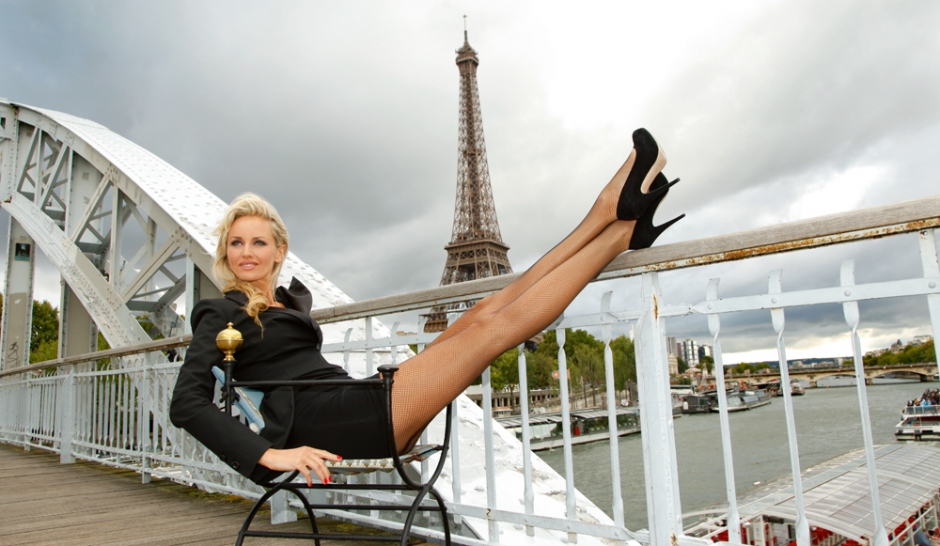
Adriana Karembeu (nee Sklenaríková)

This one is for all my little sippers out there who love gorgeous women! “Miss Wonderbra” as the beautiful and busty blonde has been dubbed has also appeared for brands like Victoria’s Secret and Peroni Beer. The gal is smart, too. Karembeu won her first modelling contest while she was studying medicine in Prague. If the “Miss Wonderbra” moniker isn’t enough to sway you or you’re more of a legs man, it should be noted that Karembeu once held the Guinness world record for longest legs among female models at close to 50 inches. I made sure to arrange my article so that squeezing in a picture of Karembeu didn’t seem out of place!

Adriana-Karembeu

I’m not sure which structure is more impressive!

Martina Hingis

The former world top-ranked women’s tennis player entered her first tournament at the age of four. Along with her mother, the two defected to Switzerland when she was just six years old and a decade later, Hingis became the youngest Grand Slam champion of all-time, winning the 1996 Wimbledon women’s doubles tournament with Helena Sukova. Following that victory, Hingis won Grand Slam singles titles at Wimbledon and the Australian and U.S. Opens. The only major championship missing from her resume is the French Open, although she did win in doubles at the tournament in 1998 and 2000. Hingis retired from tennis in 2003, at the young age of 22. She returned to the sport in 2005 and left in 2007, being handed a two-year ban after testing positive for a minimal amount of an element in cocaine. She returned again in 2010 and still plays in the occasional doubles tournament to this day.

Štefan Banič

After immigrating to the United States and witnessing a plane crash, Banič invented the first military parachute every deployed in action. The man had so much faith in his product (an umbrella like device attached to the jumpers body) that he tested it himself, first from the top of a 15-storey building and later from an actual airplane. Once successful (you know, meaning he didn’t plummet to the earth and burst into a million pieces), Banič then did something extraordinary… he donated his patent to the United States military. His invention saved the lives of countless soldiers during World War I, but the coal miner never received much money or fame for his creation.

Slovakia: Royal Tatrateani

Royal Tatrateani Cocktail

  • 1.5 oz Gin
  • 0.5 oz Tatratea Citrus
  • Splash of Lemon Juice
  • Dash of Agave Nectar
  • Garnish with a Lemon Slice

So, now you know a heck of a lot more about Slovakia than you did before… and really, that’s my only mission in life: to educate while getting people so blitzed they forget half the shit they knew. Full circle, my little sippers, full circle!

Sip Advisor Bar Notes (3 Sips out of 5):
Mrs. Sip was kind enough to pick these liqueurs up for me for Christmas, adding a country to my 52-week tour that I did not have on my radar. We have the Forest Fruit, Citrus, and Coconut flavours, but the company also sells Peach & White Tea, Original, Bohemian, and Outlaw varieties. This martini was really strong, but grew on me with each sip. To enhance the use of the Tatratea Citrus, I selected Tanqueray Rangpur as my Gin of choice.