
Throughout the year, the Sip Advisor will alphabetically travel the National Hockey League (NHL), discovering the best and worst each team has to offer in a variety of subjects. We will also feature a drink based off the franchise. Today, we journey through the Gateway to the West, checking in with the St. Louis Blues:
Establishment Story: The Blues entered the NHL during the 1967 expansion from the Original Six to 12 teams. The league had previously dabbled with the city by relocating the original Ottawa Senators there, becoming the St. Louis Eagles. The Eagles played one season (1934-35) before folding. The Blues are named for the W.C. Handy song Saint Louis Blues, released in 1914.
Stanley Cups: The Blues lone Stanley Cup victory occurred in 2019. The team also made the Stanley Cup Finals three times in their first three seasons, when the league’s divisions were split into the Original Six and the 1967 expansion teams (Next Six). St. Louis lost each time, twice to the Montreal Canadiens and once to the Boston Bruins. Revenge against Boston finally came with that 2019 championship.
Celebrity Fan: There are a number of famous supporters of the Blues, including actors Jon Hamm and Jenna Fischer, who both call St. Louis home. Hamm and Fischer were honourary coaches during the 2020 NHL All-Star Game in St. Louis and were prominent in the Blues Stanley Cup run in 2019. Because of his lifelong love of the Blues, Hamm has also done a fair bit of work for the NHL, including hosting the NHL100 event.

Super Fan: Laila Anderson is often credited with inspiring the Blues to turn around their 2018-19 season, which climaxed with their Stanley Cup championship. Anderson, who battled a rare auto-immune disease during that season, became a mascot of sorts for the club, as she celebrated the Stanley Cup win with them on the ice and at their rally. Anderson was also presented with a Stanley Cup ring, which is etched with her name on the inside.
Mascot: Louie is a blue polar bear, who debuted during the 2007-08 season. Louie’s backstory says he travelled to St. Louis from the Arctic Circle, inspired to search out his favourite hockey team. A 2021 poll conducted by Play Canada ranked Louie as the fourth most popular mascot in the NHL, but given the winner of the poll was Carlton the Bear of the Toronto Maple Leafs, the poll loses all credibility.
Tradition: The Blues and their fans have a couple rituals of note. First, following a goal, a bell tone is played for each tally scored that night, as the crowd counts along. Also, during the team’s 2018-19 season turnaround and Stanley Cup run, the song Gloria by Laura Branigan became the Blues theme track, played after each win. The tune was retired after St. Louis celebrated raising their Stanley Cup banner.
Appearances in Media: The Tom Hanks post-apocalyptic movie Finch is set in St. Louis and features his characters wearing a classic Blues jersey. Also, musician Nelly, a proud St. Louis native, can be seen alternating between St. Louis Cardinals and Blues gear throughout the music video for his hit song Country Grammar. Nelly can often be seen in Blues paraphernalia and is a big fan of the team.

Events/Scandals: Just days after the Blues were eliminated from the 2004 playoffs, player Mike Danton was arrested on a conspiracy to commit murder charge. Danton had attempted to hire a hitman to murder his agent David Frost. Danton was sentenced to 90 months in prison, serving 63 before he was released. Danton later claimed his estranged father was the intended target of the murder-for-hire plot.
Rivalry: The Blues have had a long-standing feud with the Chicago Blackhawks, as the two teams have shared a division since 1970. While brawls between the clubs were common, one particular melee in 1991 is known as the St. Patrick’s Day Massacre. The result of the fights was 12 players ejected and three players suspended. Interestingly, all six Sutter brothers were members of each team in 1991-92.
Tragedy: Bob Gassoff played for the Blues from 1973 to 1977. At a party following the 1976-77 season, hosted by teammate Garry Unger, Gassoff was involved in a motorcycle accident, killing him at only 24 years old. Following his death, Gassoff’s number 3 jersey was retired by the Blues and the Bob Gassoff Trophy was created, rewarded to the most improved defenseman of the Central Hockey League. Gassoff holds the Blues record for penalty minutes in a season at 306.
Player Nicknames: Brett Hull’s father, Bobby Hull, was nicknamed the Golden Jet during his illustrious hockey career. Therefore, the moniker the Golden Brett was bestowed upon Brett, who shared his father’s scoring touch. Once Brett joined the Blues in 1988, he became one of the league’s most dangerous scorers, holding the franchise records for single-season and career goals. Hull’s jersey number 16 was retired by the Blues in 2006.
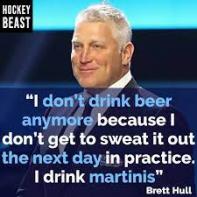
Line: Sometimes, it doesn’t matter who the third member of a line is, so long as the first two pieces have tremendous chemistry. Such was the case when Brett Hull and Adam Oates were paired together, comprising the duo of Hull & Oates, a play on the musical tandem Hall & Oates. Together, Hull and Oates played together from 1989 to 1992, with Hull scoring 212 goals during that span, while his frequent playmaker Oates recorded 228 assists.
Captain: Brian Sutter was the longest-serving captain in Blues history, holding the mantle from 1979 up until his retirement in 1988. Sutter played his entire career with St. Louis, drafted by the team 20th overall in 1976. After hanging up his skates, Sutter became head coach of the Blues, leading them behind the bench from 1988 to 1992. Sutter’s number 11 jersey was retired by the organization on December 30, 1988.
Enforcer: Kelly Chase and Tony Twist were known as the Bruise Brothers while they played together for the Blues in 1989-90 and later from 1997 to 1999. The two had been together in junior hockey with the Saskatoon Blades and the minor leagues with the Peoria Rivermen. Despite being good friends and Twist living in Chase’s house while he was with the Hartford Whalers, the two even fought each other during a March 9, 1996 game.
Family Values: The Plager brothers (Bobby, Barclay and Bill) played together for the Blues from 1968 to 1972. The trio helped lead St. Louis to their three straight Stanley Cup Finals appearances after the Blues joined the NHL. Another brother set to suit up together with St. Louis was Gino and Paul Cavallini. They were both members of the franchise from 1987 to 1992.

Returning Players: David Perron has had three stints with the Blues. He was drafted by the team in 2007, playing six seasons, before being traded to the Edmonton Oilers in 2013. Perron returned to St. Louis as a free agent in 2016, but after one season, was the Vegas Golden Knights Expansion Draft choice from the Blues. He was back in St. Louis in 2018, playing four seasons, before signing as a free agent with the Detroit Red Wings in 2022.
Short Stint: Some of the greatest players of all-time have had such short stints with St. Louis, that seeing them in a Blues jersey looks odd. This includes goalies Martin Brodeur (seven games after two decades with the New Jersey Devils), and Tom Barrasso (six games), along with Peter Stastny (27 games, regular season and playoffs combined), and even Wayne Gretzky (31 games, regular season and playoffs combined).
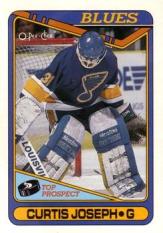
Undrafted: Curtis Joseph, nicknamed Cujo, from the Stephen King novel of the same name, was signed out of the NCAA University of Wisconsin in 1989. He would remain in St. Louis until 1995, gaining a reputation as one of the best goalies in the league, including being a Vezina Trophy finalist for the 1992-93 season. In 2015, Joseph was inducted into the St. Louis Sports Hall of Fame.
Trade: Among the Blues better acquisitions were bringing in Brett Hull from the Calgary Flames in March 1988 (along with Steve Bozek for Rob Ramage and Rick Wamsley), followed by Adam Oates from the Detroit Red Wings in June 1989 (along with Paul MacLean for Bernie Federko and Tony Mckegney). The two combined to make one of the most lethal offensive duos in NHL history, as noted above.
Signing: In the early 90s, the Blues made a number of offer sheet signings to restricted free agents. They threw out contracts to the likes of Scott Stevens (twice!), Dave Christian, Brendan Shanahan, Michel Goulet, Marty McSorely, Petr Nedved, and Shayne Corson. Only Goulet, McSorely and Stevens (the second time) didn’t end up with the club, but the cost of the acquisitions was a number of draft picks and key players lost in compensation.
Draft Pick: The Blues have had an interesting draft history. The team passed on their opportunity to make any picks in their very first draft in 1967, didn’t participate in the 1983 draft, and had five straight first rounders (1991-95) transfer to the Washington Capitals, as compensation for the successful Scott Stevens offer sheet. They have selected first overall just once, taking defenseman Erik Johnson in 2006.
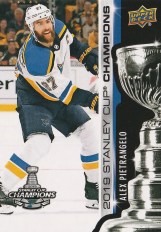
Holdouts: Alex Pietrangelo only missed one training camp practice before signing a seven-year, $45.5 million contract with the Blues in 2013. The hope was that Pietrangelo would spend his entire career with the team, but the defenseman, who was selected fourth overall in 2008, joined the Vegas Golden Knights in free agency in 2020 (seven years, $61.6 million), upon the expiry of the aforementioned pact.
Buyouts: The Blues have only used two buyouts in their history and none since 2009. In 2007, the team parted ways with captain Dallas Drake, following six seasons in St. Louis. Drake would move onto the Detroit Red Wings for a season, retiring as a Stanley Cup champion. Two years later, defenseman Jay McKee was bought out of the final year of his four-year, $16 million contract signed in 2006. His final campaign came with the Pittsburgh Penguins.
Unique Game: The Blues have participated in two Winter Classic games. First, they hosted the rival Chicago Blackhawks in 2017, followed by facing the Minnesota Wild in 2022. St. Louis and the Edmonton Oilers also participated in the 1990 Epson Cup in Dusseldorf, West Germany, which included a game against each other as part of the tournament. Finally, the Blues opened their 2009-10 season with a pair of games against the Detroit Red Wings in Stockholm, Sweden, for the 2009 NHL Premiere.
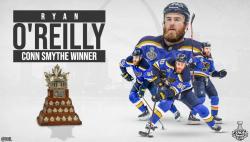
Goal: Blues fans waited 52 years for the club’s first Stanley Cup and it took a 4-1 win in Game 7 of the finals against the Boston Bruins to get that title. The St. Louis faithful were put at ease when Ryan O’Reilly tallied the opening goal of that game at 16:47 of the first period and the Blues never looked back. O’Reilly was later named the Conn Smythe Trophy recipient as playoff MVP.
Fight/Brawl: Blues history is littered with infamous brawls. These include melees against the Philadelphia Flyers (1972), Pittsburgh Penguins (1973), New York Rangers (1974), Chicago Blackhawks (1991 St. Patrick’s Day Massacre), and Detroit Red Wings (1993). The fracas with the Penguins occurred during a pre-season contest and lasted 20 minutes, with fighting occurring in the penalty boxes and the hallway leading from them to St. Louis’ dressing room.
Injury: Two Blues defensemen have suffered serious heart issues during games with the team. First, during the 1998 playoffs, Chris Pronger was hit with a slapshot to the chest in a contest against the Detroit Red Wings. This caused Pronger to go into cardiac arrest due to his heart rhythm being disrupted. Next, in 2020, Jay Bouwmeester collapsed on the bench due to cardiac arrest. Thankfully, both players survived their ordeals, but Bouwmeester never played in the NHL again.
Penalty: During a 1969 pre-season game, Wayne Maki got into a stick swinging fight against Ted Green of the Boston Bruins. Maki clubbed Green over the head, resulting in a fractured skull and brain injury. Both players were charged with assault, becoming the first NHL players to face criminal prosecution for an on-ice incident, but were acquitted. Maki was suspended 30 days, while Green missed the entire season recovering.
Wildest Story: The Blues were almost moved to Saskatoon, Saskatchewan in 1983, but the NHL’s Board of Governors voted to reject the proposed $12 million sale. This led to lawsuits between then owner Ralston Purina (of the Purina animal food empire) and the NHL, with control of the franchise taken over by the league. The result was the Blues stayed in St. Louis, when a new ownership group, led by businessman Harry Ornest, was put together.
Blooper: In February 2006, Blues defenseman Dennis Wideman made one of the most memorable shootout attempts of all-time… memorable for all the wrong reasons. As Wideman swiftly skated towards Chicago Blackhawks goalie Corey Crawford, he made a nice deke move, but lost a skate edge and went flying up in the air, landing flat on his back, with the puck sliding into the corner of the rink.
Miscellaneous: Bernie Federko deserves some mentioning, as he’s the Blues career leader in games, assists and points, while sitting second all-time in goals. Federko was drafted by St. Louis seventh overall in 1976, remaining with the team until a 1989 trade to the Detroit Red Wings. Federko would have his number 24 jersey retired by the Blues in 1991 and for an extended period was the color commentator on the team’s TV broadcasts.
St. Louis Blues: Monday Night Miracle
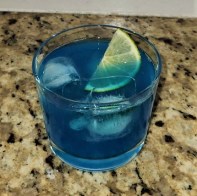
- 1.5 oz Gin or Vodka
- 1 oz Blue Curacao
- Splash of Lime Juice
- Garnish with a Lime Slice
This cocktail is named after the greatest comeback in Blues history, Game 6 of the Campbell Conference Finals, which occurred on Monday, May 12, 1986. The Blues were down 5-2 with 12 minutes left in the contest, when they rallied to force overtime and won 6-5. Despite the momentum change, they would still lose the series to the Calgary Flames.




 Sip Advisor