St. Louis Blues – Monday Night Miracle

Throughout the year, the Sip Advisor will alphabetically travel the National Hockey League (NHL), discovering the best and worst each team has to offer in a variety of subjects. We will also feature a drink based off the franchise. Today, we journey through the Gateway to the West, checking in with the St. Louis Blues:

Establishment Story: The Blues entered the NHL during the 1967 expansion from the Original Six to 12 teams. The league had previously dabbled with the city by relocating the original Ottawa Senators there, becoming the St. Louis Eagles. The Eagles played one season (1934-35) before folding. The Blues are named for the W.C. Handy song Saint Louis Blues, released in 1914.

Stanley Cups: The Blues lone Stanley Cup victory occurred in 2019. The team also made the Stanley Cup Finals three times in their first three seasons, when the league’s divisions were split into the Original Six and the 1967 expansion teams (Next Six). St. Louis lost each time, twice to the Montreal Canadiens and once to the Boston Bruins. Revenge against Boston finally came with that 2019 championship.

Celebrity Fan: There are a number of famous supporters of the Blues, including actors Jon Hamm and Jenna Fischer, who both call St. Louis home. Hamm and Fischer were honourary coaches during the 2020 NHL All-Star Game in St. Louis and were prominent in the Blues Stanley Cup run in 2019. Because of his lifelong love of the Blues, Hamm has also done a fair bit of work for the NHL, including hosting the NHL100 event.

Jon Hamm

Super Fan: Laila Anderson is often credited with inspiring the Blues to turn around their 2018-19 season, which climaxed with their Stanley Cup championship. Anderson, who battled a rare auto-immune disease during that season, became a mascot of sorts for the club, as she celebrated the Stanley Cup win with them on the ice and at their rally. Anderson was also presented with a Stanley Cup ring, which is etched with her name on the inside.

Mascot: Louie is a blue polar bear, who debuted during the 2007-08 season. Louie’s backstory says he travelled to St. Louis from the Arctic Circle, inspired to search out his favourite hockey team. A 2021 poll conducted by Play Canada ranked Louie as the fourth most popular mascot in the NHL, but given the winner of the poll was Carlton the Bear of the Toronto Maple Leafs, the poll loses all credibility.

Tradition: The Blues and their fans have a couple rituals of note. First, following a goal, a bell tone is played for each tally scored that night, as the crowd counts along. Also, during the team’s 2018-19 season turnaround and Stanley Cup run, the song Gloria by Laura Branigan became the Blues theme track, played after each win. The tune was retired after St. Louis celebrated raising their Stanley Cup banner.

Appearances in Media: The Tom Hanks post-apocalyptic movie Finch is set in St. Louis and features his characters wearing a classic Blues jersey. Also, musician Nelly, a proud St. Louis native, can be seen alternating between St. Louis Cardinals and Blues gear throughout the music video for his hit song Country Grammar. Nelly can often be seen in Blues paraphernalia and is a big fan of the team.

Nelly

Events/Scandals: Just days after the Blues were eliminated from the 2004 playoffs, player Mike Danton was arrested on a conspiracy to commit murder charge. Danton had attempted to hire a hitman to murder his agent David Frost. Danton was sentenced to 90 months in prison, serving 63 before he was released. Danton later claimed his estranged father was the intended target of the murder-for-hire plot.

Rivalry: The Blues have had a long-standing feud with the Chicago Blackhawks, as the two teams have shared a division since 1970. While brawls between the clubs were common, one particular melee in 1991 is known as the St. Patrick’s Day Massacre. The result of the fights was 12 players ejected and three players suspended. Interestingly, all six Sutter brothers were members of each team in 1991-92.

Tragedy: Bob Gassoff played for the Blues from 1973 to 1977. At a party following the 1976-77 season, hosted by teammate Garry Unger, Gassoff was involved in a motorcycle accident, killing him at only 24 years old. Following his death, Gassoff’s number 3 jersey was retired by the Blues and the Bob Gassoff Trophy was created, rewarded to the most improved defenseman of the Central Hockey League. Gassoff holds the Blues record for penalty minutes in a season at 306.

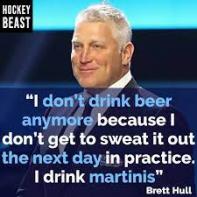
Player Nicknames: Brett Hull’s father, Bobby Hull, was nicknamed the Golden Jet during his illustrious hockey career. Therefore, the moniker the Golden Brett was bestowed upon Brett, who shared his father’s scoring touch. Once Brett joined the Blues in 1988, he became one of the league’s most dangerous scorers, holding the franchise records for single-season and career goals. Hull’s jersey number 16 was retired by the Blues in 2006.
Brett Hull

Line: Sometimes, it doesn’t matter who the third member of a line is, so long as the first two pieces have tremendous chemistry. Such was the case when Brett Hull and Adam Oates were paired together, comprising the duo of Hull & Oates, a play on the musical tandem Hall & Oates. Together, Hull and Oates played together from 1989 to 1992, with Hull scoring 212 goals during that span, while his frequent playmaker Oates recorded 228 assists.

Captain: Brian Sutter was the longest-serving captain in Blues history, holding the mantle from 1979 up until his retirement in 1988. Sutter played his entire career with St. Louis, drafted by the team 20th overall in 1976. After hanging up his skates, Sutter became head coach of the Blues, leading them behind the bench from 1988 to 1992. Sutter’s number 11 jersey was retired by the organization on December 30, 1988.

Enforcer: Kelly Chase and Tony Twist were known as the Bruise Brothers while they played together for the Blues in 1989-90 and later from 1997 to 1999. The two had been together in junior hockey with the Saskatoon Blades and the minor leagues with the Peoria Rivermen. Despite being good friends and Twist living in Chase’s house while he was with the Hartford Whalers, the two even fought each other during a March 9, 1996 game.

Family Values: The Plager brothers (Bobby, Barclay and Bill) played together for the Blues from 1968 to 1972. The trio helped lead St. Louis to their three straight Stanley Cup Finals appearances after the Blues joined the NHL. Another brother set to suit up together with St. Louis was Gino and Paul Cavallini. They were both members of the franchise from 1987 to 1992.

Plager Brothers

Returning Players: David Perron has had three stints with the Blues. He was drafted by the team in 2007, playing six seasons, before being traded to the Edmonton Oilers in 2013. Perron returned to St. Louis as a free agent in 2016, but after one season, was the Vegas Golden Knights Expansion Draft choice from the Blues. He was back in St. Louis in 2018, playing four seasons, before signing as a free agent with the Detroit Red Wings in 2022.

Short Stint: Some of the greatest players of all-time have had such short stints with St. Louis, that seeing them in a Blues jersey looks odd. This includes goalies Martin Brodeur (seven games after two decades with the New Jersey Devils), and Tom Barrasso (six games), along with Peter Stastny (27 games, regular season and playoffs combined), and even Wayne Gretzky (31 games, regular season and playoffs combined).

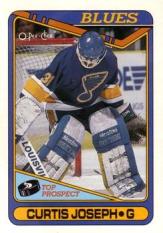
Undrafted: Curtis Joseph, nicknamed Cujo, from the Stephen King novel of the same name, was signed out of the NCAA University of Wisconsin in 1989. He would remain in St. Louis until 1995, gaining a reputation as one of the best goalies in the league, including being a Vezina Trophy finalist for the 1992-93 season. In 2015, Joseph was inducted into the St. Louis Sports Hall of Fame.

Trade: Among the Blues better acquisitions were bringing in Brett Hull from the Calgary Flames in March 1988 (along with Steve Bozek for Rob Ramage and Rick Wamsley), followed by Adam Oates from the Detroit Red Wings in June 1989 (along with Paul MacLean for Bernie Federko and Tony Mckegney). The two combined to make one of the most lethal offensive duos in NHL history, as noted above.
Curtis Joseph

Signing: In the early 90s, the Blues made a number of offer sheet signings to restricted free agents. They threw out contracts to the likes of Scott Stevens (twice!), Dave Christian, Brendan Shanahan, Michel Goulet, Marty McSorely, Petr Nedved, and Shayne Corson. Only Goulet, McSorely and Stevens (the second time) didn’t end up with the club, but the cost of the acquisitions was a number of draft picks and key players lost in compensation.

Draft Pick: The Blues have had an interesting draft history. The team passed on their opportunity to make any picks in their very first draft in 1967, didn’t participate in the 1983 draft, and had five straight first rounders (1991-95) transfer to the Washington Capitals, as compensation for the successful Scott Stevens offer sheet. They have selected first overall just once, taking defenseman Erik Johnson in 2006.

Holdouts: Alex Pietrangelo only missed one training camp practice before signing a seven-year, $45.5 million contract with the Blues in 2013. The hope was that Pietrangelo would spend his entire career with the team, but the defenseman, who was selected fourth overall in 2008, joined the Vegas Golden Knights in free agency in 2020 (seven years, $61.6 million), upon the expiry of the aforementioned pact.

Buyouts: The Blues have only used two buyouts in their history and none since 2009. In 2007, the team parted ways with captain Dallas Drake, following six seasons in St. Louis. Drake would move onto the Detroit Red Wings for a season, retiring as a Stanley Cup champion. Two years later, defenseman Jay McKee was bought out of the final year of his four-year, $16 million contract signed in 2006. His final campaign came with the Pittsburgh Penguins.
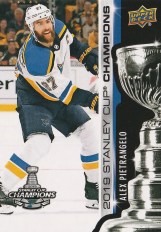
Pietrangelo

Unique Game: The Blues have participated in two Winter Classic games. First, they hosted the rival Chicago Blackhawks in 2017, followed by facing the Minnesota Wild in 2022. St. Louis and the Edmonton Oilers also participated in the 1990 Epson Cup in Dusseldorf, West Germany, which included a game against each other as part of the tournament. Finally, the Blues opened their 2009-10 season with a pair of games against the Detroit Red Wings in Stockholm, Sweden, for the 2009 NHL Premiere.

Goal: Blues fans waited 52 years for the club’s first Stanley Cup and it took a 4-1 win in Game 7 of the finals against the Boston Bruins to get that title. The St. Louis faithful were put at ease when Ryan O’Reilly tallied the opening goal of that game at 16:47 of the first period and the Blues never looked back. O’Reilly was later named the Conn Smythe Trophy recipient as playoff MVP.

Fight/Brawl: Blues history is littered with infamous brawls. These include melees against the Philadelphia Flyers (1972), Pittsburgh Penguins (1973), New York Rangers (1974), Chicago Blackhawks (1991 St. Patrick’s Day Massacre), and Detroit Red Wings (1993). The fracas with the Penguins occurred during a pre-season contest and lasted 20 minutes, with fighting occurring in the penalty boxes and the hallway leading from them to St. Louis’ dressing room.

Injury: Two Blues defensemen have suffered serious heart issues during games with the team. First, during the 1998 playoffs, Chris Pronger was hit with a slapshot to the chest in a contest against the Detroit Red Wings. This caused Pronger to go into cardiac arrest due to his heart rhythm being disrupted. Next, in 2020, Jay Bouwmeester collapsed on the bench due to cardiac arrest. Thankfully, both players survived their ordeals, but Bouwmeester never played in the NHL again.
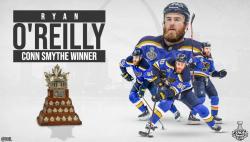
Ryan O'Reilly

Penalty: During a 1969 pre-season game, Wayne Maki got into a stick swinging fight against Ted Green of the Boston Bruins. Maki clubbed Green over the head, resulting in a fractured skull and brain injury. Both players were charged with assault, becoming the first NHL players to face criminal prosecution for an on-ice incident, but were acquitted. Maki was suspended 30 days, while Green missed the entire season recovering.

Wildest Story: The Blues were almost moved to Saskatoon, Saskatchewan in 1983, but the NHL’s Board of Governors voted to reject the proposed $12 million sale. This led to lawsuits between then owner Ralston Purina (of the Purina animal food empire) and the NHL, with control of the franchise taken over by the league. The result was the Blues stayed in St. Louis, when a new ownership group, led by businessman Harry Ornest, was put together.

Blooper: In February 2006, Blues defenseman Dennis Wideman made one of the most memorable shootout attempts of all-time… memorable for all the wrong reasons. As Wideman swiftly skated towards Chicago Blackhawks goalie Corey Crawford, he made a nice deke move, but lost a skate edge and went flying up in the air, landing flat on his back, with the puck sliding into the corner of the rink.

Miscellaneous: Bernie Federko deserves some mentioning, as he’s the Blues career leader in games, assists and points, while sitting second all-time in goals. Federko was drafted by St. Louis seventh overall in 1976, remaining with the team until a 1989 trade to the Detroit Red Wings. Federko would have his number 24 jersey retired by the Blues in 1991 and for an extended period was the color commentator on the team’s TV broadcasts.

St. Louis Blues: Monday Night Miracle
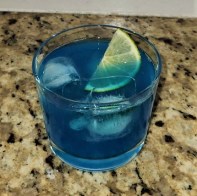
Monday Night Miracle

  • 1.5 oz Gin or Vodka
  • 1 oz Blue Curacao
  • Splash of Lime Juice
  • Garnish with a Lime Slice

This cocktail is named after the greatest comeback in Blues history, Game 6 of the Campbell Conference Finals, which occurred on Monday, May 12, 1986. The Blues were down 5-2 with 12 minutes left in the contest, when they rallied to force overtime and won 6-5. Despite the momentum change, they would still lose the series to the Calgary Flames.
Detroit Red Wings – Detroit Red Wing

Throughout the year, the Sip Advisor will alphabetically travel the National Hockey League (NHL), discovering the best and worst each team has to offer in a variety of subjects. We will also feature a drink based off the franchise. Today, we cruise the Motor City and get a crash course on the Detroit Red Wings:

Establishment Story: One of the NHL’s Original Six franchises, the Red Wings were founded in 1926. The franchise began life as the Cougars (after buying players from the Victoria Cougars Western Hockey League team to begin operations), then Falcons, before finally settling on Red Wings in 1932. The change to Red Wings was initiated by new owner James Norris, who liked the ‘winged-wheel’ logo of the Montreal Amateur Athletic Association and thought it fit well with Detroit’s Motor City nickname.

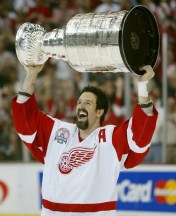
Stanley Cups: The Red Wings have won 11 Stanley Cups, the most of any American NHL team. The team qualified for the playoffs for 25 straight seasons, from 1983-84 to 2015-16, one of the longest streaks in NHL history. They won four of their Stanley Cups during this run. The Red Wings success in the mid 1990s, led to the team registering the trademark Hockeytown for the city of Detroit.

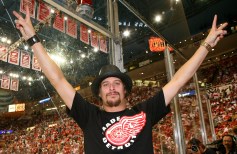
Celebrity Fan: Musician Kid Rock has had a long association with the Red Wings. The Michigan native even wrote and recorded one of the team’s goal songs ‘Hey Hey Hockeytown’. Kid Rock has often appeared at games and celebrated Stanley Cup wins with the likes of Chris Chelios, along with being the act that opened Detroit’s Little Caesars Arena in 2017, with four consecutive concerts.

Kid Rock

Super Fan: Heather ‘Wing-Nut’ Petrie, who is recognizable for her red hair, hat, jacket, tutu, and car, attended every Detroit home game from December 23, 2014 until the pandemic. From Windsor, Ontario, which has a large pocket of Red Wings supporters, given its proximity to Detroit, Petrie was named Windsor’s biggest Red Wings fan in a 2019 radio contest and was a finalist in the 2021 Upper Deck My MVP contest.

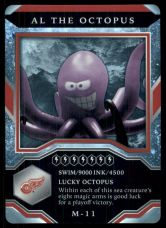
Mascot: Al the Octopus isn’t your typical costumed mascot, but an inflatable one that is used to pump up the crowd as the Red Wings take the ice. The prop is then lifted to the arena’s rafters. Wearing jersey number 8, a reference to an octopi’s eight tentacles, Al is missing a tooth, completing the hockey player look. Detroit’s previous mascot was the Red Winger, appearing from 1982 to 1987.

Tradition: The Legend of the Octopus dates back to 1952, when fish market owner Peter Cusimano tossed one onto the Detroit ice, the octopi’s eight legs signifying the number of wins it took at that time to win the Stanley Cup. Former ice manager Al Sobotka is best associated with the present tradition, which included him swinging the octopi around after collecting it from the ice.

Appearances in Media: A number of characters in TV shows and films have donned a Red Wings jersey, long thought to be one of the best sweaters in all of sports. Cameron from Ferris Bueller’s Day Off, Joey from Full House and Dr. Cox from Scrubs each wore the famous winged-wheel kit. Even Homer Simpson has sported a Detroit jersey, with his wearing being a throwback to Ferris Bueller’s Day Off.

Al the Octopus

Events/Scandals: The seeds for the NHL Players’ Association were planted by long-time Red Wings star Ted Lindsay (along with Doug Harvey of the Montreal Canadiens). Due to their association with the union efforts, Lindsay and Harvey faced punishments of sorts, as both were traded away and dealt with threats from the league and team owners, along with strained relationships with teammates. A TV movie on the subject, titled Net Worth, was released in 1995.

Rivalry: As one of the oldest teams in the NHL, the Red Wings have made many enemies along the way. The list includes former division rival the Chicago Blackhawks, repeated playoff foes the Colorado Avalanche and Pittsburgh Penguins, and cross border adversaries the Toronto Maple Leafs. All of these rivalries have had their ebbs and flows over the years, particularly with the Red Wings current downturn.

Tragedy: Following a team party just six days after clinching the 1997 Stanley Cup, a limo transporting defenseman Vladimir Konstantinov crashed. Konstantinov suffered a brain injury and was in a coma for two months. The injuries forced Konstantinov’s retirement from hockey at only 30 years old and in the prime of his career. Making matters worse, the limo driver, who fell asleep, causing the accident, was driving on a suspended license for drunk driving.

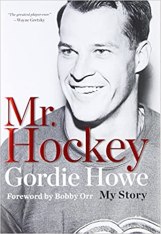
Player Nicknames: When you’re called Mr. Hockey, as Red Wings icon Gordie Howe was, that means you’re synonymous with the sport. Howe had the moniker trademarked, along with Mrs. Hockey for his wife Colleen. Other nicknames given to Howe throughout his career include Mr. Everything, Mr. All-Star, The Great Gordie, The King of Hockey, The Legend, The Man, and Mr. Elbows.

Mr. Hockey

Line: The Red Wings not only had a famous line of forwards, they had a complete unit of players that were often iced together. Dubbed the Russian Five, the group consisted of Sergei Fedorov, Slava Kozlov, Igor Larionov, Vladimir Konstantinov, and Slava Fetisov. A later homage to the Russian Five was the Swedish Five, comprised of Nicklas Lidstrom, Niklas Kronwall, Henrik Zetterberg, Mikael Samuelsson, and Tomas Holmstrom.

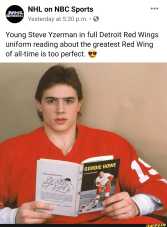
Captain: Steve Yzerman was only 21 years old when he was named captain of the Red Wings in 1986. He would serve the team in that role for the rest of his career, retiring in 2006. Yzerman’s 19 seasons and 1,303 games as captain is the longest tenure in North American sports history. His mark on Detroit saw him once voted the most popular athlete in the city’s long and storied sports history.

Enforcer: Perhaps the greatest and most feared fighter in NHL history was Bob Probert. He patrolled the ice for the Red Wings for nine seasons and holds the franchise records for penalty minutes in a season and total penalty minutes. Probert’s main task was to protect stars like Steve Yzerman. When paired with fellow fighter Joey Kocur, the two were known as the Bruise Brothers.

Family Values: Frank ‘Big M’ and Pete ‘Little M’ Mahovlich played for the Red Wings from 1967 to 1969, while Frank was a superstar and Pete (Detroit’s 2nd overall draft pick in 1963) was breaking into the league. Similarly, Bryan and Dennis Hextall were teammates during part of the 1975-76 season. The Red Wings have also had a handful of father-son combos play for the team, most notably, Gordie and Mark Howe.

Russian Five

Returning Players: Legendary goalie Terry Sawchuk did three tours of duty with the Red Wings over his 21-season career. He was signed by Detroit in 1947, debuting in 1950. After a stint with the Boston Bruins, Sawchuk returned to the Red Wings in 1957. He was claimed by the Toronto Maple Leafs in the 1964 NHL Intra-League Draft, also suiting up for the expansion Los Angeles Kings, before playing a final 13 contests for Detroit in 1968-69. Sawchuk died in 1970, following one season with the New York Rangers.

Short Stint: Derian Hatcher had a curious stint with the Red Wings. Despite signing a five-year, $30 million contract with Detroit in 2003, Hatcher only played 15 games with the franchise. He was injured early in the 2003-04 season, with the following campaign wiped out by the NHL lockout. When teams prepared to return to action with the newly introduced salary cap, the remaining years of Hatcher’s contract were bought out.

Undrafted: When the Red Wings signed Adam Oates in 1985, they landed a future Hall of Fame member, even if he made a name for himself elsewhere. Oates chose Detroit over other offers, with his $1.1 million contract making him the highest paid rookie in the NHL in his debut campaign. The Red Wings traded Oates to the St. Louis Blues in 1989, in what is regarded as one of the worst trades in franchise history.

Trade: The acquisition of Brendan Shanahan in 1996 is a move that is often cited as one that pushed the Red Wings over the hump in the late 1990s, leading to three Stanley Cups in 1997, 1998 and 2002. Shanahan came to Detroit along with Brian Glynn, in exchange for Keith Primeau, Paul Coffey and a first-round draft pick. Shanahan played a total of nine seasons with the Red Wings, racking up 633 points in 716 games.

Brendan Shanahan

Signing: Looking to load up for another Stanley Cup run, in the 2001 off-season, the Red Wings signed two of the greatest goal scorers in league history, Brett Hull and Luc Robitaille, each to two-year pacts. Both players took less money from Detroit, in order to join a star-studded squad. They were rewarded with winning the 2002 Stanley Cup, where Hull led the NHL in playoff goals.

Draft Pick: The Red Wings greatest draft pick was taking Steve Yzerman fourth overall in 1983. The team can also be credited with one of the best draft classes ever in 1989, when they selected Nicklas Lidstrom (54th overall), Sergei Fedorov (74th overall) and Vladimir Konstantinov (221st overall). The Red Wings have also done very well finding diamonds in the rough, including Tomas Holmstrom (257th overall in 1994), Pavel Datsyuk (171st overall in 1998) and Henrik Zetterberg (210th overall in 1999).

Holdouts: Sergei Fedorov’s 1997-98 holdout would lead to the largest single season payment to an NHL player. The Carolina Hurricanes signed Fedorov to a $38 million offer sheet, which was matched by Detroit. Federov received a $14 million signing bonus, $2 million base salary and $12 million bonus for the Red Wings making the Conference Finals. A total of $28 million for 21 regular season games and 22 playoff contests, but Fedorov did lead Detroit in goals as they won their second consecutive Stanley Cup.

Buyouts: The Red Wings have twice bought out contracts with three years remaining on them. First, in 2015, they parted ways with Stephen Weiss, two seasons into a five-year deal. They owed him $10 million over the next six years. Later, in 2020, lifetime Red Wing Justin Abdelkader was released four years into a seven-year pact. He is being paid out $6.33 million, spread out until 2025-26.

Steve Yzerman

Unique Game: The first NHL games to take place outside North America occurred when the Red Wings and Montreal Canadiens toured Europe in 1938 for a nine-game exhibition series. The contests took place in London and Brighton, United Kingdom, as well as Paris, France. Detroit also played a 1954 game at Marquette Branch Prison, defeating the Marquette Prison Pirates 18-0 (they stopped keeping score after the first period). This was the first outdoor game ever for an NHL team.

Goal: When the Red Wings battled the star-loaded St. Louis Blues in the second round of the 1996 playoffs, the series went to a seventh game, taking until double overtime to finally be decided. The end came, when Steve Yzerman stole the puck – from Wayne Gretzky, no less – and ripped a slap shot past Blues goalie Jon Casey. Another famous tally was Darren McCarty’s 1997 Stanley Cup clincher versus the Philadelphia Flyers.

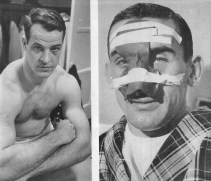
Fight/Brawl: Many tales exist about the legendary Gordie Howe. Among them, is his fight with Lou Fontinato, one of the most feared combatants of the era. The two players had feuded for some time, but on February 1, 1959, Howe cemented his status as a player not to be pushed around, pounding Fontinato’s face, resulting in a broken nose and dislocated jaw. The sound of the punches was described as like an axe chopping wood.

Injury: On November 21, 2005, during a game against the Nashville Predators, Red Wings defenseman Jiri Fischer went into cardiac arrest, collapsing on the bench. Fischer was unconscious for six minutes, needing CPR and a defibrillator to be revived. The contest became the first in NHL history postponed due to an injury. Fischer never played in the league again, moving into the role of Director of Player Development with Detroit.

Gordie-Lou

Penalty: On November 5, 1975, Dan Maloney came to the defense of teammate Bryan Hextall, after he was hit by Brian Glennie of the Toronto Maple Leafs. Maloney repeatedly punched and slammed Glennie to the ice, resulting in a concussion. In the aftermath, Maloney became the third player in NHL history to be charged with assault for an on-ice incident, although he was acquitted months later.

Wildest Story: In 1993, Kris Draper was acquired by the Red Wings for a whopping $1. To that point, Draper had only played 20 NHL games for the Winnipeg Jets, since being drafted in 1989. Draper would go onto become one of Detroit’s mainstays through the successful 1990s and 2000s, playing 1,137 games with the club and being a member of four Stanley Cup championship squads.

Blooper: Two playoff gaffes by goalie Chris Osgood are well-remembered by Red Wings fans. First, in 1994, the rookie netminder went to clear the puck late in the seventh game of their first round series versus the San Jose Sharks, only to play it to an opponent, who quickly scored the deciding goal. Next, in the 1998 Western Conference Finals, Jamie Langenbrunner of the Dallas Stars scored the game five overtime winner from center ice on Osgood. The Red Wings still went on to win the Stanley Cup that year.

Miscellaneous: In 1985, Petr Klima (drafted 86th overall in 1983 by Detroit) became the first player to defect from Czechoslovakia to a U.S.-based NHL team, with the help of Red Wings officials Jim Lites and Nick Polano. In his escape, Klima had to avoid police and request refugee status in the U.S. In honour of his successful move to North America, Klima wore jersey number 85 throughout his career.

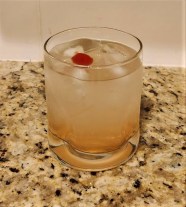
Detroit Red Wings: Detroit Red Wing

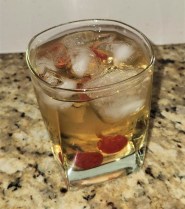
Detroit Red Wing

  • 1.5 oz Cinnamon Schnapps
  • Top with Ginger Ale
  • Garnish with Maraschino Cherries

Another Red Wings cocktails combines Raspberry Vodka, Lemon-Lime Soda and Grenadine. The beverage I selected seemed to be the most popular option, with drinkers supposed to use Vernors Ginger Ale, a Detroit-area favourite soda, first served in 1866.

Arizona Coyotes – Coyote on the Rocks

Throughout the year, the Sip Advisor will alphabetically travel the National Hockey League (NHL), discovering the best and worst each team has to offer in a variety of subjects. We will also feature a drink based off the franchise. Today, we venture to the hotbed of hockey that is Arizona. While checking out the Coyotes operation, we must be mindful of the franchise’s past in Winnipeg as the first incarnation of the Jets:

Establishment Story: On July 1, 1996, the Winnipeg Jets became the Phoenix Coyotes, moving their operations from the frozen tundra to the desert. The original plan was to relocate to Minneaplos-St. Paul, but the new owners couldn’t arrange an arena lease, so Phoenix became the destination. A fan vote was conducted to name the team, with Coyotes being the winner over Scorpions.

Stanley Cups: The Jets/Coyotes franchise has never appeared in a Stanley Cup Final (the oldest team to have not made the Finals), let alone won the championship. The deepest the team has ever gone in the playoffs was the Western Conference Finals in 2012. It should be noted, the Jets were extremely successful during their stint in the World Hockey Association (WHA), winning the Avco Cup three times during the league’s seven seasons of existence.

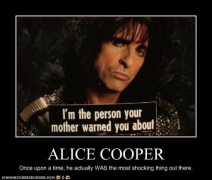
Celebrity Fan: The ‘Godfather of Shock Rock’ Alice Cooper has long been a fan of the Coyotes, being an Arizona native since he was a teenager. The team has even given away Alice Cooper bobbleheads as a fan promotion in 2012. Cooper can often be spotted at games or rocking the classic Kachina-style jersey. Goalie Mike Smith even had Cooper painted on the back of his helmet in 2015.

Alice Cooper

Super Fan: Any supporter of the Coyotes has to be considered a super fan, no? Seriously, though, Leighton Accardo was a 9-year-old Coyotes supporter who sadly lost her 18-month battle with cancer in late 2020. Prior to passing, Accardo played youth hockey in the Arizona Kachinas program and was signed to a one-day contract by the Coyotes. On that night, rather than drop the puck for the ceremonial face-off, the youngster actually took the draw.

Mascot: Howler the Coyote (full name Canis Howlus Maximus) debuted in 2005. He wears jersey number 96, representing the year the team arrived in Arizona. Also, rather than have a captain’s ‘C’ on his jersey, Howler has the letter ‘M’ for mascot. Howler is best known for being a great drummer, joining area bands during Coyotes Foundation charity events.

Tradition: The White Out began as a Jets ritual, but carried over to Phoenix when the franchise relocated. It began in 1987 to counter the Calgary Flames ‘C of Red’, as the Jets were facing the Flames in the playoffs that season. Winnipeg swept the series and fans hoped the White Out would continue to bring good luck. In Arizona, lyrics to the Wang Chung song “Everybody Have Fun Tonight” have been altered to “Everybody wear white tonight” in marketing campaigns.

Appearances in Media: There are a couple documentaries feature footage of the original Jets. This includes Sel8nne, about the career of Teemu Selanne, and Death by Popcorn: The Tragedy of the Winnipeg Jets, covering the rise and fall of that franchise. The title comes from an incident in the 1990 playoffs, when the Jets were on the verge of finally defeating the Edmonton Oilers, until a fan threw popcorn on the ice, causing a long delay and changing the momentum of the game and series in the Oilers favour.

Howler

Events/Scandals: When the Coyotes selected Mitchell Miller in the fourth round of the 2020 NHL Entry Draft, they didn’t realize the firestorm they were about to set off. According to a report weeks later in The Arizona Republic, Miller had been found guilty in 2016 of repeatedly bullying a developmentally disabled African American classmate. The Coyotes renounced the draft pick as a result.

Rivalry: Aside from brief flirtations with rivalries, the Coyotes greatest battle seems to be against financial stability. For a time, the Coyotes most hated opponents were the Los Angeles Kings, based on their heated 2012 Western Conference Final series. When the franchise was based in Winnipeg, perennial Smythe Division leaders the Edmonton Oilers and Calgary Flames provided the team with many great clashes.

Tragedy: While playing with the Tucson Roadrunners (the Coyotes minor league affiliate), captain Craig Cunningham suffered a cardiac arrest prior to puck drop on November 19, 2016. It took 83 minutes of CPR to keep Cunningham alive. Due to the incident, Cunningham’s lower left leg had to be amputated because of an infection that followed circulation issues. No longer able to play, Cunningham was offered a pro scout position with the Coyotes.

Player Nicknames: The Coyotes greatest legacy on the game of hockey may be some of the nicknames the team has been responsible for over the Arizona/Winnipeg existence. Some include Finnish Flash (Teemu Selanne), Bulin Wall (goalie Nikolai Khabibulin) and BizNasty (Paul Bissonnette). A few others to be considered include Ducky (Dale Hawerchuk), Rhino (Zac Rinaldo), Goose (Alex Goligoski) and Stinky (Christian Fischer).

Arizona Coyotes

Line: When superstar Bobby Hull was joined by European imports Anders Hedberg and Ulf Nilsson to form the Hot Line, the unit dominated the WHA. They played together for four seasons, winning two Avco Cups, before both Hedberg and Nilsson joined the NHL’s New York Rangers. Perhaps the greatest compliment of the trio came from Edmonton Oilers GM Glen Sather, who said he used the Hot Line as a template for building his 1980s dynasty teams.

Captain: Shane Doan spent his entire career as a member of the Coyotes. For 13 of those 21 seasons, he served as the team’s captain. At the time Doan retired in 2017, he was the longest-serving captain in the NHL, providing the Coyotes franchise with some semblance of stability amongst all their other issues. Doan’s jersey was retired by the team in 2019. He recorded 402 goals and 972 points over 1,540 games with the club, all franchise records.

Enforcer: Kris King’s tenure with the franchise spanned both the Winnipeg and Phoenix incarnations of the team. Originally brought in to provide protection for the likes of Teemu Selanne and Keith Tkachuk, the ‘King of Pain’ recorded 762 penalty minutes and 71 fighting majors over his five seasons with the club. King was awarded the King Clancy Memorial Trophy in 1996, given to an NHL player who has made significant contributions to their community.

Family Values: From 1993 to 1996, brothers Darryl and Darrin Shannon played together for the Jets. Coyote lifer Shane Doan had the pleasure of being part of the team’s draft table when they selected his son, Josh Doan, 37th overall in 2021. Josh was born and raised in Arizona, as his father played two decades with the franchise. Brothers Philip and Henrik Samuelsson were members of the organization at the same time, while dad Ulf was a former assistant coach.

Shane Doan

Returning Players: Radim Vrbata had three tenures with the Coyotes. He first played for the club for the 2007-08 season. He split the next campaign between the Tampa Bay Lightning and two teams in the Czech Extraliga, before returning to the Coyotes for five seasons. After a two-year stint with the Vancouver Canucks, Vrbata once again called Arizona home for a year. He finished his career with the Florida Panthers, retiring in 2018.

Short Stint: Coming out of the 2004-05 NHL lockout, legendary scorer Brett Hull joined the Coyotes. His dad’s #9 jersey (retired when the team was in Winnipeg) was unretired, allowing him to wear it. However, just five games into the season, Hull believed he could no longer play at the level he expected of himself and abruptly retired. He had recorded only one assist in those contests.

Undrafted: Winger Doug Smail signed with the Jets in 1980, following three years at the University of North Dakota. He remained with the team for 11 seasons and holds a couple interesting records, including the franchise mark for shorthanded goals (25), while sharing the NHL record with three others for fastest goal to start a game (five seconds). He was also the first player to ever join the U.K.’s Elite Ice Hockey League directly from the NHL.

Trade: It was tough to lose the face of their franchise, but at the 1990 NHL Draft, the Jets granted Dale Hawerchuk’s trade request, sending him to the Buffalo Sabres with a first-round draft choice. In return, the Jets received all-star defenseman Phil Housley, Scott Arniel, Jeff Parker and a first-round pick, used to select future star Keith Tkachuk. Another good move was acquiring Jeremy Roenick from the Chicago Blackhawks in 1996 for a package of assets. Roenick was a splashy move for the team’s Phoenix debut.

Brett Hull

Signing: When Mike Smith joined the Coyotes in 2011 on a very reasonable two-year, $4 million deal, he instantly legitimized the team’s goaltending. With Smith in net, the franchise won its first playoff series since 1987 and advanced to the Western Conference Finals for the first time ever. Smith’s success also came on offense, as he scored a rare goalie goal on October 19, 2013.

Draft Pick: Despite a long history of poor performances, the Coyotes have never held a draft pick better than third overall. The Jets selected first overall once, in 1981, taking future Hall of Fame member Dale Hawerchuk. Perhaps the franchise’s greatest pick of all-time was Teemu Selanne (10th overall in 1988), while their diamond in the rough find would be Nikolai Khabibulin (204th overall in 1992).

Holdouts: Nikolai Khabibulin’s contract impasse with the Coyotes, following the 1998-99 season, resulted in the goalie missing almost two full years of NHL action. Khabibulin would finally be traded to the Tampa Bay Lightning on March 5, 2001, suiting up for the team twice before the end of the year. The move worked out well for Khabibulin, as the Lightning won the 2004 Stanley Cup, with him in the crease.

Buyouts: Mike Ribeiro’s time with the Coyotes was brief. Coming off a season where he scored a point per game with the Washington Capitals, Ribeiro signed a four-year, $22 million contract with the Coyotes in 2013. Following a single season, Ribeiro was bought out due to behavioural issues, related to alcohol use. Arizona paid Ribeiro $11,666,667 to not play for them, while the forward signed on with the Nashville Predators.

Mike Smith

Unique Game: For a 2006 pre-season game, the Coyotes returned to where it all began, playing the Edmonton Oilers in Winnipeg, 10 years after the Jets relocation to Phoenix. The Coyotes also opened the 2010 season with a pair of contests against the Boston Bruins in Prague, Czechia. Finally, there has been talk of the Coyotes playing an outdoor game in Mexico, which would be the first time NHL action has ever taken place in the country.

Goal: On March 2, 1993, Teemu Selanne surpassed Mike Bossy’s rookie scoring record of 53, with a goal against the Quebec Nordiques. The tally was made even more memorable thanks to Selanne’s celebration of throwing his glove into the air and using his stick as a gun to shoot it down. Selanne would finish the season with an incredible 76 goals and 132 points (also a NHL record), en route to being named the NHL’s top rookie, winning the Calder Memorial Trophy.

Fight/Brawl: An October 11, 1985 bench clearing brawl between the Jets and Calgary Flames is memorable for a couple reasons. The second period skirmish resulted in six game ejections, including Jets assistant coach Rick Bowness, who took a swipe at Flames enforcer Tim Hunter, the player thought to ignite the melee. Also ejected was Flames backup goalie Mark D’Amour, who was dressing in his first NHL game.

Injury: Coyotes star Clayton Keller had his 2021-22 season ended early when he crashed into the boards, fracturing his leg. A stretcher was needed to remove Keller from the ice, followed by surgery. Another notable injury was Jeremy Roenick having his jaw broken in 1999 by Derian Hatcher of the Dallas Stars. The blatant elbow was retribution for Roenick hitting Dallas superstar Mike Modano in the teams previous encounter. Hatcher was suspended seven games for the incident.

Teemu Selanne

Penalty: Jets tough guy Jimmy Mann was coming off a three-game suspension a month earlier for pushing a linesman, when on January 13, 1982, he left the bench and sucker punched Paul Gardner of the Pittsburgh Penguins, breaking his jaw. The attack was in retaliation for Gardner injuring a teammate just prior. For this offense, Mann was suspended for 10 games, along with being charged with assault causing bodily harm in Manitoba court. Mann pled guilty, receiving a maximum $500 fine.

Wildest Story: On December 8, 2021, it was announced the Coyotes owed $1.3 million in back taxes and they would be locked out of the Gila River Arena if the money was not paid by December 20, 2021. This was the last straw in their lease agreement with the City of Glendale and the Coyotes were forced to find a new home for the 2022-23 season, eventually coming to terms with Arizona State University to play out of their 5,000 seat Mullett Arena.

Blooper: Mike Smith was one of the best goalies in franchise history, but he is also remembered for one of the most bizarre own goals fans have ever seen. During a December 2013 game against the Buffalo Sabres, the puck launched into the air, coming down and getting stuck in the back of Smith’s gear. Smith, losing sight of the puck, backed into his own net. The tally is known today as the ‘Butt Goal’ and worst of all, it occurred in overtime, giving the Sabres the win.

Miscellaneous: During the 2003-04 season, netminder Brian Boucher recorded five consecutive shutouts, with a shutout streak of 332:01, setting modern day NHL records for both stats. The previous records belonged to Gary Durnan, who earned four consecutive shutouts and a streak of 309:21 playing for the Montreal Canadiens in 1949. The all-time records date back to the 1927-28 season, when Ottawa Senators goalie Alec Connell had six consecutive shutouts and a streak of 460:49.

Arizona Coyotes: Coyote on the Rocks

Coyote on the Rocks

  • 1.5 oz Tequila
  • Top with Grapefruit Juice
  • Splash of Grenadine
  • Garnish with a Maraschino Cherry

This beverage is similar to a Paloma, which is among the Sip Advisor’s favourite cocktails. Some differences include the addition of grenadine and no salt for the drink’s rim. I like the double entendre this recipe conjures, as you can imagine a coyote resting on rocks or it could just be the ice filling your glass.