Montreal Canadiens – Habitant

Throughout the year, the Sip Advisor will alphabetically travel the National Hockey League (NHL), discovering the best and worst each team has to offer in a variety of subjects. We will also feature a drink based off the franchise. Today, we visit La Belle Province, to learn about one of the most storied sports franchises in the world, the Montreal Canadiens:

Establishment Story: The Canadiens are one of the NHL’s Original Six franchises, being founded in 1909 and playing in the National Hockey Association. In fact, the team is the longest continuously operating ice hockey team in the world, predating the formation of the NHL. The team was given the name ‘Les Canadiens’, as it was supposed to be comprised of French players and supported by Montreal’s francophone community.

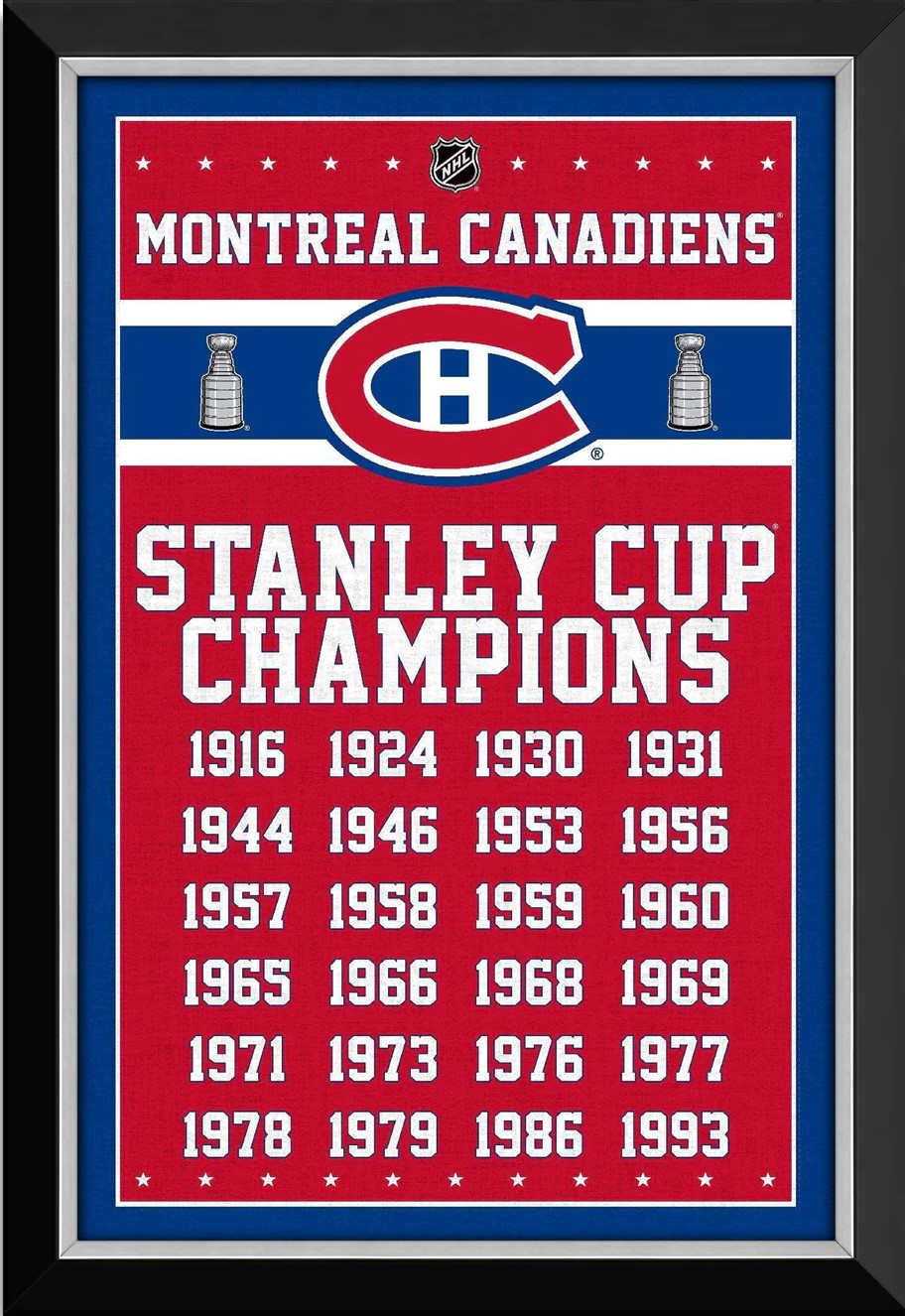
Stanley Cups: The Canadiens hold the NHL record for Stanley Cup victories with 24. Montreal’s dynasty teams of 1955-60, 1964-69 and 1975-79 largely contributed to this total. The Canadiens have appeared in a total of 35 Stanley Cup Finals. Introduced in 1985, Montreal has never won the Presidents’ Trophy, awarded for best regular season record. Had it always existed, the Canadiens would have won it on 21 occasions.

Celebrity Fan: As you can expect, given the club’s reverence with French Canadians, there are a number of celebrity supporters of the Canadiens. Among the team’s most famous fans are singer Celine Dion, Canadian Prime Minister Justin Trudeau, actors Jay Baruchel, Viggo Mortensen and William Shatner, and mixed martial arts fighter Georges St-Pierre. Legend has it, Mortensen wore a Canadiens jersey under his armor while filming the Lord of the Rings trilogy.
Stanley Cups

Super Fan: I believe every Canadiens fan to be a super fan in their own right. After all, supporting the team is like a religion in Montreal. In fact, the Canadiens launched their own Hall of Fan in 2022, with the original inductees being Sunil Peetush, Maika Parisien and Thommy Boudreau. Perks of the honour included an induction ceremony and having their names on a banner in the Molson Ex Zone, within the Bell Centre, as well as watching a game from a suite.

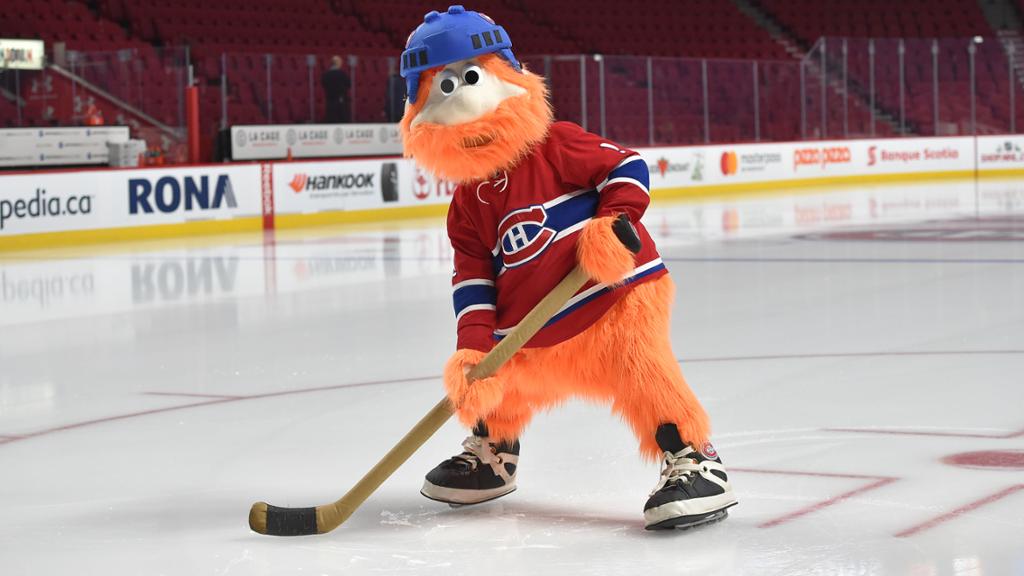
Mascot: Youppi! was the mascot of Major League Baseball’s Montreal Expos from 1979 to 2004, before the team was relocated to Washington, D.C., becoming the Washington Nationals. Needing a new team to support, Youppi! joined the Canadiens. His jersey number is an exclamation mark. Youppi was the first Canadian mascot to be inducted into the Mascot Hall of Fame, earning the honour in 2020.

Tradition: The Canadiens team motto is “Nos bras meurtris vous tendent le flambeau, à vous toujours de le porter bien haut.” This translates as “To you from failing hands we throw the torch. Be yours to hold it high.” The slogan comes from the famous World War I poem In Flanders Fields by John McCrae. Canadiens fans have also been known for the chants “Olé, Olé, Olé”, along with the team’s goal song and “Nah Nah Nah Nah Hey Hey Hey Goodbye”, as the team wound down a game with victory imminent.

Appearances in Media: The Hockey Sweater is a cherished children’s book, which was later turned into an animated short, titled The Sweater. The story is about a little boy who’s gifted a Toronto Maple Leafs sweater, despite living in Montreal and being a loyal Canadiens fan. It is based on author Roch Carrier’s childhood experience. The book and short are so iconic, a line from the story appeared on Canadian $5 bills for a time.
Youppi

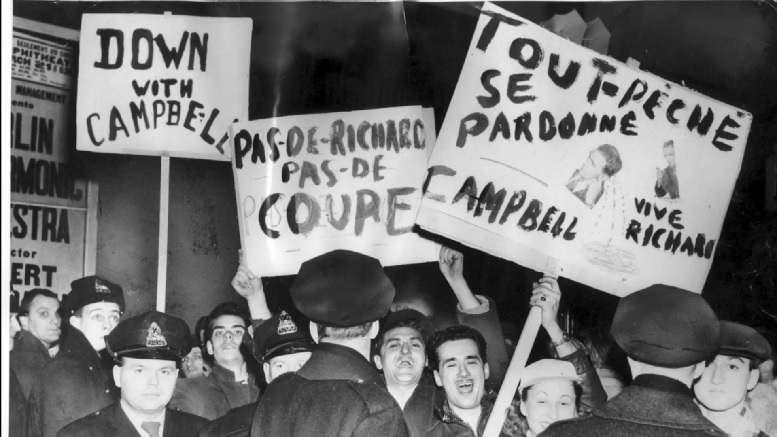
Events/Scandals: Occurring on March 17, 1955, the Richard Riot transpired because beloved Canadiens superstar Maurice Richard was suspended for the remainder of the 1954-55 season, including the playoffs, following an altercation with a linesman. When NHL president Clarence Campbell appeared at the Montreal Forum for the Canadiens next game, fans revolted causing $100,000 worth of property damage, only being quelled by Richard asking for supporters to stop.

Rivalry: Many view Montreal’s feud with the Boston Bruins as one of the NHL’s greatest rivalries. The two teams have faced each other in the playoffs countless times and heated matchups aren’t restricted to the post-season. The Canadiens also have checkered histories with geographically close teams in the Toronto Maple Leafs and Ottawa Senators and would still be enemies of the Quebec Nordiques and Montreal Maroons, if those clubs still existed.

Tragedy: The Canadiens long history includes numerous tragedies. First, days after the 1919 Stanley Cup Finals were cancelled due to the Spanish flu pandemic, player Joe Hall died of pneumonia. Next, goalie Georges Vezina succumbed to tuberculosis in March 1926. Later, in 1937, star Howie Morenz perished due to a coronary embolism, while recovering from a broken leg (more on that below). Finally, prospect Neil Carnes was killed in a 1989 motorcycle accident.

Player Nicknames: Canadiens fans and media work diligently to create nicknames for their beloved players. Some of the best, include Boom Boom (Bernie Geoffrion), Big Bird (Larry Robinson), Roadrunner (Yvon Cournoyer), Rocket/Pocket Rocket (Maurice/Henri Richard), Flower/Blond Demon (Guy Lafleur), Chicoutimi Cucumber (George Vezina), Goal Caufield (Cole Caufield), WiFi (Arber Xhekaj), Jesus Price (Carey Price), and Saint Patrick (Patrick Roy).
Richard Riot

Line: The Punch Line of Toe Blake, Elmer Lach and Maurice Richard were formed during the 1943-44 season and instantly had great chemistry. The following campaign, the trio finished first, second and third in league scoring. They would win two Stanley Cups together. Two championships, however, pale in comparison to The Dynasty Line of Guy Lafleur, Steve Shutt and Pete Mahovlich/Jacques Lemaire, who won four straight Stanley Cups from 1976 to 1979.

Captain: Amongst other notable leaders, Jean Beliveau gets the nod here. He led the team for 10 years, winning four Stanley Cups in five seasons from 1965 to 1969. Even after his career wrapped, Beliveau continued to leave his mark on the Canadiens, winning seven Stanley Cups as an executive with the team. Beliveau was named to the Order of Canada in 1998 and had his name added to Canada’s Walk of Fame in 2001.

Enforcer: Chris Nilan, nicknamed Knuckles for his fighting skills, holds the Canadiens team records for career (2,248) and single-season (358) penalty minutes. He was a member of Montreal’s 1986 Stanley Cup squad. When the Canadiens closed the fabled Montreal Forum and began auctioning off pieces from the historic building, Nilan bought the penalty box… a home away from home.

Family Values: It’s pretty special when three generations of a family played for the same team. Bernie Geoffrion, his son Dan and his grandson Blake all suited up for the Canadiens. Add in Howie Morenz, whose daughter married Bernie and was mother to Dan and grandmother to Blake, for a non-direct fourth generation. Additionally, brother combos to play together for Montreal include Maurice and Henri Richard and Frank and Pete Mahovlich.
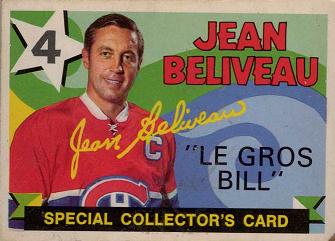
Jean Beliveau

Returning Players: Howie Morenz is a Canadiens legend, playing the first 11 seasons of his career with the team and winning three Stanley Cups, while becoming one of the NHL’s first stars. After time with the Chicago Blackhawks and New York Rangers, Morenz returned to Montreal for the 1936-37 campaign. Sadly, Morenz broke his leg late in the season and weeks later, died of a coronary embolism, caused by blood clots from the injury. 50,000 fans attended his funeral held at the Montreal Forum.

Short Stint: A number of notable Russian players had limited tenures with the Canadiens. This includes Alexander Radulov, who revived his NHL career with the team in 2016-17, before leaving for the Dallas Stars; Ilya Kovalchuk, who played 22 games with Montreal in 2020, between stints with the Los Angeles Kings and Washington Capitals; and Alexander Semin, who played a mere 15 contests with the Canadiens in 2015, before he was waived and had his contract terminated for failing to report to the minor leagues.

Undrafted: The Canadiens signed Mike Keane on September 25, 1985. Keane would spend eight seasons with Montreal, winning a Stanley Cup in 1993 and serving as team captain for half a season. He was part of the infamous Patrick Roy trade, accompanying the star goalie, where they would win another championship in 1996. Keane would win a third Stanley Cup with the Dallas Stars in 1999. He retired having played 1,161 regular season games and 220 playoff contests.

Trade: Goalie Ken Dryden was actually drafted by the Boston Bruins 14th overall in 1964, but was traded a couple weeks later to the Canadiens. Legend has it, Dryden’s agent never told him of being drafted by Boston and he only became aware of how he actually ended up in Montreal midway through his career. Although Dryden only played eight NHL seasons, he won six Stanley Cups and five Vezina Trophies as the league’s best goaltender.
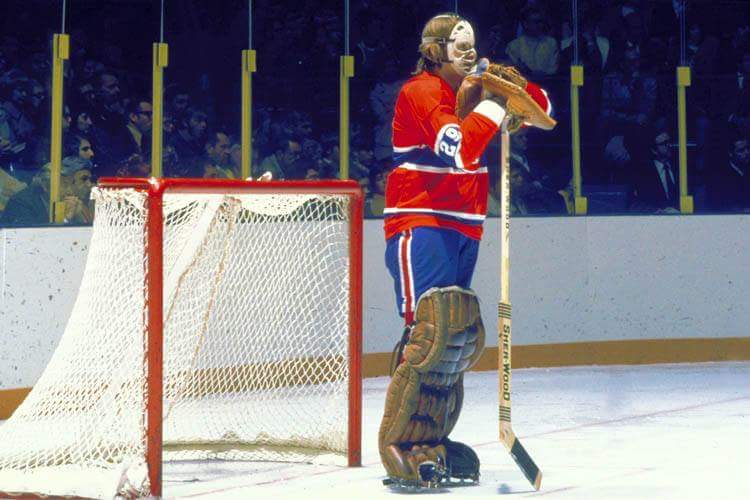
Ken Dryden

Signing: Among the Canadiens best deals was bringing in Brian Gionta with a five-year, $25 million pact in 2009. Gionta would be named the team’s captain in 2010, serving in the role until the end of his contract. One of the worst signings by Montreal was adding hometown enforcer Georges Laraque. Brought in to add toughness to the team, Laraque only lasted a season and a half of his thee-year, $4.5 million deal before being released and bought out.

Draft Pick: One of the savviest moves the Canadiens ever made was trading for the California Golden Seals first round draft pick in 1971. Highly touted Quebecois players Guy Lafleur and Marcel Dionne were available to be chosen that year and when the Golden Seals finished last in the league, the Canadiens earned the right to select first overall. They eventually decided to pick Guy Lafleur, who became a Montreal legend over 14 seasons with the team.

Holdouts: Some of the Canadiens most iconic players have endured interesting contract disputes with the club. Ken Dryden’s 1973-74 disagreement resulted in the netminder articling for a law firm, a requirement needed to earn his law degree. Guy Lafleur decided to retire 19 games into the 1984-85 season, unhappy with coach Jacques Lemaire, a denied trade request and his contract. Finally, Patrick Roy’s mid-season statement he would not play for the team again led to his trade to the Colorado Avalanche.

Buyouts: Karl Alzner was one of the worst free agent signings in Canadiens history. In 2017, the stay-at-home defenseman was given a five-year, $23.125 million deal. In his second season with Montreal, he was demoted to the minors and would only play four more games for the team, before his contract was bought out in October 2020. This resulted in a $3.33 million payout over four years.
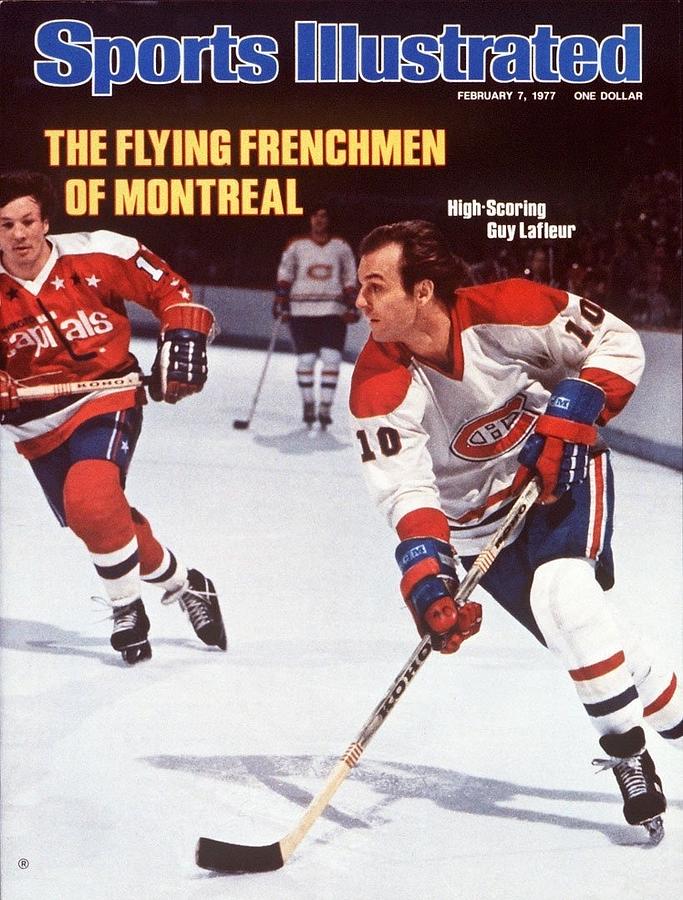
Guy Lafleur

Unique Game: The Canadiens have been part of a number of international tours and showcase events for the NHL. This includes the 1938 Detroit Red Wings–Montreal Canadiens European Tour (first NHL games outside North America), a 1975 New Year’s Eve game vs. Moscow Central Red Army (played during the Cold War), the 2003 Heritage Classic vs. Edmonton Oilers (first regular season outdoor game), 2011 Heritage Classic vs. Calgary Flames, and 2016 Winter Classic vs. Boston Bruins.

Goal: On March 18, 1945, Maurice Richard became the first player in NHL history to score 50 goals in 50 games. Richard finally reached the plateau with 2:15 left in the last game of the season, en route to a 4-2 win for Montreal. Richard’s achievement was even more notable for how much opposing players were targeting him, with an increase in slashes, hooks and other interference, as he pursued the feat.

Fight/Brawl: Canadiens teams of the 1980s were involved in a number of notable brawls. There was the infamous 1984 Good Friday Massacre with the Quebec Nordiques, but also a pair of lesser known melees deserving of some attention. These include a 1986 fracas that moved onto the Boston Bruins bench and tunnel to the dressing rooms, as well as a 1987 punch-up with the Philadelphia Flyers that occurred before the game had even begun.

Injury: A couple of serious injuries have ended Canadiens players careers. First, in January 2000, Trent McCleary took a slapshot to the throat, crushing his larynx and requiring immediate life-saving surgery. With his air passage 15 per cent narrower, McCleary was unable to resume his career. Second, while playing for the Canadiens’ American Hockey League affiliate, Blake Geoffrion suffered a depressed skull fracture following his fall from a hip check, resulting in his eventual retirement.
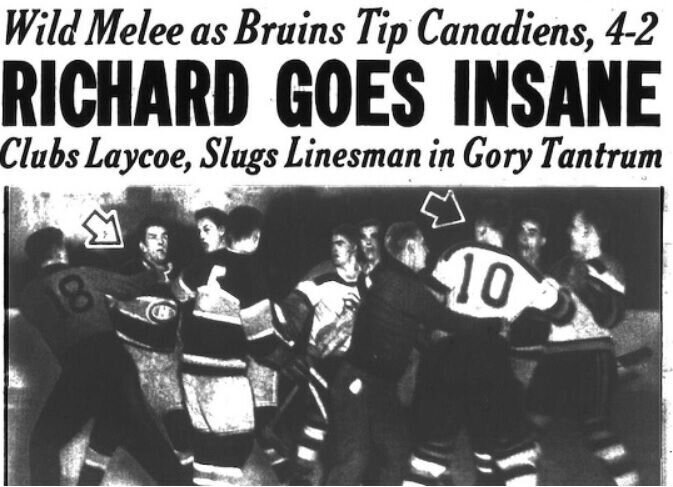
Richard

Penalty: A little more about the incident which led to the Richard Riot, Maurice Richard had a long history of retaliation penalties, stemming from physical and verbal attacks from opposing players. On March 13, 1955, Richard was involved in a skirmish with Boston Bruins player Hal Laycoe and when referees tried to intervene, Richard punched linesman Cliff Thompson twice, knocking him unconscious. A match penalty resulted and Boston police even tried to arrest Richard.

Wildest Story: As a teenager, the Canadiens pursued Jean Beliveau, attempting to sign him to contracts that would ensure he eventually played for the team. As Beliveau appeared to not be interested in turning pro, the Canadiens decided to buy the league Beliveau was playing in, the Quebec Senior Hockey League, turning it into a minor pro circuit and giving the Canadiens the rights to all players in the league, particularly Beliveau.

Blooper: When Doug Gilmour was penalized during the 2002 playoffs, he responded by slamming the penalty box door. This caused the glass to shatter, although Gilmour barely reacted to the mess he had created. Gilmour has said after that game, which he thought may be the last of his career, Canadiens owner George Gillett came to him with a wheelbarrow of glass. When Gilmour signed a few pieces, Gillett asked him to sign some more to be sold later.

Miscellaneous: On November 1, 1959, goalie Jacques Plante blocked a shot with his face, resulting in a broken nose. While Plante had practiced with a mask previously, head coach Toe Blake wouldn’t allow him to wear it during games, fearing it would obstruct his vision. On this night, Plante returned to the ice after being stitched up, donning the mask. He went on an 18-game unbeaten stretch, popularizing the use of the mask as protective equipment.

Montreal Canadiens: Habitant
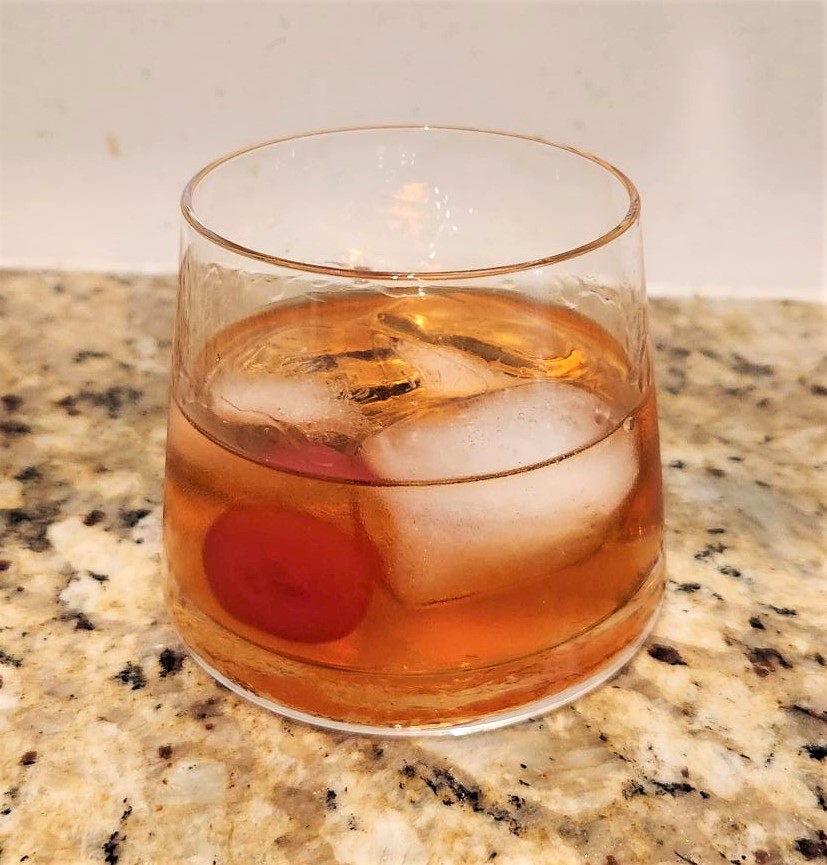
Habitant

  • 1.5 oz Whiskey
  • Splash of Lemon Juice
  • Dash of Maple Syrup
  • Dashes of Peychaud’s Bitters
  • Garnish with a Maraschino Cherry

This cocktail was created by Larry Dennis of the Seignory Club in Quebec. Les Habitants is a popular nickname for the Canadiens. Other monikers for the club include Le Bleu-Blanc-Rouge, La Sainte-Flanelle, Le Tricolore, Les Glorieux, Le Grand Club, and Les Plombiers.

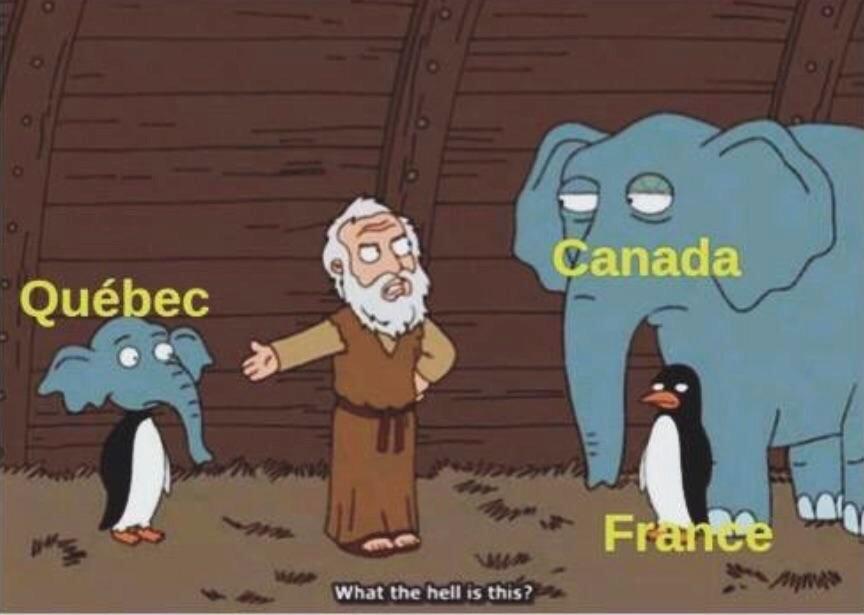
Quebec – Caribou

Each month, the Sip Advisor will alphabetically travel Canada, discovering the best each province has to offer in a variety of subjects. We will also feature a drink the area is known for. Today, we visit La Belle Provence, otherwise known as Quebec. Please note, this article will not be written bilingually:

Motto: “I remember” – Remember what?

Food: There are a number of Monteal-style dishes, including bagels, smoked meat, hot dogs, melons, and even a steak seasoning. Aside from that, a popular Quebecois dish is Tourtière, comprised of minced meat (pork, veal, beef, etc.), combined with potatoes in a pie format. The meal is traditionally served as part of Christmas and New Year’s Eve celebrations. The name for the dish comes from the device it’s made in.

Drink: While my and Mrs. Sip’s favourite Quebec-based brewery is Unibroue, Molson Brewery deserves mention here for providing most Canadians with their first beer experience. Molson was founded in Montreal all the way back in 1786 and still has some of its operations on the site of the original brewery. Molson merged with Coors in 2005, becoming Molson Coors.

Molson Beer

Site to See: A hard category to narrow down, some top sites include the Notre-Dame Basilica (stunning church in Montreal), Château Frontenac (historic hotel in Quebec City) and Mont-Tremblant (ski resort/village). The areas of Old Quebec and Old Montreal are also worth exploring, both combining historic and modern elements for total packages all can enjoy.

Street: Chemin du Roy, which is French for King’s Highway/King’s Road, connects Quebec City and Montreal, along the St. Lawrence River. When the 280 km (170 mile) long route was originally completed in 1737, it was the longest road in North America, outside of Mexico. The street is easily recognized by the Chemin du Roy markers, complete with crown logo, placed along the route.

TV Show: My favourite show set in Quebec is Just For Laughs, which airs stand-up comedy sets recorded at the annual comedy festival of the same name. The festival was founded in 1983 and has launched the careers of many comedians, as it’s seen as one of the greatest opportunities for an aspiring comic to advance their career and land TV and movie projects. The performers at each festival are a who’s who of comedy elite.

Movie: The Score, starring Robert De Niro, Edward Norton, Angela Bassett and Marlon Brando (in his final film), is set in Montreal. The movie is about a safe cracker who takes one last job, looking for a big score going into retirement. Other notable films set in Quebec include the Les Boys franchise and Bon Cop, Bad Cop, which has dialogue in both English and French, becoming Canada’s first bilingual feature movie.

Quebec

Book/Author: The Hockey Sweater, by Roch Carrier, is a Quebec institution. The children’s book tells the tale of a young boy who’s obsessed with the Montreal Canadiens hockey team, but receives a Toronto Maple Leafs sweater by mistake, causing issues for the lad. The book was adapted into a memorable animated short one year after its release. A line from the book appeared on $5 bills printed between 2001 to 2013.

Fictional Character: A number of comic superheroes have Quebec roots, including Fleur de Lys, Northguard, Northstar and Aurora. Twin brother and sister, Northstar and Aurora, are members of the X-Men universe and were originally part of an all-Canadian group called Alpha Flight. Northstar is notable for being one of the first openly gay superheroes, whose wedding was the first same-sex marriage in mainstream comics.

Fictional City: The village of Three Pines is the setting of a series of 18 mystery novels by author Louise Penny. Three Pines is based on various small towns around Quebec. The books have been adapted into a TV series, which will begin streaming on Amazon Prime Video on December 2, 2022, with Alfred Molina starring as Chief Inspector Armand Gamache. The first book in the series, Still Life, was also turned into a TV movie in 2013.

Actor/Actress: William Shatner, known for his starring role as Captain James T. Kirk on the original Star Trek, was born in Montreal. Shatner, aged 91, is still going strong 70 years after his acting career began. Shatner has done it all, too, acting in films and TV series, along with releasing multiple music projects and publishing a host of books, both fiction and non-fiction. Shatner has Walk of Fame stars in both the U.S. and Canada.

William Shatner

Song: Gens du pays, which translates to People of my Country, is an unofficial national anthem for the people of Quebec, especially those who support the sovereign/separatist movement. It was written by poet and musician Gilles Vigneault and first performed on June 24, 1975. The folk classic tune is also used to celebrate birthdays, with some of the lyrics altered for the occasion.

Band/Musician: Celine Dion, best known for her smash hit My Heart Will Go On (from the movie Titanic), was born in Charlemagne. Dion’s other chart toppers include The Power of Love, Think Twice, Because You Loved Me, It’s All Coming Back to Me Now, and I’m Your Angel. Her 2003-2007 Las Vegas stay was the highest-grossing concert residency ever, followed by her Taking Chances World Tour being among the most successful concert tours of all-time.

People: Comedian Norm Macdonald was born in Quebec City in 1959. McDonald rose to fame on Saturday Night Live, where he served as anchor of the Weekend Update news segment. After leaving Saturday Night Live, Macdonald starred in the movie Dirty Work and TV series The Norm Show. Sadly, Macdonald passed away on September 14, 2021, following along battle with cancer that few knew he was waging.

Animal: Aisaqvak is a polar bear at Zoo Sauvage de St-Félicien. In 2009, Aisaqvak gave birth to twin cubs, Ganuk (male) and Taiga (female), the first time twin polar bears were born in a Canadian zoo. In 2018, Aisaqvak had another cub, Kinuk (male). Ganuk and Taiga both ended up at the Cochrane Polar Bear Habitat in Ontario, where Taiga died in 2020. Both Aisaqvak and Kinuk remain at Zoo Sauvage de St-Félicien.

Celine Dion

Invention: There’s a lot to choose from here, including the modern baby bottle, Wonder-Bra, peanut butter, snowmobile (Ski-Doo), modern telephone, Trivial Pursuit, and hockey, among others. It should be noted that Ski-Doo creator Joseph Bombardier later founded Bombardier, which went on to make advancements and create vehicles in the fields of aviation, railway systems and public transportation.

Crime: Quebec has quite the criminal history from mass shootings, such as the École Polytechnique Massacre or the Quebec City mosque shooting, to serial killers, including The Monster of Pont-Rouge (Léopold Dion), The Vampire Rapist (Wayne Boden), The Killer Handyman (William Fyfe) and The Mad Bumper (Yves Trudeau). There was also the Quebec Biker War, which lasted from 1994 to 2002, resulting in the deaths of 162 bikers and civilians.

Sports Team: There’s the beloved Montreal Canadiens… and then there’s everything else. Following the Canadiens is like a religion in the province to most of their fans. Other teams include the Montreal Alouettes (CFL) and Montreal Impact FC (MLS), while the Quebec Nordiques (NHL) and Montreal Expos (MLB) both been relocated to American cities. Big sports events hosted by Quebec include the Canadian Grand Prix and Rogers Cup (aka Canadian Open) tennis championship.

Athlete: So many great hockey players come from Quebec, including legends such as Maurice Richard, Jean Béliveau, Guy Lafleur, Mike Bossy, Mario Lemieux, Ray Bourque, Patrick Roy, Martin Brodeur, and many more. Outside the rink, the province has been represented by Gilles and Jacques Villeneuve in car racing, Myriam Bédard in biathalon, Arturo Gatti in boxing and Georges St-Pierre in mixed martial arts.

Montreal Canadiens

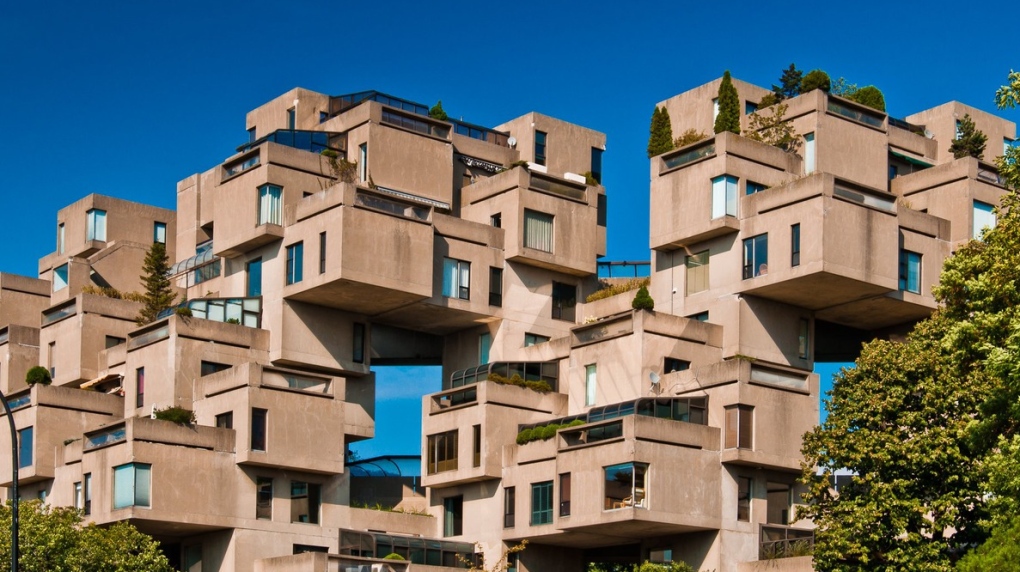
Famous Home: Habitat 67, built for Expo 1967, is a housing complex in Montreal, known for its unique design of having the 146 apartments form three open air pyramids. The design was formulated by architecture student Moshe Safdie, as part of his thesis project. The structure appeared on a 2017 Canada Post stamp, recognizing the 50th anniversary of Expo 1967 and may become a Lego famous buildings release.

Urban Legend: The Château Frontenac hotel, opened in December 1893, is a National Historic Site. With attractions that old, typically come tales of hauntings and the Château Frontenac is no different, said to be visited by at least two ghosts. The first, is Louis de Baude de Frontenac, who is said to inhabit the hotel’s second floor. The second, is a woman dressed in a white nightgown, who has been reported to get into bed with guests.

Museum: The Canadian Railway Museum, also known as Exporail, can be found in  Saint-Constant, near Montreal. Established in 1961, the museum houses a number of locomotives, highlighted by the train which pulled King George VI and Queen Elizabeth during their 1939 trek across Canada. Visitors can also hop aboard the heritage streetcar or heritage railway, which operate on the site.

Firsts: The first organized ice hockey game to ever be played took place in Montreal, at the Victoria Skating Rink, on March 3, 1875. It pitted two teams of nine players on each side against each other. The players used a wooden disc, rather than a puck, and goals were scored by putting the block between two flags spaced eight feet apart, rather than a net. A whopping 40 people attended this important moment in the history of the sport.

Habitat 67

Company: While I really want to put Pornhub here, I’ll have to give the category to Cirque du Soleil, given the worldwide, all-ages popularity of the performance company. Founded by Guy Laliberté and Gilles Ste-Croix in 1984, Cirque du Soleil now has multiple touring productions, as well as permanent shows across the world. In Las Vegas alone, visitors have their pick of six different shows produced by the company.

Events: Quebec has waged a long battle for sovereignty, including two failed referendums (in 1980 and 1995) seeking separation from the rest of Canada. One of the most notable incidents of the separation movement was the October Crisis, when members of the Front de libération du Québec kidnapped and murdered Labour Minister Pierre Laporte. The event caused Prime Minister Pierre Trudeau to invoke the War Measures Act for the first time ever in Canada during peacetime.

Miscellaneous: Quebec hosts a myriad of interesting festivals, including the Just for Laughs Festival, Quebec Winter Carnival, Montreal International Jazz Festival, Festival d’été de Québec, Gatineau Hot Air Balloon Festival. The province also celebrates a number of unique holidays and traditions, such as St-Jean-Baptiste Day, National Patriots’ Day, Moving Day, Construction Holiday, Réveillon, Temps des Sucres and Noël des Campeurs.

Quebec: Caribou

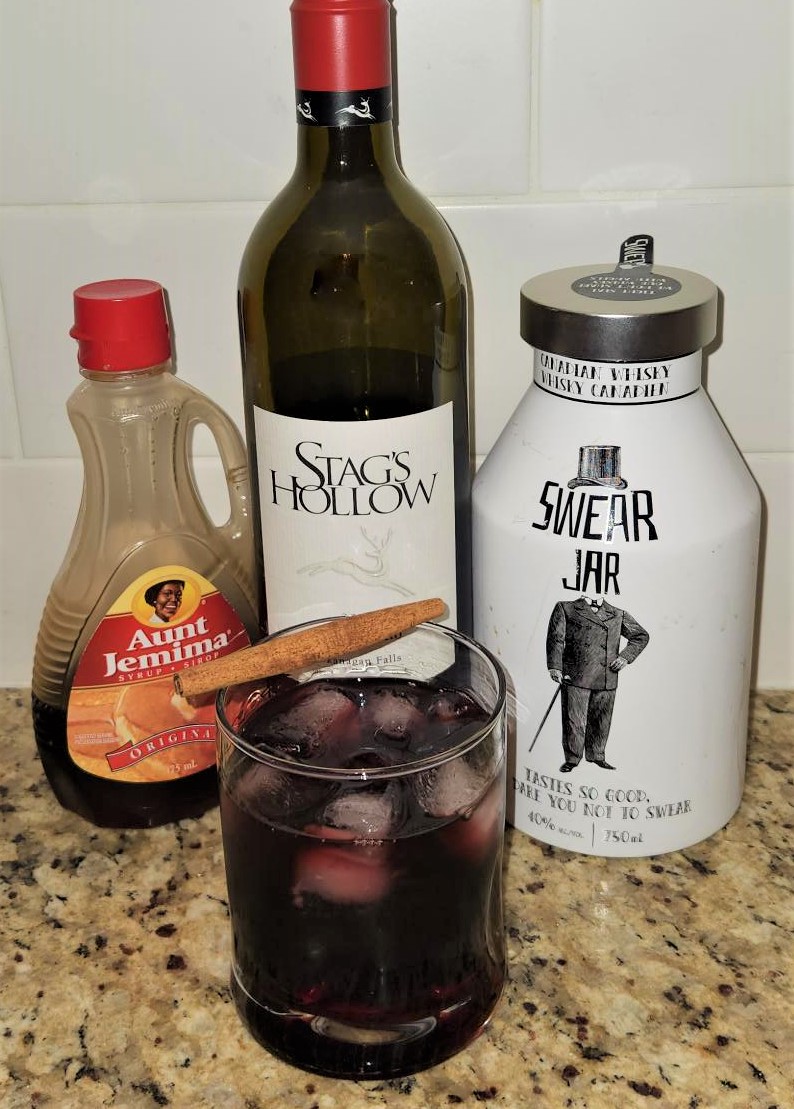
Caribou

  • 3 oz Red Wine
  • 1 oz Whiskey
  • Splash of Maple Syrup
  • Garnish with a Cinnamon Stick

This drink has a long history. It was once said to be made by mixing caribou blood and whiskey, with the plasma later replaced by red wine. The concoction can be enjoyed hot or cold and is popular at various events around the province. Today, the beverage comes pre-mixed and bottled for consumers.

September 12 – Furry Purple Squirrel

Mascot Mess

Teams largely have mascots to engage young fans and as a merchandising opportunity. I don’t know why college teams have mascots, as well, but I guess alcohol and people dressed as animals is always a winning combination. Each major league (NHL, MLB, NBA, NFL) is guilty of poorly chosen characters. Here are some of the worst mascots in the wide world of sports:

Carlton the Bear – Toronto Maple Leafs (NHL)

How in the hell is a bear the mascot for this team? Did they just want to be able to sell oodles of merchandise using a cute teddy bear? The team’s mascot should really be a dude dressed up in a leaf costume and they could do this performance introduction, where the leaf blows through the sky and lands flat on the ground, only to be crushed by passersby. Just like the team itself… symmetry, my friends, symmetry. Leafs suck, btw.

Carlton the Bear

Heh, golfing… just like the Maple Leafs every spring!

Raymond – Tampa Bay Rays (MLB)

There’s just no zip to this name and the character is even worse, described as a seadog and wearing large sneakers and a backwards ball cap. Raymond is really just a slacker, complete with unkempt facial hair. Why couldn’t the mascot be a sting ray, with the tag line “I killed Steve Irwin, so don’t mess with us!” Now that would be bad ass.

Bear – Utah Jazz (NBA)

They couldn’t even give their mascot a decent nickname? The marketing department sat around and just settled with Bear? I’d be more impressed with Bear if he occasionally picked up a musical instrument and belted out some jazz scat tunes. Then again, the Jazz name doesn’t even work in Utah and is only a carryover from the franchise’s New Orleans origins. Ridiculous all around.

Rowdy – Dallas Cowboys (NFL)

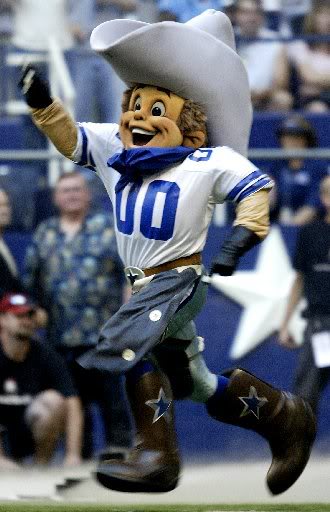
Rowdy looks like Fix-It Felix from Wreck-It Ralph… except he appears a little more Broke Back Mountain than the team would probably want. The Cowboys legacy as a rough and tumble team doesn’t hold up so well when Rowdy is paired with that lineage. He has to be the creepiest looking cowboy I’ve ever seen, making the blood of Clint Eastwood boil to extreme levels.

Rowdy Cowboy

Spartacat – Ottawa Senators (NHL)

I don’t get the orange hair. Doesn’t the Senators organization know that the world hates gingers!? Not myself, I find them to be loveable folks, but I am a rare breed. Readers know of my love for cats, but this one just doesn’t sit right. The name is okay too, but I just don’t see the necessity for that orange hippie hair. Call me crazy (and I’m sure you have), but I just can’t get past that.

Screech – Washington Nationals (MLB)

How awesome would it be if the Washington Nationals mascot wasn’t a anthropomorphic bald eagle, but was, in fact, Screech from Saved by the Bell!? Other than that minor note, I really don’t have any problem with Screech. He falls in line with the team name and the city the franchise plays out of. I probably should have left him off the list… but that Saved by the Bell thing still bugs me.

Hip Hop the Rabbit – Philadelphia 76ers (NBA)

Sure, basketball teams need to cater to the hip hop market and fans of the music genre, but this is really taking things a little too far. Hip Hop looks like a “gangsta” Trix Rabbit on roids, who instead of searching aimlessly for the beloved cereal, performs slam dunks off trampolines to pass the time. Let’s just hope Hip Hop doesn’t become a casualty of the East-West Rap Feud.

Hip Hop the Rabbit

Stinger – Columbus Blue Jackets (NHL)

How anyone could consider an insect cute and cuddly is a question I’ll never be able to answer. Still, this pest was able to find work with the Columbus Blue Jackets, despite being a yellow jacket bug. That mixed with the teams blue colours, has turned him green, just to confuse people even more. I foresee a large swatter and a satisfying splat in Stinger’s future!

Sparky the Dragon – New York Islanders (NHL)

Why a dragon is the mascot for this team is perplexing. Sure, the owner, Charles Wang (heh… wang) is of Asian descent, but is that enough to justify this move? Not to mention he simply transferred the character over from his former Arena Football League franchise and you have the makings of a mascot conspiracy. We must form a task force to get to the bottom of this!

Dinger – Colorado Rockies (MLB)

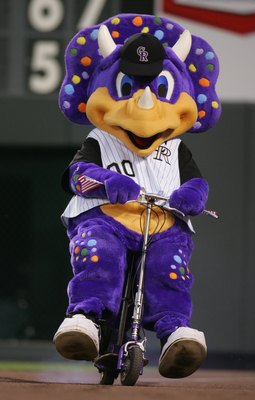
The Colorado Rockies entered Major League Baseball around the time that Barney the Dinosaur was huge for many youngsters. I guess they decided to capitalize on that marketing craze when conceptualizing Dinger. Apparently, making Dinger a Triceratops was based on reports of dinosaur fossils being discovered as the franchise built its Coors Field stadium. I have to say that I do like the name Dinger, though.

Dinger the Dinosaur

Bernie Brewer – Milwaukee Brewers (MLB)

This mascot has to be the closest thing to resemble a 1970’s porn star in the sporting world, complete with a full, bushy, handlebar moustache. I bet under that jersey is a chest full of wild, curly hair and if we keep travelling downwards, a Ron Jeremy-esque member. The Brewer probably drinks a ton, too, and may be the best candidate on this list to party with!

Youppi – Montreal Canadiens (NHL)

The only thing worse than a bad mascot is a bad mascot that was meant for another team. When the Montreal Expos were relocated to become the Washington Nationals, Youppi became a free agent, quickly snapped up by the Canadiens. I do have to give credit to Youppi for being the first mascot ever kicked out of a Major League Baseball game, which occurred in 1989 following LA Dodgers manager Tommy Lasorda complaining to umps about the mascot’s behaviour.

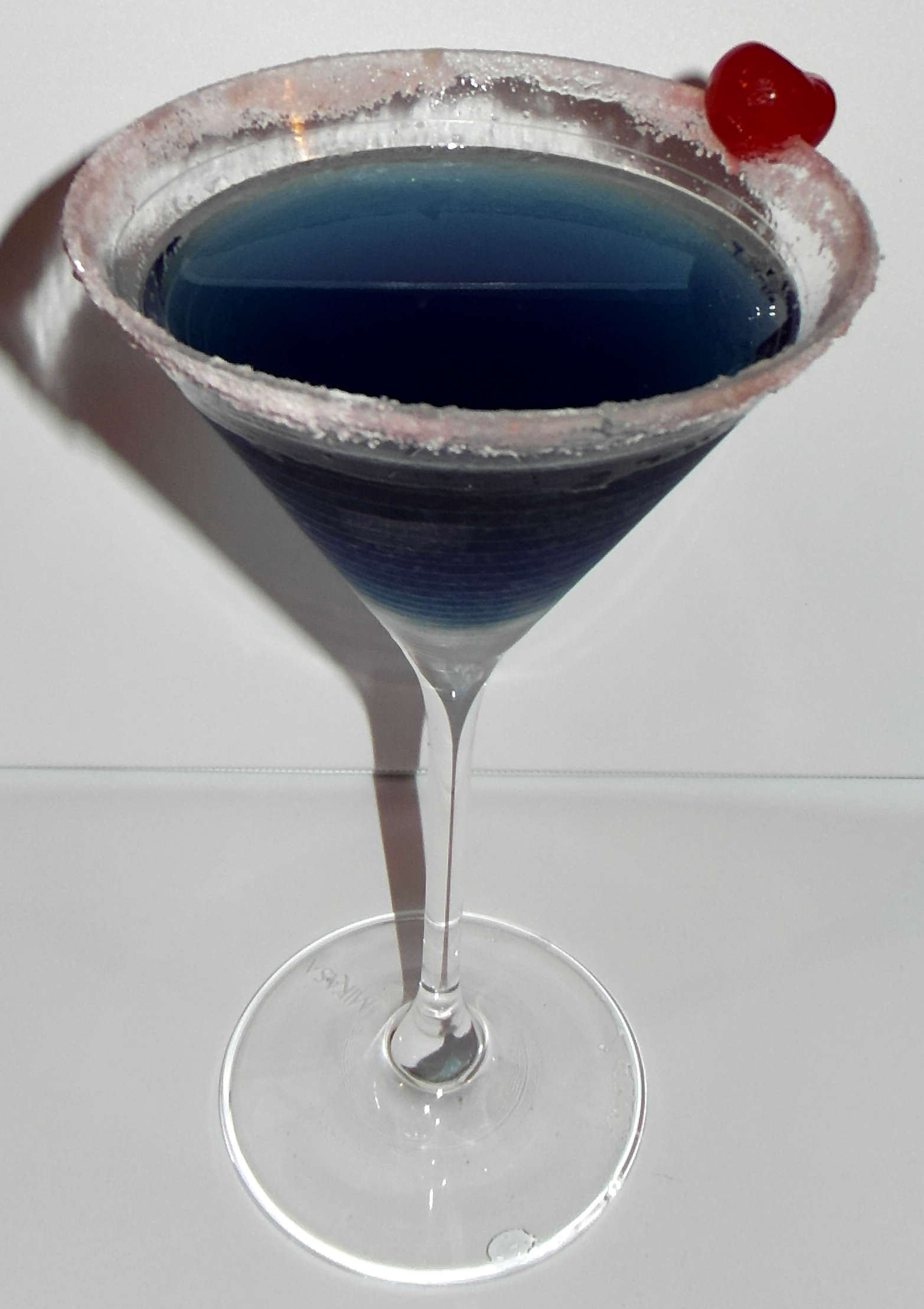
Drink #255: Furry Purple Squirrel

Sept 12

  • Rim glass with Grape Candy Powder
  • 1 oz Blue Curacao
  • 1 oz Light Rum
  • 1 oz Coconut Rum (I used Malibu)
  • Top with Club Soda
  • Splash of Lime Juice
  • Dash of Grenadine
  • Garnish with a Maraschino Cherry

I must admit, I left off the many amateur sport mascots that could have filled three of these lists. Olympic mascots have always been ridiculous too. Just to keep things simple, I only focused on professional team mascots. Did I miss any? Leave a message after the beep. BEEEEEEEP!

Sip Advisor Bar Notes (3 Sips out of 5):
This is an interesting recipe that includes floating the Coconut Rum on top of the drink right before serving. I picked this cocktail because it somewhat went with the topic of today’s post and because the blend of ingredients intrigued me. My Grape Candy Powder rim worked out better than others. I still don’t understand why every drink that purports itself to be purple never turns out that way and remains blue. Maybe I’m not using enough Grenadine, but then again, I don’t want to use a ton of Grenadine.