New York Rangers – The Broadway Blueshirts

Throughout the year, the Sip Advisor will alphabetically travel the National Hockey League (NHL), discovering the best and worst each team has to offer in a variety of subjects. We will also feature a drink based off the franchise. Today, we head to the Big Apple and take a bite out of the New York Rangers:

Establishment Story: The Rangers are one of the NHL’s Original Six franchises, founded in 1926. The club was originally owned by George ‘Tex’ Rickard, who wanted a second team to play out of Madison Square Garden (MSG), which he was president of, based on the success of the New York Americans. Rickard’s team quickly earned the nickname ‘Tex’s Rangers’ and the latter half stuck.

Stanley Cups: The Rangers were the first U.S. team to win the Stanley Cup and have won a total of four championships. The team ended a 54-year drought when they defeated the Vancouver Canucks in 1994. Since then, they have appeared in one Stanley Cup Final, losing to the Los Angeles Kings in 2014. Other championship round losses include 1929, 1932, 1937, 1950, 1972 and 1979.

Celebrity Fan: Playing at one of the most famous arenas in the world, in a VIP hub like New York City, brings a lot of star power to games. Some particular luminaries known to drop by MSG, sporting their Rangers threads, includes Liam Neeson, Kate Upton, Spike Lee, Susan Sarandon and Tim Robbins, John McEnroe, Jason Bateman, and others. On any given night, you can spot multiple celebs supporting the Rangers.

Rangers

Super Fan: Bobby Granger was a fictional super fan, created by the Rangers for a series of TV commercials. The character was played by real-life fan Kev Kage, with ads including Granger teaching Rangers players how to say “Fuhgeddaboudit”, learning to speak Czech from Jaromir Jagr and taking a slap shot to the groin from Brendan Shanahan. Granger was also used to pump up the crowd prior to playoff games.

Mascot: The Rangers have never had a mascot in their close to a century-long history. As of the 2022-23 season, the Rangers remain the only team in the league to not have a mascot and that may never change. Some have suggested a Statue of Liberty type, while others lean towards some sort of animal. There’s even an online petition, launched with the hopes of the team adding a mascot.

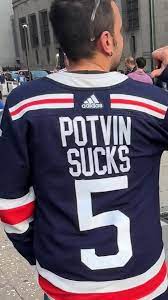
Tradition: Denis Potvin hasn’t played in the NHL since 1988, but that hasn’t stopped Rangers fans from chanting “Potvin Sucks” at every home game since the former New York Islanders captain inadvertently injured Ulf Nilsson in February 1979. The chant became so popular, spurred on by the organ tune Let’s Go Band, it was released on a vinyl album by the band Bobby Nyse and the Scrotums.

Appearances in Media: The plot of the 1999 movie Mystery, Alaska deals with an amateur hockey team preparing for an exhibition game with the Rangers. The film starred Russell Crowe, Hank Azaria, Burt Reynolds and Mike Myers, while the likes of Phil Esposito, Little Richard, Jim Fox and Barry Melrose appeared as themselves. Unfortunately, the movie did not do well critically or financially.
Potvin Sucks

Events/Scandals: Some believe the Rangers half-century championship drought was due to the Curse of 1940, aka Dutton’s Curse. The story goes that MSG owners paid off their mortgage to coincide with the Rangers 1940 Stanley Cup win, so burned the document in the treasured trophy, resulting in the curse. Another version has New York Americans owner Red Dutton declaring the Rangers wouldn’t win again in his lifetime, after his team was not reinstated into the NHL following World War II. Dutton died in 1987.

Rivalry: The Rangers have long-standing rivalries with a number of their Metropolitan Division adversaries. This includes the New York Islanders (Battle of New York), New Jersey Devils (Battle of the Hudson River), Philadelphia Flyers (Broadway vs. Broad Street), and Washington Capitals. During their founding years, they also feuded with the New York Americans, which they practically drove out of the NHL… and were cursed for doing so.

Tragedy: There is a lot of death surrounding the Rangers. Minor leaguer Wayne Larkin (heart attack in training camp), legendary goaltender Terry Sawchuk (pulmonary embolism weeks after a roughhousing accident with a teammate), forward Roman Lyashenko (suicide), prospect Alexei Cherepanov (heart attack during Kontinental Hockey League game), and enforcer Derek Boogaard (accidental overdose) all died as members or recent members of the organization.

Player Nicknames: At a height of 5’9”, tenacious winger Pat Verbeek was given the nickname ‘Little Ball of Hate’ by teammate Glenn Healy in 1995. Fellow teammate Ray Ferraro was known as the ‘Big Ball of Hate’, standing a whole inch taller than Verbeek. Another popular moniker in the franchise’s history was ‘The King’, attached to goalie Henrik Lundqvist by fans and media during his stellar rookie season.

Curse of 1940

Line: The Rangers have had some really great line names. This includes the Mafia Line (“Godfather” Phil Esposito and his two “Dons” Don Maloney and Don Murdoch), as well as the Czechmates (Petr Nedved, Jan Hlavac, Radek Dvorak). Their most productive line of all-time, was dubbed the GAG Line or Goal-A-Game Line. Comprised of Jean Ratelle, Vic Hadfield and Rod Gilbert, the unit played together from 1968-69 to 1973-74.

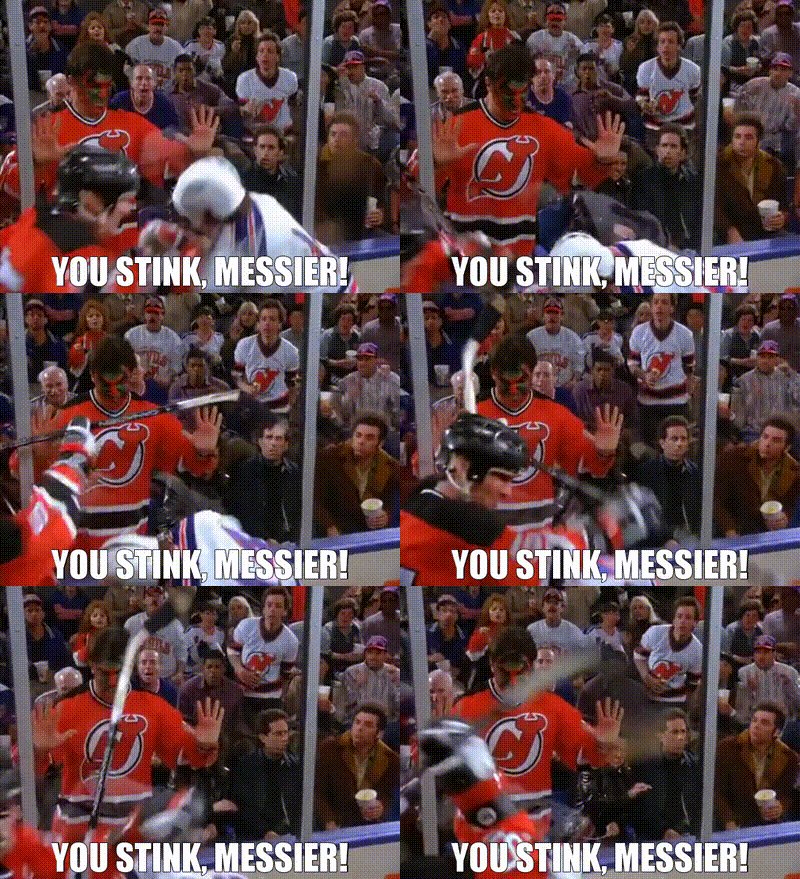
Captain: Mark Messier is so synonymous with the term leader in hockey that the Mark Messier Leadership Award has been given to an NHL captain or other leader since the 2006-07 season. Perhaps Messier’s greatest leadership moment was guaranteeing the Rangers would win Game 6 of the 1994 Eastern Conference Finals. They did, thanks to a natural hat trick for Messier, then went on to take Game 7 and later won the Stanley Cup.

Enforcer: Jeff Beukeboom played eight seasons for the Rangers, leading the team in penalty minutes in a season three times. Beukeboom sits second for the franchise record for total penalty minutes at 1,157, just 69 minutes behind the leader, Ron Greschner, who spent his entire 16-season NHL career with the club. Beukeboom was used in a popular ESPN This is SportsCenter ad, where he attacked sportscaster Steve Levy, after Levy referred to him as “Puke-a-boom”.

Family Values: The Patrick family is synonymous with the long history of the Rangers. Lester Patrick was the first GM in team history, guiding the club from 1926 to 1946 and winning three Stanley Cups. Lester’s sons, Lynn and Muzz, both played for the team during Lester’s reign, with Lynn later becoming a coach and Muzz a GM for New York. Finally, Lynn’s son Craig served as GM of the franchise from 1980 to 1986, including temporarily coaching the team at times.
Messier

Returning Players: Following the 1996-97 season, the Rangers were prepared to part ways with captain Mark Messier. Messier moved on to the Vancouver Canucks for three disastrous seasons personally and organizationally, before returning to New York in 2000. Messier regained the captaincy from Brian Leetch, as well as his previous playing form. Messier would remain with the team through the 2003-04 campaign, officially retiring in September 2005.

Short Stint: NHL Hall of Fame members Guy Lafleur and Pat LaFontaine played 67 games each for the Rangers. Lafleur had been retired from the league since 1985, when he staged a comeback and joined New York in 1988. After one season, Lafleur left for the Quebec Nordiques. As for LaFontaine, he joined the Rangers for the 1997-98 season, with a history of concussions following him. In a March 1998 contest, he collided with a teammate, suffering another head injury and never played again, officially retiring in 1999.

Undrafted: In 1978, World Hockey Association (WHA) stars Anders Hedberg and Ulf Nilsson were lured to the NHL by twin $600,000 deals offered by the Rangers. Their WHA team, the Winnipeg Jets, simply couldn’t afford to match those offers. Another European fan favourite, Mats Zuccarello (nicknamed The Hobbit, for his 5’8” stature), came to the Rangers organization in 2010, playing with the team for nine seasons.

Trade: GM Neil Smith earned the nickname ‘Big Deal Neil’ during his tenure with the Rangers from 1989 to 2000. His biggest acquisition was trading for Mark Messier in 1991, giving up Bernie Nicholls, Louie DeBrusk and Steven Rice in exchange. Messier would lead the team to their 1994 Stanley Cup, which also included other Edmonton Oilers dynasty members Kevin Lowe, Adam Graves, Glenn Anderson, Esa Tikkanen, Craig MacTavish, and Jeff Beukeboom.

Zuccarello

Signing: For a time, the Rangers seemed to try and sign every top free agent available, often to awful deals they would later regret. Wade Redden (six-year, $39 million), Brad Richards (nine-year, $60 million), Scott Gomez (seven-year, $51.5 million), Chris Drury (five-year, $35.5 million), Bobby Holik (five-year, $45 million), Theoren Fleury (four-year, $28 million), and Kevin Shattenkirk (four-year, $26.65 million) all signed loaded contracts they never lived up to.

Draft Pick: Despite their long history, the Rangers have rarely had a top pick to utilize. The jury is still out on 2020 first overall selection Alexis Lafreniere, as well as 2019 second overall choice Kaapo Kakko. Pavel Brendl, taken fourth overall in 1999, never played for New York and only had 78 total NHL games. Some great picks for the Rangers were diamond in the rough goalie finds Henrik Lundqvist (205th overall in 2000) and Igor Shesterkin (118th overall in 2014).

Holdouts: Mark Messier, who ended up in New York after a holdout with the Edmonton Oilers, became a legend in the city as the team won their first Stanley Cup since 1940. His popularity waned a bit before the next season could start, as Messier wanted to negotiate a new contract with the Rangers. The 1994-95 NHL lockout meant nobody played until January, but Messier was still without a new contract until days into the shortened season.

Buyouts: The Rangers have capitalized on using buyouts to get themselves out of bad free agent deals, but a stunning buyout was that of goalie Henrik Lundqvist, a fan favourite and backbone of the team for years. He was sent packing in 2020, with one year remaining on his deal, landing with the Washington Capitals. Before he could ever play for another team, it was discovered Lundqvist was suffering from an irregular heartbeat, which would eventually lead to his retirement.

Henrik Lundqvist

Unique Game: The Rangers have been featured in many NHL special events, including the 1991 Las Vegas outdoor game vs. Los Angeles Kings, a 2006 pre-season game in San Juan, Puerto Rico vs. Florida Panthers, the 2011 NHL Premiere (two games in Stockholm, Sweden), the 2012 Winter Classic vs. Philadelphia Flyers, a pair of 2014 Stadium Series contests vs. New Jersey Devils and New York Islanders, and the 2018 Winter Classic vs. Buffalo Sabres. The Rangers and Islanders will play as part of the 2024 Stadium Series.

Goal: The Rangers 1994 Stanley Cup would not be possible had it not been for Stephane Matteau’s Game 7 double overtime winner in the 1994 Eastern Conference Finals. The tally is best remembered for play-by-play man Howie Rose’s call of ‘Matteau, Matteau, Matteau!” Another memorable goal was Marek Malik’s 2005 between-the-legs shootout winner to end the longest shootout in NHL history. Malik was not known for his scoring ability, but ended the game in fashion in the 15th round.

Fight/Brawl: Brawls with the Boston Bruins (1979) and Los Angeles Kings (1981) have already been covered during this project, so we’ll focus on a 1971 melee with the Toronto Maple Leafs, that is best remembered for Leafs goalie Bernie Parent’s mask going missing for 41 years. During the fracas, Rangers captain Vic Hadfield tossed Parent’s face shield into the crowd and it wasn’t seen again by Parent until a memorabilia collector asked him to authenticate the mask in 2012. It was the real deal.

Injury: During a November 1998 game against the Los Angeles Kings, Jeff Beukeboom was sucker punched by Kings enforcer Matt Johnson. This resulted in another concussion for Beukeboom, whose physical playing style had resulted in other head injuries throughout his career. Johnson was suspended 12 games for his actions. While Beukeboom did return to action, another hit to the head in 1999 ended his career, due to post-concussion syndrome.

Matteau

Penalty: During the 2008 playoffs, the Rangers were facing the New Jersey Devils. While on a power play, super pest Sean Avery decided to use a new tactic against legendary goalie Martin Brodeur, by wildly waving his arms and stick in front of the netminder to distract him. The next day, the NHL ruled that this could be penalized as unsportsmanlike conduct in the future, resulting in a minor penalty. The statute is commonly known as ‘The Avery Rule’.

Wildest Story: Tony DeAngelo’s time with the Rangers came with much controversy, especially the end of his tenure. DeAngelo was put on waivers on January 31, 2021, following a reported physical confrontation with teammate Alexandar Geogiev. The altercation stemmed from DeAngelo saying something to the goalie following a loss and Georgiev electing to attack the defenseman. DeAngelo was dismissed from the Rangers and bought out of his contract at the end of the season.

Blooper: Wayne Gretzky played the final three seasons of his career with the Rangers (1996-99). Despite being the most famous hockey star of all-time, on October 30, 1997, for a game against the New York Islanders, the equipment team spelled the Great One’s name GRETKZY on the back of his jersey. Gretzky would have a similar jersey name bar mishap when visiting English Premier League team Tottenham Hotspur, who gave him a custom jersey with GRETSKY on the back.

Miscellaneous: On March 13, 1948, Larry Kwong became the first non-white and Asian player in NHL history, breaking the colour barrier, when he played one shift with the Rangers at the end of what would prove to be his only NHL game. Kwong, who played most of his later career in Quebec senior leagues, had previously been invited to training camp with the Chicago Black Hawks in 1942, but the Canadian government declined to process the paperwork needed for Kwong to leave the country.

New York Rangers: The Broadway Blueshirts
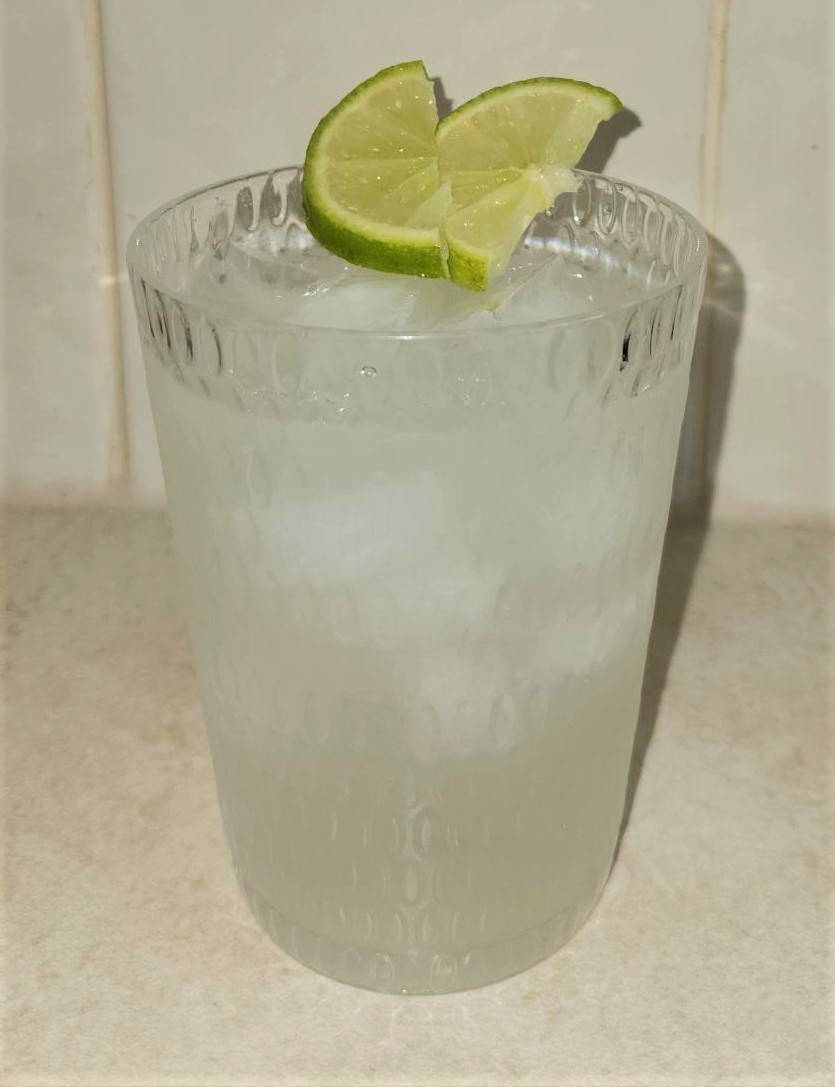
The Broadway Blueshirts

  • 2 oz Tequila
  • Top with Coconut Water
  • Splash of Lime Juice
  • Dash of Agave Nectar
  • Dashes of Angostura Bitters
  • Garnish with a Lime Wedge

This recipe comes from Hornitos Tequila, with its name coming from a nickname for the Rangers. For those wanting more Rangers cocktail options, the Blueshirts Bartender on Instagram creates a new Rangers-themed beverage before every game.
Montreal Canadiens – Habitant

Throughout the year, the Sip Advisor will alphabetically travel the National Hockey League (NHL), discovering the best and worst each team has to offer in a variety of subjects. We will also feature a drink based off the franchise. Today, we visit La Belle Province, to learn about one of the most storied sports franchises in the world, the Montreal Canadiens:

Establishment Story: The Canadiens are one of the NHL’s Original Six franchises, being founded in 1909 and playing in the National Hockey Association. In fact, the team is the longest continuously operating ice hockey team in the world, predating the formation of the NHL. The team was given the name ‘Les Canadiens’, as it was supposed to be comprised of French players and supported by Montreal’s francophone community.

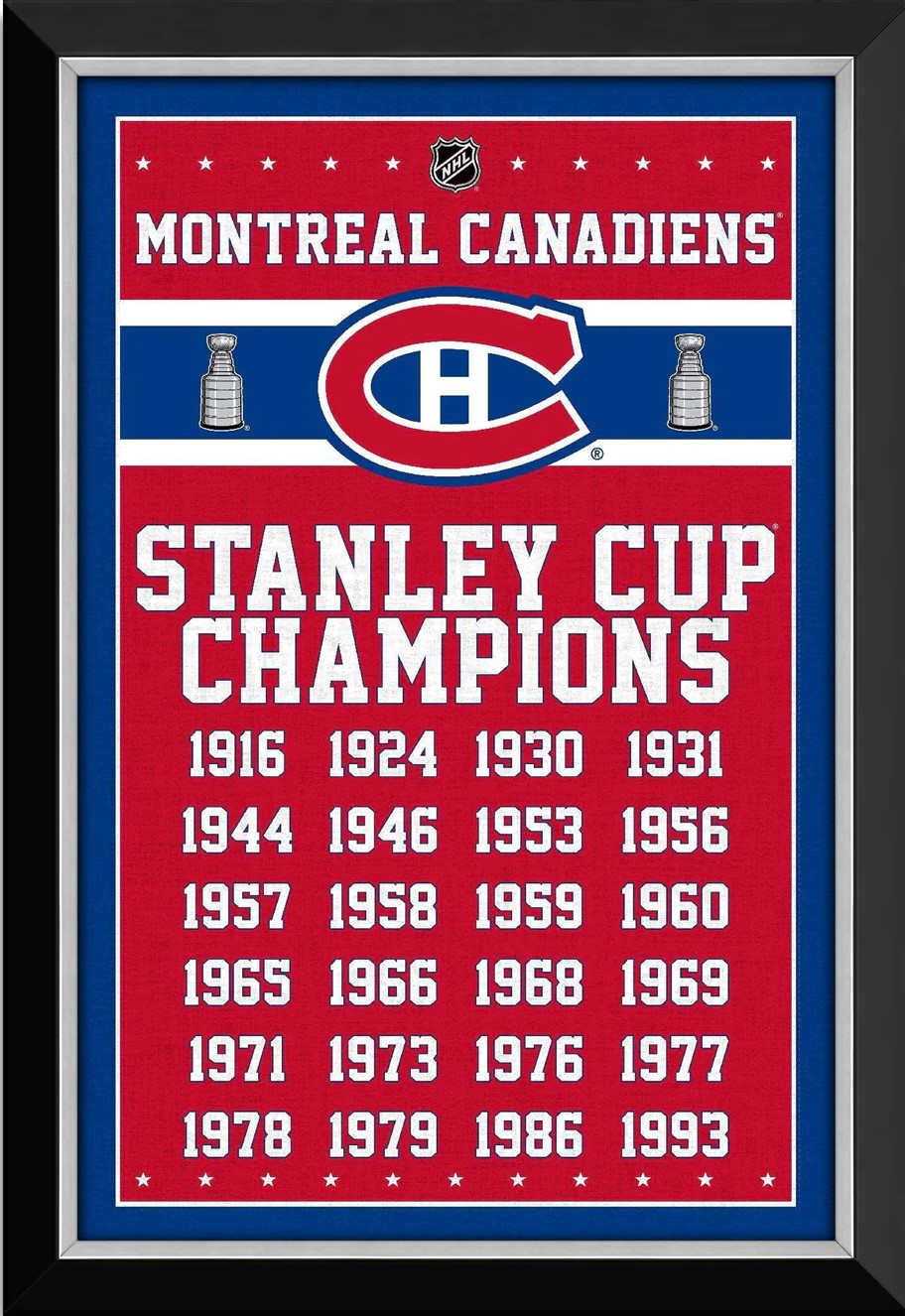
Stanley Cups: The Canadiens hold the NHL record for Stanley Cup victories with 24. Montreal’s dynasty teams of 1955-60, 1964-69 and 1975-79 largely contributed to this total. The Canadiens have appeared in a total of 35 Stanley Cup Finals. Introduced in 1985, Montreal has never won the Presidents’ Trophy, awarded for best regular season record. Had it always existed, the Canadiens would have won it on 21 occasions.

Celebrity Fan: As you can expect, given the club’s reverence with French Canadians, there are a number of celebrity supporters of the Canadiens. Among the team’s most famous fans are singer Celine Dion, Canadian Prime Minister Justin Trudeau, actors Jay Baruchel, Viggo Mortensen and William Shatner, and mixed martial arts fighter Georges St-Pierre. Legend has it, Mortensen wore a Canadiens jersey under his armor while filming the Lord of the Rings trilogy.

Stanley Cups

Super Fan: I believe every Canadiens fan to be a super fan in their own right. After all, supporting the team is like a religion in Montreal. In fact, the Canadiens launched their own Hall of Fan in 2022, with the original inductees being Sunil Peetush, Maika Parisien and Thommy Boudreau. Perks of the honour included an induction ceremony and having their names on a banner in the Molson Ex Zone, within the Bell Centre, as well as watching a game from a suite.

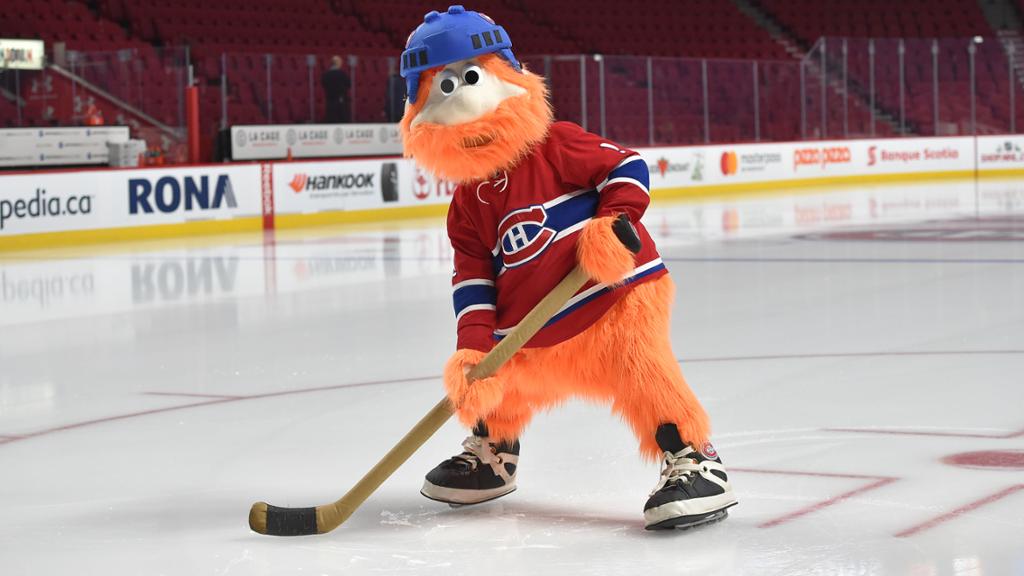
Mascot: Youppi! was the mascot of Major League Baseball’s Montreal Expos from 1979 to 2004, before the team was relocated to Washington, D.C., becoming the Washington Nationals. Needing a new team to support, Youppi! joined the Canadiens. His jersey number is an exclamation mark. Youppi was the first Canadian mascot to be inducted into the Mascot Hall of Fame, earning the honour in 2020.

Tradition: The Canadiens team motto is “Nos bras meurtris vous tendent le flambeau, à vous toujours de le porter bien haut.” This translates as “To you from failing hands we throw the torch. Be yours to hold it high.” The slogan comes from the famous World War I poem In Flanders Fields by John McCrae. Canadiens fans have also been known for the chants “Olé, Olé, Olé”, along with the team’s goal song and “Nah Nah Nah Nah Hey Hey Hey Goodbye”, as the team wound down a game with victory imminent.

Appearances in Media: The Hockey Sweater is a cherished children’s book, which was later turned into an animated short, titled The Sweater. The story is about a little boy who’s gifted a Toronto Maple Leafs sweater, despite living in Montreal and being a loyal Canadiens fan. It is based on author Roch Carrier’s childhood experience. The book and short are so iconic, a line from the story appeared on Canadian $5 bills for a time.

Youppi

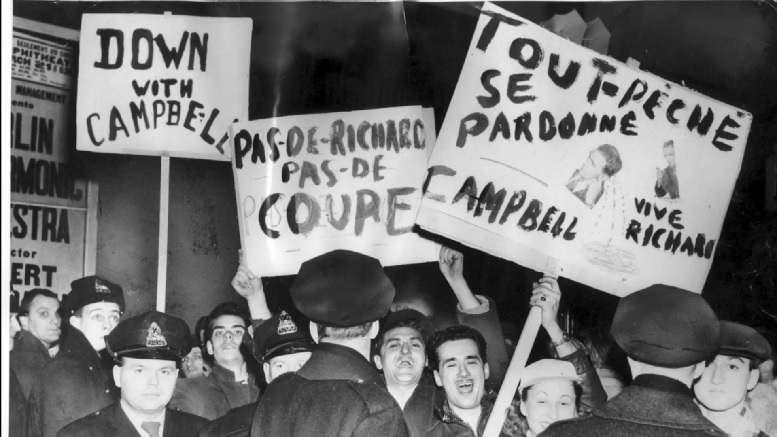
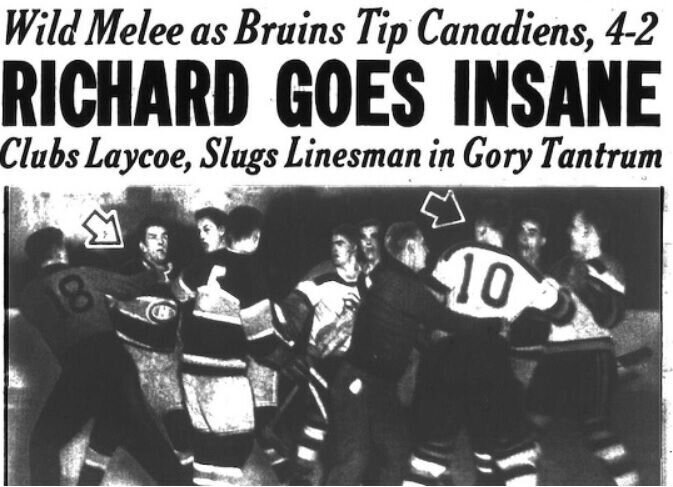
Events/Scandals: Occurring on March 17, 1955, the Richard Riot transpired because beloved Canadiens superstar Maurice Richard was suspended for the remainder of the 1954-55 season, including the playoffs, following an altercation with a linesman. When NHL president Clarence Campbell appeared at the Montreal Forum for the Canadiens next game, fans revolted causing $100,000 worth of property damage, only being quelled by Richard asking for supporters to stop.

Rivalry: Many view Montreal’s feud with the Boston Bruins as one of the NHL’s greatest rivalries. The two teams have faced each other in the playoffs countless times and heated matchups aren’t restricted to the post-season. The Canadiens also have checkered histories with geographically close teams in the Toronto Maple Leafs and Ottawa Senators and would still be enemies of the Quebec Nordiques and Montreal Maroons, if those clubs still existed.

Tragedy: The Canadiens long history includes numerous tragedies. First, days after the 1919 Stanley Cup Finals were cancelled due to the Spanish flu pandemic, player Joe Hall died of pneumonia. Next, goalie Georges Vezina succumbed to tuberculosis in March 1926. Later, in 1937, star Howie Morenz perished due to a coronary embolism, while recovering from a broken leg (more on that below). Finally, prospect Neil Carnes was killed in a 1989 motorcycle accident.

Player Nicknames: Canadiens fans and media work diligently to create nicknames for their beloved players. Some of the best, include Boom Boom (Bernie Geoffrion), Big Bird (Larry Robinson), Roadrunner (Yvon Cournoyer), Rocket/Pocket Rocket (Maurice/Henri Richard), Flower/Blond Demon (Guy Lafleur), Chicoutimi Cucumber (George Vezina), Goal Caufield (Cole Caufield), WiFi (Arber Xhekaj), Jesus Price (Carey Price), and Saint Patrick (Patrick Roy).

Richard Riot

Line: The Punch Line of Toe Blake, Elmer Lach and Maurice Richard were formed during the 1943-44 season and instantly had great chemistry. The following campaign, the trio finished first, second and third in league scoring. They would win two Stanley Cups together. Two championships, however, pale in comparison to The Dynasty Line of Guy Lafleur, Steve Shutt and Pete Mahovlich/Jacques Lemaire, who won four straight Stanley Cups from 1976 to 1979.

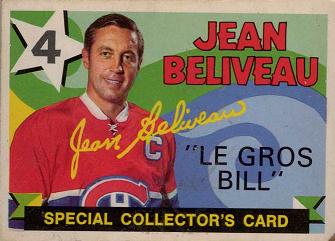
Captain: Amongst other notable leaders, Jean Beliveau gets the nod here. He led the team for 10 years, winning four Stanley Cups in five seasons from 1965 to 1969. Even after his career wrapped, Beliveau continued to leave his mark on the Canadiens, winning seven Stanley Cups as an executive with the team. Beliveau was named to the Order of Canada in 1998 and had his name added to Canada’s Walk of Fame in 2001.

Enforcer: Chris Nilan, nicknamed Knuckles for his fighting skills, holds the Canadiens team records for career (2,248) and single-season (358) penalty minutes. He was a member of Montreal’s 1986 Stanley Cup squad. When the Canadiens closed the fabled Montreal Forum and began auctioning off pieces from the historic building, Nilan bought the penalty box… a home away from home.

Family Values: It’s pretty special when three generations of a family played for the same team. Bernie Geoffrion, his son Dan and his grandson Blake all suited up for the Canadiens. Add in Howie Morenz, whose daughter married Bernie and was mother to Dan and grandmother to Blake, for a non-direct fourth generation. Additionally, brother combos to play together for Montreal include Maurice and Henri Richard and Frank and Pete Mahovlich.

Jean Beliveau

Returning Players: Howie Morenz is a Canadiens legend, playing the first 11 seasons of his career with the team and winning three Stanley Cups, while becoming one of the NHL’s first stars. After time with the Chicago Blackhawks and New York Rangers, Morenz returned to Montreal for the 1936-37 campaign. Sadly, Morenz broke his leg late in the season and weeks later, died of a coronary embolism, caused by blood clots from the injury. 50,000 fans attended his funeral held at the Montreal Forum.

Short Stint: A number of notable Russian players had limited tenures with the Canadiens. This includes Alexander Radulov, who revived his NHL career with the team in 2016-17, before leaving for the Dallas Stars; Ilya Kovalchuk, who played 22 games with Montreal in 2020, between stints with the Los Angeles Kings and Washington Capitals; and Alexander Semin, who played a mere 15 contests with the Canadiens in 2015, before he was waived and had his contract terminated for failing to report to the minor leagues.

Undrafted: The Canadiens signed Mike Keane on September 25, 1985. Keane would spend eight seasons with Montreal, winning a Stanley Cup in 1993 and serving as team captain for half a season. He was part of the infamous Patrick Roy trade, accompanying the star goalie, where they would win another championship in 1996. Keane would win a third Stanley Cup with the Dallas Stars in 1999. He retired having played 1,161 regular season games and 220 playoff contests.

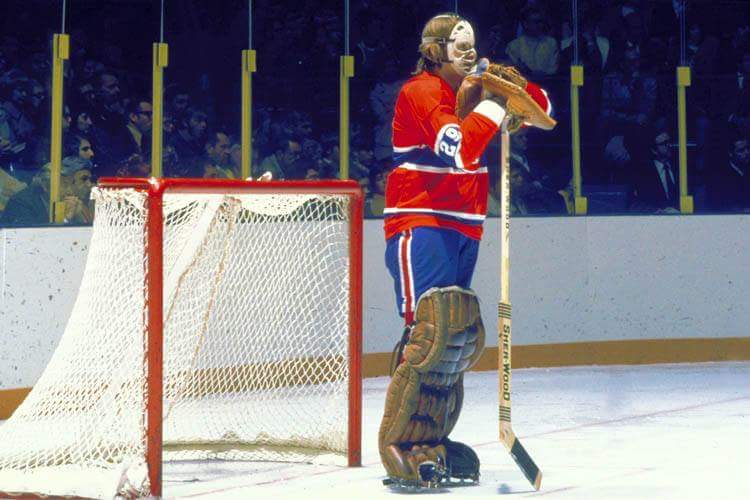
Trade: Goalie Ken Dryden was actually drafted by the Boston Bruins 14th overall in 1964, but was traded a couple weeks later to the Canadiens. Legend has it, Dryden’s agent never told him of being drafted by Boston and he only became aware of how he actually ended up in Montreal midway through his career. Although Dryden only played eight NHL seasons, he won six Stanley Cups and five Vezina Trophies as the league’s best goaltender.

Ken Dryden

Signing: Among the Canadiens best deals was bringing in Brian Gionta with a five-year, $25 million pact in 2009. Gionta would be named the team’s captain in 2010, serving in the role until the end of his contract. One of the worst signings by Montreal was adding hometown enforcer Georges Laraque. Brought in to add toughness to the team, Laraque only lasted a season and a half of his thee-year, $4.5 million deal before being released and bought out.

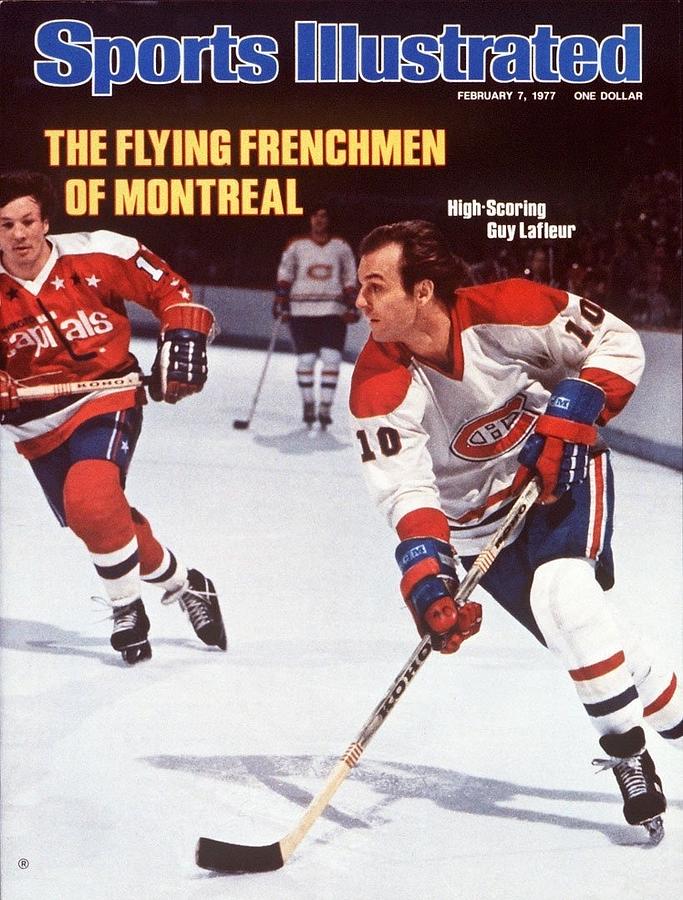
Draft Pick: One of the savviest moves the Canadiens ever made was trading for the California Golden Seals first round draft pick in 1971. Highly touted Quebecois players Guy Lafleur and Marcel Dionne were available to be chosen that year and when the Golden Seals finished last in the league, the Canadiens earned the right to select first overall. They eventually decided to pick Guy Lafleur, who became a Montreal legend over 14 seasons with the team.

Holdouts: Some of the Canadiens most iconic players have endured interesting contract disputes with the club. Ken Dryden’s 1973-74 disagreement resulted in the netminder articling for a law firm, a requirement needed to earn his law degree. Guy Lafleur decided to retire 19 games into the 1984-85 season, unhappy with coach Jacques Lemaire, a denied trade request and his contract. Finally, Patrick Roy’s mid-season statement he would not play for the team again led to his trade to the Colorado Avalanche.

Buyouts: Karl Alzner was one of the worst free agent signings in Canadiens history. In 2017, the stay-at-home defenseman was given a five-year, $23.125 million deal. In his second season with Montreal, he was demoted to the minors and would only play four more games for the team, before his contract was bought out in October 2020. This resulted in a $3.33 million payout over four years.

Guy Lafleur

Unique Game: The Canadiens have been part of a number of international tours and showcase events for the NHL. This includes the 1938 Detroit Red Wings–Montreal Canadiens European Tour (first NHL games outside North America), a 1975 New Year’s Eve game vs. Moscow Central Red Army (played during the Cold War), the 2003 Heritage Classic vs. Edmonton Oilers (first regular season outdoor game), 2011 Heritage Classic vs. Calgary Flames, and 2016 Winter Classic vs. Boston Bruins.

Goal: On March 18, 1945, Maurice Richard became the first player in NHL history to score 50 goals in 50 games. Richard finally reached the plateau with 2:15 left in the last game of the season, en route to a 4-2 win for Montreal. Richard’s achievement was even more notable for how much opposing players were targeting him, with an increase in slashes, hooks and other interference, as he pursued the feat.

Fight/Brawl: Canadiens teams of the 1980s were involved in a number of notable brawls. There was the infamous 1984 Good Friday Massacre with the Quebec Nordiques, but also a pair of lesser known melees deserving of some attention. These include a 1986 fracas that moved onto the Boston Bruins bench and tunnel to the dressing rooms, as well as a 1987 punch-up with the Philadelphia Flyers that occurred before the game had even begun.

Injury: A couple of serious injuries have ended Canadiens players careers. First, in January 2000, Trent McCleary took a slapshot to the throat, crushing his larynx and requiring immediate life-saving surgery. With his air passage 15 per cent narrower, McCleary was unable to resume his career. Second, while playing for the Canadiens’ American Hockey League affiliate, Blake Geoffrion suffered a depressed skull fracture following his fall from a hip check, resulting in his eventual retirement.

Richard

Penalty: A little more about the incident which led to the Richard Riot, Maurice Richard had a long history of retaliation penalties, stemming from physical and verbal attacks from opposing players. On March 13, 1955, Richard was involved in a skirmish with Boston Bruins player Hal Laycoe and when referees tried to intervene, Richard punched linesman Cliff Thompson twice, knocking him unconscious. A match penalty resulted and Boston police even tried to arrest Richard.

Wildest Story: As a teenager, the Canadiens pursued Jean Beliveau, attempting to sign him to contracts that would ensure he eventually played for the team. As Beliveau appeared to not be interested in turning pro, the Canadiens decided to buy the league Beliveau was playing in, the Quebec Senior Hockey League, turning it into a minor pro circuit and giving the Canadiens the rights to all players in the league, particularly Beliveau.

Blooper: When Doug Gilmour was penalized during the 2002 playoffs, he responded by slamming the penalty box door. This caused the glass to shatter, although Gilmour barely reacted to the mess he had created. Gilmour has said after that game, which he thought may be the last of his career, Canadiens owner George Gillett came to him with a wheelbarrow of glass. When Gilmour signed a few pieces, Gillett asked him to sign some more to be sold later.

Miscellaneous: On November 1, 1959, goalie Jacques Plante blocked a shot with his face, resulting in a broken nose. While Plante had practiced with a mask previously, head coach Toe Blake wouldn’t allow him to wear it during games, fearing it would obstruct his vision. On this night, Plante returned to the ice after being stitched up, donning the mask. He went on an 18-game unbeaten stretch, popularizing the use of the mask as protective equipment.

Montreal Canadiens: Habitant

Habitant

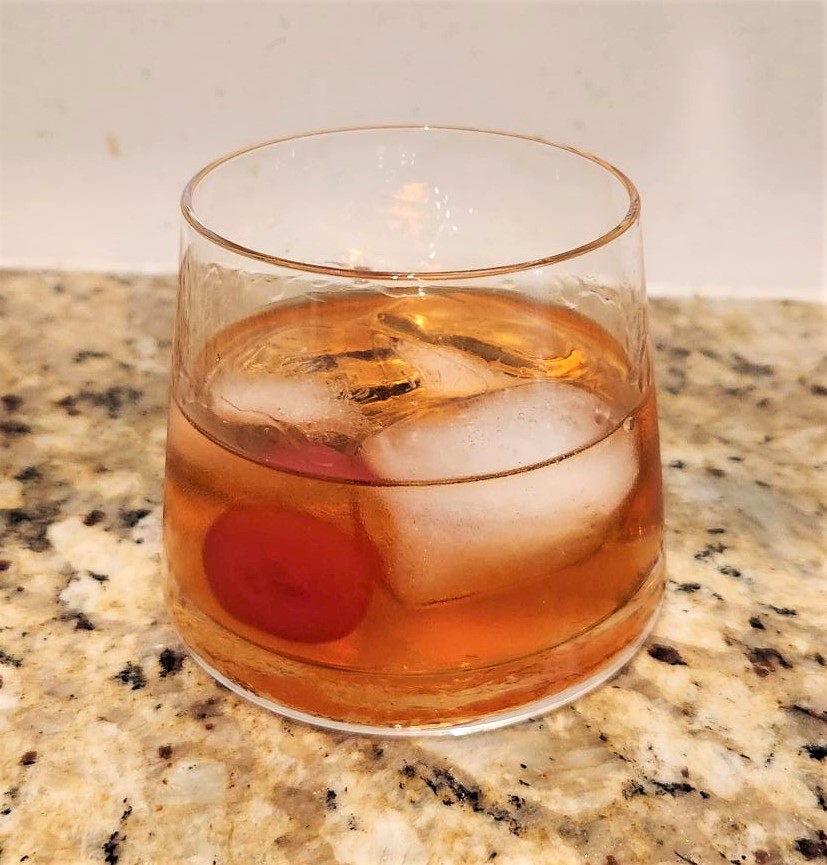
  • 1.5 oz Whiskey
  • Splash of Lemon Juice
  • Dash of Maple Syrup
  • Dashes of Peychaud’s Bitters
  • Garnish with a Maraschino Cherry

This cocktail was created by Larry Dennis of the Seignory Club in Quebec. Les Habitants is a popular nickname for the Canadiens. Other monikers for the club include Le Bleu-Blanc-Rouge, La Sainte-Flanelle, Le Tricolore, Les Glorieux, Le Grand Club, and Les Plombiers.